Support

Tanjung Selor

About

Tanjung Selor is the administrative center of North Kalimantan province and a vital transportation hub on the island of Borneo. Located on the banks of the mighty Kayan River, this city offers travelers a unique opportunity to experience authentic life far from overcrowded tourist routes. Here, modern infrastructure harmoniously coexists with the traditional lifestyle of the local residents.

Geographically, the city is situated in the equatorial zone, ensuring a warm and humid tropical climate year-round. Despite its status as a provincial capital, Tanjung Selor maintains the cozy atmosphere of a relatively small town with a population of about 70,000. A trip here allows you to see a completely different, wilder, and calmer side of such a multifaceted country as Indonesia.
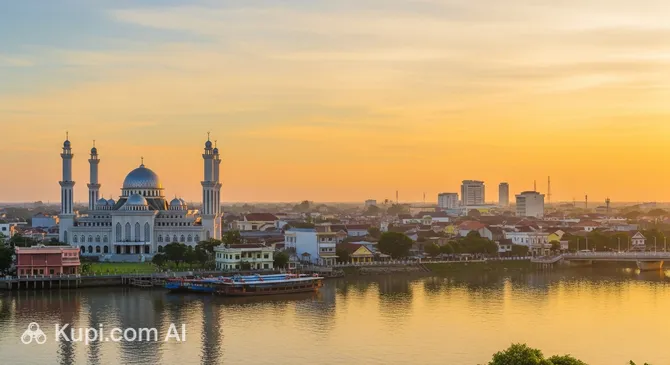
Tanjung Selor. Illustration.
Source: Kupi.com AI

The region's cultural identity is inextricably linked to its past. The rich history of Tanjung Selor intertwines with the heritage of the Bulungan Sultanate, whose historical center was located nearby in Tanjung Palas on the opposite bank of the river. Natural attractions include the limestone mountain Gunung Putih, which offers breathtaking panoramic views of the surroundings, and the Kayan River itself, which serves as the city's main artery. A boat trip along the river provides an unforgettable experience and a chance to observe daily life on the water.

Tanjung Selor serves as an excellent starting point for wildlife explorers and ethnography enthusiasts. This destination invites guests to slow down, enjoy local hospitality, and immerse themselves in the unhurried pace of Indonesian provincial life before traveling deeper into the island.

Weather Overview

The climate of Tanjung Selor is typical for equatorial latitudes: eternal summer reigns here with high humidity and stable temperatures. Throughout the year, the weather remains virtually unchanged, making the city accessible for visits in any month, provided you are prepared for the region's tropical characteristics.

The temperature regime here is very comfortable for heat lovers. The average air temperature stays steady at around 27°C. During the day, the thermometer usually rises to 30–31°C, while nights bring only slight coolness as the air cools down to 23–24°C. No sharp temperature drops or distinct seasonal changes are observed here.

Precipitation is a key feature of the local climate. Rain is a frequent guest in Tanjung Selor. According to statistics, the number of days with precipitation varies from 26 to 30 per month, meaning there is a chance of rain almost every day. Checking the detailed weather in Tanjung Selor will help you find the current forecast for upcoming dates, but experienced travelers recommend always carrying a raincoat.

Expect consistently warm and humid weather year-round with frequent rainfall that freshens the air but rarely lasts all day. When planning your trip, prioritize light, quick-drying clothing and waterproof footwear.

Average monthly temperature

Average monthly precipitation

Interesting Facts

Tanjung Selor is not just an administrative center, but a place with curious features that reveal themselves only to the attentive traveler. Beyond its scenic river views, this city holds several surprising facts that make it unique on the map of the archipelago.
  • A capital without city status. Tanjung Selor represents a rare administrative phenomenon. Despite being the capital of the entire North Kalimantan province, it officially still holds the status of a district (Kecamatan) rather than an autonomous municipality. This creates a striking contrast: important government buildings are located here, yet the pace of life remains steady and almost rural.

  • A water "highway" instead of a road. Although the city has an airport, the Kayan River remains the main transport artery for most travelers. The primary way to get here is an exciting speedboat ride from the city of Tarakan. This 90-minute voyage down the wide river through the jungle often impresses tourists more than the destination itself.

  • Royal neighbors. Tanjung Selor developed as a trading settlement, while the region's aristocratic center was always located on the opposite bank. Just a few minutes away by boat is Tanjung Palas—the historical residence of the Bulungan Sultans. Living in the modern center, you are effectively looking out your window at the ancient capital of the sultanate.

  • A mountain of white stone. One of the local landmarks is Gunung Putih ("White Mountain"). This massive limestone hill serves not only as a natural observation deck but also as a source of local legends. It is believed that the mountain's underground caves were once used by sultans as shelters and places for meditation.

How to Get There

When planning a trip to the capital of North Kalimantan, keep in mind that logistics in this region have their own peculiarities. Direct air service to the city is limited, so routes often involve transfers at nearby major transport hubs. To create an optimal travel plan, we recommend learning more about how to get to Tanjung Selor and choosing the most convenient mode of transport.

Tanjung Selor itself does not have a large airport that handles long-distance flights. Most often, tourists fly into Juwata International Airport (TRK), located in the city of Tarakan. The distance from there to Tanjung Selor is about 58 km. This is a significant transport hub with a moderate passenger flow, connecting the region with other parts of the archipelago. The travel time from Tarakan to Tanjung Selor (usually including a water crossing by speedboat) takes approximately 1 hour and 50 minutes.

Another available option is to fly into Kalimarau Airport (BEJ), located in the city of Berau, about 77 km from Tanjung Selor. This is also a medium-scale airport serving domestic routes. The journey from Berau to Tanjung Selor by land takes about 2 hours and 15 minutes.

For clarity, here is a summary of the main airports:

AirportPassenger trafficDistance
Juwata International Airport730 00058 km
Kalimarau Airport393 95877 km
Tawau Airport1.7 mln183 km
Bario Airport22 084231 km
Lahad Datu Airport125 000264 km

Main Attractions

Although Tanjung Selor is an administrative center, it retains the charm of a quiet province where the main points of interest are linked to the region's rich history and magnificent nature. Travelers visiting this part of the country should take the time to visit several iconic locations to better feel the spirit of North Kalimantan.

Museum Kesultanan Bulungan (Bulungan Sultanate Museum)
This is the primary historical landmark, located on the opposite bank of the river in the Tanjung Palas district. The museum is a reconstruction of the palace of the once-powerful Bulungan Sultanate. The exhibition includes replicas of the royal throne, traditional clothing, historical weapons, and vintage photographs. The boat trip across the river is a small adventure in itself and allows you to touch the cultural heritage that shaped this region long before the formation of modern Indonesia.

Gunung Putih (White Mountain)
A picturesque limestone hill that has become a symbol of the area's tourism potential. The mountain gets its name from the characteristic color of its rock formations. This site attracts nature lovers and hikers: after climbing the steps to the observation deck, you will be rewarded with a spectacular panoramic view of endless green forests and the winding river. Additionally, small caves are hidden within the mountain, adding an air of mystery to the place.

Tepian Sungai Kayan (Kayan Riverbank)
The epicenter of the city's evening life and the best place to experience local flavor. The promenade stretching along the banks of the mighty river fills with people towards sunset. Numerous street food stalls open here, offering local delicacies at very affordable prices. Tourists come here to enjoy the cool breeze, watch the boats, and see beautiful sunsets that paint the sky over the water in vibrant colors.

Local Cuisine

The gastronomic scene in Tanjung Selor is closely tied to its geographical location: the city's life is centered around the Kayan River and its proximity to the sea. The foundation of the local menu consists of fresh fish, river prawns, and various shellfish. Culinary traditions of indigenous peoples, Malay customs, and recipes from Javanese migrants have intertwined here, making the cuisine of this part of Indonesia distinctive and memorable.

The main delicacy of the Bulungan region that every traveler should try is tudai. These are thick-shelled clams found in the local mangrove forests. Their meat is known for its tender texture and slightly sweet taste. Usually, tudai is served simply boiled to preserve the natural flavor, or stir-fried in a spicy sauce with chili and garlic.

Another unique dish from North Kalimantan is Nasi Subut. This is an unusual side dish that replaces the standard white rice. In this dish, rice is mixed with corn kernels and purple sweet potato, giving it a beautiful lilac hue and a subtle sweet aftertaste. Nasi Subut pairs perfectly with salted fish or fried seafood.

In the hot climate of Tanjung Selor, refreshing drinks are especially popular, such as Es Kelapa Muda—iced young coconut—or freshly squeezed tropical fruit juices. The city also has a developed coffee shop culture: in small establishments called "warkops," locals enjoy spending time over a cup of strong, sweet coffee. It is worth noting that finding alcohol here can be difficult, as most establishments adhere to halal standards.

The center of evening gastronomic life is the Kayan Riverbank (Tepian Sungai Kayan). After sunset, many street food stalls open here, where you can have an inexpensive dinner in the traditional "lesehan" style—sitting on mats at low tables. This is the best place to enjoy the river breeze and try giant freshwater prawns (Udang Galah) or grilled fish.

Travel Tips

Welcome to Tanjung Selor! A trip to this corner of Borneo promises to be exciting, but for maximum comfort, it is worth preparing in advance for the peculiarities of local life. We have gathered practical recommendations for you to help avoid minor difficulties and allow you to focus on exploring the culture and nature.

  1. Clothing and Climate. Given that Indonesia is in the equatorial belt, it is always hot and humid. Prefer loose clothing made of natural fabrics (cotton, linen) in light colors. Be sure to bring a high-quality raincoat or a compact umbrella—tropical downpours can start suddenly. Also, remember modesty: for city walks, it is better to choose items that cover the shoulders and knees out of respect for local traditions.
  2. Transport Specifics. There is no conventional public transport like buses in Tanjung Selor. The most convenient way to get around is by motorcycle taxi (ojek). Agree on the price in advance, before the trip starts. If you plan to explore the surroundings, remember that the main "highway" here is the Kayan River. Speedboats are the primary means of connection with other cities, so be prepared for water travel.
  3. Finances and Cash. Bank cards are not accepted everywhere, mostly only in large hotels or chain stores. It is vital to have a sufficient supply of cash (Indonesian Rupiah), especially small bills. They will be useful for paying for boats, food at the market, and tips. There are ATMs in the city (look for ATM Bersama logos), but in case of connection failures, it's better to have a "safety cushion" in the form of cash.
  4. Health and Hygiene. In a tropical climate, it is important to stay hydrated, but never drink tap water. Buy only bottled water with a sealed cap. It is also strongly recommended to use mosquito repellent around the clock, as insects can carry tropical infections. Pack a small first-aid kit: stomach remedies and antiseptics can be very useful here.
  5. Connectivity and Internet. Wi-Fi in hotels can be slow or unstable. For reliable communication, it's best to purchase a local SIM card upon arrival (Telkomsel usually has the best coverage in North Kalimantan province). Note that a passport may be required to register a SIM card. Download offline maps and a translator in advance.
  6. Local Etiquette. Residents of Tanjung Selor are very friendly and smiling. Reciprocate! An important rule: hand over money, accept items, or eat exclusively with your right hand. The left hand is considered "unclean." When entering a private home or a mosque, be sure to remove your shoes—this is a sign of respect for the hosts and the holy site.
  7. What to Avoid. Never raise your voice or show aggression in public. In the local culture, maintaining "face" and harmony is extremely important, and shouting is perceived as rudeness and weakness. Also, avoid excessive displays of affection (hugging and kissing) in public places so as not to embarrass the conservative local population.
  8. Gourmet Tip. Don't be afraid to try street food on the embankment (Tepian Kayan) in the evening, but choose stalls where many locals gather—this is a guarantee of fresh products. Be sure to try the local river prawns that this region is famous for; they are a true gastronomic brand of the city.

Tanjung Selor is a city that teaches you not to rush. Embrace the local unhurried pace of life, be open and polite, and this journey will reveal to you the true, non-touristic soul of Kalimantan. Have a pleasant trip!

Entertainment & Nightlife

In Tanjung Selor, do not look for noisy nightclubs or large-scale entertainment centers. Leisure here is closely tied to nature, cultural traditions, and the steady rhythm of life in North Kalimantan province. This place is perfect for those who want to take a break from the hustle and bustle of megacities and immerse themselves in the authentic atmosphere of Indonesian Borneo.

The main center of attraction for locals and tourists remains the Kayan River. While it serves as a transport artery during the day, it turns into a place for relaxation towards evening. You can rent a small traditional boat (kelinting) for a private trip along the river. This is a great way to see the city from the water, watch the fishermen, and enjoy the sunset in the silence of the jungle.

For fans of active recreation and sports, the city features Taman Sungai Kayan. This green zone along the embankment is where locals jog, do gymnastics, or simply walk with their families in the mornings and evenings. The park is decorated with ethnic patterns characteristic of the Dayak tribes and Bulungan culture, making the walk educational as well. Small city events and open-air live music concerts are often held here.

The most vibrant event on the entertainment calendar is the Birau Festival. It is held every two years (usually in October) to commemorate the anniversary of the founding of Tanjung Selor and the Bulungan Sultanate. If your trip to Indonesia coincides with this holiday, you will witness colorful parades, traditional dances, and exciting dragon boat races on the Kayan River, which draw thousands of spectators.

Those interested in local crafts should go in search of unique souvenirs. Tanjung Selor is famous for its batik with special North Kalimantan patterns (Batik Kaltara), which weave together motifs of flora, fauna, and ancient legends. Visiting local workshops or the market will allow you not only to purchase beautiful fabric but also to observe the painstaking process of its creation.

Parks & Museums

While Tanjung Selor is known primarily as an administrative center, the city and its surroundings offer green zones and architectural monuments that allow you to relax and engage with the local culture. Unlike the popular tourist routes of Indonesia, the parks and monuments here were created primarily for the comfort of local residents, giving them a special sense of authenticity.

Bunda Hayati Urban Forest (Hutan Kota Bunda Hayati)
This extensive forest park is a true "green belt" for Tanjung Selor. Unlike typical city squares, Bunda Hayati is a dense tropical forest preserved within the city limits. This site is ideal for eco-tourism and peaceful walks. There are trails that allow you to go deep into the thicket and observe the local flora, including rare tree species and orchids. The forest plays an important role in preserving the region's biodiversity and serves as a natural air conditioner for the city on hot days.

Tanjung Selor Botanical Garden (Kebun Raya Tanjung Selor)
Another significant green zone that is currently being actively developed. This is a research and recreational center with a collection of plants characteristic of the Borneo ecosystem. The Botanical Garden is a great place for family vacations: here you can not only enjoy nature but also learn more about the rich plant world of Kalimantan. Well-kept alleys and themed gardens create a pleasant atmosphere for picnics.

Agung Istiqomah Mosque (Masjid Agung Istiqomah)
The city's main architectural landmark and the center of spiritual life in the province. This grand building, often referred to as the Islamic Center, impresses with its scale and beauty. The mosque's architecture combines Middle Eastern canons with local Indonesian motifs: high minarets, a huge painted dome, and spacious halls flooded with light. The complex looks particularly impressive in the evening when the lighting reflects in the decorative ponds on the grounds.

"Cinta Damai" Monument (Tugu Cinta Damai)
The name of this monument translates to the "Love and Peace Monument." It is an important symbol of social harmony in North Kalimantan. The sculptural composition is intended to remind people of the unity of various ethnic groups (Dayaks, Tidung, Bulungan, and migrants) peacefully coexisting on this land. The square around the monument is a popular meeting place for young people and a great location for commemorative photos against the city backdrop.

Gunung Seriang Recreation Area (Obyek Wisata Gunung Seriang)
A few kilometers from the center is a recreation spot popular with locals, which is often mistaken for a mountain peak or waterfall because of its name. In reality, it is a picturesque section of a river with a rocky bed and a swift current. There is no high cascade of water here, but there are natural "jacuzzis" among the boulders and clear, cool water perfect for swimming on a hot day. The jungle-surrounded area is equipped with gazebos and is a favorite spot for weekend picnics.

Getting Around

The public transport system in Tanjung Selor differs significantly from what residents of megacities are used to. You won't find a metro, trams, or large trolleybus networks here. Since the city is relatively small and holds the status of a developing administrative center, the transport infrastructure is simple, informal, and oriented primarily toward local realities rather than mass tourism.

Given the city's location on the banks of the Kayan River, water transport is an integral part of the public movement system. To cross to the opposite bank (for example, to the historical district of Tanjung Palas), traditional wooden boats called "tambangan" or more modern speedboats are used. This is not just a tourist attraction, but a daily mode of travel for many local residents. Boat stations are located along the embankment, and departure occurs as the vessel fills up.

On land, the main form of public transport is microbuses known as "angkot." They do not have a set schedule or fixed stops: to board a minibus, you simply wave your hand from the roadside, and to exit, you ask the driver to stop at the desired location. Routes are usually distinguished by the color of the vehicle or a letter designation on the windshield. This is the most budget-friendly way to get around, though it can be difficult for tourists due to the lack of clear route maps.

Online taxi and motorcycle taxi services have become the most convenient and popular alternative for travelers. Apps such as Grab or Gojek operate in the city, allowing you to book a ride at a fixed price. This eliminates the need to haggle or explain directions in the local language. Motorcycle taxis (ojek) are the fastest way to get anywhere, especially during peak hours, while car taxis provide the comfort of air conditioning in hot weather.

The payment system in public transport (minibuses and boats) is exclusively cash. Transport cards or contactless terminal payments are not used here. Tourists are strongly advised to always carry small bills (denominations of 2,000, 5,000, or 10,000 rupiah), as drivers often do not have change for large banknotes. In online taxis, you can link a card to the app, but the option to pay the driver in cash is also available and widely used.

For those who prefer independence, there are vehicle rental points in the city. Renting a scooter is the most common option, offering complete freedom of movement. Rental points are often located at hotels or guesthouses. Car sharing in the conventional European sense is not developed here, but you can rent a car with a driver for the whole day, which is very convenient for exploring the surrounding areas.

Transport in Tanjung Selor stops running quite early. After sunset (around 6:00–7:00 PM), the number of minibuses drops sharply, and boatmen finish their work. In the evening, the only reliable way to get around is via online taxis or pre-rented transport. When planning your trips, take this unhurried pace of city life into account.

Accommodation

The choice of accommodation in Tanjung Selor reflects the city's status as a developing administrative center. Here, travelers will not find luxury international resorts or five-star chain giants. The hotel stock consists mainly of functional mid-range city hotels and many budget options catering to business travelers and local tourists.

Types of accommodation vary from standard hotels to traditional guesthouses known as "wisma" or "losmen." In mid-range hotels (usually 2–3 star level), guests can expect comfortable rooms with air conditioning, hot water, Wi-Fi, and breakfast. Budget guesthouses offer basic amenities at very affordable prices, which is perfect for those planning to spend most of their time exploring the region's nature and culture.

Where is the best place to stay? The most attractive area for tourists is the coastal zone along the Kayan River (around Jalan Jendral Sudirman and the surrounding area). Staying here provides easy access to the main embankment, the evening street food market, and the boat stations where speedboats depart. Additionally, hotels on the front line often offer picturesque river views. Another popular housing cluster is located in the city's administrative center, which is convenient for business trips.

Booking and prices. The price range in Tanjung Selor is very affordable, even by the standards of a country like Indonesia. A night in a budget guesthouse is inexpensive, and prices for rooms in the city's best hotels remain moderate. It is worth noting that as the provincial capital, the city frequently hosts government delegations. During periods of state meetings or the Birau Festival, the best rooms can be completely sold out, so it is recommended to book accommodation in advance through popular Asian online platforms or by contacting hotels directly.

Nearby Cities

For those wishing to explore the surrounding area, Tanjung Selor serves as an excellent starting point for day trips to several interesting nearby locations. Given the geography of Borneo, where distances are often covered by water, a journey to neighboring towns becomes an adventure in itself.

One of the most popular destinations for a short visit is Tarakan. This island city is only an hour and a half to two hours away by speedboat. Tarakan is interesting for its rich World War II history, numerous bunkers and museums, as well as a mangrove forest reserve where you can see rare proboscis monkeys in their natural habitat.

Another accessible option is a trip to the neighboring Berau district. The overland journey takes about two and a half hours. Berau, known as a "mining town" and the gateway to the famous Derawan Islands, offers tourists a colorful historical center with the Sambaliung Sultan's Palace (Keraton Sambaliung). This is a great opportunity to get acquainted with the region's architectural heritage and see how local rulers lived in the past.

CityPopulationDistance
Tarakan201 63558 km
Bunyu15 00090 km
Berau170 000102 km
Nunukan70 000147 km
Tawau113 809165 km

These nearby destinations provide insight into the diverse culture and landscapes of the region, complementing the experience of staying in the capital of North Kalimantan.

Shopping & Souvenirs

Shopping in Tanjung Selor has its own unique flavor, distinct from large megacities. You won't find massive shopping malls with luxury brands or endless rows of boutiques here. Commerce in the capital of North Kalimantan is primarily about discovering authentic crafts, local products, and a traditional way of life. For a tourist, it's an opportunity to purchase items that carry a piece of Borneo's culture, whether it's unique fabrics or delicacies.

The city's commercial life is concentrated along its main transport arteries. The main shopping street can be considered Jalan Sengkawit. Here you will find rows of shops (known as "ruko") selling everything from electronics and clothing to food. Lively trade also takes place along the embankment and Jalan Jenderal Sudirman, where tourists can find souvenir shops and small stores with essential goods.

There are virtually no large shopping centers of the standard Western format in Tanjung Selor. The retail infrastructure is represented by local supermarkets and department stores that provide residents with everything they need. If you need to buy groceries, household chemicals, or simple clothing, it's worth checking out the local Indomaret or Alfamidi mini-marts scattered throughout the city.

The heart of local trade is Pasar Induk Tanjung Selor—the city's main market. This place is a must-visit even for those who don't plan to buy anything. Here, the atmosphere of a true Asian bazaar prevails: stalls are overflowing with exotic fruits (durians, rambutan, mangosteen), fresh river fish, and spices. It's best to visit the market early in the morning when the selection of products is at its peak and the heat hasn't set in yet.

Items made by local artisans are most commonly taken home as souvenirs from Tanjung Selor. Pay special attention to:

  • Batik Kaltara—fabrics with unique North Kalimantan patterns, often depicting local plants or Dayak cultural elements.
  • Woven goods—"seraung" hats made from palm leaves, handmade baskets, and mats.
  • Bead accessories—traditional Dayak tribal jewelry, distinguished by bright colors and intricate geometric patterns.
  • Amplang—popular fish crackers that are a gastronomic hallmark of the region.

Shops in the city usually open around 8:00–9:00 AM and stay open until 9:00 or 10:00 PM. Markets start much earlier—at dawn, around 5:00 AM—and wrap up active trading by lunchtime. Regarding payment, Tanjung Selor is a cash-oriented city. Bank cards are accepted only in some large stores and hotels. For purchases at the market, in souvenir shops, and small stores, you will definitely need Indonesian Rupiah, preferably in small denominations.

The Tax Free (VAT refund) system is not common in Tanjung Selor. You won't be able to process a tax refund here, as the city's stores generally do not participate in this international program. If you make large purchases in other regions of the country, a refund can only be processed at international airports before departing the country (e.g., in Jakarta or Bali), so keep your receipts, but don't count on this option in the North Kalimantan province.

Reached the end of the page?

That means the route is fully explored