Support

Baghdad Renaissance Monument

About

The Baghdad Renaissance Monument, also known as the "Iraq Renaissance" monument, is one of the iconic and symbolic structures located in the city of Baghdad, the capital of Iraq. This monument draws attention with its unusual artistic solution and the deep meaning embedded in its concept.
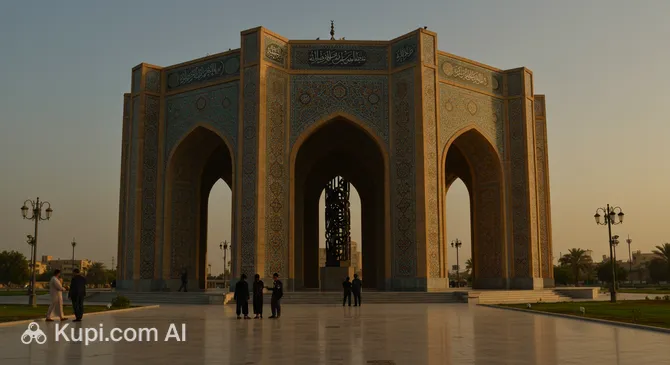
Baghdad Renaissance Monument. Illustration.
Source: Kupi.com AI

Traveler photos:

The monument is a cylindrical stone column with a surface adorned with cuneiform decoration, referencing the ancient history of Mesopotamia. However, the most striking and memorable feature of the monument is its depiction in a state of falling—the column is shown cracked and tilted, which creates a strong dramatic effect and invites reflection on its meaning.

Such an original design carries the idea of resilience and the desire for renewal. Despite its apparent fall, the monument symbolizes not so much destruction as the process of overcoming difficulties and rebirth, which is reflected in its name. This makes it more than just an architectural object; it is a powerful symbol of hope and the indomitable spirit.

The Baghdad Renaissance Monument is an important part of the cultural heritage of Baghdad, a city with a centuries-old history. It serves as a reminder of a rich past and an aspiration for the future, making it an interesting site for anyone wishing to better understand the history and culture of this ancient land.

Contacts

The Baghdad Renaissance Monument is an open-air monument, so it does not have specific contact information for visitors. To find your way to the monument, please use city maps. Additional visitor information can also be obtained at tourist information centers in Baghdad.

How to contactContact
Address89RQ+GPR, Baghdad, Baghdad Governorate, Iraq

What to Do

A visit to the Baghdad Renaissance Monument provides a unique opportunity to experience the contemporary art and architecture of Baghdad. Tourists can take impressive photos of this monumental structure and closely examine the details of its cuneiform decoration, which carries deep symbolic meaning. It is an excellent place to reflect on the artistic intent of the creators and appreciate its realization in metal and stone.

This monument is of particular interest to admirers of modern architecture and monumental art. Viewing the Baghdad Renaissance Monument will be an important part of your introduction to the cultural heritage of Iraq. To gain a more complete understanding of the city's rich history and culture, it is also recommended to visit other attractions in Baghdad. The city is famous for its architectural monuments from various eras—from ancient Abbasid-era mosques and Ottoman-period palaces to modern museums, each telling its own unique story.

Getting There

The Baghdad Renaissance Monument is located in the capital of Iraq, the city of Baghdad. Like most of the city's attractions, it can be reached in several ways, depending on your location and preferences.

Taxis are often the most convenient option for tourists. You can order a car from your hotel or hail one on the street. A trip from central Baghdad to the monument likely won't take long, but it's always a good idea to confirm the route and approximate cost with the driver before starting the journey. This will help avoid misunderstandings and make your trip more comfortable.

If you prefer public transport, it's worth researching the local bus routes that pass through the area of the Baghdad Renaissance Monument. Information about routes and stops can be found online or by asking locals. However, keep in mind that this method may require more time and some knowledge of the local area.

Nearest city: Baghdad

History & Facts

The "Baghdad Renaissance" monument likely symbolizes the city's rich, centuries-old history and its capacity for renewal and development. Baghdad itself, founded in 762 as Madinat al-Salam ("City of Peace") by Caliph al-Mansur, was originally a masterpiece of urban planning. It was conceived as a perfectly circular city, a pioneering solution for its time, and quickly became one of the most important centers of the world. While specific details about the monument itself—such as its creation year, the sculptor's name, or the exact event it commemorates—are not specified in available records, its name speaks volumes about the spirit of the city.

According to historical accounts, the walls of ancient Baghdad reached an impressive height of 24 meters, protecting this thriving cultural and political center. Over the centuries, the city has lived through various eras, and its appearance has changed. Significant changes occurred in the 20th century, especially in the 1950s, when a large-scale reconstruction began: streets were straightened and oriented along major transport arteries and the Tigris River. These transformations became an important milestone in the city's modern history.

This period can be considered one of the significant stages of Baghdad's "renaissance," which may have inspired the creation of such a monument. While the city's area was about 6 square kilometers at the beginning of the 20th century, the urban agglomeration grew more than tenfold by its end, demonstrating impressive dynamics. Although street development became more spontaneous over time, modern Baghdad largely retains traces of the original circular structure envisioned by its founder.

Thus, the "Baghdad Renaissance Monument" serves as a reminder not only of a glorious past but also of the continuous process of renewal and the resilience of this ancient city. On its streets, buildings from different eras exist harmoniously, each telling its own unique part of the story of Baghdad—a city that has repeatedly proven its amazing ability to revive and develop throughout the centuries.

Time Needed

Visiting the Baghdad Renaissance Monument usually doesn't take much time, as it is primarily a monumental structure designed for contemplation. For most visitors, 30–60 minutes is enough to view the monument from different angles, take photos, and soak in its atmosphere and symbolic meaning.

The time spent at the monument can vary depending on your interest in modern sculpture and the history of Baghdad. If you plan just a quick look, 15–20 minutes might suffice. However, if you want to more thoughtfully study the details of the composition, perhaps read any available information nearby, or simply sit and reflect, it is worth setting aside about an hour.

Overall, a visit to the Baghdad Renaissance Monument is easy to fit into a broader city walk, as it doesn't require a long stay. Also, consider the travel time to the monument itself when planning your route through the capital of Iraq.

Working Hours

Unfortunately, precise information regarding the opening hours of the Baghdad Renaissance Monument in Baghdad is currently unavailable. There is also no information on whether advance ticket booking or registration is required for a visit.

We recommend checking the current schedule before your visit, finding out if the monument is open year-round or during specific seasons, and clarifying the visiting conditions on the official website of the attraction (if one exists) or at local tourist information centers in Baghdad. This will help you plan your trip in the best possible way and avoid any potential inconvenience.

8:00 – 21:00

Nearby

After seeing the Baghdad Renaissance Monument, don't be in a hurry to leave the area. Baghdad is a city with a thousand-year history, and its surroundings offer many interesting discoveries that will complement your experience and allow for a deeper understanding of Iraq's cultural heritage.

A walk through the nearby streets will allow you to discover other significant sites, each holding its own piece of history and the atmosphere of this ancient city. Below is a list of some attractions located nearby.

NameDistance
Haydar-Khana Mosque0.1 km
Qishla of Baghdad0.2 km
Al-Mutanabbi Street0.2 km
Rasul Kahi Geymar1.3 km
Iraqi National Museum1.5 km
Al-Sarafiya Bridge2.1 km
Tahrir Square2.3 km

Have you reached the end of the page?

So the route has been studied inside and out