Support

Iraqi National Museum

About

The National Museum of Iraq is not just a museum, but the largest and oldest repository of priceless artifacts in Iraq. Located in the capital city, Baghdad, in the Al-Alawi Al-Hilla district, it serves as the main center for preserving the rich cultural heritage and historical memory of the Iraqi people.
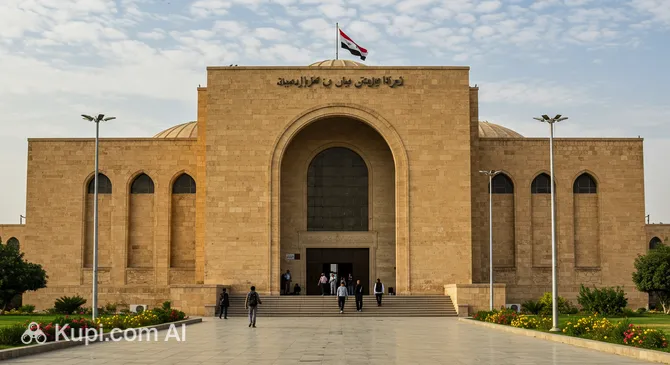
Iraqi National Museum. Illustration.
Source: Kupi.com AI

Traveler photos:

Within the walls of this significant institution, an extensive collection of relics and archaeological finds has been gathered, telling the story of the centuries-old history of the ancient civilizations of Mesopotamia. The museum's exhibition is housed in 28 spacious galleries and vaults, where each exhibit tells its own unique story, allowing visitors to take a journey through time.

The collection's particular pride and value are the unique gold items from Nimrud, which joined the museum's holdings in 1988. These artifacts are considered one of the richest and most significant archaeological finds of the 20th century, attracting the attention of both specialists and ordinary tourists interested in ancient history and art. A visit to the National Museum of Iraq is an opportunity to touch the origins of world civilization and appreciate the greatness of the cultures that flourished on this land.

Contacts

To get the most up-to-date information on opening hours and contact methods for the National Museum of Iraq, it is recommended to visit the museum's official website or contact tourist information centers in Baghdad.

There you can find accurate contact details, including phone numbers and email addresses, as well as information about any possible changes to the schedule.

How to contactContact
Address89HP+62J, Baghdad, Baghdad Governorate, Iraq
Websitewww.theiraqmuseum.com

What to Do

A visit to the National Museum of Iraq in Baghdad is a unique opportunity to touch the centuries-old history of Mesopotamia, one of the cradles of civilization. In the museum's more than 20 galleries, a rich collection of artifacts is presented, covering various historical eras. You will be able to trace the development of culture in the territory of modern Iraq, starting from the most ancient times, and see authentic evidence of the lives of the Sumerians, Akkadians, Babylonians, and Assyrians.

Particular attention is drawn to exhibits demonstrating the superior craftsmanship of ancient artisans. Among them, the unique gold items from the Nimrud Treasury stand out, considered one of the most significant archaeological finds of the 20th century. These exquisite pieces of jewelry and household items are striking in their detail and preservation. In addition, the museum's halls feature massive ancient statues and sculptures, which, due to their impressive size and weight, remained in place even during the museum's most challenging times.

A walk through the halls of the National Museum of Iraq is not just viewing exhibits, but a true immersion into the past. You will be able to see firsthand objects used by people thousands of years ago and learn about their beliefs, art, and daily life. The museum provides a rare opportunity to appreciate the scale and significance of Mesopotamia's cultural heritage, which has left an indelible mark on world history.

Getting There

The National Museum of Iraq is located in the country's capital, Baghdad, in the Al-Alawi Al-Hilla district. Due to its central location, reaching the museum is relatively easy from various parts of the city.

The most predictable and often most comfortable way to get to the National Museum of Iraq is by taxi. You can call a car from your hotel or hail one on the street. A trip from central districts of Baghdad to the museum usually doesn't take long, though potential traffic jams should be considered, especially during rush hour. Give the driver the museum's name—"National Museum of Iraq" (Al-Mathaf Al-Watani Al-Iraqi)—or its location in the Al-Alawi Al-Hilla district.

Information about specific public transport routes going directly to the museum may be limited. However, if you prefer public transport, it is recommended to check locally—at your hotel, with locals, or at tourist information centers—about the most convenient bus routes that pass near the Al-Alawi Al-Hilla district. You might need to walk some distance from the nearest stop.

Nearest city: Baghdad

History & Facts

The National Museum of Iraq, located in Baghdad, has a fascinating history. It was founded in 1923 thanks to the efforts of British archaeologist and writer Gertrude Bell. Driven by the idea of helping the people of Iraq discover the richness of their ancient history and strengthen their national identity, Bell personally supervised archaeological excavations and meticulously studied the artifacts found. It was her enthusiasm and dedication that laid a solid foundation for the formation of a unique museum collection.

Originally known as the Baghdad Archaeological Museum, it found its first home in the palace of King Faisal I. However, as early as 1926, the growing collection moved to a separate building on Al-Ma'mun Street, where the museum first opened its doors to the general public. Over time, as archaeological expeditions brought more and more priceless finds, the modest premises could no longer accommodate the thousands of exhibits. It was only in 1966 that the National Museum of Iraq moved into its current, more spacious building, specifically designed to house its extensive and constantly growing collections.

One of the landmark events in the museum's history was the addition of unique gold items discovered during excavations of the ancient city of Nimrud in 1988. This find is considered one of the most important archaeological discoveries of the 20th century and significantly enriched the exhibition. During the same period, the first catalog of the museum's collection was published, though it quickly became outdated as the museum's holdings continued to be actively supplemented with new valuable artifacts testifying to the region's immense cultural heritage.

Time Needed

When planning a visit to the National Museum of Iraq in Baghdad, it is worth allocating at least 2-3 hours to view the main exhibitions. This museum holds a vast collection of artifacts spanning millennia of Mesopotamian history, one of the cradles of civilization. A quick tour will provide a general overview of the key exhibits.

If you are deeply interested in ancient history, archaeology, or the region's art, a full immersion in the museum's collections may take half a day or even more. The museum has numerous halls dedicated to different eras—from prehistoric times to the Islamic period. A careful study of the details, reading descriptions, and potentially visiting temporary exhibitions will significantly increase your stay.

Thus, for the average tourist wishing to see the main treasures of the National Museum of Iraq, setting aside about three hours would be optimal. This will allow you to walk through the main halls without rushing and form an impression of the cultural heritage of Iraq.

Working Hours

The National Museum of Iraq in Baghdad is one of the key cultural attractions of Iraq, and for planning your visit, it is important to check the current opening hours in advance. Usually, large national museums operate on a standard schedule, but hours can change depending on the day of the week, the season, or public holidays. It is recommended to visit the museum's official website or contact local tourist information centers for the latest information on opening hours and possible closing days.

Also, it is worth finding out if advance ticket booking is required, especially if you plan a visit during the peak tourist season or as part of a group. Although many museums are open year-round, confirming this information will help avoid inconvenience and plan your trip in the best possible way. Checking in advance will allow you to enjoy the museum's exhibition without any extra hassle.

DayOpening hours
Monday9:00 – 13:00
Tuesday9:00 – 13:00
Wednesday9:00 – 13:00
Thursday9:00 – 13:00
Friday9:00 – 16:00
SaturdayClosed
SundayClosed

Nearby

Visiting the National Museum of Iraq in Baghdad is, without a doubt, an immersion into the rich history and culture of the region. However, to make your trip even more fulfilling and memorable, it is worth paying attention to its surroundings as well. Exploring nearby attractions will allow you to deeper understand the city's multifaceted character and see how antiquity neighbors modernity.

A walk around the museum's district may reveal unexpected corners, introduce you to local flavor, and complement your impressions of the main exhibition. Below is a list of some interesting places located near the National Museum of Iraq that might interest you.

NameDistance
Al-Mutanabbi Street1.3 km
Qishla of Baghdad1.4 km
Baghdad Renaissance Monument1.5 km
Al-Zawraa Park1.6 km
Haydar-Khana Mosque1.7 km
Rasul Kahi Geymar2 km
Tahrir Monument2.2 km

Have you reached the end of the page?

So the route has been studied inside and out