Samarra is a true oasis of history and architectural wonders, a city with a unique atmosphere of antiquity stretching along the eastern bank of the majestic Tigris River. It is located approximately 130 kilometers north of Baghdad, the capital of Iraq, and extends over 40 kilometers along the river. Samarra serves as the administrative center of the district of the same name, which is home to about 158,000 people.
Founded in the 9th century AD under Caliph Al-Mutawakkil, Samarra briefly became the capital of the vast Abbasid Caliphate, which stretched from Tunisia to Central Asia. This period left the city a rich heritage that continues to attract researchers and travelers today. Ancient irrigation canals, some of which are still functioning, testify to the high level of engineering of that era.
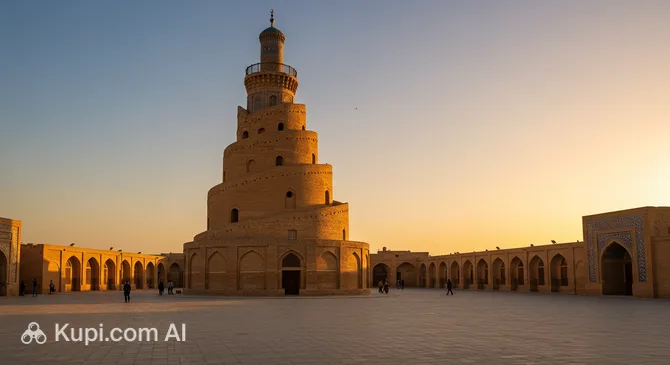
One of the most iconic landmarks of Samarra is undoubtedly the Great Mosque with its unique spiral minaret, the Malwiya. This 52-meter-high minaret, reminiscent of the ancient ziggurats of Mesopotamia, has become a true symbol of the city and one of the most recognizable monuments of Islamic architecture. Additionally, Samarra preserves the ruins of extensive palace complexes, such as the palace of Caliph Al-Mutawakkil, which impress with their scale and the remnants of their former glory.
Samarra is a place where every stone breathes history. If you are looking for authentic Eastern exoticism, dreaming of immersing yourself in the atmosphere of antiquity and discovering little-known gems of world civilization, a journey to Samarra will give you unforgettable impressions and allow you to touch the greatness of the past.
You can find more interesting facts on the Samarra city history page.