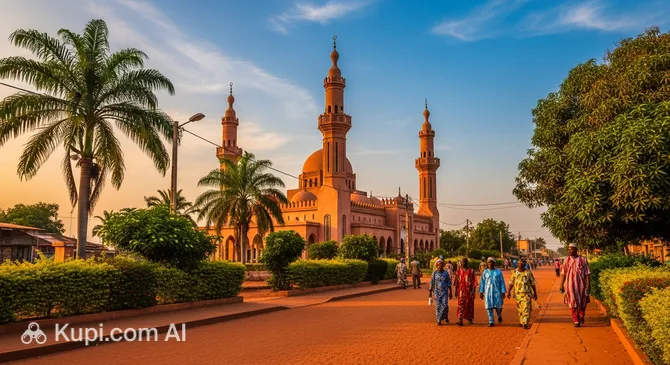
Daloa is one of the most important economic centers in the heart of Côte d'Ivoire. The administrative center of the Haut-Sassandra region, this city is permeated with an atmosphere of active trade and provincial comfort. With a population of over 421,000, Daloa is a typical West African hub where modern administrative buildings stand alongside bustling markets and traditional residential quarters.
The city's geographical location makes it a strategic junction at the intersection of the country's key trade routes. Surrounded by endless cocoa and coffee plantations, it lives to the rhythm of agricultural seasons. Although the city is not a classic tourist destination, its authenticity attracts those who want to see the real, off-the-beaten-path Côte d'Ivoire and learn about the lives of the Bété and Guro peoples.
Daloa. Illustration.
Source: Kupi.com AI
The fascinating history of the city's formation began in 1903, when a French military post was established on these lands. Over time, the settlement transformed into a powerful commercial center while maintaining the deep cultural roots of local ethnic groups. Unique crafts, such as wood carving, still flourish here, and oral traditions are passed down from generation to generation.
Visiting Daloa is an invitation to immerse yourself in the daily life of the region, where every intersection tells its own story. It is a city for travelers who appreciate sincerity, lively market interactions, and the opportunity to see how the economic heart of one of Africa's most dynamic countries beats.
Weather Overview
Daloa is dominated by a typical tropical climate with high humidity characteristic of the central regions of Côte d'Ivoire. Throughout the year, air temperatures remain consistently high, usually ranging from 25°C to 32°C. There are no traditional four seasons here; instead, the year is divided into rainy and dry periods, which directly affect the rhythm of life in this agricultural region.
Precipitation occurs mainly in two stages: from May to July and from October to December. During these months, rainstorms can be short but very intense, bringing long-awaited coolness but potentially making travel on unpaved roads difficult. The dry season is characterized by clear skies and dustier air, especially when the Harmattan wind blows, bringing dust from the Sahara. Before your trip, it's worth checking the current weather forecast in the city to choose the right clothing.
For tourists, the most comfortable time to visit is considered to be the months from January to March, when the probability of rain is minimal and the average air temperature is around 28-29°C. However, keep in mind that even during the dry period, humidity remains noticeable and the sun is very strong, so sunscreen and hats will be necessary at any time of year.
Average monthly temperature
Average monthly precipitation
Interesting Facts
According to local legend, the city's name comes from a woman's cry as she loudly called for her husband, "Dalo-a!". Europeans passing by mistook this shout for the name of the area and put it on their maps.
Daloa is officially considered one of the world's largest centers for the collection and redistribution of cocoa beans. It is from here that a significant portion of Ivorian cocoa begins its journey to the world's chocolate factories.
The city was founded in 1903 as a French military post and by 1912 had become the most important administrative center of the Haut-Sassandra region.
Four key trade routes intersect in Daloa, connecting the northern, southern, western, and eastern regions of the country, making it the "main crossroads" of central Côte d'Ivoire.
The region around the city is the cradle of unique Bété wood carving, whose masks are highly valued by African art collectors worldwide.
How to Get There
Daloa is an important transport hub in Côte d'Ivoire, though its accessibility depends largely on road quality and seasonal conditions. The primary way to reach the city for most travelers remains ground transport. Regular bus services and shared taxis connect Daloa with the country's largest centers.
The journey from the economic capital, Abidjan, usually takes between 6 and 8 hours. The road passes through picturesque plantations, but travelers should be prepared for traffic jams leaving the metropolis and checkpoints along the highways. From the political capital, Yamoussoukro, the journey is significantly shorter, taking about 3–5 hours. The city also serves as a transit point for those heading to the western regions of the country, such as towards the city of Man.
For those who prefer to save time, air travel is an option. Daloa Airport (IATA: DJO) handles regional flights, primarily from Abidjan. The flight lasts just over an hour; however, flight schedules can be irregular and require prior verification. You can reach the city center from the airport by taxi in 20–30 minutes.
There is no direct rail service to Daloa itself, so travelers who prefer trains will have to combine modes of transport, using the nearest stations in other regions and transferring to buses.
Station
Passenger traffic
Distance
Bouaké railway station
2
179 km
Main Attractions
Daloa is primarily a hard-working city, so you won't find the usual architectural masterpieces or amusement parks here. The city's main attractions are its central markets. These are true theaters of life, with brisk trade in cocoa, coffee, and kola nuts. Walking through the stalls, you can see mountains of yams, plantains, and cassava, and experience the unique atmosphere of a West African bazaar.
For those interested in local culture, the Bété craft workshops are of great interest. The artisans of this region are famous for their masterful woodworking skills. While the city lacks large specialized museums, small shops and private workshops offer a glimpse into the creation of ritual masks and everyday objects that are an essential part of the locals' cultural code.
In the city center, the Haut-Sassandra regional administrative buildings and central squares serve as landmarks. These places are the main gathering points for citizens, where public events and celebrations are held. The atmosphere of Daloa is best felt in motion: at bustling intersections, in the dust of trade roads, and in the sincere smiles of locals going about their daily business.
Local Cuisine
The gastronomic profile of Daloa is a vibrant blend of traditional Ivorian flavors, where the main role is played by products grown in the surrounding fertile lands. The staple diet of the locals consists of yams, rice, plantains, and cassava. The cuisine of the Bété and Guro peoples is known for being hearty and featuring an abundance of aromatic, often quite spicy sauces.
One of the main dishes you must try is fufu—a thick dough made from pounded cassava or yams, served with various soups. Especially popular is sauce graine, made from the fruit of the oil palm. This thick, rich sauce with fish or meat is considered a true regional delicacy. You can also frequently find fried plantains known as alloco on the city streets, which serve as an excellent snack.
The food culture in Daloa is centered around markets and small street eateries called "maquis." This is where the locals eat, and it's where you'll find the most authentic food. Popular drinks include freshly squeezed juices, palm wine, and kola nuts, which locals often use as a natural stimulant. In the city center, you can also find small cafes where French influence is felt, serving fresh baguettes and strong coffee for breakfast.
Travel Tips
Preparing for a trip to Daloa requires considering the specifics of the region to ensure your journey is comfortable and safe. Here are some practical tips to help you settle into this busy trading hub more quickly.
Clothing and Essentials: Choose light, breathable cotton clothing, as the city experiences high humidity. During the dry season, Daloa can be very dusty, so bringing sunglasses and a light scarf is a good idea. Comfortable shoes are a must, as roads often do not have smooth surfaces.
Transport: To move around the city, it is best to use taxis or moto-taxis. Always agree on the price of the ride beforehand, as there are no meters here. Be prepared for traffic in the city center to slow down significantly during peak hours.
Finances: The main currency is the CFA franc. Cards are rarely accepted, only in a couple of large hotels, so always carry a supply of cash in small bills for paying at markets and for transport.
Health: Having a yellow fever vaccination certificate is a mandatory requirement for entry into the country. Drink only bottled water and use insect repellents.
Communication: The official language is French. English is not widely spoken, so learn a few basic phrases for greetings and asking for prices. A local SIM card with mobile internet can be easily purchased in the city center.
Local Etiquette: When entering a shop or addressing a passerby, always start with a polite greeting. Local residents highly value friendliness and openness in communication.
What to Avoid: It is not recommended to walk alone after dark, especially in remote areas and on the outskirts. Also, try not to display expensive jewelry or large sums of money in crowded places.
Specific Tip: If you plan to buy cocoa or coffee in large quantities as a souvenir, check the rules for transporting them at the airport, as wholesale batches may require special documents.
Following these simple rules will allow you to focus on exploring the local culture and will make your visit to Daloa a pleasant and memorable event.
Entertainment & Nightlife
Nightlife in Daloa is quite calm and local, reflecting the overall atmosphere of an agricultural and administrative center. There are no massive nightclubs or loud discos like in the country's economic capital; however, the city offers its own unique ways to spend an evening. Most after-dark activity is centered in small local bars and cafes located near the markets and in the central quarters.
The crowd in such establishments consists mainly of locals and businesspeople in town for trade. In the evenings, you can often hear live performances of traditional Bété music or popular modern African rhythms. The atmosphere is very relaxed, there is no dress code, and prices remain very affordable. It is a great opportunity to try local beer or palm wine in the company of the townspeople.
For those seeking large-scale entertainment, it is worth noting that major festivals and concerts more often take place in Yamoussoukro or Abidjan. Daytime leisure in Daloa mostly revolves around markets and church holidays, which are celebrated on a grand scale with singing and dancing. For safe travel around the city at night, it is recommended to use official taxis.
Parks & Museums
In terms of traditional tourist sites, Daloa is a very modest city. You won't find large national museums or art galleries here. The city's cultural heritage lives not in exhibition halls, but directly on the streets, in artisan workshops, and in the traditions of the local residents. Small displays of Bété artifacts can sometimes be found in administrative buildings, but they are not public museums in the traditional sense.
Greenery within the city itself is minimal and limited to small squares near administrative buildings in the center. However, Daloa is surrounded by magnificent nature. The city is located in a savanna zone that gradually transitions into forest tracts in this region. While there are no large parks within the city limits, the vast agricultural lands and cocoa plantations surrounding it create a kind of "green belt" that provides natural ventilation for the city.
For a proper nature retreat, residents and guests usually head outside the city limits. Daloa can serve as a base for those planning expeditions to more remote national parks in the country. Nevertheless, a simple walk on the outskirts of the city toward the plantations will allow nature lovers to see the authentic rural landscapes of Côte d'Ivoire that rarely make it into the camera lenses of ordinary tourists.
Getting Around
The public transport system in Daloa reflects the city's dynamic and somewhat chaotic rhythm. There is no metro or trams, and the main burden falls on minibuses, which locals call gbakas. They connect residential neighborhoods and major markets. This is the cheapest but also the most crowded form of transport, especially during peak hours from 7 to 9 AM and 5 to 7 PM.
A more maneuverable and popular alternative are the moto-taxis, known as zemidjans. They allow for quick navigation through traffic jams and dusty streets, delivering passengers to any point in the city. Regular taxis also operate in Daloa. Fares are usually not fixed, so it is worth negotiating the price with the driver in advance, before the trip starts. Payment is made exclusively in cash.
Pedestrian zones are practically non-existent in Daloa, and sidewalks are often occupied by market stalls, making walks through the city center quite a challenge. Bicycles are rare due to the high humidity and heat. Travelers are advised to plan their movements to avoid peak hours when the central streets around the markets become almost impassable due to traffic congestion.
Accommodation
The choice of accommodation in Daloa is primarily oriented toward practicality. Since the city is not a mass tourist destination, mid-range hotels and small guesthouses predominate, catering to business travelers, traders, and employees of international organizations. Most hotels are concentrated in the central district and near the DJO airport, which is convenient for quick access to markets and administrative offices.
A typical accommodation option in the city is a simple, functional room with basic amenities. There are no luxury five-star international chain hotels here, but you can find perfectly comfortable and clean establishments with air conditioning and secure parking. For those planning to stay in the region for a long period, such as expats, renting apartments in the city center is a popular choice.
Price ranges in Daloa are considered low compared to Abidjan. It is recommended to book accommodation in advance if your trip coincides with major religious holidays or the peak harvest period, when many buyers flock to the city. Payment in smaller hotels is most often made in cash in the local currency (CFA francs), so it is wise to ensure you have the necessary amount on hand.
Nearby Cities
The city of Daloa serves as an excellent starting point for exploring the central and western parts of the country. Several interesting settlements are located around it, each with its own unique character and potential as a destination for an interesting trip.
Just 78 kilometers away is the city of Bouaflé, famous for its picturesque surroundings and traditional markets. If you drive a bit further southeast, you can visit Gagnoa—a major center of the Gôh region, known for its cultural traditions. For those who want to see the life of smaller settlements, Bonoufla or Louenoufla, located very close to Daloa, are excellent choices.
Traveling through the surroundings of Daloa allows for a better understanding of the diversity of the region's cultural landscapes. Although distances may seem small, plan your trips considering the road conditions and choose morning hours for departure to ensure you return before sunset.
Shopping & Souvenirs
Shopping in Daloa is, first and foremost, a trip to the massive city markets. There are no glittering shopping malls with global brands here, but there is an abundance of the goods for which this region is famous. The main interest for travelers lies in export products: high-quality cocoa and coffee. These can be purchased in their pure form or as local souvenirs that will long remind you of the scents of Africa.
The craft markets deserve special attention. Daloa is known as a center of Bété culture, whose masters create amazing wood products. Here you can buy authentic ritual masks, figurines, and household items decorated with intricate carvings. The markets also offer a large selection of bright African fabrics and traditional clothing sewn by local tailors.
Shops and stalls usually open early in the morning and work until sunset. It should be noted that in Daloa, cash (CFA francs) is accepted almost everywhere, and in the markets, bargaining is not only appropriate but is an important part of the purchasing ritual. If you are looking for an unusual gift, look out for kola nuts—a local symbol of hospitality and energy often sold in woven baskets.