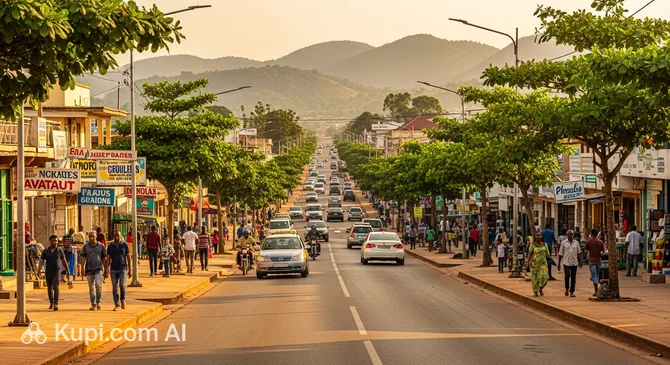
Gagnoa is a dynamic administrative center of the Gô region in Côte d'Ivoire, serving as a vital economic and logistical hub for the country. Located in the heart of a fertile forest massif, this city of approximately 277,000 residents is a key link in the famous "cocoa loop." Life here is bustling and closely tied to agriculture, with the air thick with the business activity of a trade center connecting plantations to international markets.
Gagnoa. Illustration.
Source: Kupi.com AI
The rich history of Gagnoa is inextricably linked to the Bété people, for whom the city serves as a cultural capital. Their traditions and language shape the settlement's unique identity, making it a fascinating destination for those wishing to experience authentic West African life. Unlike the coastal tourist hubs, Gagnoa offers an honest look at the region's daily life, where modern trade exists alongside age-old customs.
While the city is not geared toward mass tourism, its authentic atmosphere and role in cocoa production make it appealing to curious travelers. We invite you to discover this "heart" of Ivorian agriculture and feel the rhythm of a real African city.
Weather Overview
Gagnoa is under the influence of a typical tropical climate, where the year is clearly divided into two seasons. The dry period lasts from November to April, while the wet season spans the months from May to October. Due to its location in the heart of the forest massif, the weather in Gagnoa is characterized by high air humidity throughout the year, which is especially noticeable during the summer months.
The temperature remains consistently high, with averages ranging between 25–29°C. The hottest months are February and March, when daytime maximums can reach 34–35°C. During the rainy season, especially in September and October, heavy precipitation occurs, which sometimes makes traveling on regional roads difficult but gives the surroundings lush greenery.
Average monthly temperature
Average monthly precipitation
Interesting Facts
Gagnoa is a place with deep roots and significant economic importance, hiding many interesting details behind its facade as an agricultural center.
The city's name originates from the language of the Bété people, who historically inhabited these lands and still maintain a strong cultural influence here.
The city is a vital hub of the so-called "cocoa loop"—a region that accounts for a significant share of global cocoa bean production.
The French colonial administration chose Gagnoa to govern the territory specifically because of its strategic location in the very center of fertile lands.
In the 20th century, the city's rapid population growth was directly linked to the "coffee and cocoa boom," which transformed a modest settlement into a major commercial center.
How to Get There
There are several ways to reach Gagnoa, located in the heart of the Gô region. The city is approximately 180 km from the country's largest port, Abidjan, and 250 km from the official capital, Yamoussoukro. Before planning your trip, we recommend reviewing detailed information on how to get to Gagnoa, taking local logistics into account.
The primary mode of transport is by car or bus via regional roads. The journey from Abidjan usually takes 4 to 5 hours, though road conditions during the rainy season can significantly increase travel time. For those who prefer air travel, the city has its own Gagnoa Airport (IATA: GGN), although scheduled flights are infrequent.
Rail service in this region is poorly developed, so most passenger traffic is split between road transport and aviation. Travelers should plan their logistics in advance, especially if the trip is planned during the wet season when roads may be difficult to navigate.
Station
Passenger traffic
Distance
Bouaké railway station
2
198 km
Gare ferroviaire Treichville
2
234 km
Main Attractions
Although Gagnoa is not considered a classic tourist destination, the city preserves the region's unique cultural heritage. One of the main points of interest is the local Museum, housed in the grand building of the former colonial governor's residence. Here, you can trace the region's history from pre-colonial times to the era of independence through collections of traditional ceramics, ancient tools, and archival photographs.
Those wishing to see authentic architecture should stroll through the historical center. You can still find traditional "ting" style houses with their characteristic thatched roofs. These buildings serve as a living reminder of the ancient building traditions of the Bété people, blending harmoniously into the modern urban landscape.
The true heart of Gagnoa is its Central Market. Every day from early morning, a massive spectacle unfolds: traders offer the freshest catches and mounds of fragrant African spices. Visiting the market is the best way to feel the city's energy and see the diversity of products for which this fertile land is famous.
Local Cuisine
The gastronomy of Gagnoa is a vibrant combination of traditional African flavors and the bounties of the generous Ivorian land. Be sure to try the local interpretation of "attiku"—tender meat served under a rich nut sauce—as well as the famous "fufu" porridge made from cassava. These dishes form the basis of the local diet and best convey the culinary character of the region.
A special place in the local cuisine is held by "graine" sauce, prepared from palm nuts. It is considered one of the most delicious sauces in the world, and in Gagnoa, it is made according to ancient recipes. Due to the proximity to trade routes, fresh seafood often appears on local tables: grilled tuna, sea bass, and juicy shrimp, generously seasoned with local spices.
To immerse yourself in the local food culture, head to the night markets that open on warm summer evenings. Here, you can not only taste street food prepared right in front of you but also purchase rare seasonings. The atmosphere of these markets is filled with the aromas of smoke, spices, and lively conversation, making dinner a truly memorable event.
Travel Tips
When planning a trip to Gagnoa, remember that it is primarily an economic and logistical hub, not a tourist resort. These tips will help you feel comfortable and confident during your visit.
Clothing and Essentials: Choose clothing made of light, natural fabrics. If your trip falls between May and October, be sure to bring a high-quality raincoat and sturdy, closed-toe shoes.
Transport: The main means of getting around the city are shared taxis and moto-taxis. For intercity travel, it is better to use official bus companies.
Finances: The official currency is the West African CFA franc (XOF). Always carry enough cash, as bank cards are rarely accepted.
Health and Safety: Follow general precautions: drink only bottled water and avoid traveling at night.
Communication: The official language is French. Knowing even basic phrases will significantly simplify communication with locals, as English is not widely spoken.
Local Etiquette: Always greet people politely when entering a shop or starting a conversation. It is customary to address elders with special respect.
What to Avoid: It is not recommended to photograph government buildings without special permission.
Seasonality: If possible, avoid traveling during the peak of the rainy season (May-October), when roads can become difficult to navigate.
May your introduction to this unique corner of Africa go smoothly and bring only interesting discoveries!
Entertainment & Nightlife
The entertainment infrastructure in Gagnoa is more social and cultural than commercial. Life here slows down earlier than in the mega-cities, but that doesn't mean the evenings are dull. The main event of the year is the annual "Sounds of the Ocean" festival, held in July. It is a vibrant celebration of traditional music and dance, where representatives of various coastal tribes gather to showcase their skills.
On ordinary days, the night markets become the epicenter of evening activity. These are not just places for trade, but true hubs for social interaction. Here, you can meet local artisans, purchase unique jewelry made from cocoa wood beads, and enjoy the atmosphere of an African evening accompanied by the sounds of leisurely conversation and the aroma of roasted spices.
For fans of classic nightlife—clubs and bars with modern service—the selection is limited. The main establishments are concentrated in the city center, but their format is oriented toward local residents. If you are looking for vibrant nightlife, it is better to plan trips to larger cities like Abidjan or Yamoussoukro, where the entertainment industry is much more developed.
Parks & Museums
Despite Gagnoa being surrounded by dense forests, urban park areas are modestly represented. One of the most significant initiatives in this field is the Ecotourism Center, opened in 1998. It was the first project of its kind in the country, aimed at educating tourists and locals on the principles of sustainable development and respect for the region's nature.
The cultural program should begin with a visit to the city Museum. Located in a historical building that once served as the colonial governor's residence, it is the main guardian of the past. Its halls house unique exhibits: from ancient ceramics and traditional tools to photographs capturing the stages of Gagnoa's development as an important trade hub.
The natural vegetation around the city replaces conventional parks, offering nature lovers the opportunity to see the untouched forests of West Africa. While there are few specialized recreation areas within the city limits, Gagnoa's geographical position in the center of a fertile region makes it an interesting starting point for studying tropical ecosystems.
Getting Around
The public transport system in Gagnoa reflects the rhythm of a typical African trade hub. The core of the urban fleet consists of shared taxis and maneuverable moto-taxis. The latter are particularly popular for moving quickly through the busy center, though tourists should exercise caution and agree on the fare in advance.
The city's road infrastructure is in average condition. During peak hours, traffic jams often occur in central areas, and during the wet season, the situation can become complicated due to the state of the road surface. There are no metro or tram systems in Gagnoa, so taxis remain the most accessible option for getting around the city.
For trips to other regions of Côte d'Ivoire, residents use intercity buses and collective taxis. Most private carriers do not have a fixed schedule—vehicles depart as they fill up. If you are planning a long-distance trip, it is best to arrive at the bus station in the morning hours, when the likelihood of a quick departure is highest.
Accommodation
The hotel sector in Gagnoa is primarily focused on business travelers and trade representatives, making the choice of accommodation quite specific. You won't find major international hotel chains in the city; instead, there are many small guesthouses and pensions. Most offer a modest but necessary set of amenities for a short-term stay.
The most convenient areas to stay are those located near the central shopping streets and transport hubs, which helps save time when moving around the city. Long-term apartment rentals are also popular in Gagnoa, which is convenient for those visiting the region for agricultural business or research purposes.
Given the limited choice of high-quality options, it is recommended to book accommodation in advance, especially if your visit coincides with regional holidays. Housing prices in the city remain quite affordable, but it is worth carefully researching available offers, as infrastructure for foreign tourists is limited.
Nearby Cities
Gagnoa serves as an excellent starting point for exploring the central and southern regions of the country. Thanks to its location, the city allows you to reach iconic places within a few hours, each possessing its own unique character.
Just 65 kilometers away is the city of Oumé, known for its agricultural traditions. A bit further, at 74 kilometers, lies the city of Divo, which is also an important hub in the cocoa production chain. For those ready for longer journeys, the paths to the country's largest metropolises are open: Abidjan with its modern rhythm and Yamoussoukro, where you can see the largest church on the planet.
Exploring the surroundings of Gagnoa will allow you to see the full diversity of the Ivorian landscape: from endless plantations to historical centers. Each of these destinations will provide new impressions and help you better understand the cultural code of this region.
Shopping & Souvenirs
Shopping in Gagnoa is primarily about experiencing the traditional markets where the real life of the city pulses. The main trading point is the Central Market. There is no glitz of modern shopping malls here, but there is an abundance of local products. Tourists come here for authentic African spices that fill the air with pungent aromas and fresh seafood.
If you are looking for memorable gifts, look for the works of local artisans at the night markets. The most original souvenirs from Gagnoa are jewelry and beads made from cocoa wood. It is also worth looking for woven handicrafts and traditional textiles that reflect the craftsmanship of the Bété people. There are virtually no Western-style specialized shopping centers in the city, so the entire shopping process is tied to traditional market trade.
Shops and stalls usually operate from early morning until noon, while night markets come alive on summer evenings. In most places, only cash is accepted, and the art of bargaining is an integral part of the purchasing process. Don't hesitate to discuss the price—in Gagnoa, this is not just a way to save money, but a form of polite social interaction.