Located on the picturesque shores of the Ébrié Lagoon, Attécoubé is one of the most colorful and lively communes of Côte d'Ivoire's economic capital. This suburb of Abidjan harmoniously combines the energy of a metropolis with the tranquility of natural landscapes, stretching to the northwest of the central business district. Its territory covers more than 46 square kilometers, a significant part of which is occupied by dense forests and water expanses, creating a unique "green suburb" landscape.
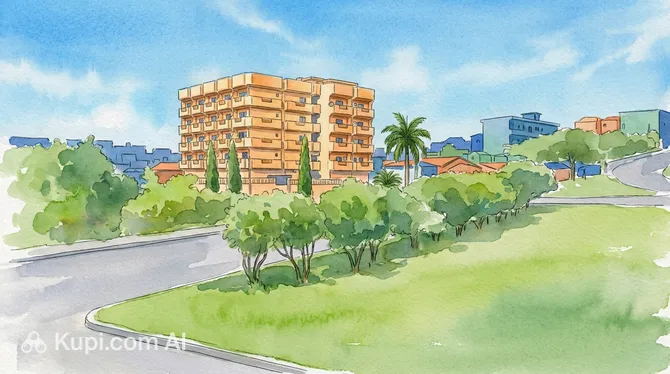
The rich historical heritage of Attécoubé dates back to the colonial era when these lands were actively used for harvesting valuable timber. Today, it is home to about 313,000 people, and the atmosphere is permeated with the daily bustle of working-class neighborhoods, the noise of local markets, and the calm of coastal zones. Attiécoubé. Illustration.
Source: Kupi.com AI
One of the main features of the district is its immediate proximity to Banco National Park—a real tropical rainforest in the middle of the city. Tourists are attracted not only by walks along the park's shaded paths but also by panoramic views of Baie du Banco. Attécoubé invites those who want to see the real, non-touristy side of the country, feel the rhythm of life of ordinary Ivoirians, and enjoy natural contrasts in the heart of an urbanized region.
Weather Overview
The weather in Attécoubé is determined by its equatorial location, which means stable warmth and high humidity throughout the year. The average air temperature usually fluctuates between 27–30°C, while the proximity of the lagoon and vast forests softens the heat but adds humidity to the atmosphere.
There are two distinct rainy seasons during the year: the main one occurs from May to July, and the second, less intense one, from October to November. During these periods, heavy downpours are possible, which, however, often give way to sunny weather. The driest months are considered to be January and February, when the weather is most comfortable for walking.
When planning a visit, it is worth considering the typical climate of the city: expect a warm summer with periodic tropical rains and a humid but mild winter. Evenings bring a pleasant coolness from the lagoon, though due to high humidity, even night temperatures rarely drop below 23°C.
Average monthly temperature
Average monthly precipitation
Interesting Facts
At the beginning of the colonial period, the territory of the current commune was a key center for the French timber industry due to the abundance of valuable wood in the surrounding forests.
More than half of the total area of Attécoubé is occupied by natural sites: about 30 km² is taken up by the forests of Banco National Park, and another 5 km² consists of the waters of the Ébrié Lagoon.
The city demonstrates rapid demographic growth: while about 165,000 people lived here in 1988, today the population has exceeded 313,000 residents.
The name of the Baie du Banco, which many houses in the commune overlook, is associated with legends about the purity of the local waters, which were considered sacred in the past.
Despite the dense construction, Attécoubé maintains its status as one of the "greenest" districts of the metropolitan area thanks to the strictly protected boundaries of the forest reserve.
How to Get There
Due to its location within the largest metropolitan area of Côte d'Ivoire, Attécoubé enjoys good transport accessibility. Most travelers arrive here via the country's main gateway located nearby, after which they use the local road network to move to the suburb. The transport infrastructure is constantly developing, connecting residential quarters with the business center.
The main hub for international and domestic flights is Félix Houphouët-Boigny International Airport (ABJ). It is located in the southern part of Abidjan. You can get from the airport to Attécoubé by official taxi in about 40–50 minutes. Comfortable buses running between the air hub and the metropolis's main transport hubs are also popular.
For those who prefer land routes, the commune is connected to other regions by rail. Although the stations are outside the district itself, access to them is not difficult. The main railway line connects Côte d'Ivoire with neighboring Burkina Faso, providing a flow of goods and passengers through Abidjan's central stations.
Station
Passenger traffic
Distance
Gare ferroviaire Treichville
2
5 km
Kojokrom Train Station
1
260 km
Bouaké railway station
2
282 km
Main Attractions
Although Attécoubé is considered a predominantly residential area, it hides several places that can interest an inquisitive traveler. The main pride of the commune is its proximity to Banco National Park. This is a vast area of virgin tropical forest that serves as the "lungs" of the entire region. Here, you can stroll along hiking trails, observing exotic birds and centuries-old trees, making the park an ideal place to escape the city noise.
For those who want to immerse themselves in the daily life of locals, the Attécoubé Central Market is a must-visit. This is a place where trade never stops for a minute: piles of bright fabrics, aromatic spices, and fresh catches from the lagoon create a unique atmosphere. A walk through the market is the best way to get acquainted with the culture and life of modern Africa.
The visual jewel of the district is Baie du Banco. From the shores of the commune, there are impressive views of the water surface and the silhouettes of skyscrapers in the neighboring Plateau district. Along the shore, you can find local fishermen and small shipyards where traditional boats are still built, preserving the ancestral craft traditions.
Local Cuisine
The culinary landscape of Attécoubé is a real feast for lovers of exotic flavors and simple, hearty dishes. The staple of the local diet is attiéké—grated and fermented cassava pulp, similar in appearance to couscous. It is traditionally served with grilled or charcoal-baked fish, caught directly from the lagoon, and a spicy sauce made from fresh tomatoes and peppers.
You should definitely try fufu (or foutou)—a thick mash made of yams or plantains, served with various sauces. Peanut sauce and a rich soup made from oil palm fruits are particularly popular. For meat lovers, local eateries prepare "choukouya"—spicy grilled meat with a smoky aroma.
Locals prefer to wash down spicy dishes with homemade soft drinks. Bissap, a bright red infusion of hibiscus flowers, and spicy ginger juice are excellent thirst-quenchers on a hot afternoon. In the markets of Attécoubé, you can find many street food vendors where food is prepared right in front of you, offering the freshest and most accessible gastronomic experience in the city.
Travel Tips
Planning a trip to Attécoubé requires considering local specifics to ensure your journey is comfortable and leaves only pleasant impressions. These practical tips will help you navigate life in the suburb and avoid common difficulties.
Clothing and Essentials: Choose light clothing made of natural fabrics, as the region has high humidity. Be sure to bring a reliable umbrella or raincoat if you plan to visit during the rainy season. For walks in Banco National Park, you will need closed, comfortable shoes.
Transport: To move around the commune, it is best to use "woro-woro" taxis. If you decide to use "gbaka" minibuses, be prepared for crowded conditions. Car rental is recommended only for experienced drivers due to complex traffic.
Finances: The official currency is the CFA franc. Cards are only accepted in large supermarkets, so always carry a sufficient supply of cash, especially small bills for the markets.
Health and Safety: Use insect repellents and check for mosquito nets in your accommodation to protect against malaria. Drink only bottled water. Avoid walking alone in unfamiliar residential quarters after dark.
Communication: The main language is French. English is not widely spoken, so learn a few basic phrases or use a translator. A local SIM card can be easily bought at any kiosk with a passport.
Local Etiquette: Greetings are very important—always say hello to vendors or taxi drivers. The residents of Attécoubé are friendly, but always ask for permission before photographing people or their stalls.
What to Avoid: Do not openly display expensive equipment or large sums of money in crowded places. Avoid criticizing local customs and show respect for the traditional way of life.
Additional Tip: Visit the markets early in the morning—this is the best time to see the bustling life of the commune and buy the freshest products without the midday heat.
May your acquaintance with Attécoubé be a bright discovery, full of interesting encounters and authentic African hospitality!
Entertainment & Nightlife
Nightlife in Attécoubé itself is local in nature and lacks metropolitan gloss, which makes it sincere and authentic in its own way. Most activity is concentrated in small street cafes and bars known as maquis. Here, live music in the style of reggae or Coupé-Décalé plays in the evenings, and locals gather to discuss the news over a cold drink and a portion of fried fish.
If you are looking for large-scale discos, modern cinemas, or elite clubs, you should head for entertainment to neighboring areas of Abidjan, such as Marcory or Cocody. A taxi ride will take from 15 to 30 minutes, and that is where the city's real social life thrives with international DJs and sophisticated cocktail bars.
Daytime leisure in the commune is most often associated with walks near the bay or attending football matches. Football for locals is more than just a sport, and on small fields or at the nearby Félix Houphouët-Boigny Stadium, you can always feel the excitement and incredible energy of the fans.
Parks & Museums
The main natural asset of Attécoubé is Banco National Park, which occupies almost two-thirds of the entire commune's area. This is a unique reserve of ancient rainforest, preserved right in the middle of the urbanized landscape. The park offers kilometers of shaded paths for walking and cycling, allowing tourists to see giant trees of valuable species, exotic butterflies, and birds. It is an ideal place for those seeking solitude and wanting to enjoy the silence of nature.
Although there are no major art galleries or historical museums within the commune itself, its proximity to the cultural center of Abidjan fully compensates for this. The National Library and key cultural institutes, where you can get acquainted with the contemporary art of West Africa, are just a few minutes' drive away. In Attécoubé itself, the traditional quarters by the lagoon, where the old way of life of fishing communities has been preserved, play the role of a "living museum."
Green zones along the Ébrié Lagoon also serve as places for recreation. Despite the dense construction, the coastal areas retain their natural charm, offering picturesque views of the water. A walk along the shore allows you to see how nature and the city coexist in this dynamic area, creating the unique landscape appearance of Attécoubé.
Getting Around
The transport system of Attécoubé reflects the dynamic nature of the suburb. The main means of transport for locals and tourists are minibuses known as "gbaka". They run on fixed routes, connecting the commune with other parts of Abidjan. This is the most affordable, though often crowded, type of transport, allowing for quick movement along the main highways.
A more comfortable alternative is provided by two types of taxis: orange cars that operate throughout the city, and "woro-woro"—taxis of a specific color (usually yellow or green) that only run within the district or along specific routes. The price for a taxi ride without a meter should be negotiated in advance. For greater freedom of movement, you can use ride-hailing apps, which are becoming increasingly popular in the region.
An important feature of transport in Attécoubé is traffic jams, especially during peak hours at the entrance to the business center. To avoid wasting time, plan your trips for the middle of the day. Bus and minibus fares are paid in cash to the driver or conductor. Despite some chaos, the system works quite efficiently, allowing you to reach any point in the metropolis without difficulty.
Accommodation
The tourist infrastructure in Attécoubé regarding accommodation is primarily oriented toward those seeking an authentic experience or planning a long stay. You will rarely find five-star chain hotels here, but there is a wide selection of private apartments and small guest houses. Such accommodation allows you to feel like part of the local community and often costs significantly less than in central districts.
The most convenient accommodation options should be sought near the city hall or along the main transport arteries, which will provide easy access to markets and public transport. For those who prefer classic hotel service with swimming pools and breakfasts, it is recommended to consider hotels in the neighboring Abidjan area, from where Attécoubé can be quickly reached by taxi.
When choosing accommodation, pay attention to the presence of air conditioning and mosquito nets on the windows, which is critical in a tropical climate. It is better to book options in advance through international services, especially if your trip coincides with major holidays or football tournaments, when the demand for affordable housing in the suburbs increases sharply.
Nearby Cities
Attécoubé is an excellent starting point for exploring the central part of the country and other districts of the metropolis. Due to its proximity to major transport interchanges, you can easily make exciting day trips from here, discovering the multifaceted nature of Ivorian culture and architecture.
Just a few kilometers away is Abidjan, specifically its business heart—the Plateau district. This is a place of contrasts, where futuristic skyscrapers sit alongside bustling markets. It is also worth visiting Yopougon, which is famous for its incredible festive atmosphere and an endless number of traditional open-air restaurants. For those seeking more elite leisure, the Cocody district with its spacious villas and green boulevards is a perfect choice.
Exploring the surroundings of Attécoubé will allow you to see Côte d'Ivoire from different perspectives: from the business bustle of Plateau to the relaxed atmosphere of coastal neighborhoods. Each of these destinations is accessible within a short taxi or public transport ride.
Shopping & Souvenirs
Shopping in Attécoubé is primarily an immersion into the atmosphere of traditional African markets, where trade is an important part of social life. The main point of attraction is the Central Market, where you can find everything from the freshest tropical fruits and seafood from the lagoon to everyday household items. There are no fixed prices here, so the ability to bargain will be your best tool for making good purchases.
If you are looking for special items, pay attention to the local textiles. Attécoubé's shops offer a huge selection of bright fabrics with traditional patterns, from which local tailors can sew clothes to order. It is also worth bringing back natural spices, cocoa beans, or homemade palm oil, which are famous for their quality.
For modern brands and large shopping centers, residents and guests of the commune usually head to neighboring districts of Abidjan. However, Attécoubé is exactly the place to buy handmade souvenirs: woven baskets, wooden products, and jewelry. Most shops are open from early morning until sunset, and payment is primarily accepted in cash in the local currency.