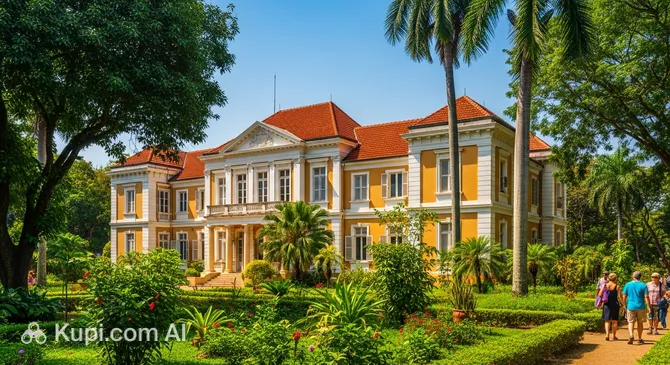
Bingerville is a colorful suburban town located in the Lagunes Region of Côte d'Ivoire, just 20 kilometers east of the country's economic capital, Abidjan. With a population of over 200,000, the city possesses a unique atmosphere where typical African urbanism intertwines with elements of rural life. Named after the first wife of the country's first president, it serves as an important administrative and residential hub while maintaining the spirit of everyday Ivorian bustle.
Geographically, Bingerville is nestled near the Guinea lagoon system, which leaves its mark on the city's appearance. There is no glitz of skyscrapers here, but instead an abundance of lively markets, dusty streets with low-rise buildings, and informal trade that creates a unique rhythm of life. For a tourist, this place can be interesting as a starting point for exploring the authentic lifestyle of local residents away from the tourist polish.
Bingerville. Illustration.
Source: Kupi.com AI
Delving into the history of the city's development, one can see how it transformed from a quiet settlement into a massive residential area, attracting people with affordable housing and tranquility compared to bustling Abidjan. We invite you to visit Bingerville to see Côte d'Ivoire as it truly is: hospitable, hardworking, and full of life.
Weather Overview
The climate in Bingerville is classic equatorial, which means stable warmth and high humidity throughout the year. The average air temperature fluctuates between 25–28°C, however, during the dry season, the thermometer often rises to the 31–32°C mark. Proximity to the ocean and lagoons brings a pleasant breeze that somewhat softens the tropical heat.
There are two distinct rainy seasons in the year: the main one occurs from May to July, and the second, less intense one, in October and November. During this time, rainfall can be very heavy, which sometimes leads to flooding on unpaved sections of road. If you are planning a trip, it is worth considering the city's climate, choosing drier months for your visit, such as January or February.
Precipitation in the region promotes lush green growth, making the city look very picturesque. The driest and sunniest month is usually January, when humidity drops slightly and the average temperature is about 27.5°C. At any time of year, it is recommended to have light clothing and sunscreen, as the African sun is active even on cloudy days.
Average monthly temperature
Average monthly precipitation
Interesting Facts
The city was named in honor of Jeanne d'Arc Pelli Binger, the first wife of the prominent leader and first president of Côte d'Ivoire, Félix Houphouët-Boigny.
Bingerville is situated at an elevation of only a few meters above sea level, which makes its climate particularly humid and promotes the rapid growth of tropical vegetation in the surrounding areas.
Despite its status as a "residential suburb," the city's population exceeds 200,000 people, making it comparable in size to some European capitals.
The ethnic composition of the city is extremely diverse: representatives of dozens of ethnic groups from Côte d'Ivoire live here, creating a unique melting pot of languages and traditions.
Unlike neighboring Grand-Bassam, Bingerville does not have UNESCO World Heritage status, but it is considered one of the fastest-growing administrative centers in the Lagunes Region.
How to Get There
Accessibility to Bingerville is closely linked to its proximity to the country's main transport hub, Abidjan. The city does not have its own airport, so travelers arrive at Félix Houphouët-Boigny International Airport in Abidjan, which is located about 20–25 kilometers away. You can learn more about various ways to get to Bingerville on specialized route planning pages.
The main artery connecting the city with the rest of the country is the RN1 road. A trip by taxi or minibus from central Abidjan usually takes 30 to 60 minutes. It is worth noting that traffic jams during rush hour are a common occurrence on Ivorian highways, and travel time can increase significantly. There is no rail service within the city itself, so the main focus when planning a trip should be on road transport.
For trips from more distant cities, such as Yamoussoukro or Bouaké, it is most convenient to first reach the bus stations in Abidjan and then transfer to local transport. Intercity bus fares are quite affordable, though the condition of the road surface in some sections may slow down your journey.
Station
Passenger traffic
Distance
Gare ferroviaire Treichville
2
16 km
Kojokrom Train Station
1
242 km
Bouaké railway station
2
288 km
Main Attractions
While Bingerville is not a classic tourist center with an abundance of world-renowned monuments, its main charm lies in the opportunity to observe the authentic, unvarnished life of the region. The centers of attraction here are the local markets and bustling squares where trade thrives from early morning until late evening. This is the perfect place for those who want to feel the energy of an African suburb, see mountains of exotic fruits, and meet local artisans.
The architectural appearance of the city is primarily shaped by administrative buildings and functional residential blocks. Nevertheless, the proximity to the lagoons allows for finding picturesque spots for walks where the water surface meets lush tropical greenery. Lovers of authenticity will appreciate the chaotic yet harmoniously unique layout that tells the story of the rapid growth of Ivorian cities.
For those seeking grander sights, Bingerville serves as an excellent base. The UNESCO-listed historic town of Grand-Bassam and all the cultural riches of Abidjan are very close by. Visiting Bingerville is a chance to see Côte d'Ivoire through the eyes of its residents rather than through the lens of a tour bus.
Local Cuisine
A gastronomic journey through Bingerville is an introduction to the most vibrant flavors of West Africa. The local diet is based on yams, cassava, and rice, which are served with rich sauces. Be sure to try the grain sauce (made from palm nut pulp) or the traditional peanut sauce, which give dishes a unique aroma and heartiness. One of the most popular dishes here is fufu—a thick dough made from boiled yuca or plantains.
Thanks to its proximity to the lagoons, you can always find the freshest fried fish in Bingerville, prepared right at the street markets with the addition of hot spices. No less popular is poulet (chicken), marinated in local herbs and fried to a golden crust. Street food in the city is not just a snack, but an important part of the culture, where a full meal can be had for a small amount of money (from 500 to 1,500 CFA francs).
Regarding drinks, it is worth trying palm wine (pueis), which has a specific sweetish taste, as well as fresh juices from tropical fruits: mango, pineapple, and papaya. You can round off your meal with a local beer. The city's cuisine is simple, hearty, and always based on fresh products from nearby farms, making it feel truly homemade and memorable.
Travel Tips
A trip to Bingerville will bring a lot of positive emotions if you prepare in advance for the peculiarities of the local pace of life. Here are a few tips to help you feel confident in this Ivorian city:
Clothing and gear: Choose light clothing made from natural fabrics (cotton, linen), as the humidity here is very high. Be sure to bring comfortable closed shoes for walking on dusty streets and a power adapter (usually Type C and E).
Transport: During daylight hours, use official taxis or wôro-wôro. For trips to Abidjan, plan your time with a buffer so as not to get stuck in multi-hour traffic jams at the entrance.
Finances: The main currency is the CFA franc (XOF). Cards are rarely accepted, mostly in large pharmacies or chain stores, so always carry cash. Mobile payments (MoMo) are also very popular.
Health: A yellow fever vaccination certificate is mandatory for entry. Drink only bottled water and use mosquito repellents.
Communication: The official language is French. English is not widely spoken, so learn basic phrases: "Bonjour" (hello), "Merci" (thank you), and "S'il vous plaît" (please).
Local Etiquette: Ivorians are very polite. It is customary to greet people when meeting, and it is better to ask for directions or the price at the market with a smile. Always ask for permission before taking a photo of a person.
What to Avoid: Do not walk alone after dark, especially in areas away from the main roads. Do not display large sums of money or expensive equipment in crowded places.
Additional Tip: Try the local coffee and cocoa—Côte d'Ivoire is world-famous for them, and you can find the freshest products in Bingerville.
Following these simple rules will make your introduction to the city comfortable and safe. We wish you an unforgettable journey and vivid discoveries in the heart of West Africa!
Entertainment & Nightlife
The entertainment infrastructure in Bingerville is primarily geared toward locals, making a visit here truly authentic. You won't find huge nightclubs or glamorous casinos here, but you can visit small street bars known as maquis. In these establishments, live music often plays on weekends, and the atmosphere is filled with genuine joy and friendliness.
For those craving a vibrant nightlife, sparkling lights, and dancing until dawn, the nearby Abidjan remains the primary destination. In just 30–40 minutes by taxi, you can reach the country's best restaurants and discos. However, even in Bingerville itself, evening life around the markets has its own charm: here you can try street food under the open sky and observe the evening rituals of the townspeople.
Daytime leisure in the city involves walking through local neighborhoods and watching artisans at work. Cultural life is represented by spontaneous events and festivals that often take place right on the streets. Despite the lack of large entertainment centers, Bingerville charms with its simplicity and the absence of the typical hustle and bustle of large metropolises.
Parks & Museums
Green zones in Bingerville are mainly represented by the natural tropical vegetation that surrounds residential neighborhoods. While there are no large, landscaped European-style parks in the city itself, its streets are adorned with majestic trees that provide much-needed shade on hot days. Walking on the outskirts of the city allows you to enjoy views of the lagoons and feel a closeness to nature without traveling far from the center.
In terms of cultural institutions, the city is geared toward the practical needs of its residents, so for classic museums and galleries, you will have to head to neighboring locations. The nearest major site for nature lovers is Banco National Park in Abidjan—a real tropical forest in the middle of a metropolis, which is a half-hour drive away.
The lack of large cultural centers in Bingerville is compensated for by its proximity to Grand-Bassam, where museums and colonial architecture are presented in abundance. The city itself remains a place where the main "exhibit" is the living history of its streets, reflecting the modern challenges and achievements of Côte d'Ivoire. This is a place for those who value real life more than museum displays.
Getting Around
The backbone of Bingerville's transport system is the wôro-wôro—shared taxis of a specific color that run on fixed routes. This is the most popular and affordable way to travel between the city and Abidjan. A ride usually costs between 300 and 500 CFA francs. Additionally, large buses regularly run between settlements; they are cheaper but often overcrowded, especially during rush hours from 7 to 9 AM and 5 to 7 PM.
For short trips within the city itself, local residents and tourists often use motorcycle taxis, known here as zoro. This is a fast way to bypass traffic jams on narrow streets, but it's important to remember safety: roads can be dusty and traffic can be chaotic. If you prefer comfort, it is better to call a regular taxi via mobile apps or negotiate with a driver on the street, discussing the price in advance.
Payment in public transport is made in cash to the driver or conductor. There are no ticket offices in the traditional sense; everything is based on direct communication. Tourists are advised to carry small bills and coins, as getting change from large sums can be an issue. Despite the absence of a metro or trams, the extensive network of route taxis allows you to reach almost any point in Bingerville and its surroundings.
Accommodation
The accommodation market in Bingerville is mainly represented by budget and mid-range options. It is difficult to find luxury five-star hotels here, but the city offers a decent selection of guesthouses and apartments for short-term or long-term rental. This is an excellent option for those seeking affordable housing near Abidjan's business center but preferring a quieter environment.
Prices for accommodation vary between 20 to 50 dollars per night, providing a basic level of comfort: air conditioning or a fan, Wi-Fi, and a convenient location relative to main roads. For tourists, the most convenient areas are those adjacent to the main highway connecting the city with the capital, as this significantly simplifies travel.
When planning a trip, it is recommended to book accommodation in advance through international services, although "on-the-spot" rentals are also common in the city. Bingerville is often chosen by expats and specialists working in the region, so the demand for high-quality furnished apartments is steadily high. By choosing to stay here, you get the opportunity to immerse yourself in the daily life of the city while remaining within easy reach of all the region's important sites.
Nearby Cities
Bingerville serves as an excellent starting point for exploring the surroundings of the Lagunes Region, offering travelers access to the country's key cities. Literally just a few kilometers away are lively districts, each with its own character and economic significance.
First and foremost, it is worth visiting the majestic Abidjan—the economic heart of the country with its skyscrapers, parks, and wide choice of entertainment. Also of interest are coastal areas such as Cocody, known for its architecture, and Port-Bouët, where the region's maritime activity is concentrated. For history buffs, a trip to Grand-Bassam, which can be easily reached by taxi, is a must.
Exploring nearby cities such as Koumassi or Marcory will allow you to better understand the structure of the capital region and see the contrasts between quiet suburbs and noisy shopping centers. A journey around the outskirts of Bingerville is always full of discoveries and new impressions.
Shopping & Souvenirs
Shopping in Bingerville is primarily a vibrant adventure at local markets. There are no huge air-conditioned shopping malls with international brands, but instead, there are rows of colorful fabrics, fresh exotic fruits, and traditional household items. The main trading areas are concentrated along the primary roads and in central squares, where trade doesn't quiet down until late evening.
If you are looking for something special, pay attention to local batik—hand-painted fabrics that make an excellent gift. Also worth bringing back from Bingerville are cocoa products, as Côte d'Ivoire is the world leader in its production. Small shops offer wood and ceramic crafts created by artisans from surrounding villages.
For more extensive shopping and visits to modern malls, residents usually head to Abidjan, specifically the Marcory or Cocody districts. In the city itself, shops operate on flexible schedules, often from early morning "until the last customer." Payment is mostly made in cash in West African francs (CFA), and the ability to haggle politely at the market will help you not only save money but also establish rapport with local vendors.