Support

Hakodate City Museum of Northern Peoples

About

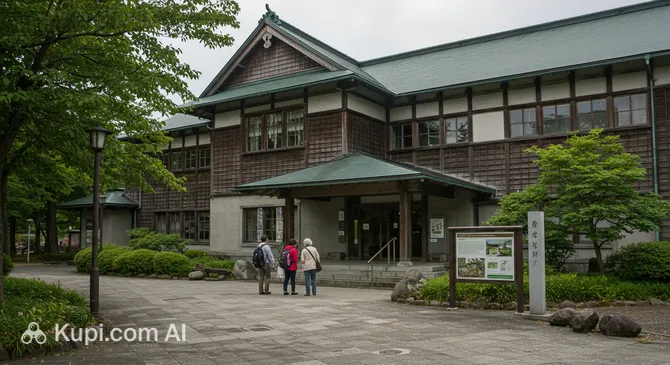
Imagine a massive historic building that once buzzed with the life of a financial center, now reigning with silence and respect for ancient traditions. The Hakodate City Museum of Northern Peoples in the city of Hakodate is a unique ethnographic space located in a former branch of the Bank of Japan, built in 1926. Here, Japan reveals a completely different side, introducing guests to the rich heritage of the indigenous peoples of the North.
\n\n

Hakodate City Museum of Northern Peoples
Hakodate City Museum of Northern Peoples. Иллюстрация. Источник: Kupi.com AI

\n\n

The museum is rightfully considered a treasury of folk culture. Its halls house about 750 priceless exhibits recognized as important Tangible Cultural Properties of the country. The core of the collection consists of daily life items and crafts of the Ainu—the indigenous people of Hokkaido—as well as materials related to the Orok people and other ethnic groups of the northern latitudes, from Siberia to Canada.

\n\n

Visitors can expect to encounter very rare artifacts, including one of the world's few surviving authentic Ainu boats. The museum harmoniously combines the functions of a scientific center, based on the works of famous anthropologists, and an architectural monument that carefully preserves the spirit of the Taisho era.

Contacts

For more information about visiting the museum, you can use the following contact details:

\n\n
How to contactContact
Address21-7 Suehirochō, Hakodate, Hokkaido 040-0053, Япония
Phone+81 138-22-4128
Websitewww.zaidan-hakodate.com

What to Do

A visit to the museum offers guests more than just a passive look at display cases; it is a true immersion into the world of northern traditions. In the thematic halls, you can see everything from intricate patterns on clothing and elegant jewelry to massive hunting tools and traditional dwellings. Particular attention should be paid to the collection of woven tapestries in the main hall, which describe the annual life cycle and customs of the Ainu in detail.

\n\n

For those who prefer an interactive format, the museum provides the opportunity to try their hand at folk arts. Here, you can master traditional Ainu paper cutting or even create your own musical instrument. On the second floor, there is a cinema room broadcasting rare archival video recordings made in the mid-20th century, allowing you to see the living traditions of northern peoples as they were decades ago.

\n\n

The exhibition also includes an interesting section dedicated to the culture of the Sea of Okhotsk, which clearly shows the similarities between various peoples of the North—from the Inuit and Sami to the indigenous inhabitants of Siberia. Thanks to the English information boards, every traveler will be able to understand the deep meaning hidden behind each exhibit in this amazing place.

Getting There

Getting to this cultural center in the city's historic district is easy. The most convenient way is to take the famous local tram. From Hakodate Main Railway Station, the trip takes about 8 minutes. You should get off at the "Suehiro-cho" stop, which is just a minute's leisurely walk from the museum entrance.

\n\n

If you prefer comfort, you can take a taxi directly from the central station or any point in the city. The ride will be short, as the museum is located in the heart of the tourist quarter, where many old Taisho-era buildings have been preserved.

\n\n

Walking to the museum is also an excellent choice, as it is situated in a picturesque area filled with historic architecture. Strolling through these streets, you can see firsthand what the city's financial center looked like at the beginning of the last century.

Ближайший город: Hakodate

History & Facts

The history of this place began not with museum halls, but with bank vaults. The building that houses the exhibition today was built in 1926 for the local branch of the Bank of Japan. The majestic architecture of that time still serves as a reminder of the period when the city was a key financial hub for the region, before this role passed to Otaru.

\n\n

The museum itself opened its doors in November 1989. Initially, its concept was broader, featuring materials on Northern peoples alongside an exhibition dedicated to the famous poet Ishikawa Takuboku. However, in 1993, after the literary section moved to a separate building, the museum was completely repurposed and took on its current unique form.

\n\n

The foundation of the collection consists of priceless artifacts collected in the 1930s by prominent researchers. Anthropologist Sakuzaemon Kodama and his colleagues performed a monumental task studying the life and culture of the indigenous inhabitants of Sakhalin and Hokkaido. Thanks to their efforts and the contribution of the Hokkaido University Laboratory of Northern Culture, we have the opportunity today to see rare items that might have been lost to history forever.

Time Needed

To leisurely explore the main exhibition and get acquainted with the unique artifacts, most visitors need about 1–2 hours. This time is quite sufficient to see the key halls and interactive zones.

\n\n

If you are a connoisseur of ethnography and plan to study every description in English in detail or watch the rare video materials on the second floor, we recommend allocating up to 3 hours for your visit. A deep immersion into Ainu culture and a comparison of the lives of various Northern peoples of the world requires a careful and focused approach.

Working Hours

The museum's operating hours depend on the season, so it is worth planning your visit in advance. During the warm season, from April to October, the doors are open to visitors from 09:00 to 19:00. In the winter period, from November to March, the hours are shorter—the museum welcomes guests until 17:00.

\n\n

Please note that the museum is closed during the New Year holidays—from December 31 to January 3. Irregular closures for maintenance are also possible, so it is recommended to check the official website for the latest information before your trip.

09:00–17:00

Nearby

The area around the museum is literally steeped in history, and exploring its surroundings will allow you to dive deeper into the unique atmosphere of the city, where Western traditions are closely intertwined with Japanese flavor. A walk from one historic building to another will be a true journey through time.

\n\n
NameDistance
Old Public Hall of Hakodate Ward0.3 km
Motomachi Park0.3 km
Hakodate Beer Hall0.4 km
Kanemori Red Brick Warehouse0.4 km
Hachiman-zaka Slope0.4 km

Reached the end of the page?

That means the route is fully explored