Support

Yamanaka Castle Ruins

About

The Yamanaka Castle Ruins are a significant historical monument located in the picturesque town of Hakone, Japan. In the past, Yamanaka Castle was one of the key defensive structures of the region, witnessing many important events in Japanese history.
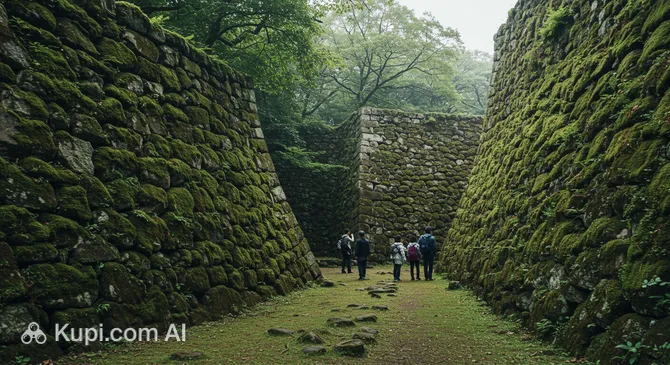
Yamanaka Castle Ruins. Illustration.
Source: Kupi.com AI

Traveler photos:

Today, the territory of the former castle has been transformed into a public park where visitors can see the impressive remains of former fortifications. Among them are preserved fragments of earthworks and deep moats that once protected the fortress. A walk through these historical ruins allows you to literally touch the past and imagine the scale of medieval fortifications.

Beyond its historical value, the Yamanaka Castle Ruins attract visitors with their picturesque nature and the beautiful views of the surrounding mountains. This place is ideal for both history enthusiasts wanting to dive deeper into the past of medieval Japan and those who simply want to enjoy a peaceful walk in the fresh air in a beautiful setting.

Contacts

Since the Yamanaka Castle Ruins are an open-air historical site, they typically do not have direct contact details such as a phone number or email address. To reach the ruins, you can use public transport or a car from the city of Hakone.

For the most accurate information regarding opening hours, if applicable, and the best ways to visit, it is recommended to contact local tourist information centers in Hakone or check official Japan tourism portals.

How to contactContact
Address410-4 Yamanaka Shinden, Mishima, Shizuoka 411-0011, Japan
Phone number+81 55-983-2672
Websitewww.city.mishima.shizuoka.jp

What to Do

A visit to the Yamanaka Castle Ruins offers a unique opportunity to connect with the history of Japan. The primary activity here is exploring the remains of the ancient fortifications. Strolling through the vast park area, you can see what were once mighty walls, moats, and other defensive structures. For those who want to dive deeper into the past, there are information plaques installed. These provide detailed accounts of significant events related to the castle and its role in Japanese history, allowing for a better understanding of the site's strategic importance.

In addition to the historical component, the Yamanaka Castle Ruins attract visitors with their natural beauty and opportunities for relaxation. The grounds offer impressive panoramic views of the Hakone surroundings, which are an attraction in their own right. The park surrounding the ruins is especially picturesque in spring during the cherry blossom season, and in autumn when the tree leaves turn brilliant shades of crimson and gold. This makes the location a favorite spot for photographers and nature lovers alike, who wish to enjoy the peaceful atmosphere and the harmonious blend of ancient history and scenic landscapes.

Getting There

The Yamanaka Castle Ruins are located in a scenic area near the popular resort town of Hakone, in close proximity to the city of Gotemba. You can reach this historical landmark by public transport. The most convenient route is to take a train to Gotemba Station, from where you can reach the castle ruins park by local bus or taxi.

For those who prefer to travel by car, access to the Yamanaka Castle Ruins is also well-organized. Convenient access roads lead to the park, and parking is available for visitors, making a trip by private vehicle comfortable and simple. This is especially convenient for families with children or travelers with a lot of luggage.

Thanks to its location near the main tourist routes of Hakone, the castle ruins are easy to include in a day trip itinerary for the region. This allows you to combine a visit to the historical site with other points of interest, such as local hot springs and nearby museums. Thus, a trip to the Yamanaka Castle Ruins can become part of a more enriching journey through Japan.

Nearest city: Hakone

History & Facts

The Yamanaka Castle Ruins, located near the city of Hakone, preserve the memory of turbulent times in Japanese history. This castle was built in the 16th century and served as a vital link in the defensive system of the powerful Late Hojo clan (Go-Hojo). The Late Hojo clan controlled the vast Kanto region, and Yamanaka Castle played a strategic role in protecting their domains, being situated on an important route connecting the eastern and western provinces.

The fate of Yamanaka Castle was decided in 1590, during a large-scale campaign to unify Japan led by Toyotomi Hideyoshi (although historical facts sometimes mention Tokugawa Ieyasu as the destroyer, the campaign was led by Hideyoshi, and Ieyasu was one of his generals, leading to the siege and fall of Odawara Castle, the capital of the Late Hojo, and its associated fortifications, such as Yamanaka). It was then that the superior forces of Toyotomi's army besieged and destroyed the castle. This event was one of the key moments in the fall of the Late Hojo clan and contributed to the further unification of the country. After its destruction, Yamanaka Castle was never rebuilt, and its ruins gradually became part of the region's cultural heritage.

Today, the Yamanaka Castle Ruins stand as a silent witness to the Sengoku Jidai — the "Warring States" period. The remains of earthworks, moats, and foundations allow visitors to imagine the former power of this fortification. Archaeological finds made on the castle grounds help to better understand the military architecture and daily life of that era. This site attracts not only history buffs but also those who wish to connect with Japan's past and enjoy the picturesque views from the hilltop where the castle once stood.

Time Needed

When planning a visit to the Yamanaka Castle Ruins in Hakone, you should allow for 1–2 hours. This amount of time is generally sufficient for most visitors to leisurely explore the historical grounds and soak in the atmosphere of the past.

During the recommended time frame, you can walk through the main sections of the ruins, imagine what the castle looked like in its heyday, and, of course, take commemorative photos. Information stands, if available on-site, will help you better understand the history of this significant site. For those who are passionate about the history of Japan or simply enjoy exploring ancient ruins in more detail, a little more time may be required. However, for a general introduction, the specified time will be quite adequate.

Working Hours

The Yamanaka Castle Ruins in Hakone are generally open to visitors daily. Access to the ruins park is typically free from morning until evening. However, as exact opening hours may vary depending on the time of year, it is recommended to confirm the latest information before planning your visit.

Currently, there is no information suggesting that advance ticket reservations are necessary to visit the castle ruins. Nevertheless, to avoid any potential inconvenience and to get the most up-to-date information on opening hours and entry conditions, we advise you to check the attraction's official website or contact local tourist information centers in Hakone.

Open 24 hours

Nearby

A visit to the Yamanaka Castle Ruins is, without a doubt, an immersion into the history and atmosphere of the past. However, to make your trip to Hakone even more fulfilling and memorable, it is worth paying attention to the attractions located nearby. Exploring the surroundings will allow you to gain a deeper understanding of the region's culture, see more interesting sites, and receive diverse impressions from your trip.

There are several notable sites around the Yamanaka Castle Ruins that can complement your excursion program. Below is a list of some of them with their distances, which will help you plan your time effectively.

NameDistance
Fureai Doubutsu Land Dakko Shite! ZOO!6.3 km
Nagaizumi Sawayaka Restaurant8.1 km
Rakujuen Park8.4 km
MOA Museum of Art9 km
Harvest Club Atami Izusan & VIALA9.9 km
Hakone Open-Air Museum11.1 km
Tsutaya Hakone Onsen Guesthouse11.2 km

Have you reached the end of the page?

So the route has been studied inside and out