Support

Nagasaki Peace Park

About

The Nagasaki Peace Park (Japanese: 平和公園, Heiwa-kōen) is not just a green zone, but a deeply symbolic memorial space located in the city of Nagasaki, Japan. This park was established to commemorate the tragic events of the atomic bombing of the city on August 9, 1945. It serves not only as a place of mourning but also as a powerful call for peace, reminding visitors of the fragility of human life and the importance of preventing such disasters in the future.
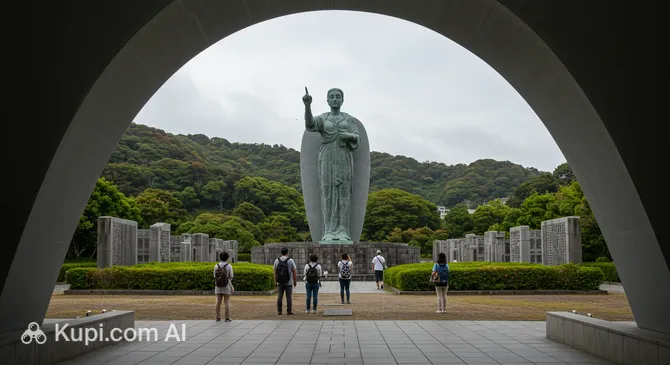
Nagasaki Peace Park. Illustration.
Source: Kupi.com AI

Traveller photos:

The central figure of the park and its most famous landmark is the majestic 10-meter Peace Statue. Created by Nagasaki sculptor Seibo Kitamura, this monumental sculpture is a symbol of hope and consolation. The statue's right hand points to the sky, warning of the threat of nuclear weapons, the left is extended horizontally, symbolizing peace, and the closed eyes express a prayer for the souls of the victims.

In the southern part of the park is another significant element – the Peace Memorial Fountain, installed in August 1969. It is dedicated to the memory of the victims who suffered from unbearable thirst after the explosion and were forced to drink water contaminated by radiation. A plaque near the fountain tells their tragic story, adding another moving touch to the overall atmosphere of the park, which calls for reflection on the consequences of war and the value of every moment of peaceful life.

Contacts

To plan your visit to the Nagasaki Peace Park, you can use the address provided below. Since this is a significant memorial complex and public space, we recommend contacting official tourist information centers or checking the city of Nagasaki's official websites for the best public transport routes or current access hours.

How to contactContact
Address9 Matsuyamamachi, Nagasaki, 852-8118, Japan
Phone+81 95-829-1162
Websitewww.city.nagasaki.lg.jp

What to Do

Visiting the Nagasaki Peace Park is primarily an opportunity to connect with history and pay your respects. The main object for contemplation is the monumental Peace Statue, the work of famous sculptor Seibo Kitamura, which has become a symbol of hope. No less important is the Peace Memorial Fountain, where you can stop to read the plaque telling the tragic stories of those affected and reflect on the value of peace.

If your trip to Nagasaki coincides with August 9, you can witness a particularly significant event. Every year on this day, a solemn ceremony is held in the park, during which the city's mayor reads a Declaration of World Peace at the foot of the Peace Statue. This is an important event that unites residents and visitors in a common pursuit of a future without wars and attracts many visitors.

In addition to the central monuments, since 1978, many other sculptures and monuments have been installed in the park, donated by various countries as a sign of solidarity and support for the ideas of peace. A walk along the park's well-kept paths will allow you to leisurely view these works of art, each of which carries its own deep meaning. This is a time for quiet reflection and immersion in the atmosphere of memory and hope that this iconic place preserves.

Getting There

Nagasaki Peace Park is one of the city's key memorial sites, so getting there is quite easy. It is located in a highly accessible part of Nagasaki, and there are several convenient ways to reach this iconic location to pay your respects and reflect on the importance of peace.

The most common and economical way to reach the Peace Park is by public transport. Nagasaki has a well-developed tram system, which is perhaps the most authentic way to travel around the city. Look for the "Heiwa Koen" (Peace Park) or "Matsuyamamachi" tram stops – they are located in the immediate vicinity of the park entrance. You can also use city buses, many of which pass near the park. It is recommended to check the current route numbers and schedules on the official websites of Nagasaki transport companies or at local tourist information centers.

For those who prefer more comfort, are traveling with children, or are short on time, taking a taxi is always an option. Taxis can easily be found at Nagasaki Railway Station, in the city center, or called via special apps. The ride from the central part of the city to the park usually doesn't take much time, depending on traffic. If you are nearby visiting other attractions in the area, the Nagasaki Peace Park is also reachable on foot, allowing you to better experience the city's atmosphere.

Nearest city: Nagasaki

History & Facts

The history of the Nagasaki Peace Park is inextricably linked to one of the most tragic events of the 20th century. The park was established as an eternal reminder of August 9, 1945, when an atomic bomb was dropped on the city of Nagasaki. The consequences were catastrophic: reports show that about 80% of buildings within a kilometer of the epicenter were instantly destroyed. On that day, approximately 22,000 people lost their lives, and another 39,000 died over the following four months from injuries and radiation sickness. The creation of the park was an act of remembrance and a symbol of the pursuit of peace.

The central element of the park complex is the majestic Peace Statue, installed in 1955, a decade after the tragedy. This monument has become a powerful symbol of hope and a call to prevent such horrors in the future. Later, in August 1969, the Peace Memorial Fountain was opened in the southern part of the park. It is dedicated to the victims who suffered from unbearable thirst after the blast. Notably, a memorial plaque at the fountain uses the story of a nine-year-old girl to tell the fate of those affected by radiation, making this place particularly moving.

The development of the memorial complex did not stop there. In 1978, the Nagasaki city authorities decided on further landscaping and improvement of the park. It was decided to install numerous additional sculptures donated by various countries and organizations as a sign of solidarity and support for the ideas of peace. These works of art from all over the world have enriched the park, making it an even more expressive and significant place for reflection and commemoration, symbolizing a global desire for a future without nuclear weapons.

Time Needed

For a typical visitor to explore the Nagasaki Peace Park, it will take approximately 1 to 2 hours. This time is usually enough to leisurely walk along the park's main paths, carefully examine key monuments such as the majestic Peace Statue and the moving Peace Memorial Fountain, and soak in the special atmosphere of this significant memorial space. Of course, the final duration of your visit will depend on your personal pace and the depth of your interest in the history and symbolism of each object.

If you only plan a brief overview of the park's main highlights, you can fit it into an hour. However, to fully appreciate this place, it is worth dedicating time to the numerous other sculptures and monuments donated by various countries as a sign of solidarity and peace. Reading the information plaques, quiet contemplation, and reflecting on the importance of peace will certainly require more time. Therefore, for a more thoughtful and leisurely visit to the Nagasaki Peace Park, it is recommended to set aside about two hours in your plan.

Working Hours

The Nagasaki Peace Park is generally open to visitors year-round, as it is an important public and memorial space. Entrance to the park itself is usually free and does not require advance ticket booking. However, access hours to certain individual sites within the park, if any, or during special events may vary.

Since exact information about opening hours can change, it is strongly recommended to check current data on the official Nagasaki city tourism website or on the information boards directly at the park entrance before your visit. This will help you plan your visit in the best way and avoid any possible inconvenience.

Open 24/7

Nearby

Visiting the Nagasaki Peace Park is undoubtedly a profound and memorable experience. However, to make your trip to Nagasaki even more rewarding and complete, it is worth paying attention to the attractions located in the immediate vicinity. Exploring the surroundings will allow you to dive deeper into the history and culture of this unique city in Japan, complementing your impressions of the memorial park with new discoveries.

Many of these sites also bear the mark of historical events or reflect the cultural heritage of Nagasaki, offering a broader perspective and context for understanding the city and its significance. Below is a list of some interesting sites located near the Peace Park.

NameDistance
Nagasaki Peace Statue0.1 km
Atomic Bomb Hypocenter0.3 km
Nagasaki Hypocenter Park0.4 km
Nagasaki Atomic Bomb Museum0.4 km
Urakami Cathedral0.4 km
Nagasaki National Peace Memorial Hall for the Atomic Bomb Victims0.5 km
Sanno Shrine One-Legged Torii Gate1.1 km

Reached the bottom of the page?

Looks like you know this route inside out