Support

Ōura Cathedral

About

Oura Cathedral, also known as the Church of the Twenty-Six Japanese Martyrs, is one of the most iconic and historically significant landmarks in the city of Nagasaki, Japan. This active Roman Catholic church is not only considered the oldest Christian church in the country but is also officially recognized as a National Treasure of Japan, underscoring its immense cultural and architectural value.
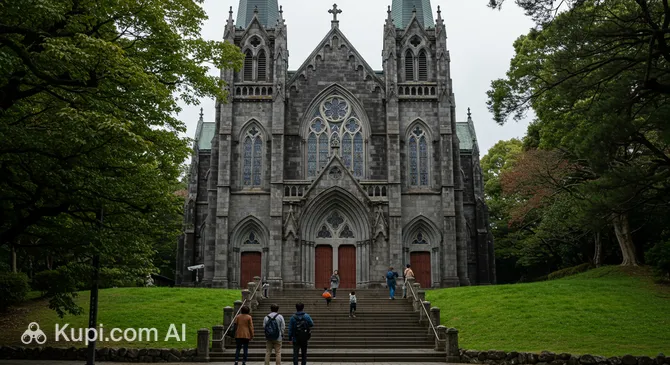
Ōura Cathedral. Illustration.
Source: Kupi.com AI

Traveller photos:

The cathedral's exterior is an impressive white structure that harmoniously blends Gothic and Baroque architectural elements. A distinctive feature is its high triangular roof, topped by an elegant tower with a cross, giving the church a majestic and memorable appearance. This architecture, unique for Japan, attracts many visitors and researchers alike.

Inside Oura Cathedral, the skillfully crafted wooden structures create a special atmosphere. The interior is particularly beautiful thanks to the stained-glass windows, through which soft light filters, and the famous "Martyrdom of the 26 Saints" mural, depicting tragic events from the history of Christianity in Japan. A visit to the cathedral allows you to connect with an important chapter of history and appreciate the unique fusion of European and Japanese cultural traditions.

Contacts

To plan your visit to Oura Cathedral, you can use the contact information provided below. For the most up-to-date information regarding opening hours and admission requirements, please consult the attraction's official website or visit tourist information centers in Nagasaki.

How to contactContact
Address5-3 Minamiyamatemachi, Nagasaki, 850-0931, Japan
Phone+81 95-823-2628
Websiteoura-church.jp

What to Do

In addition to experiencing the unique architecture of Oura Cathedral in Nagasaki, visitors are invited to delve deeper into the history of Christianity in Japan by exploring key elements of the temple complex. At the entrance, the majestic white marble statue of the Virgin Mary is particularly striking. This monument was erected in memory of the Japanese Christians who perished during the suppression of the Shimabara Rebellion in 1637-1638 and serves as a moving reminder of the resilience of faith in the face of trials.

While walking through the church courtyard, you will find a bronze bas-relief telling the story of the peasants from Urakami who, despite persecution, practiced their faith in secret. The location of Oura Cathedral itself is also significant: its facade faces Nishizaka Hill. It was on this site in 1597 that 26 Japanese Christians were crucified, recognized as the first martyrs for the faith in Japan. Exploring these sites allows for a better understanding of the complex and dramatic journey of Christianity in the country.

Getting There

Getting to Oura Cathedral, one of the iconic landmarks of Nagasaki, is quite simple thanks to the city's efficient transport system. The cathedral is located in a popular tourist district, making it easily accessible for visitors.

The most convenient way to reach Oura Cathedral is by public transport. Nagasaki has a well-developed tram network, which is one of the most authentic ways to travel around the city. You will need to take a tram to the stop closest to the cathedral—usually "Ōura Tenshudō-shita," which literally translates to "Below Oura Cathedral." From there, it is just a few minutes' walk to the cathedral itself.

Alternatively, you can take a taxi. This is a more comfortable but also more expensive option. Taxis are easy to find near major hotels and Nagasaki Station, or you can simply hail one on the street. The ride from the city center or the railway station to Oura Cathedral won't take long, depending on traffic conditions.

If you are in the vicinity of other famous attractions, such as Glover Garden, Oura Cathedral is easily within walking distance, as they are located right next to each other. This also allows you to enjoy the atmosphere of the historic part of Nagasaki.

Nearest city: Nagasaki

History & Facts

Oura Cathedral in Nagasaki is not only the oldest functioning Christian church in Japan but also a witness to a remarkable history of faith and resilience. The design of this elegant sanctuary was proposed by French priest Louis Furet and brought to life by local architect Hidenoshin Koyama. Construction was completed in December 1864, and the cathedral was originally an example of a strict Gothic style. However, after a reconstruction in 1879, it acquired its current, more eclectic appearance, harmoniously blending Gothic and Baroque features.

The history of Oura Cathedral is inextricably linked to the dramatic events of the spread and subsequent suppression of Christianity in Japan. The church is dedicated to the memory of the 26 Japanese Martyrs—Catholics who were executed for their faith on Nishizaka Hill in Nagasaki in 1597. This event was one of the most tragic in the annals of Japanese Christianity, marking the beginning of a long period of persecution. At the entrance to the cathedral, visitors are greeted by a white marble statue of the Virgin Mary. This image is not merely a memorial; it symbolizes the sorrow and the indestructible spirit of Japanese Christians, many of whom perished during the suppression of the large-scale Shimabara Rebellion (1637-1638). While the rebellion originally had socio-economic roots, it quickly took on a religious character, and its harsh suppression effectively drove Christianity underground in the region for many years, making memorials like this statue particularly significant symbols of unfailing faith.

Oura Cathedral holds special significance due to its connection with the "Kakure Kirishitan"—hidden Christians. Following the ban on Christianity in Japan in the 17th century, many believers were forced to hide their religion for over two centuries. It was in this cathedral in 1865, shortly after its opening, that the famous meeting between French priest Bernard Petitjean and a group of descendants of these hidden Christians from Urakami village took place. This event confirmed that the Christian faith had survived in Japan despite centuries of persecution. In the church courtyard, you can see a bronze bas-relief dedicated to this moving story and the resilience of the Urakami believers.

Time Needed

To explore Oura Cathedral in Nagasaki, the oldest functioning Christian church in Japan, most visitors typically need about 1-2 hours. This time is usually sufficient to appreciate the unique architecture that blends European and Japanese elements, examine the stained glass and interior decor, and soak in the atmosphere of this historically significant site.

During this time, you can leisurely walk around the outside of the cathedral, admire its facade, and take photographs. Inside, you can view historical exhibits detailing the role of Christianity in Japan and the history of the cathedral itself. A visit also includes the opportunity to simply sit in silence and enjoy the tranquility of the space. For those who wish to dive deeper into the history or visit the small adjacent museum (if available and open to the public), a bit more time may be required.

If your visit coincides with a church service and you wish to attend, your stay will naturally be longer. However, for a standard tourist visit and viewing the main exhibits, 1-2 hours will be quite enough to gain a full impression of Oura Cathedral.

Working Hours

Oura Cathedral in Nagasaki is an important historical and religious landmark. Generally, the opening hours for such sites can vary depending on the day of the week, the season, and scheduled church services. To get the most accurate and up-to-date information regarding visiting hours for Oura Cathedral, it is recommended to check the attraction's official website or consult local tourist information centers before planning your visit. This will also help you determine if advance ticket booking or tour registration is required, especially during peak tourist seasons.

Typically, such significant sites are open to visitors year-round, though schedule changes may occur during national holidays or special events. Therefore, checking information in advance will help avoid inconvenience and allow you to plan your visit effectively to fully enjoy the beauty and atmosphere of this unique location in Japan.

8:30 – 17:30

Nearby

Visiting an iconic landmark like Oura Cathedral is certainly a highlight of any trip to Nagasaki. However, to truly soak up the city's atmosphere and make your journey even more fulfilling, it is worth exploring the surrounding area. Investigating nearby sites will allow you to discover new facets of Nagasaki, whether through other historical landmarks, picturesque parks, or cozy local eateries.

A stroll through the neighborhood around Oura Cathedral can lead to unexpected discoveries and pleasant experiences. Often, it is these spontaneous finds that make a trip unforgettable, offering a deeper understanding of the culture and daily life of Nagasaki.

NameDistance
Glover Garden0.1 km
Gunkanjima Digital Museum0.2 km
Nagasaki Seaside Park0.8 km
Nagasaki Prefectural Art Museum0.9 km
Ramen Hiiragi1.2 km
Spectacles Bridge1.7 km
Izakaya Asa1.9 km

Reached the bottom of the page?

Looks like you know this route inside out