Support

Nagasaki Atomic Bomb Museum

About

The Nagasaki Atomic Bomb Museum (長崎原爆資料館) is a significant memorial complex located in the city of Nagasaki, Japan. The museum is dedicated to the tragic events of August 9, 1945, when an atomic bomb was dropped on the city. The modern museum building, opened to visitors in April 1996, replaced the previous one founded in 1955 and serves as an important reminder of the destructive power of nuclear weapons and their consequences.
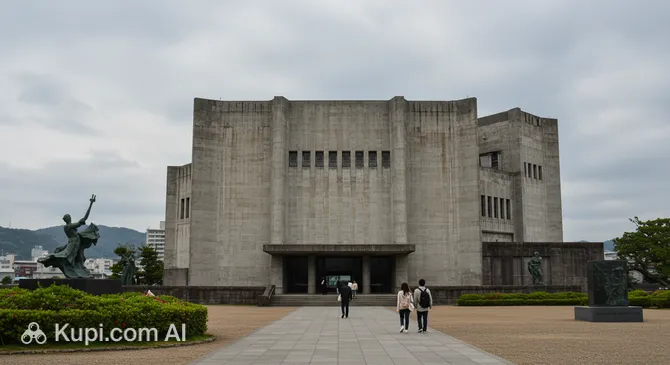
Nagasaki Atomic Bomb Museum. Illustration.
Source: Kupi.com AI

Traveller photos:

The museum's exhibition is both an educational and deeply moving space. Numerous exhibits are gathered here: personal belongings of victims, melted objects, photographs of the destroyed city, documents, and other relics directly related to the atomic bombing of Nagasaki. Visitors can not only learn details about the event itself but also trace the history of the development of nuclear weapons and see visual evidence of their horrifying consequences for humanity and the environment.

Adjacent to the main museum building is the Nagasaki National Peace Memorial Hall for the Atomic Bomb Victims. This hall is an integral part of the unified memorial complex created to commemorate those who perished and to offer prayers for peace. Together, these sites form an important cultural and historical center that annually attracts many visitors from around the world seeking to honor the memory of the victims and reflect on the future.

The main mission of the Nagasaki Atomic Bomb Museum is not just to preserve the memory of the tragedy but also to actively promote the ideas of peace and the total abolition of nuclear weapons. This place serves as a powerful warning to future generations and a symbol of unextinguished hope for the peaceful coexistence of all nations on the planet.

Contacts

For the most up-to-date information on opening hours, ticket prices, and special exhibitions at the Nagasaki Atomic Bomb Museum, it is recommended to visit its official website or contact local tourist information centers in Nagasaki. Contact details are provided below:

How to contactContact
Address7-8 Hiranomachi, Nagasaki, 852-8117, Japan
Phone+81 95-844-1231
Websitenabmuseum.jp

What to Do

Immersing themselves in history at the Nagasaki Atomic Bomb Museum, visitors encounter an extensive exhibition that tells the story of the tragedy through numerous artifacts. You will be able to see authentic photographs of the ruined city, review documents from that time, and examine personal belongings of people whose lives were affected by the bombing. These items, bearing traces of the catastrophe, serve as silent witnesses to the events and help convey the scale of what happened.

For a more complete understanding of the events and their consequences, the museum offers video materials that complement the main exhibits. The main part of the exhibition is housed in the Main Hall, located on the first basement floor. Here, visitors can also find a shop offering themed literature and books dedicated to the history of the bombing and peace issues, allowing them to take home not only impressions but also knowledge.

A visit to the museum is not just an inspection of exhibits but an opportunity to deeper reflect on the historical context of World War II and its devastating outcomes, presented through statistical data, charts, and historical documents. The exhibition is designed to create a strong emotional impact, encouraging reflection on the value of human life and the fragility of peace. The museum carries an important message about the need for the abolition of nuclear weapons and the pursuit of a peaceful future for all mankind.

Getting There

The Nagasaki Atomic Bomb Museum is located in the city of Nagasaki, on the island of Kyushu in Japan. Due to its significance and central location within the city, it is quite easy to reach using various modes of transport. When planning your visit, you can easily include it in your Nagasaki itinerary.

The most convenient and popular way to get to the museum is by public transport. Nagasaki has an excellent tram network. You will need to take a tram on line 1 or 3 and get off at the "Hamaguchi-machi" or "Peace Park" (Heiwa Koen) stop. From either of these stops, the museum is just a few minutes' walk away. Signposts are usually clearly visible, making it hard to get lost. You can also use city buses, as some routes pass near the memorial complex.

If you prefer more comfort or are traveling with limited time, you can take a taxi. A taxi ride from central Nagasaki or the main Nagasaki Station to the Atomic Bomb Museum typically takes 10 to 20 minutes, depending on traffic. This is a convenient option, especially if you have luggage or are traveling in a small group.

Nearest city: Nagasaki

History & Facts

The history of the Nagasaki Atomic Bomb Museum dates back to the immediate post-war period. The first memorial dedicated to the tragedy appeared in Nagasaki as early as 1945, right after the devastating bombing. However, the building visitors see today is a modern complex that was officially opened in April 1996. Its opening was timed to coincide with the fiftieth anniversary of those terrible events, and it was built on the site of the former International Cultural Hall, symbolizing a new chapter in preserving memory.

It is an interesting fact that Nagasaki, being an important seaport and industrial center of Japan, was not originally the primary target for the second atomic bombing carried out by the US. The city of Kokura was considered the priority target. Nagasaki appeared in the plans as a backup option. Furthermore, the date of the bombing itself was changed: it was originally planned for August 11, 1945, but due to an unfavorable weather forecast, the attack was moved forward two days to August 9.

Despite its strategic importance, Nagasaki had not been subjected to large-scale air raids before the atomic strike. Only on August 1, 1945, were several high-explosive bombs dropped on the city, damaging shipyards and industrial facilities. This incident led to a partial evacuation of the population, especially schoolchildren. Nevertheless, on the fateful day of August 9, approximately 200,000 people remained in Nagasaki, becoming witnesses and victims of the tragedy.

Time Needed

To tour the Nagasaki Atomic Bomb Museum and thoughtfully engage with its exhibits, most visitors typically need 1.5 to 2.5 hours. This time is generally sufficient to walk through the main halls, study key exhibits, photographs, and documents, and gain a general understanding of the tragic events and their consequences for the city of Nagasaki.

However, if you plan for a deeper immersion into the subject—for example, studying all information boards in detail, reading personal stories of survivors, watching available video materials, or spending time in reflection—you should budget up to 3-4 hours for the visit. It is also worth considering that the Nagasaki National Peace Memorial Hall for the Atomic Bomb Victims is located next to the museum; visiting it may add another 30-60 minutes to your total time if included in your plans.

It is important to remember that the exhibition at the Nagasaki Atomic Bomb Museum carries a significant emotional weight. Some visitors may find it necessary to take breaks or simply spend more time processing what they have seen and read. Therefore, when planning your visit, it is better to allocate a little more time than it might seem at first glance, so as not to rush through the exhibition and to be able to fully absorb the importance of this memorial site.

Working Hours

The Nagasaki Atomic Bomb Museum is generally open to visitors year-round; however, opening hours may vary depending on the season or due to special events. Typically, the museum is open from 8:30 AM to 5:30 PM (last entry at 5:00 PM), while in August, the hours are extended until 6:30 PM (last entry at 6:00 PM). The museum is closed to visitors from December 29 to 31. Nevertheless, to obtain the most accurate and up-to-date information regarding opening hours, as well as potential schedule changes, it is strongly recommended to check the official museum website or contact tourist information centers in Nagasaki just before your planned visit.

As a rule, advance ticket booking is not required for individual visitors. However, if you plan to visit the museum as part of a large group, it is better to check the visiting conditions and the possibility of group booking on the official website beforehand. This will help avoid potential inconveniences and plan your visit in the best possible way. Given the significance and popularity of the museum, especially during peak tourist seasons, checking information in advance is always beneficial.

8:30 – 18:30

Nearby

Visiting the Nagasaki Atomic Bomb Museum is, without a doubt, a profound and memorable experience. To make your journey through the history of Nagasaki and its commitment to peace even more complete, we recommend taking time to explore the attractions located in the immediate vicinity. This will not only expand your knowledge but also allow you to feel the atmosphere of this unique place more deeply.

Many of these sites are closely linked to the events of August 9, 1945, and are part of the overall memorial ensemble. Exploring nearby commemorative sites and parks will help create a more holistic view of the tragedy and how the city preserves its memory, carrying a message of peace to future generations. Below is a list of some of them, along with their distance from the museum:

NameDistance
Atomic Bomb Hypocenter0.1 km
Nagasaki Hypocenter Park0.1 km
Nagasaki National Peace Memorial Hall for the Atomic Bomb Victims0.1 km
Nagasaki Peace Park0.4 km
Urakami Cathedral0.5 km
Nagasaki Peace Statue0.5 km
Sanno Shrine One-Legged Torii Gate0.7 km

Reached the bottom of the page?

Looks like you know this route inside out