Support

Omi Jingu Shrine

About

Omi Jingu is a significant Shinto shrine located in the city of Otsu, Shiga Prefecture, Japan. It is dedicated to Japan's 38th monarch, Emperor Tenji, who is worshipped here as the primary deity (kami). The "Jingu" status in the name indicates that the shrine is dedicated to the ancestors of the Imperial family, giving it special prestige among the country's numerous Shinto sites.
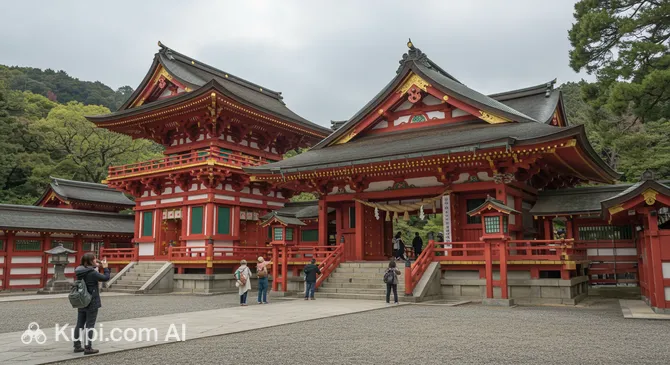
Omi Jingu Shrine. Illustration.
Source: Kupi.com AI

Traveller photos:

Founded in 1940, the shrine was established to celebrate the 2600th anniversary of the founding of the Imperial dynasty. Notably, it was built on the land where the Otsu-kyo capital, founded by Emperor Tenji himself, once stood. This location is steeped in history and serves as a bridge connecting modern Japanese people with their ancient heritage.

For visitors, Omi Jingu Shrine is interesting not only as a religious site but also as an important cultural and historical monument. Here, you can experience centuries-old traditions, feel the spirit of ancient Japan, and learn more about Emperor Tenji, who played a pivotal role in the country's history. A visit to the shrine leaves a deep impression due to its tranquil atmosphere and its connection to key moments in Japanese history.

Contacts

To visit Omi Jingu Shrine in Otsu, we recommend checking current opening hours and available contact methods in advance on the attraction's official website or at local tourist information centers.

Typically, such shrines can be reached by public transport; it is best to check specific routes and travel options on maps or inquire upon arrival in Otsu.

How to contactContact
Address1-1 Jingūchō, Otsu, Shiga 520-0015, Japan
Phone+81 77-522-3725
Websiteoumijingu.org

What to Do

A visit to Omi Jingu Shrine in Otsu offers a unique immersion into Japanese culture and history. One of the shrine's main highlights is its close connection with karuta—a traditional Japanese card game. It is here that national karuta tournaments are regularly held, attracting both participants and spectators who wish to experience this fascinating aspect of Japanese heritage. Watching the matches, or even just knowing you are at the heart of this cultural phenomenon, will be a memorable experience.

In addition to its connection with karuta, the shrine itself is of great interest to lovers of Japanese architecture and history. You can examine the traditional buildings in detail, appreciating their elegance and harmony with the surrounding nature. The shrine is dedicated to Emperor Tenji, and learning about his history and contribution to the development of Japan is an integral part of the visit. A stroll through the grounds will allow you to feel the calm and peaceful atmosphere of this significant site.

Omi Jingu Shrine holds special meaning for connoisseurs of Japanese poetry. Emperor Tenji is known as the author of the first poem in the famous collection "Ogura Hyakunin Isshu" ("One Hundred Poets, One Poem Each"). This poem, which begins with the words "Aki-no-ta-no..." ("In the autumn fields..."), is an important part of the Japanese literary canon. Visitors interested in poetry can gain a deeper understanding of the Emperor's connection to this art and the shrine's significance as a guardian of poetic traditions.

Getting There

Omi Jingu Shrine is located in the city of Otsu, Shiga Prefecture, Japan. Thanks to the convenient location of Otsu, and especially its proximity to a major tourist hub like Kyoto, reaching the shrine is quite easy for travelers.

The most common and convenient way to get to Otsu from Kyoto is by train. A historical railway line connects these cities, part of which is even recognized as a National Historic Site of Japan. The train journey is usually comfortable, takes very little time, and allows you to reach your destination quickly while enjoying views of the Japanese countryside along the way.

Upon arrival at the railway station in Otsu, Omi Jingu Shrine itself can be reached in several ways. The city of Otsu is known for its well-developed transport system. You can take local buses, whose routes often pass near key attractions, or take a taxi for a faster and more direct trip from the station. It is recommended to check the most convenient route and public transport schedules in advance using available online maps or by visiting the tourist information centers at the station.

Nearest city: Otsu

History & Facts

Omi Jingu Shrine, located in the city of Otsu, is a landmark site closely associated with one of the key figures in Japanese history—Emperor Tenji. Originally known as Prince Naka-no-Oe, he went down in history as the architect of the "Taika Reform" (Taika-no-Kaishin), which initiated significant transformations in the country. In 667, already serving as Emperor, Tenji decided to move the capital from Asuka (modern-day Nara Prefecture) to Otsu-kyo. This city remained the capital of Japan throughout his reign, from 667 to 672, becoming an important political center of that era.

Emperor Tenji left a profound mark on the development of the Japanese state and culture. He is credited with introducing Japan's first family registration system, known as "Kogo-no-Nenjaku," as well as implementing the "Handen-Shuju" land reform. These innovations were vital steps toward centralizing power and streamlining the administrative system. Furthermore, Emperor Tenji was known for his interest in technology—he used "rokoku" (water clocks) to measure time. His poetic talent is also noteworthy: his poem was honored as the opening entry in the famous "One Hundred Poets, One Poem Each" (Hyakunin Isshu) anthology, testifying to his contribution to the country's cultural heritage.

Omi Jingu Shrine itself was founded relatively recently—in 1940. Its construction was timed to coincide with a significant date: the 2600th anniversary of the founding of Japan's Imperial dynasty. The site for construction was chosen intentionally: the shrine is located on the grounds of the former capital Otsu-kyo, thereby immortalizing the memory of Emperor Tenji and his era. Since its founding, Omi Jingu has become an important cultural and historical center, attracting those interested in the rich legacy of Emperor Tenji and the history of the ancient capital.

Time Needed

When planning a visit to Omi Jingu Shrine in Otsu, it is worth setting aside approximately 1.5–2.5 hours for your tour. This time is usually sufficient for a leisurely exploration of the main grounds and the shrine's primary buildings. However, as with many Japanese sacred sites, the duration of your visit will depend on the depth of your interest in the history, architecture, and unique features of the place.

The majority of your time will be spent viewing the main hall and other shrine structures, built in a characteristic architectural style. Omi Jingu Shrine is dedicated to Emperor Tenji, known for his role in modernizing Japan and introducing the water clock, which is why the Clock Museum is also located here. If you decide to visit the museum and study its exhibits in detail, this could add about another hour to your visit. It is also worth taking the time to stroll through the shrine's picturesque grounds, enjoying the atmosphere of calm and serenity.

In summary, while an hour might be enough for a superficial look, it is better to plan for at least two hours to truly soak in the spirit of Omi Jingu Shrine, see its key features including the Clock Museum, and enjoy the surrounding nature. This will allow you to get a complete understanding of this important cultural and historical site.

Working Hours

Omi Jingu Shrine, located in Otsu, is an important cultural site in Japan. The exact opening hours of the shrine may vary depending on the season and scheduled events. Generally, many Shinto shrines in Japan are open to the public during daylight hours. However, to get the most up-to-date information on opening times, as well as the need for advance ticket booking or tour registration (which may be required for special ceremonies or access to certain parts of the complex), it is recommended to check the official Omi Jingu Shrine website or inquire at local tourist information centers upon arrival in Otsu.

Typically, shrines of this importance are open to visitors year-round; however, special events or services may affect general access. When planning your visit, it is always best to check the current schedule in advance so that your visit is as comfortable as possible and you can fully enjoy the atmosphere of this significant place.

9:00 – 16:30

Nearby

Visiting Omi Jingu Shrine in Otsu is undoubtedly a highlight, but you shouldn't limit yourself to just this one spot. The surroundings of this iconic site hide many other interesting attractions that will help you dive deeper into the region's culture and history, as well as enjoy its natural beauty.

Exploring nearby sights will allow you to get a more complete picture of Otsu and its unique atmosphere. You can discover hidden gems, sample local cuisine, and simply have a pleasant time expanding your travel itinerary. Here are a few interesting places located nearby:

NameDistance
Biwako Otsukan1.6 km
Mii-dera (Onjo-ji Temple)2.1 km
Lake Biwa Canal2.3 km
Michigan Cruise (Otsu Port, Lake Biwa)2.6 km
Karasaki Shrine2.6 km
Yasu's Old Man Nigiri Shokudo2.7 km
Omi Beef Specialty Restaurant Kadoman2.8 km

Reached the bottom of the page?

Looks like you know this route inside out