Support

Ise Grand Shrine (Naikū)

About

The Ise Jingu Inner Shrine (Naiku) is not just a landmark, but the most sacred site in Ise and one of the most important spiritual treasures of all Japan. It is the primary and most revered part of the Ise Jingu shrine complex, dedicated to the sun goddess Amaterasu, who is considered the ancestress of the Imperial lineage. Every year, millions of pilgrims and travelers come here to connect with the origins of Shinto and experience the special atmosphere of this place.

The shrine's architecture is built in the ancient Japanese "Shinmei-zukuri" style, characterized by noble simplicity. The majestic structures made of unpainted cypress, elevated on thick pillars, create a sense of perfect harmony with nature. You won't find bright decorations or lavish decor here—only a strict, minimalist beauty that emphasizes deep respect for tradition and natural materials.

The complex is surrounded by a dense, centuries-old forest that creates an atmosphere of seclusion and serene tranquility. Walking along the well-maintained paths leading to the main sanctuary via the sacred Uji Bridge is more than just sightseeing; it is a true immersion into the world of Japanese philosophy and aesthetics. A visit to Naiku leaves an unforgettable impression and allows you to feel the spiritual power of this unique place.
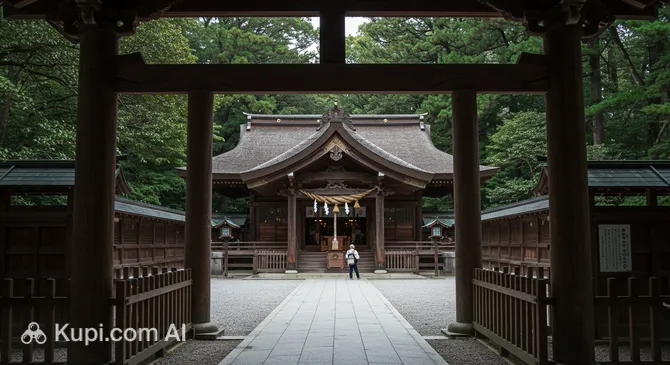
Ise Grand Shrine (Naikū). Illustration.
Source: Kupi.com AI

Traveler photos:

Contacts

To plan your visit and check up-to-date information, such as seasonal operating hours, it is recommended to visit the official website of the sanctuary. You can also find detailed rules of conduct for the sacred grounds there.

How to contactContact
Address1 Ujitachichō, Ise, Mie 516-0023, Japan
Phone number+81 596-24-1111
Websitewww.isejingu.or.jp

What to Do

A visit to the Inner Shrine begins with a peaceful walk through its vast territory, set among ancient cryptomeria trees. The path to the heart of the sanctuary leads across the famous wooden Ujibashi Bridge, which symbolically separates the secular from the sacred space. Once you cross it, you will immediately feel the special atmosphere of antiquity and tranquility that permeates this place.

One of the important traditions for visitors is the purification ritual. Before approaching the shrines, it is customary to wash your hands and mouth at the Temizuya purification pavilion. Within the complex, you can see the Kaguraden—a building where sacred kagura dances are performed in honor of the gods, as well as the Imibiyaden—the place where ritual offerings for the goddess Amaterasu are prepared with meticulous care.

Although the main sanctuary, which houses the sacred mirror, is hidden from public view behind a high fence, the walk through the complex itself leaves a deep impression. You can enjoy views of traditional architecture, stroll along the picturesque Isuzu River, and simply immerse yourself in the atmosphere of Japan's spiritual center. On certain days of the year, you may witness colorful traditional ceremonies and festive processions, making the visit even more memorable.

Getting There

Getting to the Ise Jingu Inner Shrine is quite simple, especially if you are already in the city of Ise. The most convenient way is to use public transport. The Inner Shrine is located several kilometers from the city center and main stations, so a bus is the best choice. Buses run regularly from railway stations like Iseshi, taking visitors directly to the main gates of the temple complex.

The bus ride itself doesn't take long—only about 15–20 minutes. This is a great opportunity to enjoy views of the city and its surroundings on your way to one of Japan's main shrines. Routes are well-organized, so you will have no trouble finding the right stop and reaching your destination.

If you are planning a trip from larger cities like Nagoya or Osaka, your route will begin with a train journey. First, take a Kintetsu Limited Express to Iseshi Station, which takes about an hour and a half to two hours. Upon arrival in Ise, you will need to transfer to the aforementioned city bus to reach your destination.

For those who prefer to travel by car, facilities are also provided. There are dedicated parking lots near the temple complex where you can leave your car during your visit, making the trip as comfortable as possible and independent of public transport schedules.

Nearest city: Ise

History & Facts

The history of the Ise Jingu Inner Shrine is rooted in deep antiquity and shrouded in legend. According to surviving records, the Naiku sanctuary was founded in the 4th century BC by Princess Yamatohime-no-mikoto. She acted on the direct command of the sun goddess Amaterasu herself, who wished to be worshipped in this specific location. The shrine's significance is confirmed by its mention in Japan's oldest chronicles—the Kojiki and Nihon Shoki—making it one of the pillars of Japan's cultural and spiritual heritage.

For centuries, Naiku remained an incredibly secluded place. Until 1945, the shrine's sacred land was separated from the outside world by the Miyagawa River, which was considered an impassable boundary. Only members of the Imperial Family were permitted to cross the famous Ujibashi Bridge and enter the main sanctuary. The shrine's priests had to maintain the strictest ritual purity, and any violation of these rules was considered absolutely unacceptable, emphasizing the special status of this site.

One of the most striking facts associated with the shrine in Ise is the tradition of Shikinen Sengu. Every 20 years, the main structures of the sanctuary, including the Uji Bridge, are completely dismantled and rebuilt anew on an adjacent plot. This ritual, which has existed for over 1,300 years, symbolizes Shinto beliefs in eternal renewal and the transience of all things. Furthermore, it allows unique architectural techniques and the craft skills of ancient masters to be passed down from generation to generation. The most recent ceremony took place in 2013, with the next scheduled for 2033.

Time Needed

To fully and leisurely experience the Ise Jingu Inner Shrine (Naiku), it is recommended to allocate at least 2–3 hours. This time will allow you to walk through the entire extensive territory without rushing, starting from the sacred Uji Bridge and ending at the main sanctuary hidden from visitors' eyes. Visiting Naiku is not just about looking at buildings, but a true immersion into a special atmosphere, so haste is out of place here.

The planned time will be enough to quietly stroll along the well-kept paths among centuries-old trees, perform the purification ritual by the Isuzu River, and visit the auxiliary shrines within the complex. A quick look-around might take about an hour, but to truly feel the peace and spiritual significance of this place, it is worth giving it more attention and enjoying every moment.

Working Hours

The Ise Jingu Inner Shrine (Naiku) can be visited any day of the year. The sanctuary is open to guests daily; however, opening hours change depending on the season, allowing visitors to enjoy its beauty from dawn to dusk. The exact schedule is as follows: from May to August, the shrine is open from 5:00 AM to 7:00 PM; in January, February, March, April, and September—from 5:00 AM to 6:00 PM; and from October to December—from 5:00 AM to 5:00 PM. These flexible hours provide the opportunity to plan your visit at a time convenient for you.

Admission to the sanctuary grounds is free of charge, and no prior booking or ticket purchase is required for a standard visit. You can simply arrive and immerse yourself in the peaceful atmosphere of this sacred place. Nevertheless, it is always useful to check the shrine's official website before your trip for any potential schedule changes, especially if your visit coincides with national holidays or special ceremonies.

5:00 – 17:00

Nearby

A visit to the Ise Jingu Inner Shrine (Naiku) is undoubtedly the main event for any traveler in Ise. However, to get a complete picture of this amazing place, it is worth dedicating time to its surroundings as well. Near the majestic sanctuary, you will find other iconic landmarks, cozy streets, and authentic establishments that will help you dive deeper into the culture and history of Japan.

Walking through the nearby areas will not only complement your experience but also allow you to see how spiritual life harmoniously intertwines with everyday routine. From ancient bridges and shrines to traditional markets and restaurants, every corner here holds its own story. This is a great opportunity to make your journey even more enriching and memorable.

NameDistance
Uji Bridge0.5 km
Ise Kadoya Beer0.7 km
Akafuku Main Shop0.9 km
Okage Yokocho0.9 km
Sarutahiko Shrine1.4 km
Tsukiyomi-no-miya Shrine2.1 km
Jingu Museum3.4 km

Have you reached the end of the page?

So the route has been studied inside and out