Mii-dera (Onjo-ji), located in the city of Otsu, is one of the oldest and most significant temple complexes in Japan, boasting a rich and sometimes dramatic history. Its founding in 672 is linked to the tragic events of the struggle for the imperial throne. After the death of Emperor Tenji, his son was killed, and the late emperor's brother ascended the throne as Emperor Temmu. It was Emperor Temmu who founded the temple, originally named Nagarayama Onjo-ji, in memory of his late nephew. Later, the temple became better known as Mii-dera, which translates as "Temple of Three Wells," named after three sacred springs on its grounds used for the ritual bathing of newborn emperors.
For centuries, Mii-dera played a key role in the religious and political life of the region. The temple served as the headquarters of the influential Tendai Jimon Buddhist sect, and its warrior monks frequently clashed with other monasteries, particularly the powerful Enryaku-ji temple located atop Mount Hiei. This rivalry occasionally escalated into open confrontations, leaving a significant mark on the history of the temple and the surrounding lands. Despite the destruction during these conflicts, Mii-dera was consistently rebuilt, maintaining its status and influence.
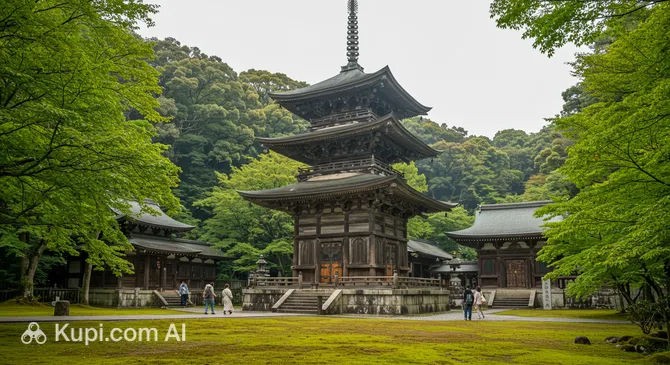
Many of the current structures within the temple complex have their own unique histories of relocation and reconstruction, reflecting its turbulent past. For instance, the majestic Dai-mon main gate was originally built in 1452 and only later moved to the Mii-dera grounds, becoming its architectural signature. Another iconic structure—the elegant three-story pagoda—was also not always here. It was moved from Fushimi Castle in the early 17th century, reportedly by the will of Toyotomi Hideyoshi, adding another fascinating page to the chronicles of this ancient temple.
In addition to its architectural and historical value, Mii-dera is famous for its cultural treasures, including ancient sculptures, paintings, and manuscripts, many of which are designated as National Treasures of Japan. The temple is also renowned for its bell, one of the "Three Famous Bells of Japan," whose deep sound resonates far across the neighborhood. A visit to Mii-dera offers a chance to touch centuries of history, feel the spirit of ancient Japan, and enjoy the beauty of its gardens and pavilions.