Support

Beomeosa Temple

About

Beomeosa Temple (Beomeosa, 범어사) is one of the jewels of South Korea, a majestic Buddhist complex nestled on the scenic slopes of Geumjeongsan Mountain in the city of Busan. As one of the country's oldest and largest temples, Beomeosa attracts visitors with its rich history and peaceful atmosphere. It is a place where spirituality and nature merge, creating a unique sense of harmony.
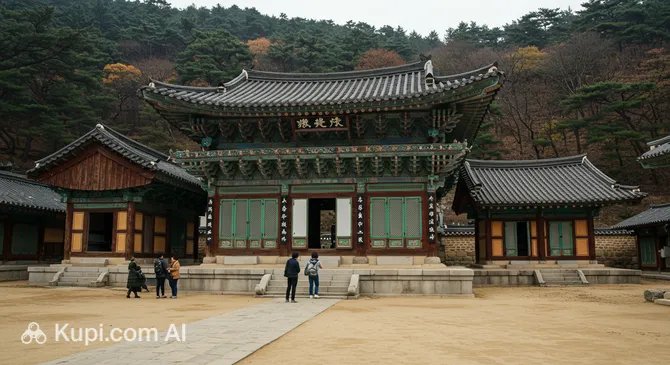
Beomeosa Temple. Illustration.
Source: Kupi.com AI

Traveler photos:

Occupying an impressive area of about 8.2 square kilometers, Beomeosa Temple is rightfully considered one of the region's major spiritual and cultural landmarks. It is ranked among the top five most significant temples in South Korea, highlighting its importance to Buddhist tradition and the country's cultural heritage. Its unique architecture, reflecting centuries-old traditions, and its harmonious integration into the mountain landscape make it a must-visit destination.

Visitors to Busan interested in history and culture will find Beomeosa Temple an inexhaustible source of inspiration. It is not just a tourist site but an active monastery where one can experience the living traditions of Buddhism. The temple attracts both pilgrims seeking spiritual enlightenment and tourists wishing to admire the exquisite architecture, and enjoy the silence and beauty of the surrounding nature. A walk through its grounds will provide unforgettable impressions and allow for a deeper understanding of South Korea's cultural wealth.

Contacts

To get the latest information on the operation of Beomeosa Temple, including service schedules, details on available tours, or information regarding cultural events, we recommend consulting official sources. You can contact the temple representatives directly or visit their official website to clarify all the details. Below are the primary contact details:

How to contactContact
Address250 Beomeosa-ro, Geumjeong-gu, Busan, South Korea
Phone number+82 51-508-3122
Websitewww.beomeo.kr

What to Do

Visitors to Beomeosa Temple can begin their experience with a stroll through its vast and picturesque grounds. Here, you will be greeted by the majestic Iljumun Gate, symbolizing the entrance to the sacred space. Further on, your path will take you past an ancient three-story pagoda dating back to the 9th century and lead to the complex's main building – Daeungjeon Hall. Be sure to take the time to explore the numerous pavilions and monk cells, each holding a piece of the centuries-old history and spirituality of this place.

For those seeking to dive deeper into the atmosphere of Buddhism, Beomeosa Temple offers unique opportunities. You can witness regular Buddhist services and rituals, feeling their special energy. Additionally, the temple is known for its "Temple Stay" programs, which allow you to temporarily become part of the monastic community, learn about its daily life and the traditions of Korean Buddhism, as well as practice meditation and find inner peace.

In addition to spiritual practices and exploring historical buildings, Beomeosa Temple provides a chance to enjoy a connection with nature. The temple is especially beautiful in spring, when it is decorated with blooming wisteria and the surrounding forest comes to life, and in autumn, when the slopes of Geumjeongsan Mountain burst into vibrant colors. It is an ideal place for leisurely walks, open-air meditation, and, of course, for taking spectacular photographs. To fully experience the spirit of monastic life, don't miss the chance to try traditional vegetarian food in the local dining hall.

Getting There

Getting to Beomeosa Temple from central Busan is quite simple using public transport. The most popular and convenient method is the metro. You need to travel to Beomeosa Station (범어사역), which is located on Line 1 (the red/orange line) of the subway system. After exiting the station, look for exits No. 5 or No. 7, where you should transfer to bus No. 90. This bus goes directly to the main entrance of the temple complex, making the trip as comfortable as possible.

For those who prefer more flexibility in their movement, or are traveling with family or a small group, a taxi is a good alternative. You can take a taxi directly from Beomeosa metro station or from any point in central Busan. A taxi ride will save time and get you to Beomeosa Temple with maximum convenience, especially if you have luggage.

If you enjoy walking and want to take in the beauty of nature, you might consider walking to the temple from Beomeosa metro station. Such a walk will take approximately 20–30 minutes. The route follows a scenic road leading up the forested slopes of Geumjeongsan Mountain. During this short hike, you will enjoy beautiful views of the city and the surrounding landscapes, which will be an excellent start to your acquaintance with the peaceful atmosphere of Beomeosa Temple.

Nearest city: Busan

History & Facts

Beomeosa Temple has a rich and ancient history dating back to the 7th century. It was founded in 678 by the prominent monk Uisang during the reign of King Munmu of the Silla Dynasty. This makes Beomeosa one of the oldest Buddhist temples on the Korean Peninsula. Located on the slopes of Geumjeongsan Mountain, the temple has played an important role in the spiritual life of the region since its inception.

The legend associated with the temple's name is quite interesting. "Beomeosa" (범어사) literally translates as "Temple of the Heavenly Fish." According to legend, there was a golden well at the top of Geumjeongsan Mountain, into which a multi-colored fish descended from the heavens. This fish, according to belief, never left the well, symbolizing purity, a spiritual essence, and eternal life. This poetic tale reflects the temple's deep connection with nature and its spiritual significance.

Unfortunately, the original buildings of Beomeosa Temple have not survived to the present day. They were completely destroyed during the Imjin War, a series of Japanese invasions of Korea that took place from 1592 to 1598. However, thanks to the efforts of monks and believers, the temple was restored in 1613. Many of the current buildings and structures of the complex, including the Daeungjeon Main Hall and the three-story stone pagoda, date back to this period or the later years of the Joseon era.

The restored Beomeosa Temple has maintained and enhanced its importance as a major center of Buddhism. The temple's architecture is a fine example of traditional Korean craftsmanship from the Joseon era, featuring characteristic wooden structures, exquisite carvings, and colorful paintings. Today, it is not only an active monastery but also a valuable historical monument that allows visitors to experience centuries-old traditions of Buddhist art and spiritual culture in South Korea.

Time Needed

To fully enjoy the atmosphere of Beomeosa Temple and see its main sights, it is recommended to set aside 2 to 3 hours. This time will be sufficient for a leisurely walk through the picturesque grounds, getting to know the architecture of the Daeungjeon Main Hall, and viewing the ancient three-story pagoda and other significant pavilions. You will be able to soak in the serenity of this holy place and take memorable photos.

If your plans include a deeper immersion into temple life, significantly more time will be required. For example, if you are interested in participating in a Temple Stay program, which allows you to live in the monastery and learn about Buddhist practices, or if you plan to explore the numerous hiking trails of Geumjeongsan Mountain, on whose slopes the temple is located, feel free to allocate half a day or even a full day. Such an extended visit will allow you not only to see but to truly feel the unique atmosphere of Busan and its surroundings.

Working Hours

Beomeosa Temple is generally open to visitors daily, from early morning until sunset. This allows guests to enjoy its beauty and tranquility during daylight hours. However, it is important to remember that exact opening hours may change depending on the season, as well as the schedule of temple services and special events.

For a standard visit and tour of the Beomeosa Temple grounds, advance ticket booking or special registration is usually not required. To avoid misunderstandings and get the most up-to-date information on operating hours for the specific day of your visit, it is highly recommended to check the temple's official website or clarify details by phone directly before your trip. This is particularly important if you plan to visit during holidays or special events, as the schedule may be adjusted.

8:00 – 17:30

Nearby

A visit to Beomeosa Temple is undoubtedly a highlight of your journey through Busan. However, to make your experience even more complete and diverse, it is worth paying attention to other interesting places located nearby. Exploring the surroundings will allow you to dive deeper into the atmosphere of this amazing city in South Korea and discover new facets of its culture and daily life.

There are several notable sites near Beomeosa Temple that can complement your program. From amusement parks to shopping centers and historical sites, Busan offers many options for continuing your exploration. Below is a list of some attractions with their distance from the temple, which will help you plan your further route.

NameDistance
Busan Solomon Law Park11 km
Samjung The Park11.3 km
Shinsegae Department Store, Centum City13.9 km
Hwangnyeongsan Beacon Mound14.1 km
Tae Tae Tae14.1 km
Sinchon Yangpuni (Seomyeon)14.2 km
Seomyeon Underground Shopping Center14.2 km

Have you reached the end of the page?

So the route has been studied inside and out