Support

Seongyojang House

About

Seongyojang is not just an old building, but an entire historical estate of a Korean nobleman, located in the picturesque city of Gangneung in South Korea. This place is a superbly preserved example of traditional Korean architecture and offers a glimpse into the life of noble families during the Joseon dynasty, one of the most significant periods in the country's history.
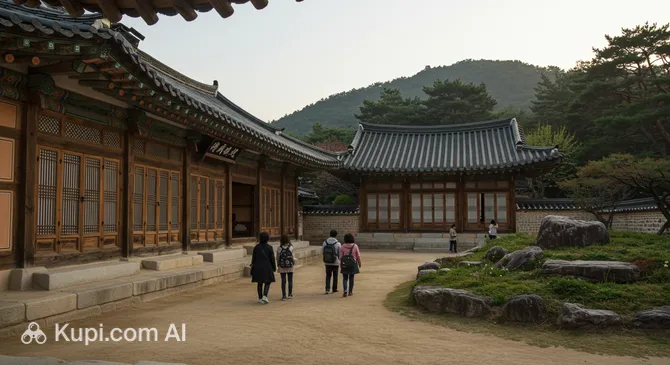
Seongyojang House. Illustration.
Source: Kupi.com AI

Traveler photos:

The Seongyojang estate is a harmonious complex of traditional Korean buildings, each with its own purpose. You will immediately notice the characteristic curved roofs, elegant wooden structures, and the general atmosphere of tranquility and refinement inherent in Eastern architecture. A walk through the estate grounds is comparable to a journey through time.

A visit to Seongyojang offers a unique opportunity to immerse yourself in Korean history and culture. Here, you can vividly imagine how the lives of the upper class flowed several centuries ago. Authentic furnishings and household items have been preserved inside the buildings, making this place especially valuable for those interested in history and seeking to understand the spirit of the past. It is a truly significant cultural site that carefully preserves the heritage of its ancestors.

Contacts

To find out the latest information about opening hours, ticket prices, and available tours at the Seongyojang estate, we recommend referring to the official tourism resources of Gangneung or looking for the attraction's own website. Generally, such historical complexes in South Korea can be reached by public transport or taxi from the city center.

How to contactContact
Address63 Unjeong-gil, Gangneung, Gangwon-do, South Korea
Phone number+82 33-648-5303
Websitewww.knsgj.net

What to Do

When visiting the Seongyojang estate, you will have the opportunity to examine various buildings constructed in the traditional Korean architectural style in detail. By looking inside, you can learn about the life of the Korean aristocracy of the Joseon period. The authentic interior items attract special attention: antique furniture, exquisite tableware, and other artifacts that were once part of the daily life of noble families and will help you better imagine their way of life.

Strolling through the grounds of the Seongyojang estate will also bring much pleasure. You can enjoy the beauty of traditional Korean landscape art while walking through the well-kept gardens. Admire the characteristic elements of landscape design that create a peaceful atmosphere, and take memorable photos against the backdrop of picturesque views. This is an excellent place for those interested in Korean culture, history, and architecture who are looking for quiet contemplation.

Getting There

Getting to the Seongyojang estate is quite easy, as it is located within the city of Gangneung. If you are already in Gangneung, the most convenient way is to use local public transport. Bus routes in South Korea are usually well-developed, and you will likely find a suitable one that takes you to the estate or the nearest stop.

As an alternative to public transport, you can always take a taxi. The ride from the center of Gangneung to Seongyojang won't take much time and will be relatively inexpensive, especially if you are traveling in a small group. Also, if you prefer more freedom of movement, you can consider renting a car, which will allow you to explore other attractions around Gangneung at your own pace.

The city of Gangneung itself has good transport links with other major cities in South Korea, including the capital, Seoul. You can reach Gangneung by the KTX high-speed train or by intercity bus. Both options offer a comfortable and relatively fast journey, after which you only need to reach the Seongyojang estate itself by one of the methods mentioned above.

Nearest city: Gangneung

History & Facts

The Seongyojang estate is not just an old house, but a true time capsule that transports us to the era of the Joseon dynasty (1392–1910). According to historical records, it was the residence of a noble Korean family, and its uniqueness lies in the fact that the building complex has reached our days virtually in its original form. This fact alone is remarkable given Korea's centuries-long history and makes Seongyojang a priceless witness to the past.

It is precisely because of such exceptional preservation that Seongyojang is today not just a tourist attraction, but an important historical monument. Here, you can see firsthand and try to understand how the life of the Korean aristocracy was organized several centuries ago. Every detail, from the layout of the rooms to the decorative elements, tells its own story about the social norms, family traditions, and aesthetic preferences of the upper class of that time.

The surviving original architectural and interior elements are of particular value. These are not reconstructions, but authentic evidence of the skill of Korean architects and craftsmen of the Joseon era. By studying these details, visitors get a rare opportunity to form a vivid picture of the daily life, culture, and worldview of the people who inhabited Korea in ancient times. Thus, Seongyojang serves not only as a beautiful architectural ensemble but also as an important cultural heritage of South Korea, vividly illustrating the richness of its history.

Time Needed

In order to fully enjoy your visit to the Seongyojang estate and carefully inspect all its corners, we recommend setting aside approximately 1-2 hours. This amount of time is generally sufficient for most visitors to get a full impression of this historical site in the city of Gangneung.

During this time, you can take a leisurely walk through the entire complex, closely examine the architectural features of each building, look inside the rooms where permitted, and familiarize yourself with the exhibits that tell the history of the estate and the life of its former inhabitants. This will allow you to immerse yourself in the atmosphere of old South Korea without rushing.

Of course, if you are deeply passionate about Korean history, Joseon-era architecture, or simply love to spend more time in such places soaking up every detail, your visit may take a bit longer. However, for a general introduction to Seongyojang and its main attractions, two hours will be quite enough to form a vivid impression.

Working Hours

Generally, the Seongyojang estate is open to visitors throughout the year, but exact opening hours may vary depending on the season and day of the week. Usually, such historical sites in South Korea operate during daylight hours, for example, from 9:00-10:00 AM to 5:00-6:00 PM. Admission for visitors often stops 30-60 minutes before closing.

Since specific information about opening hours and the need for advance ticket booking for Seongyojang is not provided in this request, it is strongly recommended to clarify these details before your visit. The most reliable way is to check the official website of the estate (if one exists) or contact the tourist information center in the city of Gangneung. There, you can obtain the most up-to-date information on the schedule, ticket prices, and any changes in operation related to holidays or special events.

9:00 – 17:00

Nearby

Visiting the Seongyojang estate is undoubtedly a highlight, but getting to know other attractions in Gangneung located nearby can significantly enrich your experience. Exploring the surroundings will allow you to dive deeper into the atmosphere of this charming Korean city and see more of its treasures.

The city of Gangneung offers many interesting places, and exploring nearby sites will help you get a more complete picture of its culture, history, and modern life. Each new location will add unique touches to your journey through South Korea.

NameDistance
Ojukheon1 km
Ojukheon and Ojukheon Municipal Museum1 km
Gyeongpodae Pavilion1.4 km
Chamsori Gramophone & Edison Science Museum1.6 km
Nature Playground Zoo1.7 km
Gyeongpo Lake1.9 km
Arte Museum Valley Gangneung2 km

Have you reached the end of the page?

So the route has been studied inside and out