Support

Gwangjang Market

About

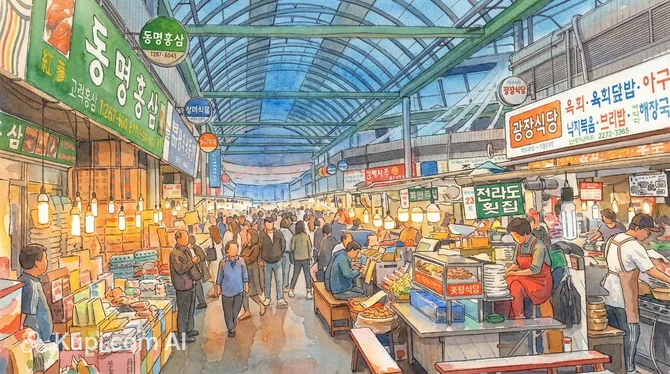
Gwangjang Market is not just a trading square, but a true cultural and gastronomic epicenter of Seoul. Founded in 1905, it is rightfully considered the oldest continuously operating traditional market in South Korea. Located in the heart of the historic Jongno district, it draws thousands of people every day with its unique atmosphere of a vibrant oriental bazaar.
\n\n
Gwangjang Market. Illustration.
Source: Kupi.com AI

Traveler photos:

\n\n

The market space is clearly divided into thematic zones: the first floor houses the famous food street, where the aromas of spices and the sizzle of open griddles create an incredible backdrop. Heading upstairs, visitors enter a world of textiles featuring the finest fabrics, embroidery, and exquisite national hanbok costumes. It is a unique place where centuries-old traditions live in harmony with the modern rhythm of the metropolis.

Contacts

When planning a visit to the famous Gwangjang Market in Seoul, we recommend checking the latest contact information in advance. Although it is one of the city's most stable establishments, it is worth checking official resources before your trip to ensure there are no changes to the schedule or special events being held in South Korea.

How to contactContact
Address88 Changgyeonggung-ro, Jongno District, Seoul, Южная Корея
Phone+82 2-2267-0291
Websitewww.kwangjangmarket.co.kr

What to Do

The main magnet of Gwangjang Market is its incredible gastronomic variety. Visitors should definitely try the famous bindae-tteok (crispy mung bean pancakes) and the legendary "mayak" kimbap—small rolls whose name literally translates as "narcotic" because of their addictive taste. Watching the chefs masterfully prepare food right in front of you turns into an exciting culinary show.

\n\n

Beyond tasting street delicacies, be sure to check out the textile and antique rows on the second floor. Here, you can not only admire masterfully crafted embroidery but also purchase unique handmade items, such as traditional Korean pouches, which make excellent souvenirs from Seoul. It is the perfect place for those who want to see the city's daily life and find authentic goods not found in typical shopping malls.

Getting There

Getting to Gwangjang Market in Seoul is very easy thanks to its central location in the Jongno district. The most convenient way is by subway: take Line 1 to Jongno 5-ga station. Using Exit 8, you will find yourself at the market entrance in just a 2–3 minute walk. The exact address is 88 Changgyeonggung-ro, Jongno-gu.

\n\n

Since the market is located in the bustling historic center, close to popular palace complexes, even a first-time traveler will have no trouble finding it. Parking in this area is very limited, so we strongly recommend using public transport or a taxi. As a nice bonus, the main aisles of the market are accessible for strollers.

Nearest city: Seoul

History & Facts

The history of Gwangjang Market began in 1905, when it became the first permanent traditional market in South Korea to be established and managed entirely by private Korean merchants. Originally called Dongdaemun Market, it later received its current name, derived from the names of the Gwanggyo and Janggyo bridges. In translation, it means "to gather and keep," which perfectly reflects the role of this place as a guardian of national trading traditions.

\n\n

Throughout its more than century-long history, the market has endured many trials. During the Korean War, the original single-story buildings in the traditional hanok style were almost completely destroyed. However, by 1959, the site was reconstructed, transforming into what was then a modern three-story building. In the 1960s, it finally secured its status as Seoul's main center for textiles and national costumes.

\n\n

Today, the company managing the market, Gwangjang Co., Ltd., is one of the oldest operating organizations in the country. Gwangjang Market remains not only an important commercial site but also a living historical monument that has preserved the atmosphere of early 20th-century Korean entrepreneurship and stood firm through eras of great change.

Time Needed

To fully experience the flavor of Gwangjang Market, we recommend setting aside at least 2–3 hours for your visit. This is enough time to stroll leisurely through the stalls, take atmospheric photos, and, of course, enjoy lunch in the legendary food zone.

\n\n

If you plan to explore the textile selection on the upper floors in detail or order custom tailoring for a traditional costume, your visit may take longer. The optimal scenario is to allow one hour for tasting famous Korean dishes and another hour for browsing the craft shops and searching for unique handmade souvenirs.

Working Hours

For the convenience of tourists, Gwangjang Market in Seoul is open daily. The main shopping rows and the famous food zone operate from 09:00 to 22:30. The fact that it is open every day makes it an excellent option for a visit at any time during your stay in South Korea.

\n\n

Please note that the operating hours of individual specialty shops, especially those selling fabrics or antiques, may differ slightly from the general schedule. For the most accurate information on specific pavilions, we recommend checking the market's official website before your visit.

09:00–22:30

Nearby

A visit to Gwangjang Market can easily be combined with exploring other iconic Seoul landmarks. Just a ten to fifteen-minute walk away is the majestic Changgyeonggung Palace, where you can escape the market bustle in the shady gardens. Also nearby is the famous Changdeokgung Palace, known for its unique architecture and the Secret Garden.

\n\n

A stroll through the surrounding Jongno district will allow you to see the striking contrast between the authentic atmosphere of the oldest market and the solemn grandeur of royal residences. The proximity of these sites makes visiting the market an ideal part of a rich sightseeing itinerary through South Korea.

NameDistance
Changgyeonggung Palace1.1 km
Changdeokgung Secret Garden1.5 km
Bound Bar1.5 km
Myeongdong Korean BBQ1.5 km
Myeongdong Korean BBQ1.6 km
Gwanghwamun Gate2.1 km
Charles H2.1 km

Reached the end of the page?

That means the route is fully explored