Support

Byblos

About

Byblos, or Jbeil as it is affectionately called by locals, is a true gem of the Mediterranean, nestled on the coast of Lebanon, just 40 kilometers north of Beirut. This city, with a population of about 40,000 people, wonderfully combines the breath of thousand-year-old history with a modern rhythm of life, where ancient streets sit alongside trendy cafes and lively markets.
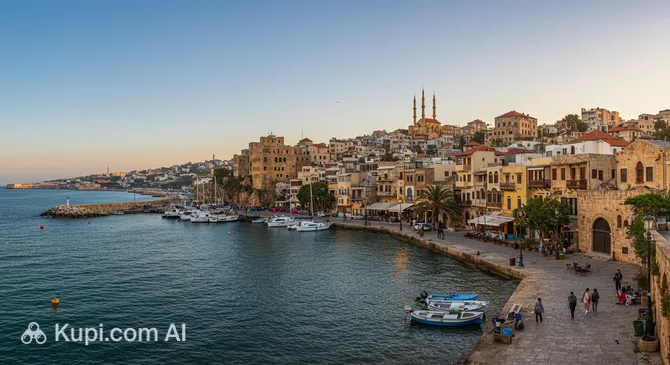
Byblos. Illustration.
Source: Kupi.com AI

Considered one of the oldest continuously inhabited cities in the world, with a history rooted in deep antiquity (approximately 8000 BC), Byblos is a veritable open-air museum. According to legend, it was here that the Phoenician script was born, which became the basis for many alphabets. Walking through its narrow streets, you will discover ruins testifying to the succession of eras and civilizations—from the Phoenicians and Romans to the Crusaders. Key attractions include the ancient port, an impressive archaeological complex with temple ruins, and the majestic Crusader castle.

The atmosphere of Byblos is filled with warmth and Eastern hospitality. Here, you can not only touch history but also enjoy a beach holiday, taste local cuisine in cozy restaurants by the sea, or simply stroll through the vibrant markets. A visit to Byblos is an unforgettable journey through time that will provide plenty of impressions and inspiration to anyone seeking a unique blend of antiquity, culture, and Mediterranean charm.

You can find more interesting facts on the history of Byblos page.
Weather Overview

Byblos features a typical Mediterranean climate with hot, dry summers and mild, wetter winters. In summer, especially in July and August, the average temperature stays around 25°C, and rainfall is virtually non-existent. In winter, during January and February, the average temperature is about 10.5°C, with many rainy days and moderate precipitation. Spring and autumn are transitional seasons with pleasant temperatures and changeable weather.

Expect a warm, sunny summer with minimal rainfall and cool, wet winters. More detailed information about the weather by month can be found on the Byblos Climate page.

Average monthly temperature

Average monthly precipitation

Interesting Facts

Beyond its famous historical monuments, Byblos hides many amazing stories and little-known details that make it even more alluring for travelers. This ancient city seems to have absorbed the wisdom of millennia, and here are just a few of its secrets:

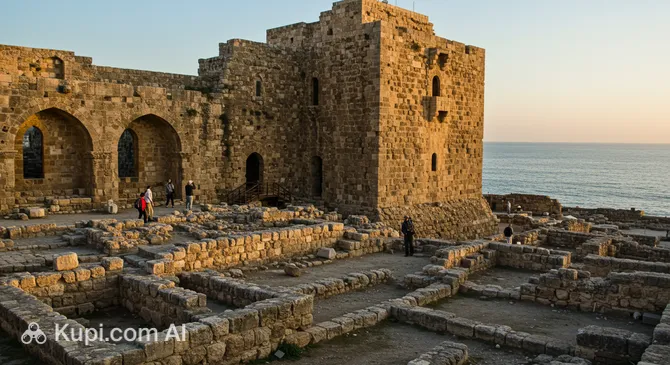
Byblos Castle. Illustration.
Source: Kupi.com AI

Traveler photos:

  • Byblos is recognized as one of the oldest continuously inhabited cities in the world—people have lived here for over 8,000 years! Furthermore, many historians believe that the first alphabetic script originated in Byblos, becoming the foundation for the development of world literature and written culture.

  • Did you know that the word "Bible" itself comes from the name of this city? In ancient times, Byblos was a major center for exporting papyrus—the material on which sacred texts were written. Over time, the city's name became associated with the "book" as such in many languages of the world.

  • The city is a true open-air museum where you can see the impressive Byblos Castle, built by the Crusaders, standing alongside ruins of ancient Phoenician temples, Byzantine churches, and even an ancient Roman theater. Many archaeological finds made in Byblos now grace the collections of the world's leading museums.

  • According to ancient Phoenician legends, the mythological hero Adonis was born in Byblos, and the goddess Aphrodite mourned her lover here. These legends are still alive in the city's culture, which hosts annual themed festivals dedicated to ancient traditions and myths.

How to Get There

Getting to the ancient city of Byblos, one of the gems of the Lebanese coast, can be done in several ways. For most international travelers, the most convenient and fastest option is by air, with the capital's airport serving as the main arrival point.

The main air gateway for a trip to Lebanon and, accordingly, to Byblos, is Beirut-Rafic Hariri International Airport (IATA: BEY). This major international airport is located in Beirut, the capital of Lebanon, approximately 36.8 km south of Byblos. A trip by taxi or rental car from the airport to Byblos usually takes about 1 hour to 1 hour 15 minutes, depending on traffic. Transfer options can also be found at the airport or arranged in advance. This is the most realistic and recommended way for tourists from other countries to reach Byblos. Other airports, such as Larnaca International Airport (IATA: LCA) in Cyprus (about 204 km) or Damascus International Airport (IATA: DAM) in Syria (about 112 km), could theoretically be considered, but using them for a trip to Byblos involves significantly more complex logistics, including potential sea or land border crossings and substantially longer travel times.

For clarity, here is a summary of the main airports that could theoretically be considered:

AirportPassenger trafficDistance
Beirut-Rafic Hariri International Airport5.6 mln37 km
Damascus International Airport2.1 mln112 km
Haifa Airport275 000156 km
Larnaca International Airport8.1 mln204 km
Ercan Airport4.8 mln228 km

Regarding rail travel, it is important to note that Lebanon currently lacks an active domestic or international passenger railway network that tourists could use for direct travel to Byblos. The provided data mentions the Bahsha railway station, located in the city of Haifa, at a distance of approximately 45.7 km from Byblos. However, given the absence of active rail service in Lebanon that could connect this station to Byblos, as well as the need to cross an international border, this option is not a practical way to reach the city.

Here is information on the mentioned railway station:

In addition to flying and then transferring, Byblos can be reached by car or bus from Beirut and other cities in Lebanon. The road network is quite developed, and this is a popular way to move around within the country. It is recommended to research local routes and schedules in advance if you plan to use public transport or rent a car for traveling around Lebanon.

Main Attractions

Byblos, one of the oldest continuously inhabited cities in the world, offers tourists a unique combination of history, culture, and Mediterranean charm. Here, everyone will find something for themselves, from ancient ruins to lively markets and beautiful beaches.

One of the city's main gems is Byblos Castle. This impressive fortress was built by the Crusaders in the 12th century on the site of even older Phoenician and Roman structures. A walk along its walls and towers not only immerses you in history but also offers breathtaking views of the ancient port and the Mediterranean Sea. This place is a must-visit for anyone interested in history and archaeology.

Byblos Castle. Illustration.
Source: Kupi.com AI

Traveler photos:

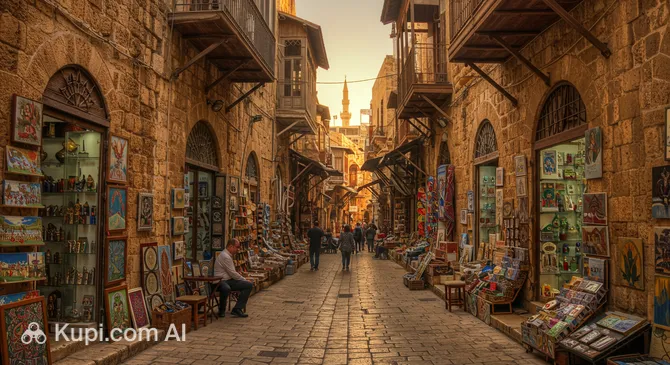
Not far from the fortress lies the Byblos Old Souk. These narrow, cobbled streets preserve the atmosphere of centuries. Here, you can find many souvenir shops, stores selling items by local craftsmen, cozy cafes, and restaurants. The market is the perfect place to feel the flavor of the ancient city, purchase memorable gifts, and try Lebanese cuisine.

Byblos Old Souk. Illustration.
Source: Kupi.com AI

Traveler photos:

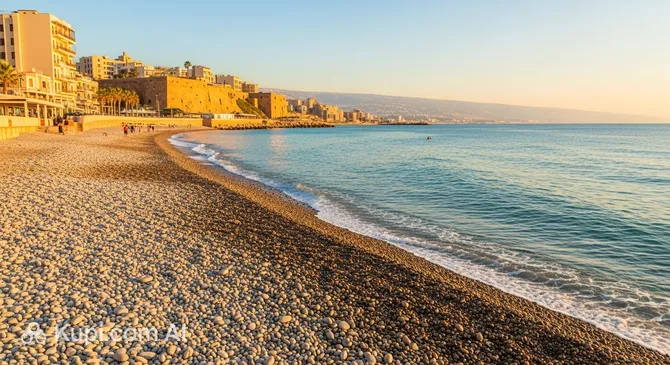
For those looking for relaxation by the sea, Bahsa Beach is an excellent choice. This popular sandy beach attracts both locals and tourists with its clean water and developed infrastructure. Here, you can sunbathe, swim, or simply enjoy the sea breeze while taking a break from sightseeing.

Bahsa Beach. Illustration.
Source: Kupi.com AI

Traveler photos:

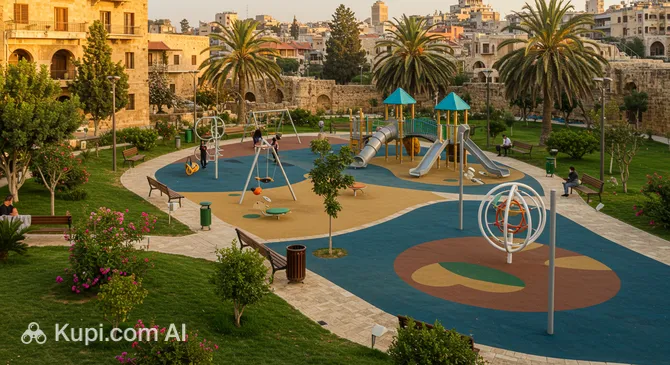
Another notable spot is Byblos Public Park. This well-maintained green oasis offers a pleasant place for walks and relaxation. The park is especially good for families with children or for those who want to take a break from the city bustle and enjoy some tranquility in the shade of the trees.

Byblos Public Park. Illustration.
Source: Kupi.com AI

Traveler photos:

In addition to these iconic locations, Byblos hides many other interesting corners, including ancient temples, an archaeological park, and a charming harbor, making it one of the most attractive destinations in Lebanon.

Local Cuisine

Byblos is a true paradise for gourmets, where Lebanon's ancient culinary traditions meet the freshness of Mediterranean gifts. Local cuisine is famous for its diversity, the use of aromatic Middle Eastern spices, and the freshest ingredients. Immersing yourself in the gastronomic world of Byblos is an integral part of traveling through this historical city.

Be sure to start your acquaintance with Lebanese cuisine with mezze—an assortment of many small appetizers. Among them, you will find the world-famous hummus (chickpea paste), baba ghanoush (roasted eggplant dip), tabbouleh (salad with bulgur and herbs), and fattoush (vegetable salad with crispy pieces of pita bread). Main courses are no less important: fresh fish and seafood take pride of place on the menu. Try fish baked with olive oil and lemon, grilled octopus, or the famous calamari. It is also worth trying kebbeh—meat croquettes with bulgur, and manouche—a fragrant flatbread with thyme (za'atar), often eaten for breakfast.

Among drinks, a special place is held by traditional Lebanese coffee with cardamom, served in small cups. Among alcoholic beverages, arak is popular—an anise-flavored spirit traditionally diluted with water and ice. Freshly squeezed juices from local fruits are also always available, which perfectly quench thirst on a hot day.

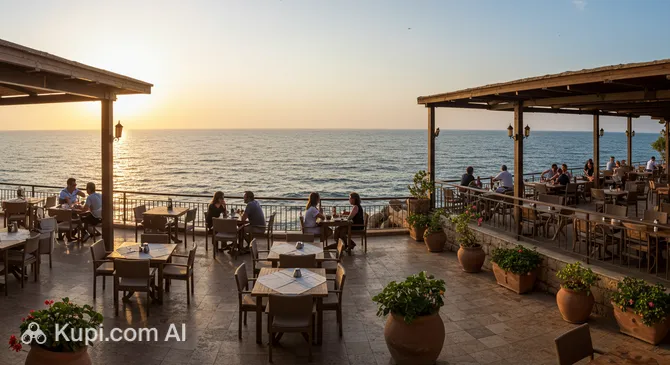
The food culture in Byblos is diverse. Locals and tourists enjoy meals in cozy taverns, especially those located along the old port, where freshly caught fish is served. Many restaurants, such as Babel Bahr, offer both classic and modern interpretations of Lebanese dishes. Street food is also popular—small shops offer quick snacks like hot flatbreads or other local delicacies. To experience the authentic taste of the city, visit the Byblos Old Souk, where you can find fresh fruits, vegetables, nuts, spices, and local cheeses.

Babel Bahr. Illustration.
Source: Kupi.com AI

Traveler photos:

Don't forget to leave room for dessert! Lebanese sweets are a true temptation. Try succulent baklava with nuts, delicate sesame cookies, or other Eastern treats. The gastronomic scene in Byblos is lively, with frequent food festivals and themed evenings turning a meal into a real celebration of taste and socializing.

Travel Tips

Welcome to Byblos, one of the oldest cities in the world! To make your journey through this amazing Lebanese city as comfortable and memorable as possible, we have prepared some practical tips.

  1. Clothing and Essentials:

    The climate in Byblos is Mediterranean. In summer (from May to October), choose light, breathable clothing made from natural fabrics, and don't forget a hat, sunglasses, and sunscreen. For walking among ancient ruins and the cobbled streets of the old town, comfortable shoes are essential. In winter (from November to April), warmer clothes like a sweater or a light jacket will be useful, along with an umbrella in case of rain. When visiting religious sites, such as the Church of St. John the Baptist, both men and women are advised to cover their shoulders and knees. Bring a universal adapter (Type C, D, and G sockets are used in Lebanon).

  2. Transport in the City:

    Byblos is a small city, and its historical center, including the archaeological zone and the old port, can easily be explored on foot. For longer trips, you can use a taxi; always agree on the price in advance or make sure the driver turns on the meter (though this is not always practiced). A "service" (shared taxi) is a cheaper option for intercity travel but is less relevant for tourists moving within Byblos itself. Renting a car makes sense if you plan to explore the surroundings, but keep in mind that traffic can be chaotic and parking in the old town is limited.

  3. Finance: Currency, Cards, Tipping:

    The official currency is the Lebanese pound (LBP), but US dollars (USD) are widely accepted and often even preferred, especially in tourist areas; prices are frequently listed in USD. It is recommended to have both currencies on hand. You can exchange money at banks or exchange offices. Credit and debit cards are accepted in large hotels, restaurants, and some shops, but in small shops at the market (souk) or local cafes, it is better to rely on cash. Check with your bank about the conditions for using cards in Lebanon and any potential fees. ATMs are available but may only dispense LBP and have withdrawal limits. An approximate daily budget in Byblos can vary significantly depending on your preferences: budget travelers can aim for $30-50 (excluding expensive tours and souvenirs), while for a more comfortable stay with restaurant dining and paid attractions, you should budget from $70-150 and up. Tipping is welcomed: 10-15% in restaurants (if a service charge is not included in the bill), small amounts for hotel staff, and rounding up the fare in taxis.

  4. Health and Safety:

    Byblos is considered a fairly safe city for tourists, especially its historical part. Observe standard precautions: keep an eye on your belongings, especially in crowded areas, and be vigilant after dark. Pharmacies are available in the city; it's best to check locally for those open 24/7. For serious medical assistance, clinics in Beirut or Jounieh may be required. Travel insurance is mandatory. It is recommended to drink bottled water.

  5. Communication and Internet:

    The official language is Arabic (Lebanese dialect). French and English are also widely spoken, especially among young people and in the tourism sector, so communication problems usually do not arise. Learn a few simple phrases in Arabic: "Marhaba" (Hello), "Shukran" (Thank you), "Naam" (Yes), "La" (No). A local SIM card can be purchased at the airport or communication stores (e.g., Alfa or Touch) by presenting your passport. Wi-Fi is available in most hotels, cafes, and restaurants. Regarding mobile apps, popular international apps like Google Maps or Maps.me (which allow you to download maps for offline use) are useful for navigating the city and surroundings. There may be few specialized local tourist apps for Byblos, but standard messengers (like WhatsApp) are widely used for communication, and translation apps like Google Translate will help overcome the language barrier if needed.

  6. Local Etiquette and Communication:

    Lebanese people are known for their hospitality. A "Marhaba" greeting will be appreciated. A handshake is the standard form of greeting. When interacting with locals, be polite and respect local traditions. It is customary to ask permission before taking photos of people. In public places, especially when visiting religious sites, try to dress modestly.

  7. What to Avoid:

    Try to avoid discussing complex political and religious topics, especially if you are not familiar with the local context. It is also not recommended to take photos of military sites and personnel.

  8. A Special Tip for Byblos:

    Take your time exploring the ancient Byblos archaeological complex—it is a site with thousands of years of history. Visit the ancient market (souk) for souvenirs and local goods, and be sure to visit the Byblos Fossil Museum, where unique specimens millions of years old are on display. And in the evening, enjoy an unforgettable sunset over the Mediterranean Sea in the old port area.

We hope these tips help you plan an unforgettable trip to Byblos and fully enjoy its ancient history and enchanting atmosphere. Have a great trip!

Entertainment & Nightlife

Byblos, one of the oldest cities in the world, transforms after dark, offering its guests a charming and lively atmosphere. Nightlife here focuses less on noisy clubs open until dawn and more on cozy bars, restaurants with live music, and the unique flavor of the ancient streets, especially in the Old Souk area.

The heart of evening entertainment in Byblos is undoubtedly the Byblos Old Souk. This historical quarter, with its narrow stone streets lit by the soft glow of lanterns, comes alive after sunset. It is home to many bars, cafes, and restaurants offering both traditional Lebanese cuisine and international dishes. The atmosphere here is relaxed and friendly, attracting both tourists and locals. Many establishments set up tables right on the street, creating the feeling of a large open-air celebration. The music varies from traditional Middle Eastern melodies to modern lounge compositions.

Byblos Old Souk. Illustration.
Source: Kupi.com AI

Traveler photos:

Among the popular spots to enjoy an evening, restaurants that often include bar areas are worth noting. For example, Babel Bahr is famous for its seafood and beautiful views, making it an excellent choice for a dinner that transitions into an evening hangout. Another establishment that offers a pleasant evening experience is the Haven — Cabin restaurant, where you can enjoy delicious food in a cozy setting.

Babel Bahr. Illustration.
Source: Kupi.com AI

Traveler photos:

The crowd in Byblos is quite mixed, ranging from families with children dining in restaurants to young people gathering in bars. The dress code in most places is casual or smart-casual; there are usually no strict requirements. Establishments start to get lively around 8:00–9:00 PM, and many stay open until midnight or 1:00 AM, especially on weekends. Prices in bars and restaurants are moderate but can vary depending on the venue's level.

Practical tips: The best time to visit nightlife spots is Friday and Saturday evenings when the city is most vibrant. You can reach central areas at night by taxi; it is recommended to use official taxis or ride-hailing apps. Byblos is considered a fairly safe city for night walks, especially in tourist zones like the Old Souk. Nevertheless, it is always wise to observe standard safety precautions.

While Byblos's nightlife has its own special charm, the city also offers plenty to do during the day. You can explore the ancient Byblos Castle, stroll through Byblos Public Park, or relax on one of the beaches, such as Bahsa Beach. The city also has small museums dedicated to its rich history.

Parks & Museums

Byblos, one of the oldest cities in the world, offers its guests not only an immersion into thousand-year history but also the opportunity to enjoy nature and get acquainted with its cultural heritage through unique sites. Here, picturesque corners for relaxation and places guarding the secrets of centuries harmonize perfectly.

For those seeking seclusion with nature or simply a pleasant break in the fresh air, Byblos offers several wonderful spots. Byblos Public Park is a lovely place for walks and family recreation, where you can enjoy greenery and a calm atmosphere. If you prefer a seaside holiday, Bahsa Beach will delight you with clean sand and the chance to swim in the Mediterranean Sea. Another popular option is Santa Preri Beach, known for its relaxing environment.

Speaking of the cultural and historical heritage of Byblos, it is impossible not to mention its iconic landmarks. The majestic Byblos Castle, built by the Crusaders, is the heart of the ancient city and offers visitors a glimpse into the past as they explore its walls, towers, and the surrounding archaeological park. It is a true open-air museum where every stone breathes history. No less colorful is the Byblos Old Souk, where you can not only buy souvenirs and local products but also feel the authentic atmosphere of an Eastern bazaar while strolling through its narrow streets. For those interested in the deep antiquity of the region, the Byblos Fossil Museum is a must-visit. Its collection features unique fossilized fish and other marine life millions of years old, allowing you to touch the prehistoric past of this land.

Beyond the main attractions, Byblos hides less known but equally charming corners. Peek into the small craft workshops in the old town, where you can watch local artisans at work and purchase unique items. Also, pay attention to the ruins of ancient Phoenician temples scattered across the archaeological zone—they tell the stories of the earliest pages of this amazing city's history.

Getting Around

Byblos is an ancient and quite compact city, so many of its interesting corners, especially in the historical center, can easily be explored on foot. However, for travel over longer distances or for convenience, there are several public transport options and alternative ways to get around.

The main form of public transport in Byblos, as in many cities in Lebanon, are service taxis (services) and buses. These are typically minibuses or passenger cars that follow specific routes. They do not have clearly marked stops—you can stop them with a wave of your hand anywhere along their route. Tell the driver where you need to go, and he will tell you if he's headed that way. This is the most budget-friendly way to move around the city and its surroundings. There are no subways, trams, or trolleybuses in Byblos.

The payment system in service taxis and buses is usually cash directly to the driver upon boarding or exiting. The fare is generally low, especially for short distances. It is recommended to have small change with you. Specialized transit cards or mobile apps for paying for public transport in Byblos are generally not provided. Prices may vary slightly, so don't hesitate to confirm the cost with the driver or other passengers before the trip.

Tourists should note that public transport operates primarily during the day, and its frequency may decrease in the evening. To use a service taxi, simply go to a busy street heading in your desired direction and raise your hand when you see an approaching "service". Knowing a few phrases in Arabic or having the address written in Arabic can be helpful, although many drivers in tourist areas may understand English or French.

As an alternative to public transport, regular taxis are widely available in Byblos. They can be found at stands near hotels, attractions, or simply hailed on the street. Unlike "services," a private taxi will take you directly to your destination. It is crucial to agree on the fare with the driver before starting the journey, as taximeters are not always used. Bike rentals or car-sharing are not well-developed in Byblos and are not primary modes of transport for tourists. Given the compactness of the historic center, walking remains one of the most pleasant ways to get to know the city.

Accommodation

In Byblos, tourists are offered a diverse choice of accommodation options capable of meeting the needs of travelers with different budgets and preferences. You can find cozy guesthouses and apartments for independent living, as well as comfortable mid-range hotels or luxury resort complexes. Areas located in the immediate vicinity of the historic city center, the ancient harbor, and the Byblos Old Souk are considered particularly popular for staying, providing easy access to major attractions and the atmosphere of the ancient city.

Among the well-known hotels offering quality service, one can highlight, for example, the Eddésands Resort & Wellness complex, known for its amenities and seaside location, as well as the Byblos Sud hotel, which offers comfortable accommodation. Many hotels in Byblos boast beautiful views of the Mediterranean Sea or the historical quarters.

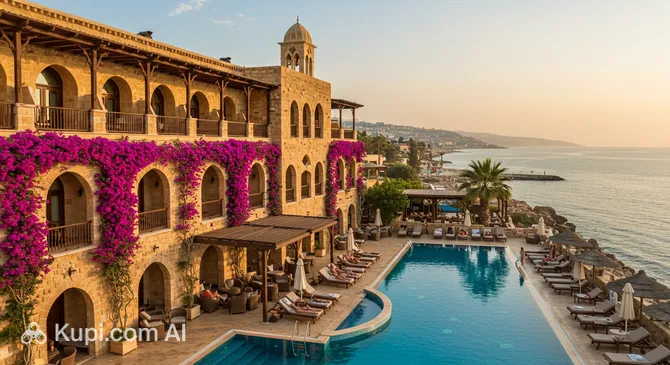
Eddésands Resort & Wellness. Illustration.
Source: Kupi.com AI

Traveler photos:

When planning a trip, especially during the high tourist season, it is recommended to book accommodation well in advance. The price range for accommodation varies from budget options to luxury offers. You can book a room or apartment through popular online platforms or by directly contacting the administration of your chosen hotel. This approach will allow you to compare offers and choose the most suitable option for your unforgettable vacation in Byblos.

Nearby Cities

For those who want to explore the surrounding area, Byblos serves as an excellent starting point for day trips to several interesting nearby locations:

CityPopulationDistance
Kfar Kidde20 0009 km
Kfar Abida9 61312 km
Batroun45 00014 km
Jounieh102 22115 km
Bteghrine12 00023 km

Among the nearby cities, two stand out in particular. Beirut, the capital of Lebanon, is only 29 km from Byblos. This bustling metropolis attracts visitors with its rich history, a mix of ancient ruins and modern architecture, as well as the famous Corniche promenade and numerous museums, such as the National Museum of Beirut. A trip here allows you to immerse yourself in the dynamic atmosphere of the Middle East.

Jounieh, located just 15 km south of Byblos, charms with its picturesque bay and is home to the famous statue of Our Lady of Lebanon in Harissa, which can be reached by cable car while enjoying breathtaking panoramic views. The city also offers pleasant beaches and a lively atmosphere with restaurants and cafes.

These nearby destinations provide insight into the diverse culture and landscapes of the region, complementing the experience of visiting ancient Byblos.

Shopping & Souvenirs

Shopping in Byblos is a fascinating journey through the pages of history, where every shop and workshop breathes antiquity. The city is not famous for giant shopping malls; its charm lies in authentic little shops and a colorful market where you can find unique souvenirs, products of local craftsmen, and traditional Lebanese goods. Here, shopping turns into a real exploration full of discoveries.

The main commercial heart of the city is undoubtedly the Byblos Old Souk. These ancient market rows, located in the historical center, are a labyrinth of narrow streets filled with all sorts of shops. You can wander here for hours, choosing souvenirs, getting acquainted with local crafts, and simply enjoying the atmosphere. Around the market, you can also find interesting shops offering antiques and modern designer items.

In Byblos, you won't find the large modern shopping malls characteristic of metropolises. For that format of shopping, it's better to head to the capital of Lebanon, Beirut. The charm of Byblos lies precisely in its intimate shops and historical market, where every purchase carries a piece of the soul of this ancient city.

The main and most famous market is, of course, the Byblos Old Souk. It is not just a place for shopping but a real landmark. It sells traditional Lebanese souvenirs, copper and silver products, handmade ceramics, colorful fabrics, spices, local sweets, and olive oil. The market also offers a good selection of ethnic-style clothing and accessories.

From Byblos, it's worth bringing back souvenirs that reflect its rich history and the culture of Lebanon. Look for items depicting Phoenician ships or the alphabet, as Byblos is considered one of the oldest continuously inhabited cities in the world and the birthplace of the alphabet. Cedarwood products, olive oil-based soap, local wines, aromatic herbs, and spices, as well as traditional Lebanese sweets, are also popular. Souvenir shops also offer high-quality replicas of ancient artifacts.

Shops in Byblos usually operate from 10:00 AM until late evening, especially during the tourist season. Some small shops may close for a siesta in the middle of the day. At the market and in small shops, it is preferable to pay in cash (Lebanese pounds, although US dollars are often accepted). In larger stores and restaurants, credit cards can be used.

Tourists in Lebanon can take advantage of the VAT refund system (Tax Free) on certain goods purchased in participating stores. To receive a tax refund, you must make a purchase of a certain amount and correctly complete the documents at the time of purchase. Check the details and availability of this option directly in the shops and keep all receipts.

Reached the end of the page?

That means the route is fully explored