Support

Tripoli

About

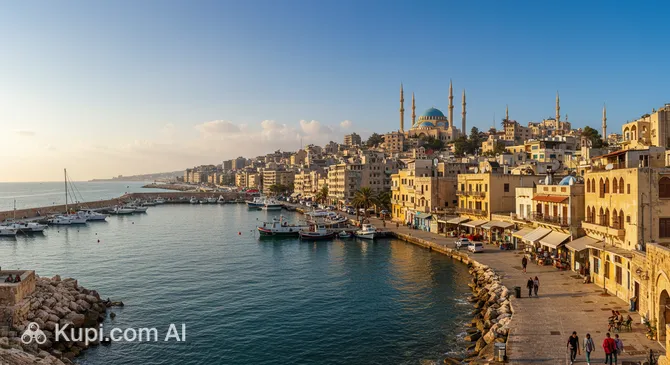
Tripoli is Lebanon's second-largest city and one of its oldest centers, located in the north of the country in the North Governorate. This bustling port city on the Mediterranean coast charms visitors with its rich history, stretching back centuries, and a unique atmosphere where East meets West. With a population of about 530,000, Tripoli serves as a vital cultural and economic hub for the region.

Tripoli. Illustration.
Source: Kupi.com AI

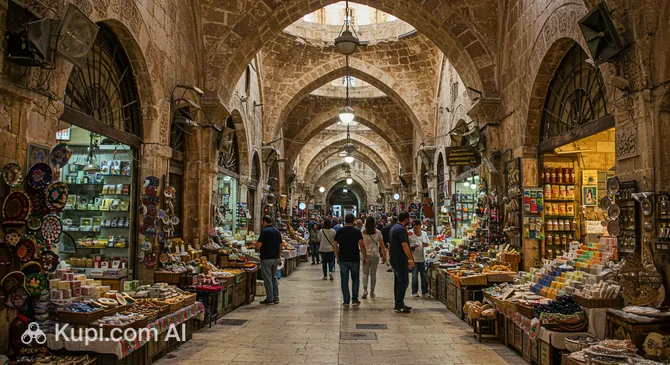
The city is famous for its mild Mediterranean climate, featuring hot dry summers and warm wet winters, making it an attractive destination almost year-round. Tripoli is a true open-air museum where every stone breathes history. Among its primary treasures is the famous Citadel of Raymond de Saint-Gilles, an impressive Crusader-era fortification offering magnificent views of the city and the sea. Equally fascinating are the ancient souks (markets) of Tripoli, a labyrinth of narrow streets filled with the scent of spices, the sounds of artisans, and the vibrant colors of trade. The city also prides itself on numerous Mamluk-era mosques, madrasas, and hammams, showcasing exquisite Islamic architecture.

A visit to Tripoli will provide you with unforgettable impressions, immersing you in the authentic atmosphere of an ancient city with its hospitable residents and cultural heritage. It is a place where you can wander for hours through historical quarters, discovering something new at every turn and enjoying the unique character of the Lebanese coast.

You can find more interesting facts on the history of the city of Tripoli page.

Weather Overview

The weather in Tripoli is ideal for a summer holiday: the peak heat occurs in August, when the average temperature reaches 26.1°C (maximum values can rise to 29.1°C), and precipitation is virtually absent, as in July. The winter here is mild but wetter. For example, in January, the coolest month, the average temperature is about 10.9°C (minimums drop to 8.1°C), with about 5 mm of precipitation and up to 17 rainy days. Thus, when planning your trip, expect a very warm and sunny summer, and a cool, occasionally rainy winter. You can learn more about seasonal changes and get a current forecast on the Tripoli Climate page.

Average monthly temperature

Average monthly precipitation

Interesting Facts

Beyond its well-known historical monuments and lively markets, Tripoli holds many fascinating secrets and little-known facts that make it even more alluring for curious travelers. Here are just a few of them:

Rachid Karami International Fair. Illustration.
Source: Kupi.com AI

Traveler photos:

  • Capital of Mamluk Architecture in Lebanon: Tripoli is often called the "capital of Mamluk architecture" in Lebanon because it preserves the largest number of buildings from this era outside of Cairo. These include magnificent mosques like the Taynal Mosque, madrasas, hammams, and caravanserais.

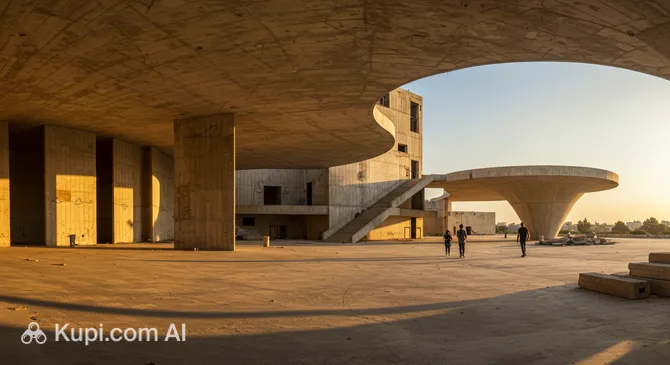
  • Oscar Niemeyer's Futuristic Project: The city is home to the grandiose but unfinished Rashid Karami International Fair complex. Designed in the 1960s by the famous Brazilian architect Oscar Niemeyer, this ensemble of futuristic buildings is today a unique monument of modernist architecture and a UNESCO World Heritage site (listed as being in danger).

  • "Three Cities" in One: The name "Tripoli" comes from the Greek "Τρίπολις" (Tripolis), meaning "three cities." Historically, it was a confederation of three Phoenician city-states—Sidon, Tyre, and Arwad—each of which had its own quarter in the ancient port that founded the modern city.

  • Palm Islands Nature Reserve: Just off the coast of Tripoli lies the Palm Islands archipelago (Jaziret el-Nakhl), which is a nature reserve. These three flat, rocky islands serve as an important nesting site for migratory birds and rare sea turtles, such as the loggerhead turtle.

  • Ancient Soapmaking Traditions: Tripoli is famous for its centuries-old soapmaking traditions. In the old city, you can still find workshops and historical soap factories, such as Khan al-Saboun (Soap Caravanserai), which produces natural olive soap based on ancient recipes, often enriched with local herbs and fragrances.

How to Get There

Reaching Tripoli, one of Lebanon's key cities, is possible in several ways; however, the most common and convenient option for international travelers is flying to the nearest major airports followed by a ground transfer.

The primary air hub serving northern Lebanon and, consequently, Tripoli, is Beirut Rafic Hariri International Airport (IATA: BEY). It is located in the capital, Beirut, about 75 km south of Tripoli. This is a major international airport with high passenger traffic, receiving flights from many countries worldwide. A trip from Beirut airport to Tripoli by taxi or rental car usually takes between 1 hour 45 minutes and 2 hours 15 minutes, depending on traffic. There are also bus routes and shared taxi services (servees) connecting Beirut with Tripoli. For more information, you can visit the Beirut Rafic Hariri International Airport page.

Other options, though more distant, include Larnaca International Airport (IATA: LCA) in Cyprus, located about 209 km from Tripoli (straight-line distance across the sea; reaching Lebanon would require an additional flight, usually to Beirut). Another option is Damascus International Airport (IATA: DAM) in Syria, located about 130 km from Tripoli. A car journey from Damascus to Tripoli takes about 3-4 hours, including border crossing time, and requires consideration of current visa rules and the border situation. These options may be relevant for travelers combining visits to multiple countries. More details about these airports can be found on their pages: Larnaca International Airport and Damascus International Airport.

For clarity, here is a summary of the main airports through which you can reach Tripoli:

AirportPassenger trafficDistance
Beirut-Rafic Hariri International Airport5.6 mln75 km
Damascus International Airport2.1 mln130 km
Haifa Airport275 000195 km
Larnaca International Airport8.1 mln208 km
Hatay Airport1 mln218 km

Regarding rail travel, direct international or intercity passenger rail service to Tripoli is currently virtually non-existent or extremely limited. Historically, there was a rail network, but it is not currently functioning for regular passenger transport in a way that would be convenient for tourists.

The provided source data mentions the Bahsa railway station located in the city of Haifa, indicating a distance of 19.4 km to Tripoli. It is critically important to note that this distance information is erroneous and does not correspond to reality. The city of Haifa is in Israel, at a significant geographical distance (about 190-200 km by land) from Tripoli in Lebanon. The stated 19.4 km is not a real distance. Any travel plans to Tripoli via this station based on this figure would be incorrect. Crossing the border between Lebanon and Israel for tourists also involves significant difficulties or impossibility depending on the current political situation and the traveler's citizenship.

For the sake of complete information, below are the details of the railway station from the provided list, subject to the above warning:

*Table Note: The stated distance of 19.4 km from Bahsa station (Haifa) to Tripoli is incorrect and does not reflect the real geographic location. Haifa is at a significant distance from Tripoli, in a different country. This figure should not be used for trip planning.

In addition to air travel, Tripoli is easily accessible by car via Lebanon's developed road network. Intercity buses and shared taxis (servees) are also a popular and affordable way to move around the country, regularly running between Tripoli, Beirut, and other Lebanese cities.
Main Attractions

Tripoli, one of the oldest cities in Lebanon, offers travelers a true immersion into history and culture. Among its many treasures are several places that are definitely worth including in your itinerary.

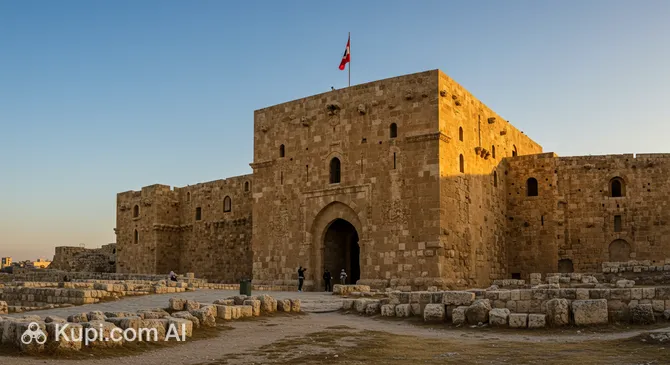
The majestic Citadel of Raymond de Saint-Gilles, also known as the Tripoli Citadel, dominates the city and serves as its primary historical symbol. Established in the 12th century by Crusaders, it was repeatedly rebuilt and expanded by subsequent rulers, including the Mamluks and Ottomans. Today, visitors can explore its massive walls, towers, and courtyards while enjoying panoramic views of the old city, the port, and the Mediterranean Sea. This is a must-visit for anyone interested in medieval history and fortification architecture.

Citadel of Raymond de Saint-Gilles. Illustration.
Source: Kupi.com AI

Traveler photos:

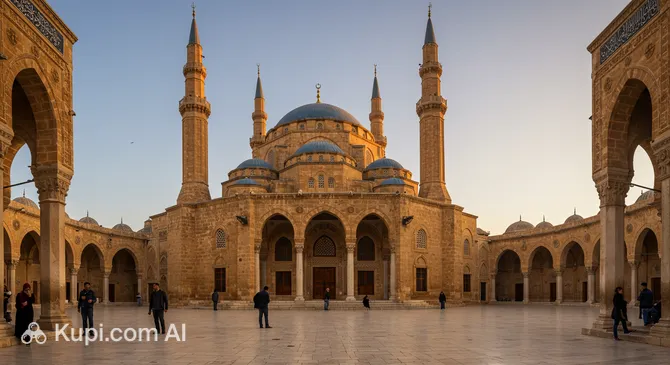
One of the city's most beautiful and significant religious buildings is the Taynal Mosque. Built in the 14th century, it is a magnificent example of Mamluk architecture with elegant minarets, a spacious prayer hall, and a quiet courtyard with a fountain. Tourists are drawn to its sophisticated stone carvings, inlay work, and special atmosphere of tranquility. Visiting the mosque (while observing modesty rules) allows you to touch the spiritual life of the city and appreciate the craftsmanship of medieval architects.

An equally colorful spot is Khan al-Saboun, or the Soap Caravanserai. This historical market, built in the 15th century, originally served as a place for producing and selling the famous Tripoli soap. Even today, you can find workshops here where natural olive soap is made using ancient techniques, enriched with local herbs and oils. A visit to Khan al-Saboun is an opportunity not only to purchase unique souvenirs but also to plunge into the atmosphere of a medieval craft quarter, experience the scents, and see the soap-making process firsthand.

A completely different experience awaits you at the Rashid Karami International Fair. This grandiose, though unfinished, complex was designed in the 1960s by the famous Brazilian architect Oscar Niemeyer. The futuristic concrete pavilions, open-air theater, and experimental housing block scattered across a vast territory make a strong impression. Despite the fact that the project was never fully realized, the fair is an important monument of 20th-century modernist architecture and a UNESCO World Heritage site. It is a unique place for walking, photography, and reflecting on the bold architectural visions of the past.

Local Cuisine

The gastronomy of Tripoli is a vivid reflection of the rich history and cultural diversity of Lebanon. Local cuisine harmoniously blends the best traditions of the Levant and the Mediterranean, emphasizing fresh seasonal products, fragrant herbs, and spices. A journey to Tripoli would not be complete without experiencing its culinary delights, which can surprise even seasoned gourmets with their authenticity and variety of flavors.

Among the dishes that are a must-try in Tripoli, moghrabieh stands out—a special type of large couscous with chicken or meat and a flavorful broth, considered one of the city's culinary symbols. Of course, one cannot overlook the classics of Lebanese cuisine: various mezze (appetizers) such as smooth hummus, spicy mutabbal (eggplant dip), refreshing fattoush salad, or tabbouleh. Be sure to try kibbeh in its various forms—from deep-fried balls to oven-baked or even raw (kibbeh nayyeh). Thanks to the city's coastal location, fresh fish and seafood, such as samke harra (spicy fish baked with herbs and vegetables), hold a place of honor on the local menu.

The traditional alcoholic drink accompanying a meal is arak—a strong anise-flavored spirit usually diluted with water and ice. Popular non-alcoholic drinks include refreshing jallab (a sweet drink made from date syrup, rose water, and grape molasses, often topped with pine nuts), ayran (a salty yogurt drink), freshly squeezed juices (especially pomegranate and orange), and, of course, fragrant Lebanese coffee brewed in a cezve and served in small cups, often with cardamom.

The food culture in Tripoli is multi-faceted and hospitable. Locals often dine with family but also enjoy visiting traditional restaurants where they can savor authentic cuisine in a cozy atmosphere. The old markets (souks) abound with street food—here you can grab a quick and tasty snack of fresh pastries like manakish (flatbreads with zaatar, cheese, or minced meat) or kaak (crispy bread rings sprinkled with sesame seeds). A special place in the city's gastronomic life is occupied by pastry shops famous throughout Lebanon. For instance, the renowned Hallab 1881 is not just a sweet shop, but a true landmark and symbol of the city, where you can taste the best examples of Lebanese desserts: from exquisite baklava and delicate knafeh to aromatic maamoul.

Hallab 1881. Illustration.
Source: Kupi.com AI

Traveler photos:

Tripoli's gastro scene is characterized by an abundance of fresh ingredients, the generous use of olive oil, lemon juice, garlic, and herbs. It is a cuisine that is both hearty and healthy, offering a rich choice for both meat-eaters and vegetarians. Immersing yourself in the world of Tripoli's flavors will be one of the highlights of your trip to this amazing city.

Travel Tips

Welcome to Tripoli, one of the oldest and most colorful cities in Lebanon! To ensure your journey through this amazing place goes smoothly and leaves only pleasant impressions, we have prepared some practical tips to help you better navigate and enjoy your stay.

  1. Clothing and Essentials: Tripoli has a Mediterranean climate, so in the summer (June-September), choose light, breathable clothing made from natural fabrics. Don't forget sunscreen, a hat, and sunglasses. For the spring-autumn period and winter months (December-February), a sweater, a light jacket, and an umbrella or raincoat will come in handy. A key element of your wardrobe is comfortable shoes for walking along ancient streets and markets. When visiting mosques and other religious sites, choose modest clothing that covers shoulders and knees; women may need a headscarf. Don't forget a universal adapter for your electronics.
  2. City Transport: The most common and affordable way to get around Tripoli is via shared taxis known as "servees." They run along set routes, and the fare is low. Regular taxis are also available; it is recommended to agree on the price before starting the trip or ensure the driver has turned on the meter. Some international taxi apps might work, but their availability and reliability should be checked on-site. Car rental is possible, but keep in mind that traffic in the city can be chaotic and parking can be a problem. For exploring the city center, public transport and taxis are usually more convenient.
  3. Finances: The official currency is the Lebanese pound (LBP). However, US dollars (USD) are also widely accepted, especially in tourist areas and for larger purchases. You can exchange currency at banks or licensed exchange offices (sarraf); compare rates before exchanging. Credit and debit cards are accepted in large hotels, restaurants, and some shops, but cash is preferred in the old markets (souks) and small stalls. The functionality of international cards and the availability of ATMs may be limited or subject to unfavorable rates due to the country's economic situation, so it is recommended to have a sufficient supply of cash dollars. Tipping (about 10-15%) is welcome in restaurants for good service; it is also customary to round up the amount for taxi drivers.
  4. Health and Safety: Pharmacies (pharmacie) are easy to find in the city; some may operate 24/7 (check locally). For medical assistance, tourists are advised to go to major hospitals or clinics; be sure to arrange travel medical insurance before your trip. Main tourist areas and the old city (souks) are considered safe during the day. However, as in any large city, remain vigilant, especially after dark and in less crowded places. Avoid displaying expensive items and keep valuables in a secure place. It is recommended to drink bottled water.
  5. Communication: The official language is Arabic (Lebanese dialect). Many residents, especially in tourism and trade, also speak French and English. Learning a few simple phrases in Arabic, such as "Marhaba" (Hello), "Shukran" (Thank you), and "Min fadlak/fadlik" (Please – to a man/woman), will be useful and appreciated by locals. Local SIM cards with internet access can be purchased at the airport or in communication stores. Wi-Fi is available in most hotels, cafes, and restaurants.
  6. Local Etiquette: Lebanese people are famous for their hospitality. Greetings usually include a handshake. Show respect for local traditions and customs. When photographing people, always ask for permission. In public places, especially when visiting religious sites, dress modestly. Avoid loud conversations and strong displays of emotion in public.
  7. What to Avoid: Try not to wear overly revealing clothing outside of beaches or tourist zones to avoid disapproval. When shopping in markets, you can bargain, but do so politely and with a smile, without aggression. Refrain from discussing sensitive political topics unless you are sure of your interlocutor's position.
  8. Special Tip – Tripoli's Sweet Life: The city is famous throughout Lebanon for its delicious oriental sweets. Be sure to visit one of the legendary pastry shops, such as Hallab 1881, to try fresh baklava, knafeh, or maamoul. This is an unforgettable gastronomic experience and a great souvenir!

We hope these tips help you feel more confident and get the most enjoyment out of discovering Tripoli. Enjoy its ancient history, lively markets, and the hospitality of its residents!

Entertainment & Nightlife

Although Tripoli in Lebanon is primarily known for its rich history and ancient attractions, the city also offers its guests and residents opportunities for pleasant evening leisure. The nightlife here might not be as vibrant as in Beirut, but it possesses its own special, more relaxed, and authentic charm, focused on socializing and enjoying the local atmosphere.

Evening entertainment in Tripoli is mostly concentrated around restaurants, cafes, and certain hotels. Popular spots for evening strolls and dinners include the waterfront and the more modern districts of the city, where you can find establishments with pleasant music and a cozy setting. Instead of loud nightclubs, the area is dominated by places where you can relax and chat with friends or family while enjoying delicious food and drinks. The atmosphere in such venues is usually friendly and welcoming. There is generally no strict dress code, but neat casual wear is appropriate.

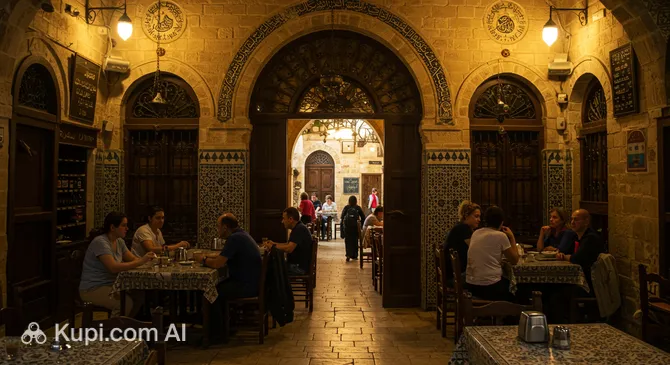
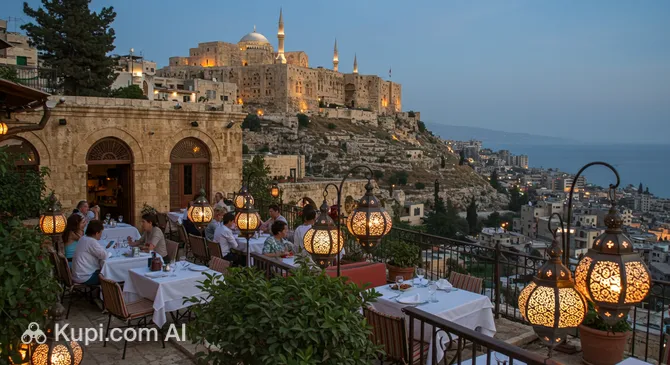
Many restaurants offer both traditional Lebanese cuisine and international dishes, staying open until late evening. One such place to enjoy a pleasant evening over dinner is Dar Al Amar, which offers guests a cozy atmosphere and tasty meals. Also, while Hallab 1881 is primarily known as a legendary pastry shop, it also functions as a restaurant where you can enjoy not just desserts but a full dinner in a historical building. For those looking for a more comprehensive leisure experience, Palma Resort offers restaurants and bars on its grounds where you can unwind after a busy day.

Dar Al Amar. Illustration.
Source: Kupi.com AI

Traveler photos:

Palma Resort. Illustration.
Source: Kupi.com AI

Traveler photos:

When planning an evening out, it's best to aim for a time after 8:00 PM, when most establishments begin to liven up. Prices in restaurants and cafes can vary depending on the level of the venue but generally remain affordable. Taxis are the most convenient way to move around the city at night. It is recommended to use official taxis or trusted services, agreeing on the fare in advance or ensuring the meter is turned on.

Regarding safety, it is recommended to stick to well-lit and busy streets in the evenings, especially in central areas and along the waterfront. As in any other city, standard precautions should be followed: keep an eye on personal belongings and avoid deserted, dark alleys. You can call a taxi by phone, via apps (if available), or ask hotel or restaurant staff to arrange one for you.

During the day, Tripoli offers many other activities. Visitors can visit historical museums, explore ancient citadels like the Citadel of Raymond de Saint-Gilles, walk through the colorful old markets (souks), or relax in city parks. Although Tripoli lacks large theme parks, its cultural heritage and historical atmosphere are major attractions in their own right.

Parks & Museums

Tripoli offers its guests not only an immersion into the past through its historical quarters but also the opportunity to enjoy nature and get acquainted with a rich cultural heritage in its unique "museums" and iconic sites. The city carefully preserves both green corners for relaxation and treasuries of history and art.

For those seeking solitude with nature, Tripoli and its surroundings offer several interesting options. Just off the coast lies the Palm Islands (Jaziret el-Nakhl) archipelago, which is a nature reserve. These islands are an important site for migratory birds and rare sea turtles, offering unique opportunities for wildlife observation. Within the city itself, the Corniche (waterfront) is a pleasant place for walking, where you can enjoy the sea breeze, views of the Mediterranean, and observe the daily life of the townspeople. The vast territory of the Rashid Karami International Fair is also noteworthy; besides its unique architectural objects, this space offers extensive green zones ideal for leisurely walks and outdoor relaxation.

While Tripoli may not have a large number of traditional museums in the classic sense, the city itself is largely an open-air museum. The majestic Citadel of Raymond de Saint-Gilles, towering over the city, serves as a primary historical "exhibit," telling the story of the region's centuries-old history. Its walls and towers hold memories of Crusaders, Mamluks, and Ottomans. The heart of the cultural heritage is the Old City with its labyrinth of narrow streets, ancient markets (souks), and workshops. Located here is Khan al-Saboun (the Soap Caravanserai), where you can not only see the process of making traditional olive soap but also feel the spirit of medieval craftsmanship. This place is a real living museum demonstrating age-old traditions.

Khan al-Saboun. Illustration.
Source: Kupi.com AI

Traveler photos:

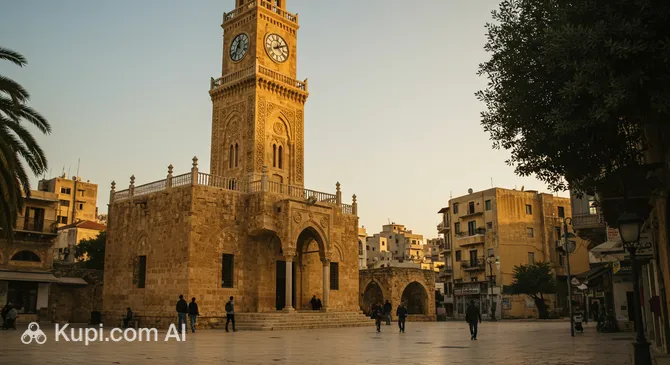
In addition to the citadel and old markets, Tripoli abounds with other significant historical and architectural sites, each contributing to the city's cultural profile. A striking example of Ottoman heritage is the Clock Tower of Sultan Abdul Hamid II, gifted to the city in the early 20th century and becoming one of its symbols. Religious architecture is represented by numerous mosques, most notably the Taynal Mosque—a gem of 14th-century Mamluk architecture with its elegant minarets and rich interior decoration. A walk through the city will reveal many other examples of magnificent Mamluk architecture, including madrasas and hammams, making Tripoli a true treasury for history enthusiasts.

Sultan Abdul Hamid II Clock Tower. Illustration.
Source: Kupi.com AI

Traveler photos:

Taynal Mosque. Illustration.
Source: Kupi.com AI

Traveler photos:

For a deeper immersion into the cultural atmosphere of Tripoli, don't limit yourself to only the most famous sights. Peek into the less touristy corners of the Old City, where you can find hidden courtyards, ancient fountains, and small craft shops. Try talking to the locals—their hospitality and stories can reveal the city from a completely new perspective. Look for authentic coffee shops where old-timers gather to feel the true rhythm of life in Tripoli.

Getting Around

Getting around Tripoli can be done in several ways, and although the city does not boast an extensive network of subways or trams, its public transport system is functional enough for the needs of residents and tourists alike. The backbone of the transport system consists of shared taxis and buses, supplemented by regular taxi services.

The most common and authentic type of public transport in Tripoli is the shared taxi, known locally as a "servees" (servees). These are cars or minibuses that run along specific, though not always strictly fixed, routes. They pick up passengers along the way and drop them off on demand. Payment is made in cash directly to the driver upon exiting or entering. The fare is usually low and depends on the distance; often, it is a fixed amount for a trip along a certain section of the route. It is best to clarify the route and cost with the driver before boarding. "Servees" are a great way to experience the local character and reach most areas of the city.

City buses are also part of Tripoli's transport system, although their network may be less dense compared to the "servees." Buses usually follow more clearly defined routes and have designated stops. Fare payment is also typically made in cash to the conductor or driver upon boarding. Schedules might not always be precise, but buses are an economical option for travel, especially for longer distances within the city.

As for the payment system, cash is the predominant method in Tripoli's public transport. Specialized transport cards or short-term tourist passes are generally not available. It is recommended to carry small bills of local currency for convenience. Fares for "servees" and buses are considered very affordable.

Practical tips for tourists: public transport usually starts operating early in the morning and ends late in the evening, however, the frequency may decrease during off-peak hours and at night. To use a "servees," simply raise your hand on the street when you see an approaching vehicle that looks like a shared taxi. Before boarding, ask the driver if they are heading in your required direction. For buses, look for designated stops, though they can sometimes stop on demand as well.

As an alternative to public transport, taxis are always available. This is a more expensive but also more comfortable way to travel, especially if you are traveling with luggage or in a group. It is recommended to agree on the fare in advance, before getting into the car, or to ensure the driver uses the meter (if one is present and working). Some international ride-hailing apps may function in Tripoli, but their availability and popularity should be checked upon arrival. Car rental is possible, but the busy and sometimes chaotic traffic in the city can be a challenge for an unaccustomed driver. Bicycle rental and car-sharing have not yet become widespread in Tripoli.

Accommodation

In Tripoli, travelers will find a variety of accommodation options to suit different preferences and budgets. The city offers a wide range of housing: from inexpensive guesthouses and hostels, ideal for budget travelers, to mid-range hotels offering comfort and good service, as well as more luxurious options including apartments and resort hotels for those seeking a higher level of amenities.

When choosing a place to stay, it is worth looking at areas close to major attractions, such as the old city (souks) and the Citadel of Raymond de Saint-Gilles, which allows for easy exploration of the historical center on foot. Areas with good transport accessibility, such as those near the waterfront or major transport arteries, can also be convenient. Some hotels are located in modern parts of the city, offering more contemporary infrastructure and easy access to restaurants and shops.

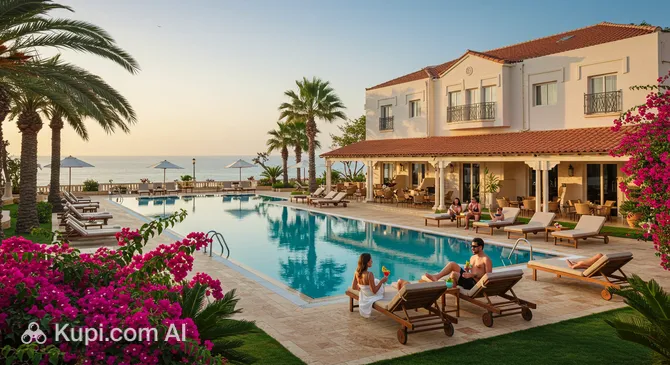
While the selection of international hotel chains in Tripoli may not be as wide as in the capital, there are decent local hotels and resort complexes. For example, Palma Resort offers accommodation with access to beach facilities and various services, which may be attractive to those wishing to combine a cultural holiday with relaxation by the sea. The choice of a specific hotel depends on your priorities—whether it's proximity to historical sites, comfort level, or the presence of specific amenities.

Palma Resort. Illustration.
Source: Kupi.com AI

Traveler photos:

Regarding price range, in Tripoli you can find budget options as well as mid-range and higher-end accommodation. For booking, it is recommended to use popular online platforms such as Booking.com, Agoda, and Expedia, or to contact hotels directly. This is especially relevant during peak tourist season or major local holidays when demand for housing increases. Planning your trip in advance will allow you to choose the best option in terms of price and quality, as well as take advantage of potential early bird discounts.

Nearby Cities

For those looking to explore the surroundings, Tripoli serves as an excellent starting point for day trips to several interesting nearby locations:

CityPopulationDistance
Minieh150 0003 km
Zgharta30 0007 km
Amioun10 00016 km
Ehden25 00021 km
Halba4 73025 km

These nearby destinations offer a glimpse into the diverse culture and landscapes of the Lebanon region. Each place has its own unique charm: Minieh and Zgharta attract visitors with their authentic atmosphere and proximity to Tripoli. Batroun charms with its ancient Phoenician walls, picturesque harbor, and old churches. Byblos, one of the oldest continuously inhabited cities in the world, is a UNESCO World Heritage site and impresses with its archaeological monuments. Jounieh is known for its beautiful bay, the cable car leading to the statue of Our Lady of Lebanon in Harissa, and its lively nightlife.

Shopping & Souvenirs

Shopping in Tripoli is, first and foremost, an immersion into the atmosphere of traditional oriental bazaars rather than a hunt for brands in modern shopping malls. The city is famous for its historical markets (souks), where you can find authentic goods, handicrafts, and local delicacies. This is a unique experience that allows you to feel the true spirit of Lebanon.

The main commercial arteries of Tripoli are its famous ancient markets (souks), located in the heart of the Old City. It is a whole labyrinth of covered and open streets, each often specializing in specific goods: Souk al-Attarine (perfume and spice market), Souk al-Sayaghin (goldsmiths' market), Souk al-Haraj (one of the oldest covered markets), and many others. Walking through them is a true journey back in time, filled with aromas, sounds, and vibrant colors.

Large modern shopping centers in the style of Western megamalls are not a characteristic feature of shopping in Tripoli. Although individual shops and small shopping complexes can be found in the newer parts of the city, the main focus for tourists remains the colorful historical markets, which offer a more authentic shopping experience and unique products.

Tripoli's markets are the soul of the city. Here you can find almost everything: from fresh produce, oriental sweets, and aromatic spices to clothing, fabrics, copper and brass items, ceramics, and jewelry. A special place is occupied by Khan al-Saboun (the Soap Caravanserai), where famous Tripoli olive oil soap has been produced for centuries using natural ingredients. This is not just a market, but an active historical workshop where you can watch the soap-making process and purchase unique products.

As souvenirs from Tripoli, it is worth bringing back:

  • Traditional olive soap: especially from Khan al-Saboun; it comes in various shapes and with different additives (herbs, honey, clay).
  • Oriental sweets: baklava, knafeh, maamoul, and other delicacies. These can be found both in the markets and in specialized pastry shops like the famous Hallab 1881.
  • Spices and herbs: zaatar, sumac, cardamom, and other aromatic seasonings that will give your dishes an oriental flavor.
  • Handicrafts: copper cookware, inlaid wood products, ceramics, and traditional musical instruments.
  • Textiles: shawls, scarves, and tablecloths with traditional patterns.
  • Jewelry: especially silver items, which can be found at Souk al-Sayaghin.

Shops and stalls in Tripoli's markets are usually open from the morning (around 9:00-10:00 AM) and work until the evening (6:00-7:00 PM). Some may close for a lunch break. On Friday, the holy day for Muslims, many shops may be closed or operate on a reduced schedule. The primary method of payment in the markets is cash (Lebanese pounds or US dollars). In some larger stores or modern boutiques, bank cards may be accepted, but you should not count on this in the old souks.

Regarding the Tax Free system (VAT refund for tourists), it is not as widespread or easily accessible in Tripoli as in some European countries, especially for purchases in traditional markets. If you make a large purchase in a major store, it is worth checking with the seller about the possibility of processing tax refund documents, but overall, when buying souvenirs and goods in the markets, this option is unlikely.

Reached the end of the page?

That means the route is fully explored