Support

Bijelo Polje

About

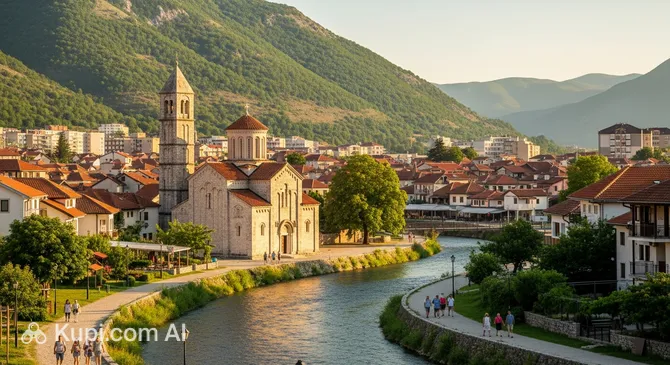
Bijelo Polje is a colorful town in the north of Montenegro, nestled in the wide valley of the Lim River. Surrounded by picturesque mountain ranges, it is considered the unofficial center of the northern region and an important transport hub connecting the coast with the continental part of the country.

Bijelo Polje. Illustration.
Source: Kupi.com AI

The town's name translates to "White Field": in spring, the surrounding meadows are covered with a carpet of blooming daisies, creating an impressive landscape. Bijelo Polje attracts travelers with its authenticity and a calm pace of life, far from the hustle and bustle of coastal resorts. Here, you can stroll through the central square, visit local cafes, and experience true Balkan hospitality.

The town is famous for its cultural diversity. Centuries of history have left their mark in the form of Orthodox churches and ancient mosques that peacefully coexist, creating a unique architectural ensemble.

For lovers of nature and outdoor activities, Bijelo Polje serves as an excellent starting point. It is convenient to begin routes to Mount Bjelasica from here or set off to explore the famous Đalovića Cave, one of the longest and most beautiful in the Balkans. The town is also known for its literary and music festivals, which gather many guests every year.

Weather Overview

The climate in Bijelo Polje can be characterized as moderate-continental, which noticeably distinguishes it from the hot coast of the country. The proximity of the mountains ensures fresh air and a clear change of seasons, making the town attractive for those who do not like exhausting heat.

Winter here is real, with steady sub-zero temperatures. The coldest month is January, when the average temperature is -1.7°C, and at night the thermometer can drop to -5.5°C. During this period, precipitation occurs frequently, up to 15–16 days a month, creating picturesque winter landscapes.

Summer in the town is mild and comfortable. In July and August, the air warms up to pleasant maximums of 24–25°C, and the average temperature stays around 18.9°C. However, even in the warm season, an umbrella can come in handy: for example, up to 19 rainy days are recorded in May, and even in summer, precipitation is not uncommon. The current weather in Bijelo Polje will help you more accurately plan your wardrobe before your trip.

Expect a warm summer with occasional rain and cool winters with frequent precipitation, which is typical for this mountain region.

Average monthly temperature

Average monthly precipitation

Interesting Facts

In addition to the main attractions, Bijelo Polje holds many fascinating secrets that make it a unique point on the map of Montenegro. Here are a few facts that will help you look at this town in a new way:

  • Home to a UNESCO Masterpiece. It was right here, in the Church of Saints Peter and Paul, that the famous Miroslav Gospel was created—the oldest surviving illustrated Cyrillic manuscript. Today, this unique cultural monument is included in the UNESCO Memory of the World Register, confirming the town's historical significance as a center of literacy.

  • "Devil's Pits". The entrance to the famous Đalovića Cave bears the fearsome folk name Vražji firovi. This place got its name due to powerful underground waters that noisily burst out at the foot of the cliffs, creating a mystical atmosphere that frightened local residents for centuries.

  • Healing Depths. The town is famous for its "Rada" mineral water, the source of which is located in the nearby village of Čeoče. This water is well-known in the Balkans for its unique composition, and local legends claim that the healing properties of these springs were used for health improvement as far back as antiquity.

  • Town of Poets. Bijelo Polje unofficially holds the title of the literary capital of the north. Risto Ratković, the author of the first modernist novel in national literature, was born here, and the "Ratković Poetry Evenings" are held annually, gathering writers from all over Europe.

How to Get There

Bijelo Polje is an important transport hub in the north of the country; however, the town does not have its own airport. Travelers will need to take a combined route: a flight to one of the neighboring cities followed by a ground transport trip. You can find more details on how to get to Bijelo Polje on a separate page, and below we will look at the main flight options.

The most convenient option for most tourists is Podgorica Airport (TGD). It is located in the capital, Podgorica, about 86 km from Bijelo Polje. This is Montenegro's main international airport with an average passenger flow. The trip from the terminal to the center of Bijelo Polje by taxi or bus will take about 2 hours and 30 minutes, passing through the picturesque Morača River canyon.

The second popular route is through Tivat Airport (TIV), located on the coast in the town of Tivat. The distance to Bijelo Polje is 110 km. This airport is convenient for those planning to combine a trip to the mountains with a holiday by the sea. The travel time by car is approximately 3 hours.

It is also worth mentioning Pristina International Airport (PRN) in the city of Pristina. Although it is a large aviation hub with a high passenger flow, it is located 117 km from the town, and the route involves a border crossing, which may take additional time. The estimated travel time, excluding border formalities, is about 3 hours and 15 minutes.

For clarity, here is a summary of the main airports:

AirportPassenger trafficDistance
Podgorica Airport1.8 mln86 km
Kraljevo13 862110 km
Tivat Airport1.1 mln110 km
Pristina International Airport4.1 mln117 km
Kukes Zayed30 000124 km

Main Attractions

Attractions:

Bijelo Polje is a town where history intertwines with natural grandeur. Here, you won't find noisy amusement parks, but you can touch the spiritual heritage of the Balkans and see impressive natural creations. A walk through the local attractions will allow for a deeper understanding of the culture of northern Montenegro.

The unquestionable symbol of the town is the Church of Saint Peter and Paul. This temple, built in the 12th century, has colossal cultural significance not only for the town but for the entire Slavic world. The church's architecture is modest yet elegant, combining Romanesque style with elements of Byzantine architecture. It was here that the famous Miroslav Gospel was created. Tourists come here to feel the breath of antiquity and enjoy the silence of the churchyard, located near the town center.

Another important shrine is the Church of Saint Nicholas in the Nikoljac district. This 17th-century Orthodox church is known for its unique collection of icons and ancient manuscripts. Amazing frescoes have been preserved inside, and the wooden iconostasis is considered one of the most beautiful in the region. The church is interesting because it was never destroyed and has preserved its original appearance, making it a true time capsule for history and art lovers.

For those inspired by natural wonders, a mandatory stop is the Đalovića Cave (Đalovića pećina), located in the picturesque gorge of the Bistrica River. This is one of the longest and most beautiful caves in the Balkans. The internal halls are imaginative in their size and the whimsical shapes of stalactites and stalagmites. The path to the cave is an adventure in itself, passing through beautiful mountain landscapes, which attracts trekking and speleology enthusiasts.

To get acquainted with the life and traditions of the region, it is worth visiting the Bijelo Polje Regional Museum. The museum's exhibition is rich in archaeological finds, ethnographic items, and historical documents telling the story of life in the Lim River valley from ancient times to the present day. This is an excellent place for quiet, educational leisure where you can see national costumes, tools, and artworks by local craftsmen.

Local Cuisine

The cuisine of Bijelo Polje is a gastronomic mirror of northern mountainous Montenegro. You won't find light Mediterranean snacks here; local food is famous for its heartiness, simplicity, and the use of eco-friendly products from alpine meadows. The diet is based on dairy products, meat, and grains, which is ideal for restoring strength after walks in the cool mountain air.

The region's main gastronomic brand is Bijelo Polje cheese (bjelopoljski sir). This is a soft or semi-hard cheese often served as a standalone snack or used in cooking. Be sure to try kačamak—a thick porridge made from corn or wheat flour, generously seasoned with cheese and old kajmak (clotted cream). Another iconic dish is cicvara, which literally melts in your mouth thanks to its high fat content and delicate texture. Meat lovers should order lamb under the sač: the meat is slow-cooked with potatoes under a cast-iron dome on coals until it becomes incredibly tender.

As for drinks, it is customary to start a meal here with a glass of homemade rakija. Plum rakija (šljivovica) or pear rakija, which locals often make themselves, is particularly popular in this region. Among non-alcoholic drinks, boza deserves special attention—a thick fermented corn drink with a sweet and sour taste, a legacy of Ottoman culture that can still be found in old pastry shops. Also, don't forget the famous "Rada" mineral water, the source of which is located in the immediate vicinity of the town.

Dining culture in Bijelo Polje is very traditional. Locals prefer to eat slowly, enjoying the conversation. The best places to get to know the cuisine are not pretentious restaurants, but cozy national konobas and kafanas. Here, you will be met with sincere hospitality, and the portions will be truly generous. If you want to take a taste of the town with you, head to the town market, where farmers sell fresh kajmak, pršut, honey, and forest berries.

Travel Tips

A trip to Bijelo Polje will give you an authentic experience of getting to know the north of the country, which is strikingly different from the usual beach holiday. To ensure your trip goes as smoothly as possible and without organizational surprises, we have compiled a list of useful recommendations taking into account local specifics.

  1. Clothing and Seasonality. The climate here is harsher than on the coast. Even if you are traveling in summer, be sure to bring warm clothes (a sweater, windbreaker) for evening walks, as the temperature at night can drop noticeably. For exploring caves and mountain routes, you will need comfortable trekking shoes. When visiting Orthodox churches and mosques, observe a modest dress code: shoulders and knees should be covered.

  2. Transport and Moving Around. The town center is compact and best explored on foot. There is practically no public transport in the form of buses within the town, but the taxi service is excellent—trips around town are very cheap (usually around 1–2 euros). For trips to natural attractions in the surrounding area, it is better to rent a car or agree with a taxi driver on a fixed round-trip price.

  3. Finances and Payment. The official currency is the Euro (EUR). Large supermarkets and hotels accept cards, but small bakeries, souvenir shops, and cafes often require cash. There are enough ATMs in the center. Tipping is not mandatory but appreciated: in cafes, it is customary to round up the bill or leave about 10% for good service.

  4. Health and Water. Bijelo Polje is a safe town with a low crime rate. The tap water here is of excellent quality, often coming from mountain sources (including the famous Rada spring), so it is safe to drink. Pharmacies (Apoteka) are easy to find in the center, but there are few 24-hour ones, so it's better to have a basic first-aid kit with you.

  5. Communication and Internet. Wi-Fi is available in almost all cafes and restaurants (the password is often on the menu or you can ask the waiter). For stable communication, we recommend buying a local SIM card from operators One, M-tel, or Telekom at any kiosk (Tabacco Shop). The main language is Montenegrin, but many locals of the older generation understand Russian, and the youth speak English quite well.

  6. Local Etiquette. Residents of northern Montenegro are distinguished by their special hospitality and conservatism. It is customary to shake hands when meeting. If you are invited to someone's home or just offered coffee, show respect and do not rush—they value slow conversations and a sincere interest in the interlocutor's affairs.

  7. What to Avoid. The main rule is do not refuse hospitality too categorically. Refusing to try homemade food or a drink can be taken as a personal insult. Also, do not enter religious sites during a service to take photos unless you have received permission to do so.

  8. Tip for Gourmets. Be sure to visit the Town Market (Pijaca) in the morning, especially on Friday or Saturday. This is the best place to buy real homemade kajmak, mountain honey, and that very same Bijelo Polje cheese at prices significantly lower than in stores, and at the same time chat with the colorful local sellers.

Bijelo Polje is a place where time flows a bit slower, allowing you to enjoy the moment and the beauty of nature. By following these simple tips, you can feel not just like a tourist here, but like a welcome guest to whom all the secrets of the Montenegrin north are open.

Entertainment & Nightlife

Nightlife and entertainment in Bijelo Polje have their own special, intimate character, which differs significantly from the noisy coastal resorts. Here, you won't find huge nightclubs with world-famous DJs, but you can immerse yourself in the authentic atmosphere of the Montenegrin "korzo"—traditional evening strolls that transition into gatherings in cozy cafe-bars. This is a town where everyone knows each other, and evenings are spent in long conversations and with live music.

The epicenter of evening life is the town's main pedestrian artery—Freedom Street (Ulica Slobode). With the onset of twilight, it fills with people of all ages. Locals come out for a promenade to see and be seen, and numerous cafes set up tables right on the street. The atmosphere here is very friendly and relaxed, with a casual dress code, though young people often like to dress up for an evening out in town.

The format of most establishments is cafe-bars, which function as coffee shops during the day and turn into lively bars with loud music in the evening. The musical repertoire varies from Balkan pop hits and folk to modern electronic music. Among the popular places to feel the rhythm of the town, Cafe Bar Hemingway and Royal are worth highlighting. These establishments are beloved by local youth for their stylish interiors and good selection of drinks. Also worth noting is the bar Rich, where groups often gather to start their evening.

The practical side of recreation here will pleasantly surprise the budget tourist. Prices in Bijelo Polje establishments are significantly lower than in Budva or Kotor: a glass of beer or wine is very affordable. The best time to dive into the nightlife is Friday and Saturday after 9:00 PM. Regarding safety, the town center and Freedom Street are very calm areas where you can walk late without concern. Taxi services operate 24/7; cars can be found at stands in the center or called by phone, and trips around town cost very little.

The daytime cultural program and entertainment in Bijelo Polje are centered around the Cultural Center (Centar za djelatnosti kulture). This is the main venue for theater productions, exhibitions, and concerts. In summer, the town comes alive thanks to festivals: it hosts the famous International Festival of Tambura Orchestras, filling the streets with the sounds of folk music, and a jazz festival that attracts fans of more complex rhythms. For a peaceful break, the town parks are ideal, such as the Poets' Park, where you can relax in the shade of trees with a book.

Parks & Museums

The cultural landscape and green zones of Bijelo Polje offer tourists a harmonious combination of history, art, and natural beauty. Although the town cannot boast huge botanical gardens, its parks and embankments create a cozy atmosphere for relaxation, and museum sites carefully preserve the memory of the region's rich past.

Among the green zones, the Town Park (Gradski park), located in the very center, holds a special place. It is a favorite meeting spot for locals and a great location for a quiet walk in the shade of trees. Monuments to heroes of the national liberation struggle are installed in the park, adding historical significance to the site. It is pleasant to rest on a bench here after exploring the town, observing the steady pace of life of the local population.

Slightly further from the center is the popular natural area Kisjele Vode. This is a picturesque recreation spot known for its natural mineral water springs. People come here to enjoy the fresh air, have a picnic on the grass, and try the very water that made the region famous. The landscape here is wilder and more natural than in the town park, which attracts nature lovers.

In cultural terms, a key site is the House of Risto Ratković. This is not just a museum, but an important cultural center located in a beautifully restored building of traditional Balkan architecture. The house is dedicated to the life and work of the famous Montenegrin poet and writer. Tourists will find it interesting to see interiors recreating the atmosphere of past eras and visit the gallery, where literary evenings and art exhibitions are regularly held.

The main repository of the region's history remains the Bijelo Polje Local History Museum (Zavičajni muzej). It is housed in the building of the former "Ruždija" gymnasium, which is itself an architectural monument from the end of the 19th century. The museum's collection covers a huge time span: from Neolithic archaeological finds to ethnographic exhibits demonstrating the daily life of the rural and urban population of northern Montenegro. It is an ideal place for those who want to understand the traditions of the region more deeply.

Architecture lovers should pay attention to the ancient Gušmire Mosque. Although it is an active religious site, its appearance with stonework and wooden elements draws attention as an example of Ottoman architecture preserved to this day.

Insider tip: Be sure to walk along the Lim River embankment at sunset. It's not an official park, but this is where the most beautiful views of the river and surrounding mountains open up, and the sound of the water creates the perfect backdrop for ending the day in Bijelo Polje.

Getting Around

The public transport system in Bijelo Polje is set up as simply as possible and corresponds to the size of this small town. Here you won't find subways, trams, or trolleybuses. The compactness of the historic center allows you to explore the main attractions on foot, enjoying the atmosphere of the ancient streets without the need to use any transport.

The main form of public transport is buses; however, they are focused not so much on moving within the town as on connecting the center with suburban settlements and surrounding villages. This is a convenient option if you plan to visit remote locations, such as monasteries or natural areas in the river valley. It's best to check the bus schedules directly at the bus station or with local residents, as they may change depending on the season.

The most popular and convenient alternative to buses for tourists is the taxi. There are several official services operating in the town, and prices for trips are very reasonable. A car can be found at special stands in the center (for example, near the main square or market) or called by phone. This is especially relevant if you need to get to the railway station, which is located at some distance from the central part of town.

The fare payment system here is conservative: modern transport cards or mobile apps for ticket payment are not used. On buses, payment is made in cash to the driver upon boarding. The fare depends on the distance of the trip but is usually a small amount. In taxis, it is also customary to pay in cash, so it is recommended to break large bills before a trip and have coins and banknotes in denominations of 5–10 euros with you.

For those who want to explore the picturesque mountain surroundings on their own, the best solution is car rental. Rental points are available both in the town and at the arrival airports. This will give you freedom of movement and the opportunity to reach the Đalovića Cave or Mount Bjelasica at your own pace. The cycling infrastructure is developing, and although there is no town bike-sharing system, you can rent a mountain bike at some hotels or travel agencies for active outings.

An important tip for travelers: if you arrive in town by train, be prepared for the fact that the railway station is located in an industrial zone. Walking to the center with suitcases can be tiring, so write down the number of a local taxi service in advance or agree with the drivers who usually wait for the arrival of trains in the station square.

Accommodation

Bijelo Polje offers travelers exploring northern Montenegro a choice of accommodation that can be described as practical, cozy, and affordable. Since the town is not a mass tourist resort, you won't find huge luxury hotel complexes here. The accommodation stock consists mainly of mid-range city hotels and a developed private sector characterized by a homey atmosphere.

For those who value comfort and standard hotel service, 3 and 4-star hotels are the best choice. Most of them are located in the town center or in close proximity to the main transport hubs and the railway station. This is the most convenient area to stay: the main square, cafes, shops, and historical attractions are within walking distance. Such hotels usually offer their own restaurants, parking, and a 24-hour reception, which is important for transit tourists.

A significant part of the market is taken up by the rental of private apartments and rooms ("sobe"). This is an excellent option for budget travelers and those who want to immerse themselves in local life. Private guest houses are often scattered along quiet streets a bit further from the noisy center, offering guests privacy and the opportunity to enjoy mountain views right from their balcony. In the outskirts of the town, ethno-villages—complexes in a traditional style—are also beginning to develop, perfect for agrotourism lovers.

The price range in Bijelo Polje can be defined as budget and mid-range. The cost of living here is noticeably lower than on the popular Montenegrin coast or in the mountain resort of Kolašin. Even in the town's best hotels, prices remain affordable, and apartment rentals are accessible to almost any tourist.

When planning a trip, seasonal factors should be taken into account. While it is usually easy to find a free room, the situation changes during summer festivals (July-August) or winter holidays. On these peak dates, it is recommended to book accommodation in advance through popular online aggregators to guarantee the best stay option.

Nearby Cities

For those who want to explore the surrounding area, Bijelo Polje serves as an excellent starting point for day trips to several interesting nearby locations. The town's convenient location makes it easy to reach both natural gems and cultural centers of the country.

Just 48 km away is Pljevlja—a town with a rich oriental flavor and history. Here, it's worth seeing the famous Husein-pasha Mosque, which is considered a masterpiece of Islamic architecture in the Balkans, and visiting archaeological excavations from the Roman period. For lovers of mountain nature and tranquility, a trip to Plav is perfect. Located at the foot of the Prokletije massif, this town is famous for its huge glacial lake, which is a magnet for tourists and fishermen. If you want to feel the rhythm of a large city, head to the capital—Podgorica, where you can combine shopping with walks in parks and a visit to the Millennium Bridge.

CityPopulationDistance
Mojkovac10 06616 km
Petnjica5 48222 km
Berane11 77623 km
Kolasin2 72531 km
Andrijevica1 07333 km

These nearby destinations allow you to get a sense of the region's diverse culture and landscapes.

Shopping & Souvenirs

Shopping in Bijelo Polje is not a hunt for global brands or luxury goods, but rather an opportunity to immerse yourself in the authentic atmosphere of the Montenegrin province. The town does not claim to be a fashion capital, so trade here is primarily focused on the needs of local residents. It is an ideal place to find quality local products, inexpensive clothing, and household goods, avoiding the tourist markups typical of the coastal resorts of Montenegro.

The heart of the town's commercial life is the central pedestrian zone—Freedom Street (Ulica Slobode). This is where most clothing boutiques, shoe stores, sporting goods, and small jewelry shops are concentrated. A walk along this street allows you to combine business with pleasure: you can leisurely browse shop windows, pop into stores, and take coffee breaks at numerous street cafes. The assortment in local boutiques often includes goods from Italy and Turkey at very reasonable prices.

There are no capital-scale large malls in Bijelo Polje, but the needs of the townspeople are met by several small shopping centers. One of the most famous is TC "Forum". This is a modern complex where a supermarket, electronics, cosmetics, and mass-market clothing stores are gathered under one roof. Another popular location is the "Imperijal" shopping center, located on the outskirts of town, which offers a wide selection of household goods, furniture, and textiles.

The most colorful place for shopping is undoubtedly the Town Market (Gradska pijaca). It's worth coming here not so much for the shopping, but for the impressions and gastronomic discoveries. The market is famous for top-quality farm products. Here you can find fresh vegetables and fruits, farm eggs, mountain honey, and forest mushrooms. The sellers, often being the producers themselves, are happy to let you try their goods and can tell the story behind each product.

If you're looking for something to bring back as a souvenir, pay attention to the gastronomy. The region's main brand is the famous Bijelo Polje cheese, which is best bought right at the market. Also, a bottle of homemade rakija (plum or pear), a jar of local honey, or pršut (cured meat) would make excellent gifts. Besides food, items made from natural wool—socks, vests, and hats knitted by local craftswomen—are popular and will keep you warm on cold evenings.

Shops in Bijelo Polje usually open from 09:00 to 21:00, Monday through Saturday. It is important to remember that Montenegro has a law on non-working Sundays: on this day, almost all shops are closed, including supermarkets and shopping centers. Only pharmacies, bakeries, and shops at gas stations operate. As for payment, supermarkets and shopping centers accept bank cards without problems; however, at the market, in souvenir shops, and small stores, it is preferable to have cash euros on hand.

The Tax Free system exists in Montenegro (VAT refund is possible for purchases over 100 euros on one receipt), but in Bijelo Polje, there are not many shops supporting this service. Usually, there is a "Tax Free" sticker on the windows of such points. If you plan on making major purchases, it's best to check with the seller in advance about the possibility of processing the necessary documents for a tax refund when leaving the country.
Reached the end of the page?

That means the route is fully explored