Support

Savnik

About

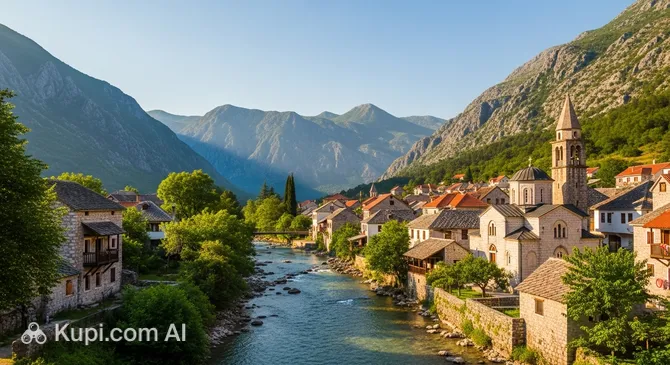
Šavnik is a tiny yet incredibly picturesque town hidden among the majestic mountains in the north of the country. Located at the unique confluence of three rivers—the Bukovica, the Bijela, and the eponymous Šavnik—this settlement is a true hidden gem that Montenegro offers to tourists.

Savnik. Illustration.
Source: Kupi.com AI

Despite its modest population of fewer than 500 people, the town possesses a special charm and a unique atmosphere of tranquility. The history of Šavnik as a settlement began in the 19th century when it began to develop as a commercial and administrative center for the Drobnjak region. One of the most amazing features of this place is a natural phenomenon: they say that on certain days the sun here "rises twice," appearing from behind a mountain peak, hiding behind it, and rising again.

Šavnik attracts fans of ecotourism and outdoor activities. It serves as the gateway to the famous Nevidio Canyon—the last conquered canyon in Europe, known for its wild beauty and inaccessibility. If you are looking for solitude away from the noisy coast and want to enjoy the cool mountain climate, be sure to include this cozy town in your itinerary.

Weather Overview

The climate in this mountain region differs significantly from the country's hot coast. Freshness and coolness prevail here, so when planning a trip, it is important to consider the altitude. To choose the right time for your visit and prepare your wardrobe correctly, we recommend checking the current weather in Šavnik in advance.

Winter here is real and quite harsh. The coldest month is usually January, with an average temperature of about -2.2°C, while the thermometer can drop below -5°C. Precipitation is frequent: for example, in December and January, up to 16–17 days with precipitation are recorded. Spring comes gradually, but travelers should be prepared for the whims of nature: May holds the record for the number of rainy days (about 22 days), although the air already warms up to an average of 10.6°C.

Summer in Šavnik is a refuge from the heat. In July and August, the average temperature stays at a comfortable 18°C, while daily maximums rarely exceed 24°C. This is the best time for hiking in canyons and mountains. It cools down quite quickly in autumn: by October, the average temperature drops to 9.6°C, and by November, it approaches 4°C.

Expect moderately warm, comfortable summers and cold winters with frequent precipitation throughout the year.

Average monthly temperature

Average monthly precipitation

Interesting Facts

In addition to its main attractions, Šavnik holds many fascinating secrets and legends. This modest town can surprise even experienced travelers with its unique features and historical details.

  • Origin of the name. The town's name is linked to the word "šavice"—the name for willow rods that grow along the local rivers. In the old days, residents used them as the main material for roofing their houses, giving the settlement a recognizable and unique appearance.

  • The mystery of the "Unseen" canyon. The famous Nevidio Canyon did not get its name by accident. In translation, it means "Invisible" or "God did not see." Until 1965, this narrow gorge remained completely impassable and hidden from human eyes, maintaining its reputation as the most mysterious place that Montenegro possesses.

  • A town by decree. Unlike many Balkan settlements that formed over centuries, Šavnik was founded relatively recently and systematically. It appeared on the map in 1861 by a special decree of Prince Nikola to become an administrative center for tax collection and regional management, and it was built according to an approved plan.

  • Mechanics of the "double sunrise." While many have heard of the double sun phenomenon, few know exactly how it happens. The optical illusion occurs due to the position of the mountains: the sun first appears from behind Kravica hill, then is obscured by the high peak of Gradac, and finally rises for good, creating the effect of a new day starting twice.

How to Get There

Šavnik is securely tucked away behind mountain ranges, off the main highways, so getting here requires prior planning. Since the town is located deep within the country, direct access is limited to road transport. You can study all available routes and logistical nuances in detail on the page how to get to Šavnik, and below we will look at the key transport hubs most convenient for building your journey.

The fastest and most popular way to reach the region is by air. The optimal arrival point is Podgorica Airport (IATA: TGD), located approximately 68 km from the town. This is the main capital hub, accepting flights year-round. The journey from the airport by car will take about two hours: the road winds through picturesque canyons and serpentines, which in itself becomes part of the adventure.

In the summer season, many tourists choose Tivat Airport (IATA: TIV), located on the coast, 69 km from Šavnik. Despite the similar distance, travel time may increase slightly due to traffic on coastal roads. It is also worth considering Dubrovnik Airport (IATA: DBV) in neighboring Croatia (81 km). This is a large international hub; however, when planning a route through it, you must allow extra time for crossing the state border.

Below are the main airports located within accessible range, with passenger traffic data and distances:

AirportPassenger trafficDistance
Podgorica Airport1.8 mln68 km
Tivat Airport1.1 mln69 km
Dubrovnik Airport3.0 mln81 km
Mostar Airport20 539108 km
Sarajevo International Airport1.8 mln114 km

The situation with rail transport for Šavnik is specific. There is no railway station in the town itself or its immediate vicinity. The mountainous terrain makes this type of transport underdeveloped here. The nearest major hubs available in the database are on the opposite shore of the Adriatic Sea, in Italy (for example, in the city of Bari), which implies a complex route using a ferry crossing to the port of Bar, followed by a transfer to a bus or taxi.

List of the nearest railway stations (considering straight-line distance):

StationPassenger trafficDistance
Durres Railway Station2 000185 km
Bari Centrale Station14 mln275 km
Brindisi Railway Station2.5 mln275 km

Main Attractions

Despite its modest size, Šavnik is surrounded by natural wonders that attract travelers from all over the world. The region's main attractions were created by nature itself, offering unique opportunities for both extreme sports enthusiasts and those seeking quiet contemplation.

The absolute highlight among the tourist sites is Nevidio Canyon. This was the last conquered canyon in Europe, remaining inaccessible and unexplored until 1965. The gorge of the Mala Komarnica river is so narrow that in some places its width is less than a meter, and sunlight practically never reaches the bottom, which gave the place its name "Nevidio" (Unseen). Today, it draws canyoning fans: navigating the route with jumps into the water and rappelling down waterfalls provides an unforgettable adrenaline rush.

For those interested in history and architecture, the Podmalinsko Monastery is an important stop. Located in the picturesque valley of the Bukovica river, this Orthodox temple has a rich history, having been destroyed and rebuilt several times over the centuries. The monastery is surrounded by dense forest and silence, making it an ideal place to learn about the spiritual heritage of the region in an atmosphere of complete peace.

Just a few kilometers from the town lies the amazing village of Pošćenje. Many guidebooks call it one of the most beautiful villages that Montenegro is proud of, thanks to its unique landscape. Two glacial lakes are located here, cascading into one another and creating an impressive natural ensemble. It is an excellent location for leisurely walks, picnics, and photoshoots against the backdrop of majestic mountain peaks.

Local Cuisine

Šavnik's gastronomy is a mirror of its harsh but generous nature. Here you won't find trendy molecular cuisine restaurants, but you will try real, ecologically clean food prepared according to ancient highlander recipes. Local cuisine is characterized by simplicity and high calorie content, as historically it had to provide warmth and strength to residents in a cold mountain climate.

The king of the table in this region is undoubtedly kačamak (smočani kačamak). This is a filling dish of potatoes and flour, which is kneaded for a long time and generously seasoned with kaymak (a special creamy dairy product) and homemade cheese. Another gastronomic symbol of the north worth ordering is cicvara. This is a cornmeal dish literally cooked in melted fatty cheese. Meat lovers must try lamb under the sač: the meat simmers for hours with potatoes under a heavy cast-iron lid (sač) covered with hot coals, making it incredibly tender.

Drinking traditions are no less important. Any meal or meeting with a guest often begins with a glass of homemade rakija—a strong fruit brandy. Plum (šljivovica) or pear rakija is especially popular in Šavnik. Those who prefer non-alcoholic drinks will be offered magnificent homemade juices and syrups made from wild forest berries—blueberries, cornelian cherries, or raspberries. The region is also famous for its herbal teas collected in ecologically clean alpine meadows and thick sour milk (kiselo mlijeko), which perfectly balances the taste of rich dishes.

The dining culture in Šavnik is very homey and unhurried. The main places where both locals and tourists eat are cozy konobas (traditional taverns) and restaurants in ethno-villages. Rushing is not expected here: lunch can stretch over a couple of hours of pleasant conversation. An important feature of local service is the huge portions, demonstrating Montenegrin hospitality, so often one dish can easily be ordered for two people.

Travel Tips

A journey to Šavnik is an immersion into the quiet, authentic life of the Montenegrin north. To ensure your vacation in this secluded mountain corner is as comfortable as possible and free of surprises, we have prepared several important recommendations considering the specifics of a small town.

  1. Clothing and Equipment. Mountain weather is changeable and harsh. Even if you visit in summer, be sure to bring a fleece jacket, a windbreaker, and long pants for the evenings—the temperature drops are significant here. In winter, full warm clothing and thermal underwear are necessary. Since the main beauties of the region are canyons and mountain trails, comfortable trekking shoes with non-slip soles are essential.
  2. Transport Accessibility. Šavnik is a tiny town, and public transport is poorly developed here (only occasional passing buses). The optimal option for a tourist is renting a car. This will give you the freedom to move to Nevidio Canyon and neighboring lakes. There are no taxi apps like Uber here; rely on your own means or prior arrangements with locals.
  3. Money and Payment. The official currency used by Montenegro is the Euro. In such a small settlement, it is critically important to have cash with you, preferably in small bills. Bank cards are not accepted everywhere, and the only ATM may be temporarily out of service or empty. There are no exchange offices here, so change your currency in advance in larger cities.
  4. Health and Safety. The crime situation in Šavnik is very calm; the main risks are related to nature. Watch your step in forests and on rocky areas to avoid encountering snakes. There is a pharmacy in town, but its stock is limited, and its opening hours may be short. We strongly recommend putting together your own first-aid kit with all necessary medications before your trip.
  5. Communication and Language. Locals speak Montenegrin. Unlike on the coast, not everyone knows English here, especially the older generation. Download an offline translator or learn a few phrases: "hvala" (thank you) and "dobar dan" (good day). It's best to buy a SIM card immediately upon arrival at the airport, as there may be no specialized mobile shops in Šavnik.
  6. Local Etiquette. Life here flows slowly. Do not rush waiters or shop assistants—it is not customary. Always say hello when entering small shops or cafes. If you visit monasteries in the area, follow a modest dress code (covered shoulders and knees).
  7. What to Avoid. It is categorically not recommended to go into Nevidio Canyon on your own without a certified guide and special equipment—it is life-threatening. Also, avoid driving fast on mountain serpentines: the roads are narrow, and a flock of sheep or cows may be around any corner.
  8. Stock Planning. Given that the town's population is less than 500 people, there are no 24-hour hypermarkets here. Shops may close early in the evening (around 7:00 PM – 8:00 PM) and may not open on Sundays. Buy water and food in advance if you plan a late dinner or an early mountain departure.

Šavnik is a place where time slows down, allowing you to enjoy pristine silence. By following these simple tips, you can avoid everyday inconveniences and fully dedicate yourself to contemplating wild nature and resting your soul.

Entertainment & Nightlife

If you expect to see neon signs of nightclubs, noisy discos until dawn, or cocktail bars with trendy DJs in Šavnik, this town will surprise you—but in a completely different way. The nightlife here perfectly matches the rhythm of a mountain settlement: it is quiet, steady, and focused on live communication. An evening in Šavnik is a time for stargazing—the sky here looks exceptionally bright away from the light pollution of big cities—and leisurely dinners in the company of locals.

The entire "nightlife district" here is limited to one or two streets in the center, where a few cafes and the only hotel are located. The atmosphere in these establishments is as casual and homey as it gets. The crowd is a colorful mix of local men discussing news over a glass of rakija and tired but happy tourists returning after conquering Nevidio Canyon. The dress code here is non-existent: you can easily come to a restaurant in trekking boots and a fleece jacket, and you will feel right at home.

The main centers for evening leisure are the restaurants at hotels and ethno-villages. This is where you can find hot food and drinks after sunset. We recommend checking out the restaurant at Hotel Šavnik, located in the very center. It is the heart of the town's social life, where you can try traditional dishes and listen to local stories. Another popular spot, especially in the summer season, is the restaurant complex in Etno Selo Nevidio (nearby, at the entrance to the canyon). Outdoor enthusiasts gather here in the evenings to exchange impressions by the fireplace or on the open terrace overlooking the mountains.

When planning your evening, keep a few important practical points in mind:

  • Opening hours: Life in the town winds down early. Most cafes and restaurant kitchens close by 10:00 PM – 11:00 PM. After this time, the town sinks into total silence.
  • Average bill: Prices here are significantly lower than on the coast. A hearty dinner with drinks will cost about 10–15 euros per person.
  • Payment: It is highly recommended to have cash with you in evening establishments. Terminals may be missing or may not work due to connectivity issues in the mountains.

Regarding safety, Šavnik is one of the most peaceful places Montenegro has to offer. You can walk around here without fear at any time of day or night. The only "danger" is the poor street lighting outside the center, so a pocket flashlight will be a useful accessory for a night walk. There are no taxi services (Uber or local dispatchers) here, so if you stay late visiting or at a restaurant outside of town, count on a rental car or a walk.

Daytime entertainment in Šavnik is also inextricably linked with nature, as there are no museums, theaters, or shopping centers here. Tourists usually spend daylight hours fishing on the crystal-clear Bukovica and Bijela rivers (a license is required) or taking easy walks in the surrounding hills. The town serves as an excellent base for radial nature trips, where the main "attractions" are panoramic views and absolute tranquility.

Parks & Museums

In a town as intimate as Šavnik, the concept of "parks" and "museums" takes on a completely different meaning. Here you will not find fenced city gardens with entry fees or huge museum complexes with audio guides. The entire town and its surroundings are one large natural park, and cultural heritage is carefully preserved in small memorials and libraries, reflecting the soul of this mountain region that Montenegro is proud of.

Green Zones and Natural Parks

The main walking area of Šavnik is the banks of the Bukovica and Bijela rivers. Since the town sits at their confluence, the natural embankments replace city parks for locals and tourists. Here, under the shade of old willows (the very "šavice" that gave the town its name), you can have a picnic, listen to the sound of the water, and enjoy the coolness even on the hottest summer day. It is an ideal place for meditative relaxation and watching trout in the clear water.

Slightly further from the town buildings lies the Dragišnica park zone. This is a forest at the foot of the mountain range, which locals call their "lungs." Dragišnica is famous for its dense coniferous and beech forests, through which unmarked but intuitive paths run. People come here for mushrooms, forest berries, and absolute silence, broken only by birdsong.

Cultural Heritage and Monuments

The center of social and cultural life in the town is the Cultural Center (Centar za kulturu). This modest building serves as the main city stage, gallery, and meeting place. It often hosts exhibitions of local artisans, photo exhibitions dedicated to the history of the Drobnjak region, and literary evenings. For a tourist, this is an opportunity to see the living culture of the region without any polished veneer.

A special place in the town's history is occupied by the memory of the great writer Borislav Pekić, whose roots are in this region. The local city library, located in the center, houses a collection of his works and materials related to his family's history. Although it is not a museum in the classic sense, the librarians will proudly tell you about their famous countryman and show archival photographs of old Šavnik.

In the central square stands the Monument to the Fallen Fighters. This monument, dedicated to the heroes of World War II, is an important historical landmark. It is designed in a strict socialist realism style and serves as a reminder of the region's harsh past. The square around the monument is a popular place for meetings and town festivities.

Insider Tip: Be sure to walk to the old watermills on the Šavnik river. Some of them are in ruins, but they represent a real open-air ethnographic museum, allowing you to imagine how highlanders lived and worked a century ago.

Getting Around

Given the intimate atmosphere and modest size of Šavnik, tourists should not expect an extensive urban transport network here. There are no subways, trams, trolleybuses, or even familiar inner-city bus routes. All infrastructure is concentrated in a compact area, so the main and most reliable way to get around the settlement is walking, which allows you to cover the entire center in literally 15–20 minutes.

The only form of public transport available to travelers is intercity buses. Šavnik serves as a transit point for routes heading to the north of the country, towards ski resorts, or to the south, towards the coast. Buses run regularly, but their schedules can change depending on the season. The stop is located in the central part of the town, and this is where you can catch transport going towards Žabljak, Nikšić, or Podgorica.

The fare payment system here is as traditional and conservative as it gets. There are no validators, contactless transport cards, or mobile apps for buying tickets in Šavnik. Payment is made exclusively in cash (in euros) to the driver upon boarding. It is highly recommended to have small bills and coins with you, as the driver may not have change for large banknotes. Be sure to keep the ticket you are given until the end of the trip.

If you need to get to remote natural attractions where buses do not run, the only alternative is a taxi. However, international aggregators like Uber or Bolt do not operate here. Services are provided by local private drivers. You can find a car in the main square or by asking for help from the staff at your guest house. An important tip: always agree on a fixed price for the trip in advance, before you get into the car, as taximeters are rarely used.

There are no specialized car-sharing or bike rental services in the town itself. For complete freedom of movement in the picturesque region, experienced tourists are recommended to rent a car immediately upon arrival in the country. This will allow you to not depend on passing bus schedules and comfortably visit Nevidio Canyon and the surrounding lakes.

Accommodation

Accommodation in Šavnik is not a story about five-star service and international hotel chains, but about soulfulness, authenticity, and maximum proximity to nature. Given the town's tiny size, the choice of housing here is limited, but it fully covers the needs of travelers seeking solitude or mountain adventures. The main accommodation stock consists of small family hotels, cozy guest houses (sobe), and increasingly popular ethno-villages (etno selo)—complexes of traditional-style wooden cabins.

In terms of location, accommodation options can be divided into two main zones. The first is the town center, located at the confluence of the rivers. Staying here is convenient for those traveling by bus or wanting walking access to shops and the only pharmacy. The second zone is the picturesque surroundings, particularly the area around the village of Pošćenje and the entrance to Nevidio Canyon. This option is ideal for car travelers and those who want to wake up to views of mountain peaks and lakes, enjoying the silence away from civilization.

The so-called ethno-villages are particularly popular. This is not just a place to sleep, but a full immersion into the lifestyle of the Montenegrin north. Accommodation here is usually organized in separate stone and wood bungalows, which creates a special atmosphere of comfort, especially on cool evenings. Such complexes almost always have their own restaurant serving home-style cuisine made with the freshest local products.

Booking tips:

  • Seasonality: Peak tourist demand falls in July and August, when the Nevidio Canyon season is open. During these months, the best options (especially in ethno-villages) should be booked 2–3 weeks before the trip.
  • Winter period: If you plan to visit in winter, be sure to check for heating in the room. There can be severe frosts in the mountains, and not all summer guest houses are equipped for a comfortable stay in the cold.
  • Payment methods: Many private apartments and small guest houses do not accept bank cards. Always have a sufficient supply of cash euros with you to pay for your stay.

Pricing policy in the region remains very affordable. Šavnik offers mainly budget and mid-range price segments. A night in a guest house or private room will cost significantly less than on the coast or in the popular Žabljak. Booking is available through major international online platforms, though many private homeowners still prefer direct communication or rent out rooms via "Sobe" (Rooms) signs right on site.

Nearby Cities

For those who want to explore the surroundings, Šavnik serves as an excellent starting point for day trips to several interesting nearby places:

Just 23 kilometers from the town is Nikšić—the country's second-largest settlement and an important industrial center. This is a great option for a short trip to change the scenery. Here you can see the ancient Bedem fortress, walk through the spacious central square, or visit the Tsar's Bridge—one of the most beautiful stone bridges in the Balkans. Additionally, the city is known for its artificial lakes, Krupac and Slano, which attract swimmers and picnickers in the summer.

If you are ready to drive a little further, head to the capital—the city of Podgorica (about 60 km). This is the administrative and cultural heart of the country, where modern architecture like the Millennium Bridge sits alongside the ruins of the ancient city of Doclea. A trip to the capital will allow you to visit large shopping centers and national museums and enjoy the milder climate of the plains.

To the north, about 49 km away, lies the town of Pljevlja. This place will be interesting for history and religion buffs. Eastern and Western cultures coexist harmoniously here: the Husein-paša Mosque with the tallest minaret in the Balkans is considered the main gem, and nearby is the Orthodox Holy Trinity Monastery, known for its rich treasury and ancient frescoes.

CityPopulationDistance
Zabljak1 93722 km
Niksic56 97023 km
Pluzine1 34130 km
Kolasin2 72538 km
Mojkovac10 06640 km

These nearby destinations provide an insight into the diverse culture and landscapes of the region.

Shopping & Souvenirs

General Overview

Shopping in Šavnik has its own unique characteristics dictated by the size and lifestyle of this small mountain town. Tourists should not expect large-scale shopping trips, brand boutiques, or outlets. The commercial sphere here is minimally developed and focused primarily on meeting the basic needs of local residents. The main value of local shopping is the opportunity to purchase authentic, ecologically clean home-produced products for which the northern region where Montenegro is located is famous.

Main Shopping Areas and Streets

The concept of a "shopping district" in Šavnik is quite nominal, as the entire town center can be walked in a few minutes. All commercial life is concentrated along the main road and the central street passing through the settlement. A few grocery stores (markets), a pharmacy, and kiosks with essential goods are located here. This is the only place where tourists can restock provisions before heading into the mountains.

Shopping Centers

There are no shopping centers, department stores, or large chain stores for clothing and electronics in Šavnik. The town is too small for such infrastructure. If your goal is serious shopping, buying clothes, or electronics, we recommend heading to nearby Nikšić (about 45 minutes away) or the capital, Podgorica, where modern malls and international brands are represented.

Markets

There is no classic indoor city market operating daily in Šavnik. However, direct sales from local producers fulfill the role of a market. Residents often offer their goods right at their homes or at small improvised stalls in the center, especially in the morning hours. Here you can find fresh seasonal fruits, vegetables, and forest treasures collected in the ecologically clean Drobnjak zone.

Souvenirs

The best souvenirs from Šavnik are gastronomic delicacies and handmade items. Be sure to look for the famous leafy cheese (lisnati sir) and kaymak—the pride of local cuisine. It is also worth buying a jar of mountain honey, homemade forest berry jam, or a bottle of traditional fruit rakija. As a physical reminder of the trip, warm woolen socks or vests knitted by local craftswomen from natural sheep's wool are perfect—they are indispensable on cold winter evenings.

Working Hours and Payment

Shops in Šavnik usually operate from early morning (around 07:00–08:00) until evening (20:00–21:00). It is important to remember that the country has a non-working Sunday law, so most shops are closed on this day (except for some pharmacies or gas stations, which may not be in the very center). The main method of payment remains cash euros. Card terminals are only available in a couple of grocery stores, but mountain connectivity can be intermittent, so always have paper bills with you, especially when buying souvenirs from private individuals.

Tax Free

Although the country has a VAT refund system (Tax Free) for foreign tourists on purchases over 100 euros, it is practically impossible to use this service in Šavnik. Local shops are too small and do not participate in the Global Blue system or similar programs, as they are focused on selling food and small household items.
Reached the end of the page?

That means the route is fully explored