Support

Cetinje

About

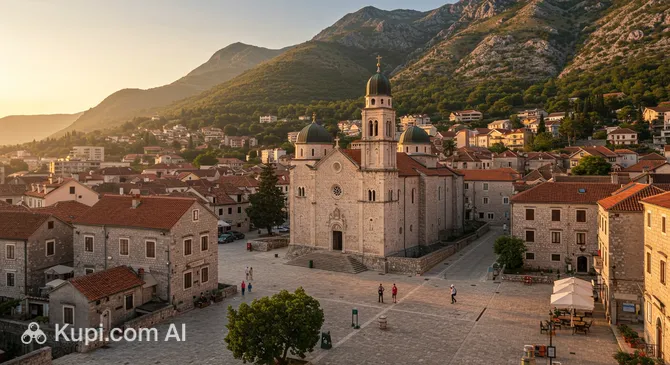
Cetinje is the true heart and soul of such an amazing country as Montenegro. The city is nestled on a picturesque mountain plateau, surrounded by green hills and majestic peaks, just 12 kilometers from the Adriatic coast. Thanks to this location, a special microclimate prevails here: even in the height of summer, the air remains fresh and filled with the scent of pine needles, making walks along the shady alleys particularly pleasant.

Cetinje. Illustration.
Source: Kupi.com AI

Despite its compact size and population of about 14,000 people, the city holds immense significance for the local people. For a long time, it was the center of government, and the rich history of Cetinje can be felt on every street. Although administrative functions eventually moved to Podgorica, this city retains its honorary status as the cultural and spiritual capital. The spirit of old Europe is preserved here, harmoniously intertwining with local traditions.

Travelers are drawn here not only by the opportunity to escape the hustle and bustle but also by the unique architectural heritage. The streets are adorned with old mansions and majestic buildings of former embassies, and the concentration of museums, galleries, and religious shrines here is perhaps the highest in the region. Cetinje is an ideal destination for those who want to immerse themselves in an authentic atmosphere and enjoy tranquility surrounded by mountain landscapes.

Weather Overview

The city's climate is shaped by its elevation, so it is always fresher here than on the coast. Expect moderately warm summers, ideal for escaping the heat, and cool winters with fairly high humidity.

The hottest period is in July and August, when the average temperature is around 23°C, with maximum values reaching 28°C. Rainfall is minimal at this time, though rain cannot be completely ruled out. To choose the best dates for your trip, we recommend checking the weather in Cetinje in advance, as conditions can change.

In winter, especially in January, the average temperature stays around 4.1°C, sometimes dropping near zero at night. Travelers should note that the shoulder seasons and winter are quite rainy here: for example, up to 19 days of precipitation are recorded in May, and about 15 such days per month in November and December.

Average monthly temperature

Average monthly precipitation

Interesting Facts

In addition to its main attractions, Cetinje hides many fascinating secrets that reveal the rich soul of this place. The city, often called an "open-air museum," is full of amazing stories hidden behind the facades of old buildings.

  • Cradle of Slavic Printing. Cetinje is where the written word took printed form in the Balkans. It was here in 1493 that the first book in a South Slavic language using the Cyrillic alphabet was published—the famous "Octoechos" (Oktoih), forever inscribing the city in the history of world culture.

  • Greatest Christian Shrines. In the intimate atmosphere of the Cetinje Monastery, relics of incredible value are kept: the Right Hand of Saint John the Baptist and a fragment of the True Cross. Additionally, you can see a unique shroud embroidered by the Russian Empress Catherine the Great herself.

  • The Mystery of Biljarda. One of the city's most famous buildings, the former residence of ruler Petar II Njegoš, bears the unusual name "Biljarda." The name originated from the first billiard table in Montenegro, which the ruler specifically brought from Vienna for his leisure.

  • A Symbol City. Despite the transfer of the administrative center, Cetinje officially retains its honorary status as the historical capital. It is the heart of national identity, where every stone serves as a reminder of the country's glorious past, and the concentration of monuments per square meter is simply astounding.

  • Guardian on the Mountaintop. Very close to the city, at the peak of Mount Lovćen, lies the mausoleum of Petar II Njegoš—a national hero, poet, and philosopher. This place serves not only as a tomb but also as one of the most impressive viewpoints in the region, inspiring travelers with its panoramas.

How to Get There

Cetinje is located in a mountainous area, so there is no direct air or rail connection to the city. However, thanks to Montenegro's compactness, getting here from neighboring cities and airports is not difficult. The journey usually takes you along scenic routes, which is an adventure in itself. You can explore all available options and routes on the how to get to Cetinje page, and below we look at the main transport hubs.

Most often, travelers fly into one of the international airports in Montenegro or neighboring Croatia, and then continue their journey by taxi, rental car, or bus.

The nearest air harbor is Tivat Airport (IATA: TIV). It is not located in Cetinje itself, but in the resort town of Tivat on the coast, about 16 km from the historical capital. Despite its proximity on the map, the drive takes about 40–50 minutes due to the mountain serpentines. It is a small but very popular airport with a passenger traffic of over a million people a year, hosting many flights during the tourist season.

Another convenient option is Podgorica Airport (IATA: TGD), located in the country's capital, Podgorica. The distance to Cetinje is about 28 km. The journey from here by taxi or bus takes about an hour. This is the country's main international hub, operating year-round and serving regular flights from many European capitals.

Many tourists also choose Dubrovnik Airport (IATA: DBV). It is important to note that it is located in Croatia, in the city of Dubrovnik, about 56 km from Cetinje. The trip will require crossing the state border, so travel time can vary from 2 to 3 hours depending on traffic at the checkpoints.

For convenience, here is a summary of the main airports:

AirportPassenger trafficDistance
Tivat Airport1.1 mln16 km
Podgorica Airport1.8 mln28 km
Dubrovnik Airport3.0 mln56 km
Tirana International Airport10 mln127 km
Kukes Zayed30 000130 km

Regarding rail transport, there is no railway station in Cetinje itself due to the difficult mountain terrain. The nearest major hubs indicated in international routes are quite far away and often require a combined journey.

For example, Bari Centrale station (IATA: BAU) is located in the Italian city of Bari, over 220 km away in a straight line across the Adriatic Sea. This option is only relevant for those planning a trip from Italy by ferry to the Montenegrin port of Bar, and from there traveling to Cetinje by bus or car.

Below is information on the nearest major railway stations (keep in mind the need for a ferry crossing for stations in Italy):

StationPassenger trafficDistance
Durres Railway Station2 000128 km
Brindisi Railway Station2.5 mln212 km
Bari Centrale Station14 mln222 km

Main Attractions

Cetinje is often called a museum city, and that is no exaggeration. The concentration of historical monuments here is so high that a simple walk through the streets turns into a fascinating excursion into the past. Here are several key places you must visit to feel the spirit of this old capital.

Cetinje Monastery is undoubtedly the city's main spiritual shrine and a symbol of the local people's resilience. Founded at the end of the 15th century by Ivan Crnojević, it was destroyed and rebuilt many times, maintaining its significance as the center of the Orthodox faith and statehood. For tourists, this place is attractive not only for its austere architecture and peaceful atmosphere but also for its greatest Christian relics: the Right Hand of Saint John the Baptist and a fragment of the True Cross are kept here.

Near the monastery is Biljarda—the former residence of the ruler, poet, and philosopher Petar II Petrović-Njegoš. This building, resembling a small fortress, received its unusual name thanks to a billiard table—the first in the country—which Njegoš specifically brought from Vienna. Today, it houses a museum where you can see the ruler's personal belongings, the manuscript of his famous poem "The Mountain Wreath," and a unique relief map of Montenegro created by the Austrians in 1917.

It is impossible to pass by the Palace of King Nikola, which now houses the National Museum. This elegant building, standing out with its red facade and snow-white stucco, served as the home for the last royal dynasty. The palace interiors have been preserved almost in their original form: luxurious Empire and Art Nouveau furniture, collections of weapons, awards, and family portraits allow you to vividly imagine how the monarchs lived at the turn of the century.

The Vlach Church deserves special attention—the oldest surviving building in Cetinje, erected back in 1450. Although the temple itself looks quite modest, it is famous for its unique fence. The railing around the churchyard is made from the barrels of captured rifles seized during the 19th-century wars of independence. This unusual monument clearly demonstrates the heroic past and the complex history of the struggle for independence in this region.

Local Cuisine

The gastronomic scene in Cetinje reflects the soul of old Montenegro: generous, hospitable, and true to tradition. Local cuisine is based on simple but incredibly high-quality and eco-friendly products produced by farmers in the surrounding mountains. Getting to know the culinary customs here usually starts with cold appetizers. The famous Njeguši pršut—a dry-cured ham with a unique aroma—is sure to appear on the table, served with homemade cheese, olives, and freshly baked bread.

For a hearty lunch to restore your energy after walking, kačamak is ideal. This filling dish resembles a thick porridge made of corn or wheat flour, generously seasoned with cheese and kajmak (thick cream). Locals say that real kačamak should be thick enough for a spoon to stand in it. No less popular is čorba—a rich, thick soup with veal or lamb and vegetables, which warms you up perfectly in the cool weather typical of this high-mountain region.

Among the drinks, local wines and strong rakija—a fruit brandy often offered as an aperitif—hold a special place. Non-alcoholic fans should try homemade yogurts or herbal teas collected on the slopes of Lovćen. The meal is usually concluded with dessert: honey cakes and sweets with nuts are loved here, pairing perfectly with a cup of strong Montenegrin coffee brewed Turkish-style.

The food culture in Cetinje leans toward cozy family establishments. Tourists and locals often gather in traditional restaurants with an informal atmosphere. Additionally, the city is famous for its farmers' markets. These are the best places to buy fresh fruits, vegetables, and homemade delicacies directly from producers. In the summer season, food festivals complement the gastronomic experience, where you can not only taste the region's best dishes but also learn the secrets of their preparation.

Travel Tips

Preparing for a trip to the historical capital is the key to a comfortable holiday, as this city differs significantly from coastal resorts. Since Cetinje is located in a mountainous area and lives at its own unique pace, we have gathered practical recommendations for you to help avoid awkward situations and enjoy the atmosphere of old Europe.

  1. Clothing and weather whims. The climate here is harsher and more humid than on the coast. Even if you are traveling in summer, be sure to bring a windbreaker, sweater, and umbrella—evenings can be cool, and sudden rains are not uncommon. For walking on the cobblestones of the historical center, choose comfortable flat shoes. If you plan to visit the monastery, remember the dress code: shoulders and knees must be covered (scarves are often provided at the entrance, but it is better to have your own).

  2. Transport and movement. The city center is very compact, and the best strategy here is walking. All main museums and attractions are within walking distance of each other. Public transport inside the city is not developed as it is unnecessary. For trips to the surroundings (e.g., Lipa Cave), you can use a taxi—prices here are lower than on the coast, and there are call-out services. Renting a car is only relevant if you plan an independent trip up Mount Lovćen.

  3. Financial matters. The official currency is the Euro (€). Cards are accepted in museums, large supermarkets, and most restaurants, but cash is essential. You will need it for buying souvenirs, paying for parking, or getting a snack in small cafes. There are ATMs in the city center, but not many. A tip of 10% of the bill is considered good manners if you liked the service.

  4. Health and safety. Cetinje is one of the safest cities in Montenegro; you can safely walk here even after dark. Pharmacies (marked as "Apoteka") are concentrated in the center, but there may not be 24-hour points, so it is better to have a basic first-aid kit with you. Tap water is usually of good quality, but tourists are recommended to buy bottled water to be safe.

  5. Communication and connection. The official language is Montenegrin. Young people and museum staff speak English fairly well, but the older generation may understand Russian better. Learn a couple of phrases: "Hvala" (thank you) and "Dobar dan" (good day)—this will win over the locals. A SIM card for the internet can be bought at any "Tobacco Shop" kiosk or at the post office; Wi-Fi is available in almost all cafes.

  6. Local etiquette. Montenegrins are proud but hospitable people. Rushing is not common here; the unspoken rule is "polako" (slowly, without haste). It is customary to say hello when entering a shop or cafe. A handshake is the standard form of greeting. In conversation, it is better to avoid sensitive political topics and criticism of local traditions.

  7. What to avoid. The main mistake of tourists coming from the coast for an excursion is walking around in beach clothes (shorts, tank tops, flip-flops). In Cetinje, as the cultural and spiritual capital, this is considered a sign of disrespect. It is also strictly forbidden to photograph monks or the interiors of churches without explicit permission—this is strictly monitored.

  8. Advice for drivers. Unlike the overcrowded resorts of Budva or Kotor, parking in Cetinje is much easier. There are many free parking spaces even near the historical center. However, look carefully at the signs: on central streets, parking may be paid (usually via SMS or at a kiosk).

By following these simple rules, you can feel like a welcome guest in Cetinje rather than just a tourist. The city opens up to those who respect its history and are ready to slow down to enjoy the silence of mountain alleys and the grandeur of ancient architecture.

Entertainment & Nightlife

Nightlife in Cetinje has its own unique charm, which is fundamentally different from the noisy parties on the coast. This is a city of students, artists, and musicians, creating a bohemian and relaxed atmosphere. Instead of huge nightclubs with electronic music, you will find cozy pubs, art cafes, and bars with live performances, where everyone knows each other, and the evening is spent in soulful conversations over a glass of wine.

The epicenter of evening activity is the pedestrian Njegoševa Street (Njegoševa ulica) and Palace Square. Most establishments are concentrated here, and this is where the traditional "korzo" takes place—the evening promenade when locals go out for a walk to see and be seen. In summer, tables are set out right on the street, and the boundary between bars blurs, turning the city center into one large, friendly open-air living room.

Among the venues that set the tone for nightlife, Scottish Pub Academia stands out. This is a cult spot, particularly loved by students of the Academy of Arts. Rock, jazz, or blues are often played here, excellent beer is served, and the interior is conducive to informal socializing. If you are looking for something more traditional, visit Gradska Kafana—a historical establishment with an elegant atmosphere where you can enjoy local wines and a peaceful setting. Ka' Doma is also popular, a bar with a name meaning "Like at Home," perfect for starting the evening.

Prices in Cetinje establishments are noticeably lower than in Budva or Kotor. A glass of wine or beer costs an average of 2–3 euros. The dress code in most places is casual, but locals, especially in the evenings, like to dress stylishly and neatly (smart casual). The best time to go out is after 21:00, when the heat subsides and the streets fill with people. Establishments usually stay open until 1:00 AM, and slightly longer on weekends.

In terms of safety, Cetinje is one of the quietest cities in Montenegro. Night walks here are perfectly safe even alone. Lighting on the main streets is good. If you need to get to a hotel on the outskirts, you can take a taxi—a ride across town is very inexpensive, usually within 1–2 euros. Cars are easy to find at the stand near the main square or by calling.

As for daytime entertainment, the cultural capital offers more intellectual leisure. In addition to visiting the numerous museums mentioned earlier, it is worth noting the Royal Theater "Zetski Dom"—the oldest theater in the country, which still hosts interesting performances today. For nature lovers, strolls through the city parks, which were laid out during the monarchy and have preserved the layout of French and English gardens, are an ideal option.

Parks & Museums

Cetinje harmoniously combines its status as a cultural capital with the comfort of a green city surrounded by mountain ranges. Here, strolls through shady alleys transition smoothly into exploring the country's richest museum collections, creating ideal conditions for an educational and leisurely holiday.

Palace Park is the city's green lung and a favorite resting place for locals. Located in the heart of the old capital, it was laid out in the late 19th century in the French style. It is a pleasant place to hide from the summer heat under the canopies of ancient trees, walk along the neat paths, and enjoy the silence. The park surrounds key historical buildings, providing a picturesque backdrop for photos.

For those seeking panoramic views and ready for some light physical activity, Eagle's Rock (Orlov Krš) is a must. This is not just a natural height but a historically significant site where the mausoleum of the founder of the Petrović-Njegoš dynasty is located. An easy climb along a trail through a pine forest takes about 15–20 minutes, rewarded by a breathtaking view of the entire city and its surrounding mountain peaks.

The cultural program in Cetinje is not limited to the royal palace. The Art Museum, located in the monumental "Vladin Dom" building (the former Government House), deserves special attention. The gallery houses a precious collection of icons, including the famous Philermos Icon of the Mother of God, as well as paintings by Yugoslav and European masters. This site is a must-visit for lovers of sacred art and painting.

To gain a deeper understanding of the life and traditions of the Montenegrin people, visit the Ethnographic Museum. Its collection is one of the richest in the Balkans. It features national costumes, ancient weapons, musical instruments, jewelry, and household items that tell the story of daily life in Montenegro over the centuries.

The city's architectural appearance is unique thanks to the buildings of former embassies. Walking through the streets, you will see magnificent mansions that once housed diplomatic missions from the Russian Empire, France, Great Britain, and Italy. Each building is designed in a style characteristic of its respective country, giving Cetinje a unique European charm and eclecticism.

Insider Tip: If you have time, be sure to visit Lipa Cave (Lipska pećina), located just 5 kilometers from the city. It is one of the largest caves in the country, featuring impressive halls, stalactites, and underground lakes. An excursion there will be a great addition to your cultural itinerary and provide vivid impressions of the underground world of karst mountains.

Getting Around

The public transport system in Cetinje has its own unique features, dictated by the city's compactness and historical layout. Unlike large metropolises, you won't find a metro, trams, or an extensive network of city buses here. This gives the city a special charm and tranquility characteristic of the old part of Montenegro. The historical center is so miniature that all main attractions, museums, and restaurants are within comfortable walking distance.

The only type of motorized transport operating within the city limits is the taxi. This is the most popular and convenient way to get around if you need to reach outlying areas or are traveling with heavy luggage. The cars are usually clean, and the drivers are polite. Instead of global ride-sharing apps, local taxi services operate here (such as "CT Taxi" or "Dax Taxi"), which can be called by phone or found at special stands in the center.

The payment system in taxis is extremely simple and conservative. Terminals are rarely used, so payment is mostly made in cash to the driver at the end of the trip. The currency is Euros (€). In most cases, a ride within the city will cost a fixed minimum amount (around 1–1.5 euros) since the distances are very short. We highly recommend carrying small bills and coins, as drivers do not always have change for large banknotes.

An important transport hub is the Cetinje Bus Station (Autobuska stanica), located about 500 meters from the main square. Although it is an intercity hub, for a tourist, it serves as the main "gateway" to the city. Comfortable buses regularly depart from here to Podgorica, Budva, Kotor, and other parts of the region. Tickets are purchased at the station box office for cash, and you must show your ticket to the controller when boarding. Note that there is often a small separate fee (about 1 euro) for luggage placed in the compartment, paid directly to the driver.

As an alternative to traditional transport, bicycle rental is popular during the warm season. The terrain of the city itself is relatively flat (it is located in a basin), making cycling trips pleasant and untiring. Rental points can be found at some hotels or at the tourist information center. This is a great way to see the park zones and surroundings at your own pace.

Car sharing in the usual sense (per-minute rental via an app) is not developed in the city, but classic car rentals are available and in demand. This is especially relevant for those planning an independent ascent to the Njegoš mausoleum on Mount Lovćen or a trip to Lipa Cave, where public transport does not go. Parking in the city is mostly free, except for a few central streets where payment via SMS or a parking meter may be required.

The main tip for a tourist in Cetinje: relax and walk. The lack of a complex transport system is not a disadvantage but an advantage, allowing you to enjoy the clean mountain air and architecture without noise and bustle.

Accommodation

Accommodation options in Cetinje differ markedly from what tourists are used to seeing on the bustling coast. Here, you won't find massive chain resorts or multi-story all-inclusive hotel complexes. Instead, the city offers an atmosphere of comfort and antiquity: the housing stock mainly consists of small boutique hotels located in renovated historical buildings and numerous private apartments where the hospitality of the hosts becomes part of the cultural experience.

For travelers wanting to be in the center of things, the best choice would be the areas around Palace Square and the pedestrian Njegoševa Street. Staying here puts you within walking distance of the main museums, the monastery, and the city's best restaurants. This is particularly convenient for those without a car: all iconic sites can be visited on foot in one day, with occasional returns to your room for a break.

The range of offers varies from budget guesthouses (known as "sobe"), ideal for students and backpackers, to mid-range hotels with comfortable conditions and breakfast. In recent years, renting private apartments and floors in old mansions has gained popularity, offering a chance to feel like a local resident of the old royal capital.

The price range in Cetinje is generally lower than in popular coastal towns like Budva or Kotor. You can find excellent accommodation at a moderate price (categories like "mid-range minus" and "standard"). Booking is recommended through popular online platforms, where most local properties are listed.

Regarding booking tips, despite the absence of mass beach tourism, demand for quality accommodation is high during the peak summer season (July–August). Many tourists choose Cetinje as a cool base for overnight stays to escape the heat. Therefore, it is worth planning your trip and booking your preferred option in advance, at least a few weeks before your visit.

Nearby Cities

For those who want to explore the surroundings, Cetinje serves as an excellent starting point for day trips to several interesting nearby locations:

Just 13 kilometers down a picturesque descent to the sea is Budva—the main tourist center of the coast. This direction is ideal for those who want to swap mountain coolness and silence for a sea breeze, beach holidays, and walks through the labyrinths of the lively Old Town.

The country's current capital, Podgorica, is located less than a half-hour drive away. A visit here will allow you to see the modern face of the state: wide boulevards, the Millennium Bridge, and large shopping centers, creating an interesting contrast with the historical atmosphere of Cetinje.

Romance and history lovers should head to Herceg Novi, located at the entrance to the Bay of Kotor. This "city of flowers" and fortresses is famous for its unique architecture, green parks, and many steps leading down to the waterfront.

CityPopulationDistance
Kotor12 58312 km
Budva19 21813 km
Tivat9 36718 km
Danilovgrad5 15624 km
Golubovci3 11027 km

These nearby destinations provide insight into the diverse culture and landscapes of the region.

Shopping & Souvenirs

General Overview. Shopping in Cetinje is strikingly different from the usual shopping trips in large metropolises. You won't find huge malls with global mass-market brands here, but that is precisely the charm of the old capital. Shopping here is a search for authentic items, pieces of art, and gastronomic delicacies that reflect the soul of Montenegro. The city is famous for its craft goods and products from local farmers, so the process of purchasing goods here is unhurried and pleasant, feeling more like a cultural exploration than a race for fashion.

Main Shopping Streets. The heart of the city's commercial life is the pedestrian Njegoševa Street (Njegoševa ulica). Walking along this picturesque promenade surrounded by old mansions, you will find many small boutiques. They sell clothing, shoes, books, jewelry, and accessories. The atmosphere on this street is very cozy: shops alternate with cafes, so shopping can easily be combined with a cup of coffee. It is also worth visiting Palace Square, where temporary souvenir fairs are often set up.

Shopping Centers. It is important to know that there are no large shopping and entertainment complexes in the conventional sense in Cetinje. For large-scale shopping and wardrobe updates at brand stores (such as Zara or H&M), locals and tourists usually head to nearby Podgorica, which is only about a 30-minute drive away by car or bus. In Cetinje itself, there are supermarkets (such as "Voli" or "Idea") and small convenience stores where you can buy all daily necessities.

Markets. A real gem for gourmets is the City Market (Gradska Pijaca), located near the center. This place is a must-visit even if you don't plan to buy anything. There is an indescribable atmosphere here: stalls are overflowing with fresh products brought from surrounding villages. This is the best place to buy famous Montenegrin delicacies directly from the producers, after tasting them first.

Souvenirs. From Cetinje, it is worth bringing back gifts with local flavor. First and foremost is gastronomy: the famous Njeguši pršut (cured meat) and homemade cheese, honey from mountain apiaries, olive oil, and local wines like "Vranac" or "Krstač." Given the city's spiritual status, icons, crosses, and brojanica (prayer bracelets) purchased from the shop at the Cetinje Monastery make good gifts. Handmade woolen products and paintings by local artists, who often display their work right on the street, are also popular.

Opening Hours and Payment. Most shops in the city center are open from 9:00 AM to 9:00 PM; however, on Sundays, many may operate on a reduced schedule or be closed, as it is a traditional day of rest. Supermarkets usually work without days off. Regarding payment, major shops and boutiques accept credit cards without issues. However, for purchases at the market, in souvenir shops, or small kiosks, it is highly recommended to have cash euros on hand.

Tax Free. The tax refund system (PDV) in Montenegro applies to purchases over 100 euros on a single receipt in stores marked with a "Tax Free" sign. However, there are few such points in Cetinje due to the lack of large brand electronics or luxury clothing stores. If you plan large purchases with the aim of a tax refund, it is better to do so during a trip to Podgorica or coastal shopping centers.
Reached the end of the page?

That means the route is fully explored