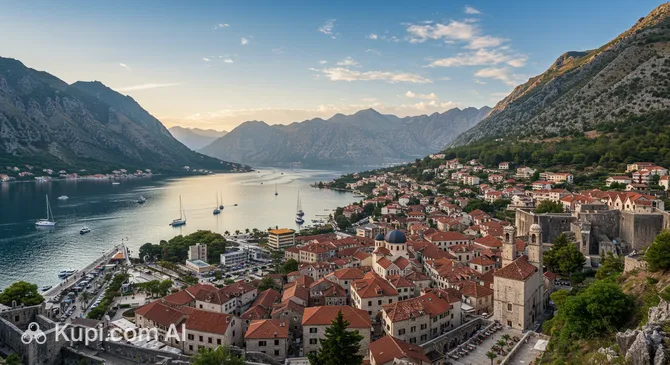
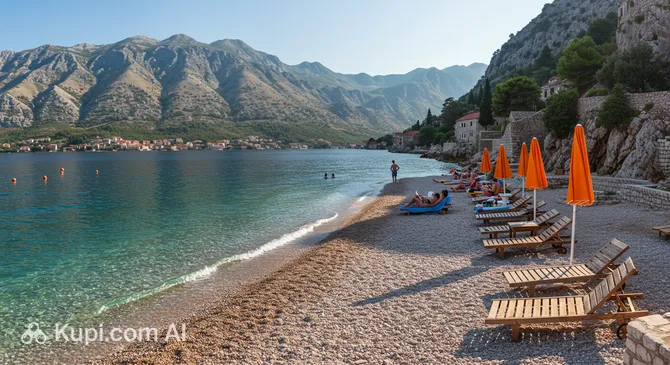
Kotor is a true gem of the Adriatic, a city with an incredible medieval atmosphere nestled in one of the most beautiful bays in the world. It is located in Montenegro, in the Bay of Kotor, and its historic center is rightfully included in the UNESCO World Heritage list. A mild Mediterranean climate and a population of about 12,583 people create a special, relaxing atmosphere here.
Kotor. Illustration.
Source: Kupi.com AI
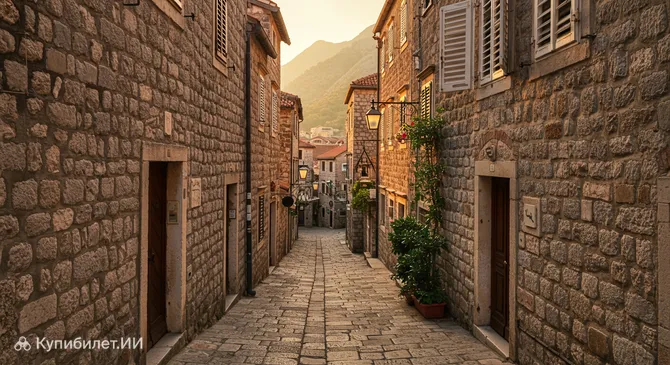
The heart of Kotor is its Old Town (Stari Grad), a labyrinth of narrow cobbled streets, ancient churches, and Venetian palaces surrounded by massive fortress walls. Walking here, you feel as if you've been transported back several centuries, sensing the breath of history at every step and discovering charming squares and hidden corners.
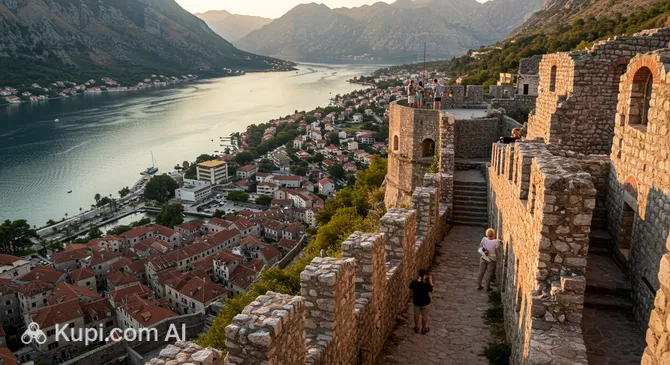
One of the key attractions that is certainly worth visiting is St. John's Fortress (San Giovanni), majestically overlooking the city. The climb to the top, though requiring some effort, will reward you with breathtaking panoramic views of the entire bay, the red-tiled roofs of Kotor, and the majestic mountains surrounding it. No less impressive is the Bay of Kotor itself, often compared to Norwegian fjords for its incredible beauty and offering wonderful opportunities for boat trips.
Kotor is a place where everyone will find something for the soul: from exploring ancient fortifications and sacred buildings to leisurely enjoying the magnificent landscapes and unique atmosphere. Come and discover this amazing and welcoming corner of the Adriatic!
The weather in Kotor will delight you with its typical Mediterranean climate. Expect a warm and sunny summer, with average temperatures in July and August around 22–23°C, reaching maximums of 27.5°C (as in August). Rainfall is minimal during the summer months, totaling only about 2 mm. Winters here are mild and wetter: the average January temperature is around 3.9°C, while November and December bring the most precipitation (12 mm and 10 mm, respectively). Spring and autumn offer comfortable weather for exploring the city, although the number of rainy days can vary—for example, there can be up to 19 in May. You can find more detailed information about monthly weather conditions on the Kotor Climate page.
Average monthly temperature
Average monthly precipitation
Interesting Facts
Beyond its famous city walls and picturesque bay, Kotor holds many surprising stories and little-known details that make it even more alluring for curious travelers. Here are just a few of them:
City of Cats: Kotor is unofficially considered the city of cats. These furry residents are everywhere; they have become a true symbol of the city, and there is even a Cats Museum opened in their honor, where you can learn more about these four-legged inhabitants and their role in Kotor's history.
Unique Defensive Layout: The narrow and winding streets of Kotor's Old Town are no accident. This confusing layout was designed by medieval architects to disorient and slow down enemies in case of an attack. One of the narrowest streets in the city is unofficially called "Pusti me da prođem" ("Let me pass"), as two people can hardly pass each other there.
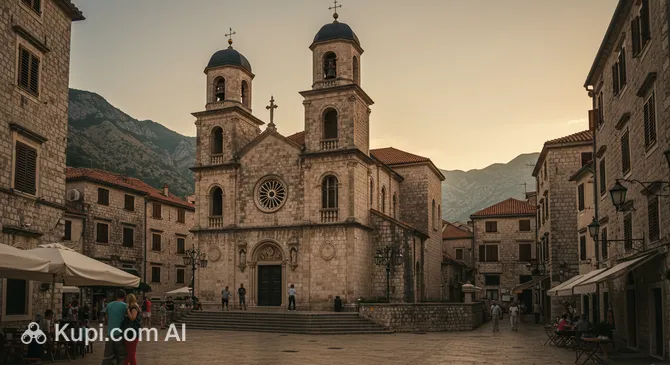
Asymmetry of the Main Cathedral: If you look closely at St. Tryphon's Cathedral, Kotor's main sanctuary, you'll notice that its two bell towers are different. One of the towers was destroyed by an earthquake in the 17th century and restored later, but due to a lack of funds and changes in architectural styles, it was not made an exact copy of the surviving one.
Impressive Length of the Walls: Kotor's defensive walls, with a total length of about 4.5 kilometers, do not just surround the old town at the foot of the mountain; they zigzag high up the steep slope to St. John's Fortress, reaching a height of up to 260 meters above sea level. This makes them one of the most impressive fortification systems in the Adriatic.
San Giovanni Fortress. Illustration.
Source: Kupi.com AI
Traveler photos:
How to Get There
There are several ways to reach Kotor, one of Montenegro's most charming cities, but the most popular and convenient is flying to one of the nearby airports. The city itself does not have its own airport, but several air harbors are located at a comfortable distance.
The closest option is Tivat Airport (TIV), located just 4.6 km from Kotor in the city of Tivat. This is a medium-sized international airport from which you can reach Kotor by taxi or bus in literally 10–15 minutes, depending on traffic. This airport is especially convenient for those who value minimal transfer time.
Another popular choice is Dubrovnik Airport (DBV) in Croatia. It is located about 44 km from Kotor. This is a large international airport that receives many flights from all over Europe. The trip from Dubrovnik Airport to Kotor usually takes about 1–1.5 hours by car or bus, including time for the border crossing.
You can also consider Podgorica Airport (TGD), the capital of Montenegro. It is located about 40 km from Kotor. This is also a medium-sized international airport. A transfer to Kotor will take about 1 hour 20 minutes to 1 hour 40 minutes by car or bus, following a road through scenic mountain areas.
For clarity, here is a summary of the main airports convenient for getting to Kotor:
Regarding rail connections, there is no train station in Kotor itself. The nearest major railway hubs are in neighboring countries and at a considerable distance. For example, Brindisi Railway Station in Italy is more than 200 km away (including a sea route), and Durres Railway Station in Albania is about 135 km away. Traveling by rail to these stations with a subsequent transfer to Kotor can be considered part of a larger European tour but is not the most direct way to get to the city.
Below is information about some railway stations in the region, although they are located at a significant distance from Kotor:
Besides air and rail transport, Kotor can be reached by car along Montenegro's scenic roads or by intercity buses that connect the city with other parts of the country and neighboring states. Kotor is also a popular port for cruise ships.
Main Attractions
Kotor is rich in historical and cultural treasures, each telling its own unique story. A walk through this charming city will lead you to many landmarks, but some deserve special attention.
San Giovanni Fortress. Illustration.
Source: Kupi.com AI
Traveler photos:
First and foremost is, of course, the majestic St. John's Fortress (also known as the Kotor Fortress), crowning the hill above the Old Town. The climb up numerous steps (over 1,300!) may seem like a challenge, but the panoramic views of the Bay of Kotor, the red-tiled roofs, and the labyrinth of streets from the top are worth every effort. This medieval fortification served as a reliable defense for the city for centuries and today is its main symbol and a place of pilgrimage for tourists.
Cathedral of Saint Tryphon. Illustration.
Source: Kupi.com AI
Traveler photos:
The heart of the Old Town is St. Tryphon's Cathedral, the cathedral of the Kotor Diocese. Consecrated in 1166, it is a magnificent example of Romanesque architecture with Gothic and Baroque elements added during subsequent reconstructions. Inside the cathedral are valuable 14th-century frescoes and a rich collection of religious art, including the relics of St. Tryphon, the patron saint of Kotor. Its two different bell towers, the result of restoration after an earthquake, give the cathedral a unique and memorable appearance.
Sea Gate. Illustration.
Source: Kupi.com AI
Traveler photos:
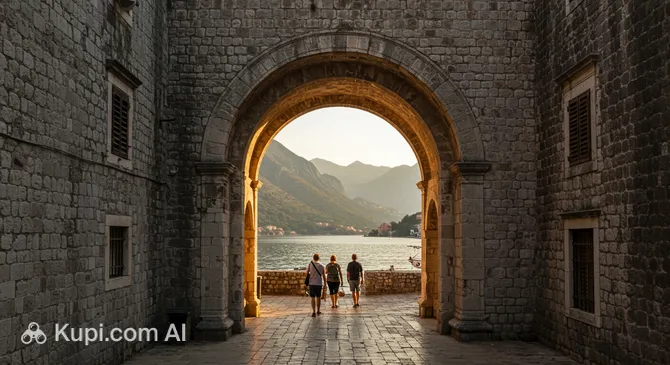
The main entrance to the Old Town is the Sea Gate (Vrata od Mora), built in the 16th century. Passing through it, you immediately immerse yourself in the atmosphere of the Middle Ages. Above the gate, you can see a bas-relief with the winged lion of St. Mark – a symbol of the Venetian Republic, under whose rule Kotor was for a long time, as well as the date of liberation from occupation and a quote by Tito. This gate is not just an entrance but an important historical monument, a witness to many key events in the city's life.
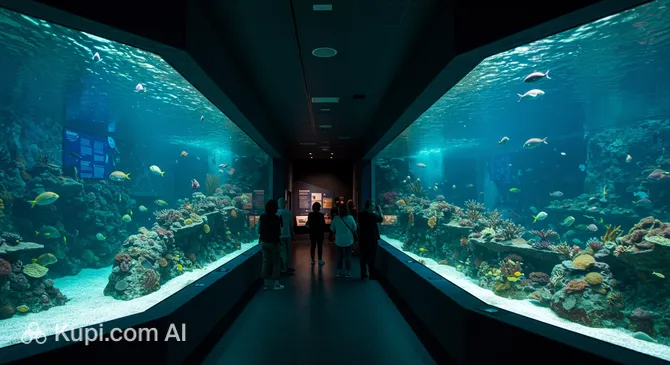
Boka Aquarium. Illustration.
Source: Kupi.com AI
Traveler photos:
For those interested in the marine life of the Adriatic, the Boka Aquarium is an interesting place. Located in the historic building of the Institute of Marine Biology, it introduces visitors to the diversity of the underwater world of the Bay of Kotor and the Adriatic Sea. It is a great place to visit with children, where you can learn a lot about the region's ecosystem and see rare marine inhabitants. The aquarium not only entertains but also performs an important educational and scientific mission.
Local Cuisine
A gastronomic journey through Kotor is an integral part of getting to know this amazing city. The local cuisine is an appetizing combination of Mediterranean traditions with the influence of Balkan culinary customs, offering fresh flavors and hearty dishes that every gourmet will love.
The foundation of Kotor's cuisine is, of course, the bounty of the Adriatic Sea. Be sure to try the freshest grilled fish, aromatic mussels in "buzara" sauce (školjke na buzaru), or the famous black risotto (crni rižot) with cuttlefish ink. No less popular are meat delicacies such as Njegusi prosciutto (cured ham) and Njegusi cheese, which are hallmarks of Montenegrin cuisine. For lovers of hearty meals, it is worth paying attention to lamb or veal dishes prepared "ispod sača"—under a special metal lid covered with coals, which makes the meat incredibly tender and juicy.
It is customary to accompany a meal in Kotor with local drinks. Among the alcoholic ones, Montenegrin wines stand out: the bold red "Vranac" (Vranac) and the refreshing white "Krstač" (Krstač). No feast is complete without rakija (rakija)—a traditional strong fruit brandy. Among non-alcoholic drinks, fresh juices, mineral water, and, of course, aromatic coffee, which is drunk here at any time of the day, are popular.
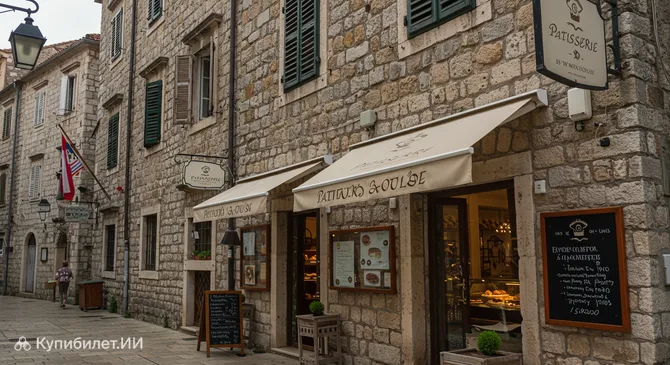
The food culture in Kotor centers around cozy restaurants and traditional taverns called "konoba," where you can taste authentic dishes in a relaxed atmosphere. Many of them are located in picturesque corners of the Old Town. Locals also love to buy fresh products at the markets. For a special gastronomic experience, you can visit places like the Patisserie by Wine House, where you can enjoy not only main courses but also desserts paired with a good wine.
Kotor's gastronomic scene attracts tourists with its freshness, simplicity, and authenticity. The focus is on high-quality local products, whether it's fish just caught from the bay or aromatic herbs from the mountain slopes. Tasting prosciutto and cheese, enjoying the flavor of fresh seafood and a glass of local wine are must-do items for anyone who wants to truly feel the spirit of Montenegro and its coastal gem—Kotor.
Travel Tips
Welcome to Kotor, a charming city with a rich history and incredible views! To make your trip to this corner of Montenegro as comfortable and memorable as possible, we have prepared some practical tips to help you get your bearings and enjoy every moment.
Clothing and essentials:
The climate in Kotor is Mediterranean. In summer (June–August), bring light clothing, swimwear, sunscreen, a hat, and sunglasses. In spring and autumn, the weather is pleasant, but a light jacket or sweater may come in handy. Winter is warmer than in continental Europe, but rain is common, so bring waterproof gear. A key point is comfortable shoes! The cobblestones of the Old Town and the climb to the fortress require sturdy, non-slip soles. When visiting churches and monasteries, follow the dress code: shoulders and knees should be covered. Don't forget a European adapter for your electronics if you need one.
Transport in the city:
Kotor's Old Town is entirely pedestrian, which is the best way to explore it. To travel around the Bay of Kotor and to neighboring towns (e.g., Perast, Dobrota), you can use the local "Blue Line" buses; they run quite regularly. Taxis are available, but it's recommended to agree on a price in advance or ensure the meter is on. Car rental is convenient for exploring the rest of Montenegro, but be aware that parking near the Old Town, especially in season, can be problematic and expensive.
Finances:
The official currency in Montenegro is the Euro (EUR). Bank cards (Visa, Mastercard) are accepted in most hotels, restaurants, and large stores. However, it's always useful to have some cash on hand for small purchases at markets, in souvenir shops, or for taxis. ATMs are easy to find in the city. A rough daily budget (excluding accommodation) can range from 50 to 100 euros, depending on your preferences. Tips in restaurants are usually 5–10% of the bill if you enjoyed the service, but they are not always mandatory and are often left to your discretion.
Health and Safety:Kotor is generally a very safe city. Pharmacies (Apoteka) are available in town, but not all are open 24/7; information about on-call pharmacies can be checked locally. For emergency medical assistance, call 124. Tap water is considered safe to drink. Basic precautions are standard: watch your belongings in crowded places, especially at the height of the tourist season. The climb to St. John's Fortress requires physical fitness; bring water, especially in hot weather, and take your time.
Communication:
The official language is Montenegrin. In the tourist areas of Kotor, many people speak English, and you can also often hear Russian and other European languages. Locals will appreciate it if you learn a few simple phrases in Montenegrin: "Zdravo" (Hello), "Hvala" (Thank you), "Molim" (Please/You're welcome), "Da" (Yes), "Ne" (No). A local SIM card with internet access can be bought at mobile operator offices or newsstands. Wi-Fi is available in most hotels, cafes, and restaurants.
Local Etiquette:
Montenegrins are hospitable and friendly. A handshake is the custom when meeting. Politeness and respect are valued in communication. Try not to make excessive noise in public places. When entering a church, men should remove their headgear, and women are advised to cover their heads and shoulders. Photography in churches is sometimes forbidden or allowed only without flash—pay attention to the signs.
What to avoid:
Try not to discuss political topics, especially those concerning the Balkan region, unless you are sure of your knowledge and the tact of your conversation partner. Also, avoid overly revealing clothing outside of the beach, especially when visiting the Old Town and religious sites.
Extra tip for Kotor:
Climb St. John's Fortress early in the morning or later in the evening to avoid the scorching sun and crowds of tourists—the views at sunrise or sunset are simply unforgettable! Don't be afraid to turn off the main streets of the Old Town into narrow alleys—that's where you'll find the most atmospheric corners, cozy courtyards, and feel the true spirit of ancient Kotor. Keep in mind that on days when cruise ships dock, the Old Town can become very crowded.
We hope these tips make your stay in Kotor even more pleasant and fulfilling. Enjoy every moment in this amazing city, its beauty, and its hospitality!
Entertainment & Nightlife
When the sun sets behind the majestic mountains surrounding the Bay of Kotor, Kotor doesn't go to sleep but transforms, offering its guests a variety of evening and night entertainment. Although Kotor is not famous for wild metropolis-style parties, its nightlife has its own unique charm, concentrated mainly within the walls of the Old Town (Stari Grad).
The heart of Kotor's nightlife beats right in its medieval center. Narrow cobbled streets and ancient squares come alive after dark thanks to numerous bars, pubs, and a few nightclubs. The atmosphere here is usually relaxed and friendly, attracting both tourists and local youth. Most establishments stay open until 1:00 or 2:00 AM, especially during the summer season. The dress code is generally casual, with smart casual being the dominant style, though it may be more formal for some clubs.
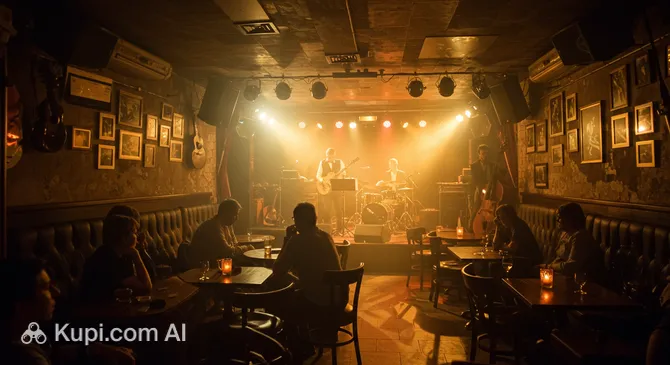
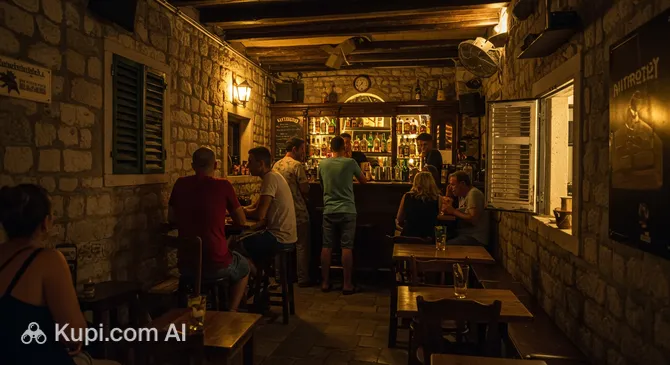
Among the popular places for evening relaxation, several establishments stand out. For example, Jazz Club Evergreen is an excellent spot for live music lovers, where you can enjoy high-quality jazz in a cozy setting. For those who prefer a livelier pub atmosphere, Nitrox Pub & Eatery is a good choice, offering a wide selection of drinks and snacks. Another place worth visiting is Incontro Bar & Food, where you can have a pleasant evening with friends over a cocktail or dinner.
Jazz Club Evergreen. Illustration.
Source: Kupi.com AI
Traveler photos:
The best time to start an evening walk through the Old Town is after 9:00–10:00 PM, when the daytime heat subsides and the venues fill up with crowds. Prices in Kotor's bars and clubs are generally moderate, especially compared to large European capitals. A glass of local beer or wine will cost around 3–5 euros, and cocktails start from 6–8 euros. Moving around the Old Town at night is safe, as it is well-lit and patrolled. If you need a taxi, you can call one or find them at the ranks by the Old Town gates; it is recommended to check the fare in advance.
Nitrox Pub & Eatery. Illustration.
Source: Kupi.com AI
Traveler photos:
Besides bars and clubs, evening Kotor offers other forms of entertainment. Open-air concerts or cultural events are often held in the squares of the Old Town, especially in summer. Some restaurants offer dinner with live music, creating a romantic atmosphere. There are no traditional night markets in Kotor, but souvenir stalls and some shops in the Old Town may stay open late.
During the day, Kotor offers quieter but no less exciting entertainment. You can visit numerous historical sights such as St. John's Fortress or St. Tryphon's Cathedral. The Cats Museum or Boka Aquarium will also be interesting. Although there are no large amusement parks in Kotor, a walk through its ancient streets or along the promenade is an adventure in itself.
Parks & Museums
Kotor is not only about majestic fortress walls and ancient temples, but also places where you can enjoy natural beauty and immerse yourself in unique aspects of the local culture. The city offers a charming blend of coastal scenery and intriguing museum collections that will complete your impression of this Adriatic gem.
Although Kotor does not abound in extensive city parks in the traditional sense, its greatest green asset is the Bay of Kotor itself, its surrounding emerald slopes, and crystal-clear waters. This natural harbor is a magnificent open-air park in its own right, perfect for leisurely walks along the promenade or exciting boat excursions. For those looking for a place to relax by the water, there is Kotor Beach. Though small, it is perfectly suited for refreshing yourself on a hot day and admiring the views of the bay and ancient walls.
Kotor Beach. Illustration.
Source: Kupi.com AI
Traveler photos:
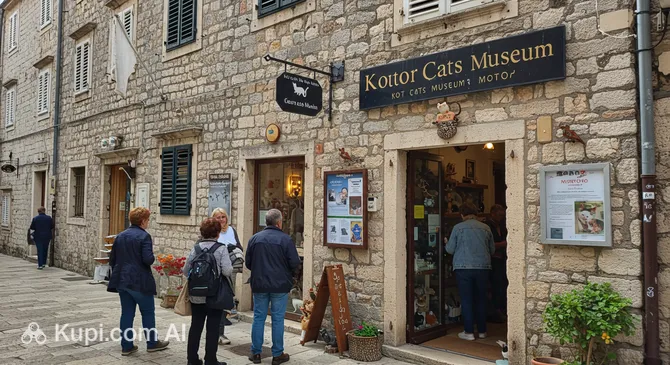
Kotor's cultural life is represented by several interesting museums. One of the most unusual and beloved by tourists is the Cats Museum. This charming place pays tribute to the city's furry residents, who have long been its unofficial symbol. It houses a collection of postcards, coins, stamps, and other artifacts featuring cats, telling the story of their role in Kotor's life. It is a great place for a light and educational pastime.
Kotor Cats Museum. Illustration.
Source: Kupi.com AI
Traveler photos:
Another notable spot is the Boka Aquarium, located in the Institute of Marine Biology building. It introduces visitors to the rich underwater world of the Adriatic Sea and the Bay of Kotor. The aquarium's exhibits will be of interest to both adults and children, allowing them to learn more about the region's marine life and the importance of preserving their habitat.
Besides specialized museums, the Old Town of Kotor itself can be considered a vast open-air museum. Every street, square, and building here breathes history. Of particular note are the numerous churches, such as the majestic St. Tryphon's Cathedral or the cozy St. Luke's Church, which house priceless frescoes and relics. The climb to St. John's Fortress is also an immersion into history, rewarding you with incredible views.
Insider tip: don't limit yourself to just the well-known routes. Turn into the inconspicuous alleys of the Old Town to discover hidden courtyards and ancient coats of arms on the walls of houses, and feel the authentic atmosphere of medieval Kotor. Sometimes the most interesting discoveries await where you least expect them.
Getting Around
Getting around Kotor and its picturesque surroundings is quite easy thanks to several modes of transport. The Old Town of Kotor itself is a completely pedestrian zone, and the best way to get to know its narrow streets and ancient squares is a leisurely walk.
The main form of public transport for trips around the Bay of Kotor and to neighboring towns like Perast, Dobrota, or Tivat is local buses. The most well-known company is "Blue Line," whose buses run along the coast with reasonable regularity. Routes usually follow the main coastal road. Tickets for local buses can generally be purchased directly from the driver upon boarding; payment is usually made in cash. The fare is low and depends on the distance, typically ranging from 1 to 3 euros. Specialized tourist passes or mobile apps for paying fares on local lines are not common. Buses usually start running early in the morning and finish late in the evening, but it's best to check the schedule locally, especially in the off-season.
For longer trips, such as to other cities in Montenegro (Budva, Podgorica) or even to neighboring countries, there is an intercity bus service. Kotor's main bus station is located near the Old Town. It's recommended to buy tickets for such trips in advance at the bus station ticket offices, especially during the peak tourist season. You can also find the current schedule at the bus station.
As an alternative to public transport, taxis are always available. They can be found at ranks near the Old Town or called by phone. It's recommended to agree on the fare in advance or make sure the driver has turned on the meter to avoid misunderstandings. Taxis are convenient for short trips or if you are traveling with luggage.
Given Kotor's coastal location, boat trips and water taxis play an important role. Numerous companies offer excursions around the Bay of Kotor, allowing you to see its beauty from the water and visit places like Our Lady of the Rocks island or the Blue Cave. This is more of a tourist activity than regular public transport, but it is very popular.
For those who prefer more independence, there is the possibility of renting a car or a scooter. This is convenient for exploring more remote corners of the region. However, keep in mind that parking in Kotor, especially near the Old Town, can be difficult and paid. In some places, you can also find bicycle rentals, which is a great option for leisurely rides along the promenade.
Accommodation
Kotor offers travelers a wide range of accommodation options to suit every taste and budget. Here you can find cozy hostels for budget-conscious tourists, numerous apartments for those who value home comfort and independence, mid-range hotels with good service, and even luxurious boutique hotels and villas with stunning bay views.
The most popular area to stay is undoubtedly the Old Town of Kotor. Staying here allows you to immerse yourself in the unique medieval atmosphere and have all the main attractions, restaurants, and bars within walking distance. Accommodation options in the immediate vicinity of the Old Town, along the coast of the Bay of Kotor—for example, in the areas of Dobrota or Muo—are also in demand. These areas offer a quieter environment, magnificent panoramic views, as well as modern hotels and apartments, some of which feature private beach areas or swimming pools.
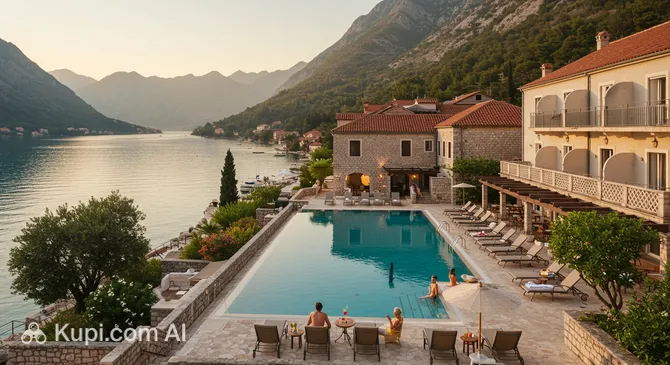
There are several notable hotels in Kotor offering a high level of comfort. For example, Huma Kotor Bay Hotel and Villas is known for its excellent location and quality of service, offering guests a luxurious holiday on the bay's shore. Many hotels, especially those located in the historic buildings of the Old Town, possess a unique charm and individual design, allowing for a deeper immersion into the atmosphere of this ancient city.
Huma Kotor Bay Hotel & Villas. Illustration.
Source: Kupi.com AI
Traveler photos:
When planning a trip to Kotor, especially during the peak tourist season (June to September), it is highly recommended to book accommodation in advance, as the most attractive and affordable options fill up quickly. The price range for accommodation is quite wide: from budget hostels and rooms to mid-range apartments and small hotels, and up to luxury offers in high-end hotels and villas. The most common booking methods are popular international online platforms and aggregators, as well as direct booking through official hotel websites or direct communication with apartment owners.
Nearby Cities
For those who want to explore the surrounding area, Kotor serves as an excellent starting point for day trips to several interesting nearby locations:
These nearby destinations provide insight into the diverse culture and landscapes of Montenegro. For example, Budva, located just 16 km away, is known for its lively beaches and Old Town. Herceg Novi (20 km) will charm you with its fortress and botanical garden. The country's capital, Podgorica (40 km), offers a more modern pace of life and interesting museums. Each of these places is easily accessible for a day trip and will provide new impressions.
Shopping & Souvenirs
Kotor, with its unique medieval atmosphere, offers not so much large-scale shopping as the pleasure of searching for unique items and local products. You won't find huge malls here like in the world's fashion capitals, but you can enjoy shopping in small boutiques, souvenir shops, and at the colorful market, especially within the Old Town.
The main place for shopping in Kotor is its historic heart—the Old Town. Strolling through its narrow cobbled streets, you will find many charming shops offering jewelry, clothes by local designers, artworks, leather goods, and, of course, various souvenirs. Every shop here has its own character, and the search process itself becomes an exciting adventure.
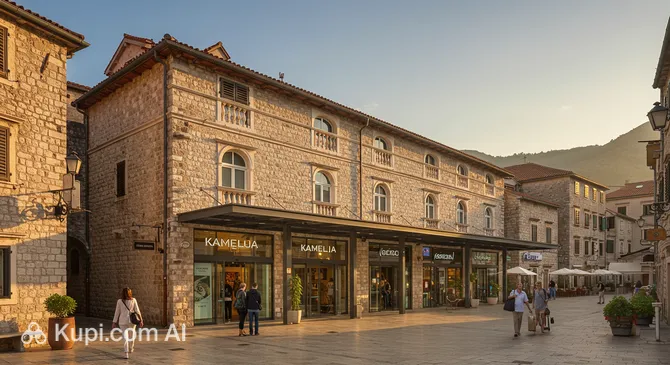
If you are looking for a more modern shopping format with well-known brands and a large selection of goods, you should visit the Kamelija Shopping Centre. It is located near the Old Town walls and offers visitors clothing, shoe, and cosmetics stores, electronics, as well as a supermarket, a cafe, and other services. This is a convenient place for those who want to combine buying necessary items with a bit of rest.
Kamelija Shopping Centre. Illustration.
Source: Kupi.com AI
Traveler photos:
Be sure to drop by the Kotor Market, which is located just outside the Sea Gate of the Old Town. This is a real kaleidoscope of the tastes and aromas of Montenegro. Here you can buy the freshest fruits and vegetables, homemade cheeses, the famous Njegusi prosciutto, olives and olive oil, local honey, wine, and strong rakija. The market is also a great place to buy edible souvenirs and small handcrafted items. The atmosphere here is very lively, especially in the morning.
As souvenirs from Kotor, tourists most often choose:
Gastronomic specialties: Njegusi prosciutto and cheese, local wines (especially "Vranac" and "Krstač"), rakija, olive oil, honey.
Cat-themed items: Kotor is famous for its numerous cats, which have become an unofficial symbol of the city. You will find many souvenirs—from magnets and postcards to ceramics and textiles—featuring images of these graceful animals. The Cats Museum is also located nearby.
Handicrafts: handmade ceramics, silver jewelry with semi-precious stones, traditional embroidery, leather goods.
Nautical themes: ship models, shells, paintings with landscapes of the Bay of Kotor.
Most shops in the Old Town of Kotor are open daily, especially during the tourist season (May to September), usually from 9:00–10:00 AM until late evening (9:00–10:00 PM). Some small private shops may have a lunch break. The Kamelija Shopping Centre has its own schedule. The official currency is the Euro (EUR). Bank cards are accepted in most stores and the shopping center, but it's better to have cash at the market and in small souvenir shops.
For tourists from non-EU countries, a Tax Free system operates in Montenegro. If the amount of your purchase in one store exceeds the set limit (usually around 100 euros, but check locally), you can apply for a VAT refund. Look for stores with the "Tax Free Shopping" logo and don't forget to ask the seller for a special receipt to present at customs when leaving the country.