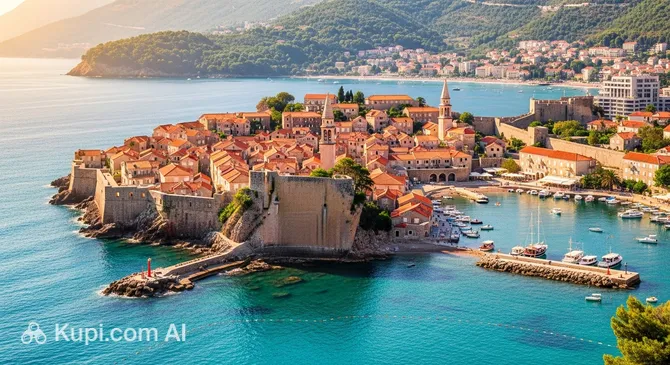
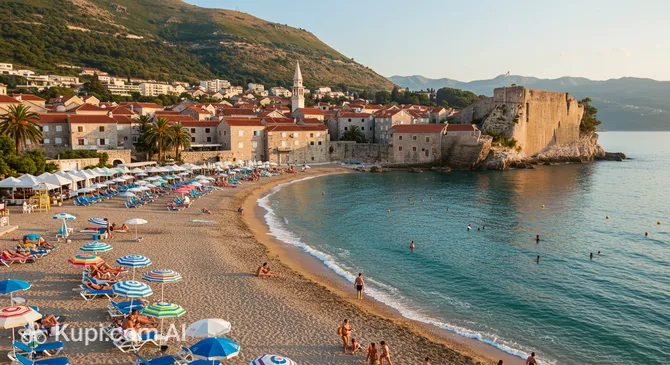
Budva is a true gem of the Adriatic coast and one of the most popular resort centers in Montenegro. This city harmoniously combines the charm of ancient history with the dynamic rhythm of modern life, attracting tourists from all over the world with its unique atmosphere.
Located in the central part of the Montenegrin coast, Budva is famous for its picturesque bays, pristine beaches, and mild Mediterranean climate. Summers here are sunny and warm, while winters are short and mild, making the city attractive to visit almost year-round. The population of Budva is about 19,000 people, but at the height of the tourist season, the city comes alive, filling with guests.
Budva. Illustration.
Source: Kupi.com AI
The main pride of Budva is undoubtedly its Old Town—a labyrinth of narrow paved streets, ancient churches, and Venetian fortress walls that hold centuries of history. Beyond its walls lie famous beaches such as Slovenska Plaža, Mogren, and Jaz, offering excellent conditions for relaxation and water activities. Budva is also known for its lively promenade, numerous restaurants, cafes, and vibrant nightlife, especially during the summer months.
Budva is not just a resort; it is a place where everyone will find something for themselves: from a relaxing beach holiday and exploring historical monuments to active entertainment and vivid impressions. Visit Budva to experience its unique flavor and hospitality!
You can find more interesting facts on the history of Budva page.
Weather Overview
The weather in Budva is characterized by warm, sunny summers and mild, wetter winters. Average temperatures in the summer months (June-August) range from 20.5°C to 23.7°C, with maximum values reaching 27-28°C. Precipitation during this period is minimal, only 2-3 mm per month, although there may be 8 to 13 rainy days. In winter (December-February), the average temperature is about 4.6°C - 6.4°C, with minimum temperatures dropping to 1.6°C. Winter months are rainier, with precipitation from 7 to 10 mm and 11-15 rainy days. Spring and autumn are transitional seasons with moderate temperatures and changeable weather. For example, in May the average temperature is 15.6°C, and in November it is 10.4°C, with November being one of the wettest months with 12 mm of precipitation. Overall, expect a warm summer with occasional rain and cool, wetter winters. To find out more details, see the detailed climate of Budva.
Average monthly temperature
Average monthly precipitation
Interesting Facts
In addition to its famous beaches and lively promenade, Budva holds many amazing stories and little-known details that make this ancient city even more attractive. Here are just a few interesting facts that will help you look at Budva in a new way:
One of the oldest settlements on the Adriatic: Budva is rightfully considered one of the oldest cities on the entire Adriatic coast. Its history spans over 2,500 years, and the first mentions of a settlement here appear as early as the 5th century BC in the works of the ancient Greek dramatist Sophocles.
Legendary foundation: According to ancient legend, the founder of Budva was Cadmus, the Phoenician hero and son of King Agenor. Banished from Thebes, he arrived in these parts with his wife Harmonia on an ox-drawn cart. It is believed that the name of the city "Budva" (Bouthoe) itself comes from the Greek word "bous," meaning "ox."
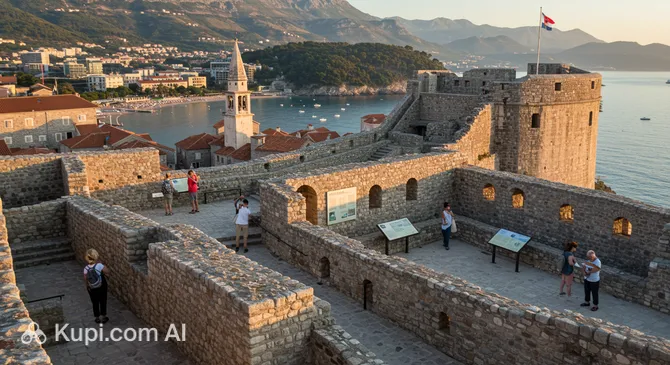
Treasures of the Citadel: The majestic Budva Citadel, rising above the Old Town, holds not only a rich history and museum exhibitions. Within its walls also lies an impressive library where you can find rare books and old nautical charts telling the history of seafaring in this region.
A symbol of loyalty and sorrow: The graceful Ballerina Statue (or Gymnast), set on a rock near Mogren Beach, is more than just a popular photo spot. One of the most touching legends says that the sculpture is dedicated to a girl who came to the shore every day, faithfully waiting for her beloved sailor who never returned from a long voyage.
Budva Citadel. Illustration.
Source: Kupi.com AI
Traveler photos:
How to Get There
Budva is one of the most popular and visited resorts in Montenegro, located on the picturesque Adriatic coast. Since the city is an important tourist center, the transport infrastructure here is fairly well-developed, although it has its own characteristics. Most often, travelers fly into one of the neighboring airports and then travel to their hotel by taxi or bus. You can find out more details on how to get to Budva to plan your route as comfortably and cost-effectively as possible.
Budva itself does not have its own airport, so the main way of arriving remains a flight to neighboring cities. The most convenient option is Tivat Airport (IATA: TIV). It is located in the city of Tivat, just 16 km from the center of Budva. This is a compact but very popular airport among tourists with an average passenger flow. The journey by taxi or transfer will take about 45–50 minutes, depending on the traffic on the coastal highway.
Another popular option is Podgorica Airport (IATA: TGD), located in the country's capital. The distance to Budva is approximately 35 km, and the travel time by car is about 1 hour 15 minutes. Many tourists also use Dubrovnik Airport (IATA: DBV), located in neighboring Croatia, about 56 km from Budva. This is a major international hub; however, when planning a route through it, you should account for time spent crossing the state border.
For clarity, here is a summary of the main airports in the region:
Regarding rail connections, there is no train station directly in Budva. The railways in the region run at a distance from the coast of the Budva Riviera. Available data mentions the Bari Centrale station (IATA: BAU), which is located in the city of Bari (Italy). The distance in a straight line is about 210 km, but they are separated by the Adriatic Sea. You can get there by taking a ferry to the Montenegrin port of Bar and then transferring to a bus or taxi to Budva.
Below is information about the nearest major railway hub:
Budva, in addition to its magnificent beaches and atmospheric Old Town, offers many unique attractions that will make your trip unforgettable. Here are just a few that should definitely be included in your itinerary:
One of the main highlights is the Budva Citadel, which rises majestically in the Old Town. This ancient fortress, once serving as the main defensive structure, today invites guests to dive into history. Inside, you will find a museum with interesting exhibits, an old library, and, most importantly, you can climb to the observation decks, which offer breathtaking panoramic views of the Adriatic Sea, the red-tiled roofs of Budva, and the picturesque St. Nicholas Island. It is the perfect place to feel the spirit of the past and take stunning photos.
Near Mogren Beach, on the coastal rocks, you will see the graceful Ballerina Statue (also known as the Gymnast). This bronze sculpture has become a true symbol of Budva and one of its most photographed spots. According to local legend, it personifies the loyalty of a girl who waited for her beloved sailor. The statue attracts tourists with its beauty, romantic aura, and wonderful backdrop for souvenir photos, especially at sunset.
For beach lovers, a visit to Jaz Beach is a must. It is one of the largest and most famous beaches not only on the Budva Riviera but in all of Montenegro. The long stretch covered with small pebbles and sand, crystal-clear water, and developed infrastructure make it an ideal place for swimming, sunbathing, and water sports. Jaz Beach is also known as a venue for major music festivals and concerts by world stars, which adds to its popularity among young people.
Podmaine Monastery. Illustration.
Source: Kupi.com AI
Traveler photos:
If you are looking for tranquility and want to touch the spiritual history of the region, visit the Podmaine Monastery (also known as Podostrog). Located at the foot of a hill, slightly away from the noisy coast, this active men's monastery is an important Orthodox center. It consists of two churches—the Assumption of the Holy Virgin (the small one, from the 15th century) and a later large church (from the 18th century) decorated with frescoes. Visiting the monastery provides an opportunity to enjoy silence, beautiful old architecture, and feel the special atmosphere of this holy place.
Local Cuisine
The gastronomic scene of Budva is a vibrant reflection of the rich culture of Montenegro, where Mediterranean traditions are closely intertwined with Balkan flavor. The basis of local cuisine is the freshest products, generously gifted by the Adriatic Sea and fertile lands. A real culinary adventure awaits travelers here, full of tastes and aromas that stay in the memory for a long time.
The main place in Budva's menu is, of course, occupied by seafood. Be sure to try freshly caught grilled fish (riba na žaru), tender squid, mussels in wine sauce (mušule na buzaru), or the famous black risotto with cuttlefish ink (crni rižot). No less popular are meat delicacies: the famous Njeguški pršut (dry-cured pork ham), juicy ćevapi (minced meat sausages), or the traditional dish peka—meat with vegetables simmered under a special dome-shaped lid over coals. This dish is usually prepared for a large group, and its taste is simply unforgettable.
You should accompany your meal with local drinks. Montenegro is famous for its wines: the robust red Vranac and the refreshing white Krstač are great additions to any dish. Among strong drinks, rakija is popular—a fruit brandy that comes in various types (slivovitz from plums, lozovača from grapes, kajsijevača from apricots). Among non-alcoholic drinks, fresh juices, mineral water, and, of course, aromatic local coffee (domaća kafa) are always available and drunk everywhere here.
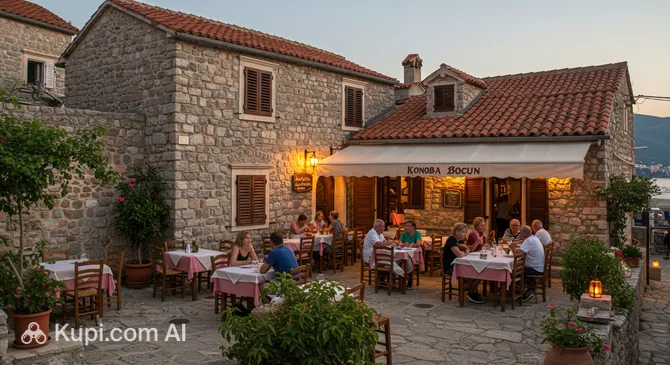
The food culture in Budva is diverse. You can have lunch or dinner in exquisite restaurants with sea views as well as in cozy family taverns called konobas. It is in the konobas that you can feel the true atmosphere of Montenegrin hospitality and try traditional dishes prepared according to old recipes. For example, stop by Konoba Bocun to enjoy authentic cuisine. Promenade cafes, where you can grab pizza or pasta, and local markets selling fresh fruit, vegetables, cheeses, and homemade pršut are also popular.
Konoba Bocun. Illustration.
Source: Kupi.com AI
Traveler photos:
Budva's gastronomic scene attracts tourists with its freshness, simplicity, and authenticity. Natural flavors are valued here, whether it's just-caught fish or juicy vegetables from a local garden. The combination of sea delicacies, hearty meat dishes, and fragrant local wines makes Budva a true paradise for foodies. Immerse yourself in the world of Adriatic flavors and discover the hospitality of Montenegro through its cuisine!
Travel Tips
Welcome to charming Budva! To make your trip through this sunny resort in Montenegro as comfortable and pleasant as possible, we have prepared a few practical tips. They will help you navigate the area better and avoid potential inconveniences.
Clothing and Essentials: The climate in Budva is Mediterranean, so in summer (June-August), bring light clothing made from natural fabrics, swimwear, a hat, sunglasses, and high-SPF sunscreen. A light sweater or windbreaker might be useful in the evening. For spring and autumn, clothes that can be layered (T-shirts, sweaters, jacket) are suitable. Be sure to bring comfortable shoes for walking on the cobblestones of the Old Town and pebble beaches. Don't forget a universal adapter for electrical appliances if yours differs from the European standard. When visiting monasteries outside Budva, modest clothing covering shoulders and knees may be required, but there is no strict dress code for most tourist spots within Budva itself.
City Transport: Budva's historical center and promenade are easily explored on foot. To move around the city and to nearby beaches (e.g., Jaz, Bečiči, Sveti Stefan), you can use the local buses of the "Mediteran Express" company—it's an affordable and convenient way. Taxis are plentiful in Budva, but it is recommended to agree on the price of the trip in advance or ensure the driver has turned on the meter. Renting a car is advisable if you plan to actively explore the coast of Montenegro, though keep in mind that parking in central Budva can be problematic during high season.
Finances: The official currency in Montenegro is the Euro (EUR). You can exchange currency at banks or exchange offices (menjačnica), but rates may be better at banks. Credit and debit cards (Visa, Mastercard) are accepted in most hotels, restaurants, and large stores. However, in small cafes, souvenir shops, and at markets, it's better to carry cash. ATMs are widely available. It is recommended to notify your bank about your trip to avoid card blocking. Regarding a rough daily budget, for a comfortable stay in Budva, aim for an amount starting from 50-70 Euros per person per day if you plan to eat in inexpensive cafes, use public transport, and don't overindulge in paid tours. For a more varied holiday with regular visits to restaurants, bars, and souvenir purchases, the budget could be 100-150 Euros and up. It's important to understand that these are only approximate figures and they can change significantly depending on the season (prices are higher in peak season), your accommodation preferences, dining style, and entertainment program. Tipping in restaurants is usually 5-10% of the bill if you liked the service; in taxis, you can round the amount up.
Health and Safety: There are pharmacies (apoteka) in Budva, some of which stay open late, but 24-hour ones are rare. If medical assistance is needed, tourists can contact the local Health Center (Dom Zdravlja) or private clinics. Travel insurance is mandatory! Budva is considered a fairly safe city, but standard precautions are still wise: watch your belongings in crowded places (beaches, Old Town, markets), and do not leave valuables unattended. Evening walks on well-lit central streets are safe.
Communication: The official language is Montenegrin. In Budva's tourist areas, many people speak English; Russian and German are also common, especially in the service industry. Locals will appreciate it if you learn a few simple phrases in Montenegrin: "Zdravo" (Hello), "Hvala" (Thank you), "Molim" (Please/You're welcome), "Da/Ne" (Yes/No). You can buy a local SIM card for mobile internet at operator offices (e.g., Telenor/One, M:tel, Crnogorski Telekom) or at newsstands. Wi-Fi is available in most hotels, cafes, and restaurants.
Local Etiquette: Montenegrins are hospitable and friendly. Greetings are usually accompanied by a handshake. Politeness and respect are valued in communication. Try not to make excessive noise in public places. When visiting churches and monasteries (even if they are just tourist sites), it is worth behaving with restraint and respect.
What to Avoid: Try not to engage in discussions on sensitive political topics, especially those concerning the history of the Balkan region. Do not photograph people without their permission, especially when it comes to private life. It is also not recommended to haggle excessively in stores with fixed prices; bargaining is mostly appropriate at markets or when buying souvenirs from street vendors, but do so politely.
Additional Tip – Tourist Tax: Remember the tourist tax (boravišna taksa). This is a small daily fee charged to all tourists. Usually, it is paid through your place of accommodation (hotel, apartment). Check at check-in whether this fee is included in the price or needs to be paid separately. This will help avoid misunderstandings at check-out.
We hope these tips help you plan an unforgettable holiday in Budva! Enjoy the sun, the sea, and the hospitality of this beautiful Montenegrin city.
Entertainment & Nightlife
When the sun sets over the Adriatic, Budva transforms into one of the liveliest centers of nightlife on the Montenegrin coast. The city offers entertainment for every taste: from noisy open-air discos to cozy bars with live music and stylish lounges where you can enjoy a cocktail with a sea view. Nighttime Budva is a kaleidoscope of lights, sounds, and impressions, attracting both young people and a more mature audience.
The main epicenter of evening and night entertainment in Budva is traditionally the promenade (Slovenska Obala). Here, especially in the summer season, life buzzes until the early morning. Numerous cafes turn into bars from which music echoes, and closer to midnight, popular clubs open their doors. It is also worth paying attention to the area around the TQ Plaza shopping center, where several modern clubs are concentrated. The atmosphere overall is very democratic and lively, especially during the peak season. Many establishments stay open until 3 or 4 AM, and some beach bars host parties until dawn.
The choice of venues is enormous. Fans of large-scale parties will appreciate clubs like Omnia, known for its impressive light shows and performances by world-famous DJs, or the TQ Plaza Nightclub, which offers modern music and a stylish interior. For a more relaxed atmosphere and signature cocktails, you can stop by Casper Bar, which is famous for its cozy setting and quality music. In summer, beach clubs on beaches like Jaz or Ploče are popular, where you can dance right on the sand under the stars.
When planning an evening out, keep in mind that most clubs start to fill up closer to midnight. The dress code varies: for beach bars, it is as casual as possible, while some prestigious clubs may stick to a smart casual style. Drink prices in popular nightspots are generally higher than in daytime cafes. You can get to the party spot or back to your hotel at night by taxi; it is recommended to use official services and confirm the fare in advance, especially if there is no meter.
Regarding safety, the central areas of Budva where nightlife is concentrated are well-lit and patrolled, especially during the tourist season. Nevertheless, standard precautions should be taken: keep an eye on your personal belongings and avoid poorly lit and deserted places. You can call a taxi via apps, by phone, or by asking the venue's staff.
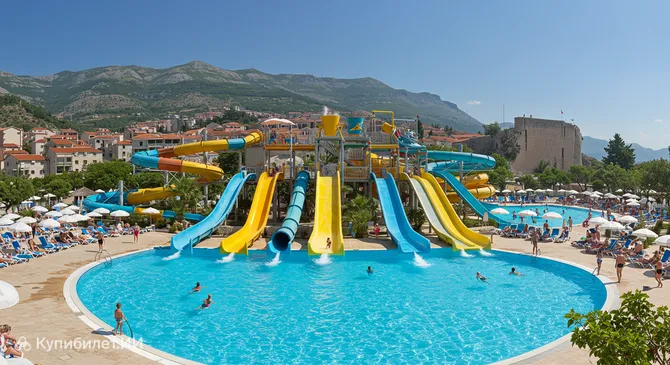
During the day, Budva also offers many interesting activities. History and culture enthusiasts can explore the Old Town or visit the Budva Citadel with its museum and observation decks. For family vacations and thrills, the Mediteran Aqua Park is an excellent choice, offering a variety of water slides and pools. While there are few classical theaters in Budva, various festivals and open-air cultural events are often held in the summer.
Thus, Budva is capable of satisfying the needs of a wide variety of travelers, offering both a vibrant nightlife and a rich daytime program.
Parks & Museums
Budva offers its guests not only magnificent beaches and a vibrant nightlife but also the opportunity to enjoy natural beauty and touch a rich cultural heritage. Although there are few classic city parks here, their role is successfully fulfilled by picturesque coastal zones and historical sites that hold centuries-old secrets.
For lovers of nature and sea holidays, Budva is a true paradise. The famous Budva Riviera, stretching for tens of kilometers, offers many well-equipped and wild beaches. These are not just strips of sand or pebbles by the sea, but entire natural zones with unique landscapes. One of the most famous is Jaz Beach, which attracts visitors not only with its size and clean water but also because major music festivals are often held here. It's a great place for those who want to combine relaxation by the sea with active entertainment. Another popular area is Rafailovići Beach, known for its scenic views and cozy restaurants.
Budva Riviera. Illustration.
Source: Kupi.com AI
Traveler photos:
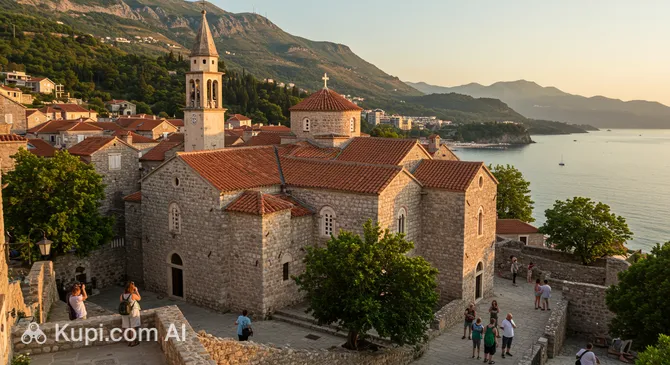
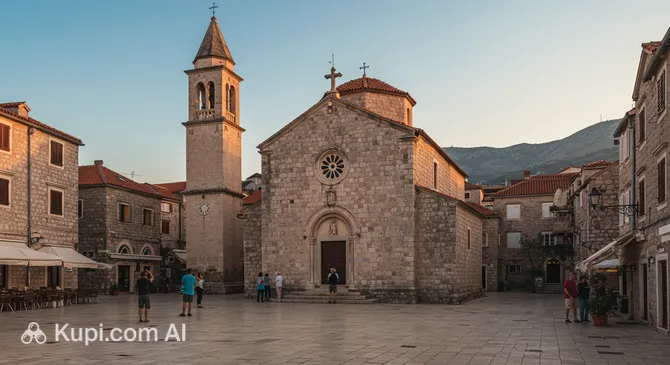
The heart of Budva's cultural life is undoubtedly its Old Town. Here, among the narrow paved streets, rises the majestic Budva Citadel. This is not just a fortress, but an important museum complex where you can learn about the city's history, see archaeological finds, and ancient maps. From the walls of the Citadel, stunning views of the Adriatic and red-tiled roofs open up. Nearby is the city's main Catholic church—the Church of St. John the Baptist, known for its high bell tower, which is one of the symbols of Budva. Valuable icons and relics are kept inside.
Budva Citadel. Illustration.
Source: Kupi.com AI
Traveler photos:
For those seeking solitude and spiritual enrichment, it is worth visiting the Podmaine Monastery (Podostrog). This active men's monastery, located slightly away from the tourist hustle and bustle at the foot of a hill, offers an atmosphere of tranquility and Orthodox culture. It consists of two churches and houses interesting frescoes. Visiting the monastery is an opportunity to see a different, non-tourist side of Budva.
Church of Saint John the Baptist. Illustration.
Source: Kupi.com AI
Traveler photos:
As a less known but interesting place, a walk to the ruins of Mogren Fort, located on a cape near the beach of the same name, can be recommended. From here, breathtaking views open up, and the place itself breathes history. Also, while exploring the Old Town, pay attention to the remains of Roman mosaics, which testify to the ancient history of these lands.
Getting Around
Getting around Budva and its surroundings is quite simple, thanks to a well-developed public transport system for a resort city and the availability of alternative options. Although the city itself is compact and many attractions are within walking distance, transport will come in very handy for trips to more distant beaches or neighboring villages.
The main form of public transport in Budva is buses. Local routes connecting various parts of the city as well as popular beaches like Bečiči, Sveti Stefan, and Jaz are operated by the "Mediteran Express" company. The buses are usually small and run quite frequently, especially during the high tourist season. Fares are usually paid in cash directly to the driver upon boarding. Ticket prices for local routes are low, typically within a few euros depending on the distance. Schedules can be checked at stops or with drivers, but be prepared for the fact that they may not always be strictly followed.
For travel to other cities in Montenegro or even neighboring countries, the Budva Main Bus Station (Autobuska Stanica Budva) is the primary hub. Here you can buy tickets for intercity and international routes. It is recommended to buy tickets in advance, especially if you plan to travel at a popular time. The station itself has ticket offices, an information board, and a waiting room. Buses depart from here on schedule, making it a reliable way to reach destinations like Kotor, Podgorica, or Tivat.
Taxis are abundant in Budva. You can hail a car on the street, find one at special taxi stands, or call by phone. It is extremely important to agree on the fare in advance or ensure the driver has turned on the meter to avoid inflated prices, especially in tourist spots. Some local taxi companies have their own apps for booking. Overall, a taxi is a convenient but more expensive way to get around compared to the bus.
In addition to public transport and taxis, other ways of getting around are popular in Budva. The historical center (Old Town) and the promenade are ideal for walking. For independent trips, you can rent a car, scooter, or bicycle. Renting a car gives you the freedom to move along the entire coast, but keep in mind that parking problems may arise in central Budva during peak season. Bicycles and scooters are great for short trips along the sea. Also, in the summer season, water taxis (boats) run actively, taking you to St. Nicholas Island (locals call it "Hawaii") or to remote beaches—this is not only convenient but also allows you to enjoy views of the coast from the water.
Accommodation
In Budva, travelers will find a wide range of accommodation options capable of satisfying diverse needs and budgets. It offers everything from economical hostels and cozy private apartments, ideal for young people and independent tourists, to comfortable mid-range hotels and luxurious resort complexes with a full range of services.
The most popular areas among tourists are those in the immediate vicinity of the Old Town and along the famous Slovenska Plaža beach. This zone offers the highest concentration of hotels, restaurants, and entertainment venues. For those who prefer a quieter holiday, neighboring resort villages such as Bečiči or Rafailovići are excellent choices, known for their beautiful beaches and developed infrastructure while remaining within easy reach of central Budva.
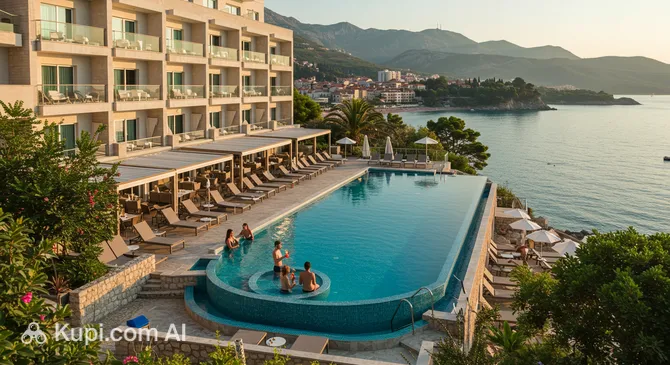
The price range for housing in Budva is very broad: from very budget-friendly options to luxury class offers. Among the well-known hotels offering a high level of service and comfort are, for example, the fashionable Splendid Conference & Spa Resort or the Waves Bellevue resort hotel.
Splendid Conference & Spa Resort. Illustration.
Source: Kupi.com AI
Traveler photos:
When planning a trip, especially during the peak tourist season (July-August), it is highly recommended to book accommodation in advance, as demand increases significantly during this time. The most common booking methods are popular international online platforms, official hotel websites, as well as contacting local travel agencies that can offer interesting package tours.
Nearby Cities
For those who want to explore the surrounding area, Budva serves as an excellent starting point for day trips to several interesting nearby locations:
Podgorica, the capital of Montenegro, offers you a chance to get acquainted with the country's modern life, visit its museums, and stroll through renovated parks and over bridges across the Morača River. This is a good option for those who want to see the contrast between coastal and continental Montenegro.
A trip to Nikšić, the country's second-largest city, will interest history buffs thanks to sites like the Emperor's Bridge and the ruins of the Onogošt fortress. You can also visit the famous "Trebjesa" brewery here, where the well-known "Nikšićko" beer is produced.
Ulcinj, the southernmost city on the Montenegrin coast, will charm you with its oriental flavor, ancient fortress, and the famous Long Beach (Velika Plaža). It is a great place for those seeking a unique atmosphere and endless sand dunes.
Herceg Novi, the "city of a thousand steps," will greet you with picturesque fortresses such as Forte Mare and Kanli Kula, and lush subtropical vegetation. It offers magnificent views of the entrance to the Bay of Kotor, making it a wonderful place for walks and photo shoots.
Cetinje, the historical and cultural capital of Montenegro, will immerse you in the country's past thanks to its numerous museums, former embassies, and the Cetinje Monastery. Located in a picturesque valley, this city is perfect for exploring national heritage.
These nearby destinations provide an insight into the diverse culture and landscapes of the Montenegro region. Each of these trips will give you new impressions and allow you to get to know the history and nature of this amazing country more deeply.
Shopping & Souvenirs
Shopping in Budva is a pleasant addition to beach relaxation and sightseeing. Although the city is not a major fashion center, you can find many interesting goods here, especially if you are looking for souvenirs, local delicacies, or beach accessories. Shops and stalls are mainly concentrated in tourist areas, offering both local craft products and goods from famous brands.
The main arteries for shopping in Budva are the promenade (Slovenska Obala) and the streets of the Old Town. On the promenade, especially in the summer season, there are many small shops, kiosks, and stalls selling souvenirs, beachwear, accessories, and jewelry. In the Old Town, you will find more refined boutiques, jewelry stores, art galleries, and shops with handmade products where you can buy something truly unique.
For more traditional shopping, Budva has a modern shopping center—TQ Plaza. It is a multi-story complex where shops of well-known clothing and footwear brands, cosmetics, electronics, as well as a supermarket, cafes, and restaurants are gathered under one roof. TQ Plaza is a convenient place for shopping, especially on a hot day or if you are looking for specific items.
TQ Plaza. Illustration.
Source: Kupi.com AI
Traveler photos:
In addition to TQ Plaza, there are other smaller retail outlets and supermarkets in the city where you can buy everyday goods.
A visit to Budva's main city market, Zelena Pijaca (Green Market), is a must. This colorful place is where you can not only buy the freshest local products but also feel the atmosphere of real Montenegrin life. They sell seasonal fruits and vegetables, homemade cheeses, the famous Njeguški pršut, olives and olive oil, honey, local wine, and rakija. The market is an excellent place to buy tasty souvenirs and delicacies to take with you.
From Budva and Montenegro as a whole, you can bring back many authentic souvenirs. Popular items include: gastronomic products such as pršut, local cheeses, olive oil, and honey. A bottle of Montenegrin wine (such as Vranac or Krstač) or strong rakija makes a great gift. Also, look out for ceramics with national patterns, handmade jewelry, sea-themed souvenirs, and lavender products. In the Old Town, you can find interesting paintings by local artists.
Most shops in Budva's tourist zones, especially in the summer season (May to September), stay open late, often until 10:00 PM or even 11:00 PM, including weekends. Supermarkets are usually open from morning to evening. Markets typically start early in the morning and close by lunch or early afternoon. The official currency in Montenegro is the Euro (EUR). In shopping centers, large stores, and restaurants, you can pay with bank cards (Visa, Mastercard). However, at markets, small souvenir shops, and kiosks, it is preferable to have cash on hand.
Tourists from non-European Union countries can use the VAT refund system (known as PDV in Montenegro) for purchases made in stores with a "Tax Free" sign. Usually, you need to make a purchase of over 100 Euros in one store in one day. When buying, ask the salesperson to issue a special Tax Free check. To get the refund, you must present this check, your passport, and the unopened goods at customs when leaving Montenegro.