Support

Ulcinj

About

Ulcinj is the southernmost city in Montenegro, enchanting visitors with its unique atmosphere where East meets West. This ancient port city beckons travelers with its rich history, magnificent beaches, and a unique charm that sets it apart from other coastal resorts in the country.

Ulcinj. Illustration.
Source: Kupi.com AI
Ulcinj

Located on picturesque hills right by the Adriatic Sea, near the border with Albania, Ulcinj boasts a mild Mediterranean climate with long, warm summers. The city's population is nearly 20,000, making it one of the significant centers in the south of the country. Ulcinj is not just a resort; it is a place with centuries of history, traces of which are visible at every turn.

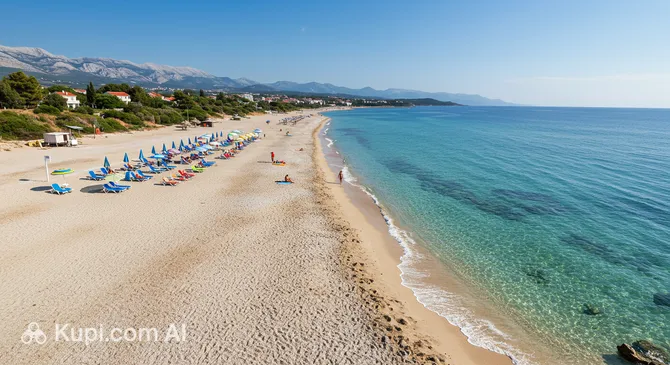
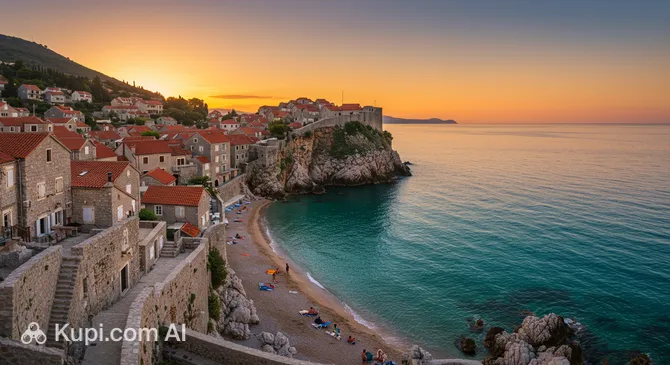
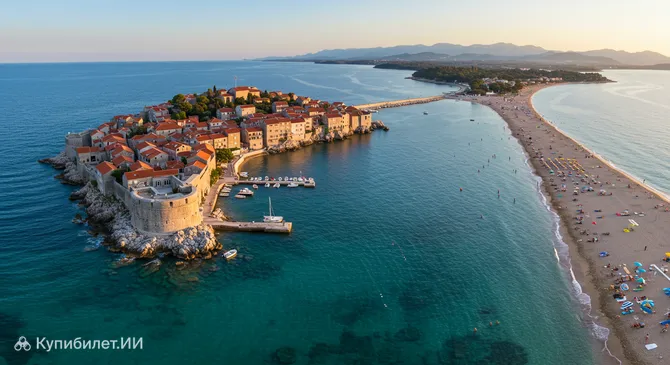
One of the main gems of Ulcinj is Velika Plaža (Long Beach) — an impressive 13-kilometer stretch of fine dark sand known for its healing properties. No less remarkable is Ada Bojana – a unique river island formed by the Bojana River delta, a popular spot for kitesurfing and secluded relaxation. The historical heart of the city – the Old Town of Ulcinj, perched on a cliff above the sea – holds the secrets of centuries within its narrow cobbled streets and ancient fortress walls, offering breathtaking views.

If you are looking for a place to combine a beach holiday with immersion in history and culture, Ulcinj will be a true discovery for you. This sunny city warmly welcomes everyone who wishes to experience its unique heritage and enjoy the beauty of the Montenegrin coast.

More interesting facts can be found on the Ulcinj city history page

Weather Overview

The weather in Ulcinj is characterized by a typical Mediterranean climate, making it attractive to visit in different seasons. Summer here is hot and mostly sunny: the average air temperature in July and August hovers around 25-26°C, and precipitation is minimal, creating ideal conditions for a beach holiday. Winters in Ulcinj are mild, with an average January temperature of about 8°C. However, winter months, especially November and December, feature more precipitation compared to summer. Spring and autumn offer comfortable temperatures, perfect for walking and exploring the city. Overall, expect a hot and sunny summer with very little rain, and a mild, wet winter. More detailed information about the weather conditions by month can be found on the weather in Ulcinj page.

Average monthly temperature

Average monthly precipitation

Interesting Facts

In addition to its famous beaches and ancient fortress, Ulcinj hides many amazing stories and little-known facts that can reveal this colorful city in a new light.

  • There is a popular legend that the famous Spanish writer Miguel de Cervantes was captured by pirates and spent five years in captivity specifically in Ulcinj (then Dulcigno). It is believed that one of the local beauties inspired him to create the character of Dulcinea del Toboso, Don Quixote's beloved. This legend is carefully preserved, and even one of the city's restaurants, Dulcinea 1984 Restaurant, bears her name.

  • For centuries, Ulcinj was one of the most formidable pirate bases on the Adriatic. Local corsairs, known for their daring and seafaring skill, struck terror into merchant ships, and their influence was felt across the Mediterranean. It is said that at its height, Ulcinj's pirate fleet numbered hundreds of ships.

  • A less known but historically significant fact: Ulcinj became the final resting place for Sabbatai Zevi, one of the most controversial figures in 17th-century Jewish history, who proclaimed himself the Messiah. After converting to Islam, he was exiled here by the Ottoman Sultan and died in Ulcinj in 1676. His supposed grave, according to some reports, is located within the territory of the Museum of Local History in Ulcinj or nearby, and still attracts the attention of researchers and followers.

  • The famous dark sand of Velika Plaža is not just unusual in appearance. It is rich in minerals and has low radioactivity, which is why it is credited with healing properties, particularly beneficial for rheumatism and musculoskeletal diseases. Many people come here not only for a tan but also for health improvement.

Long Beach. Illustration.
Source: Kupi.com AI

Traveler photos:

How to Get There

There are several ways to reach charming Ulcinj, located in the very south of Montenegro. Since the city itself does not have its own airport or a large railway station, most travelers arrive via the nearest international airports and then continue their journey by land transport. Bus routes and car trips are also popular.

The primary way to get to Ulcinj is by flying to one of the nearest airports. Podgorica Airport (TGD), located in Podgorica, the capital of Montenegro, is the closest to Ulcinj – the distance is about 48 km. This international airport receives many flights from various countries. A taxi or bus ride from the airport to Ulcinj will take approximately 1.5 hours. Podgorica Airport is one of the country's key transport hubs.

Another popular option is Tivat Airport (TIV), which is located in the town of Tivat on the Montenegrin coast, about 67 km from Ulcinj. Tivat Airport serves many regular and seasonal flights, especially during the summer. The journey to Ulcinj from here will take about 2 hours.

It is also worth considering Tirana International Airport (TIA) Nënë Tereza, the main airport of Albania. It is located in Tirana, about 70 km from Ulcinj. This is a major international hub, and the trip to Ulcinj will take just over 2 hours, including time for the border crossing. Tirana International Airport can be convenient if you also plan to visit Albania.

For clarity, here is summary information on the main airports through which you can reach Ulcinj:

AirportPassenger trafficDistance
Podgorica Airport1.8 mln48 km
Tivat Airport1.1 mln66 km
Tirana International Airport10 mln70 km
Kukes Zayed30 000100 km
Dubrovnik Airport3.0 mln105 km

There is no direct rail connection to Ulcinj. If you prefer traveling by train, the nearest station from which you can relatively easily reach Ulcinj is Durrës Railway Station (DUH). It is located in the Albanian city of Durrës, about 71 km from Ulcinj. From there, you can reach Ulcinj by bus or taxi; the trip will take about 2 hours, including potential waiting time at the border. Other railway hubs are located significantly further away.

Regarding rail connections, below is information on some stations in the region (there is no direct connection to Ulcinj):

StationPassenger trafficDistance
Durres Railway Station2 00071 km
Brindisi Railway Station2.5 mln179 km
Bari Centrale Station14 mln216 km

Additionally, Ulcinj is well-connected by bus to other cities in Montenegro, such as Podgorica, Bar, and Budva, as well as to cities in neighboring countries, including Albania and Kosovo. Traveling by car is also a convenient option, allowing you to enjoy the region's scenic roads and visit interesting places along the way.

Main Attractions

Ulcinj offers its guests many interesting places, from magnificent beaches to historical treasures. This city, steeped in the spirit of different eras and cultures, will not leave any traveler indifferent. Here are some of the main attractions that are certainly worth a visit to fully experience the charm of Ulcinj.

This is, without a doubt, the hallmark of Ulcinj. Velika Plaža is an impressive 13-kilometer beach with unique fine dark sand, which is believed to have healing properties. Due to its length and width, there is always room for a secluded getaway or active pursuits such as kitesurfing and windsurfing, for which ideal conditions are created here. This place attracts both families with children and water sports enthusiasts from all over the world.

Long Beach. Illustration.
Source: Kupi.com AI

Traveler photos:

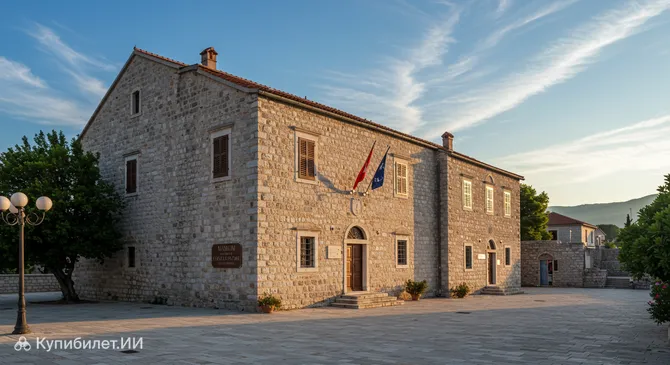
For those interested in the rich and multi-layered history of Ulcinj, a visit to the Museum of Local History in Ulcinj is a must. It is housed in a complex of historical buildings in the Old Town, including a former church-mosque and the Balšić Tower. The museum's exhibits cover periods from Illyrian settlements to Ottoman rule and the famous era of Ulcinj pirates, offering a glimpse into archaeological finds and ethnographic artifacts. A visit to the museum is a true journey through time.

Museum of Local History in Ulcinj

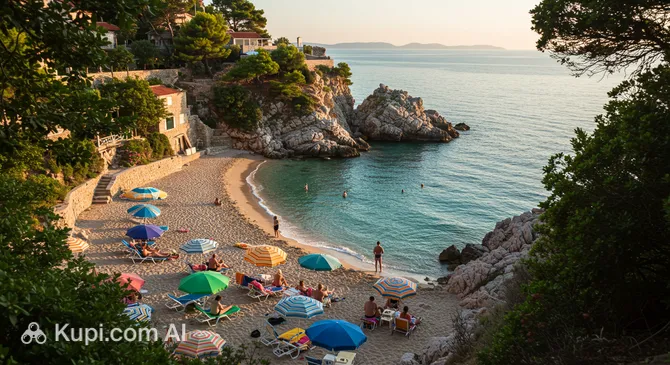
In the very heart of the city, at the foot of the Old Town, is Mala Plaža (Small Beach). This cozy sandy beach, protected by a small bay, is popular for its convenient location and developed infrastructure. From here, wonderful views of the ancient walls open up, and it is a great place to freshen up after a walk through the historical streets of the Old Town or simply enjoy the sun and sea within walking distance of main city amenities.

Small Beach. Illustration.
Source: Kupi.com AI

Traveler photos:

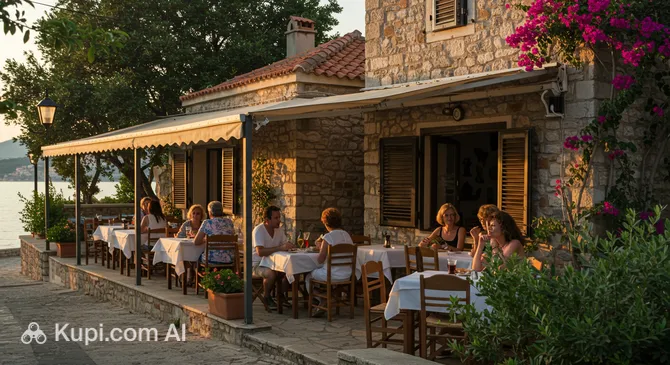
To immerse yourself in the atmosphere of legends, visit the Dulcinea 1984 Restaurant. Named after the heroine of Cervantes' novel, who, according to legend, was held captive in Ulcinj, this restaurant offers not only delicious local and Mediterranean cuisine but also a chance to touch the romantic history of the city. It is located in the Old Town, which adds a special charm and makes dinner here a truly memorable event.

Dulcinea 1984 Restaurant. Illustration.
Source: Kupi.com AI

Traveler photos:

Local Cuisine

The cuisine of Ulcinj is an appetizing blend of Mediterranean traditions, Balkan flavors, and a slight oriental influence, stemming from its rich history and proximity to Albania. The main star of the table here is undoubtedly the freshest seafood caught in the Adriatic Sea, as well as the gifts of the fertile land – juicy vegetables, aromatic herbs, and olives.

Be sure to try grilled fish (riba na žaru), prepared simply but with incredible flavor, or black risotto (crni rižot) with cuttlefish. No less popular are lamb dishes, especially those cooked "under the sač" (a metal lid covered with coals), which makes the meat incredibly tender. For lovers of hearty pastries, it's worth checking out burek with meat or cheese, as well as traditional Balkan ćevapi – small sausages made from minced meat.

As for drinks, local Montenegrin wines are noteworthy, such as the rich red "Vranac" or the refreshing white "Krstač." Among spirits, rakija – a fruit brandy available in various types – is popular. On a hot day, freshly squeezed juices, homemade lemonades, or traditional fermented milk drinks are perfectly refreshing.

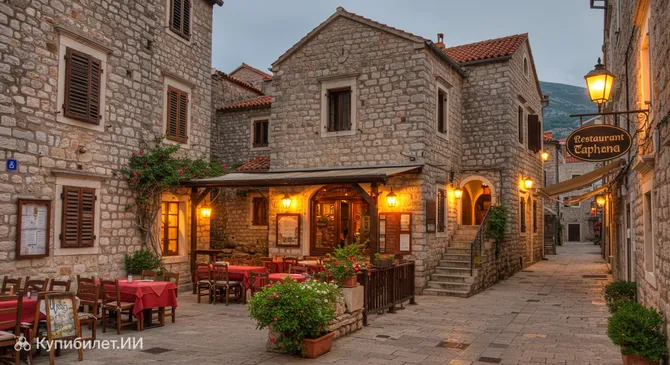
The food culture in Ulcinj involves leisurely meals shared with family and friends. Tourists and locals alike love to dine in the numerous restaurants and konobas (traditional taverns), especially those located along the promenade or in the Old Town, which offer beautiful views. Many establishments offer dishes prepared according to old family recipes. For example, the Taphana Restaurant is known for its authentic atmosphere and local dishes. To buy fresh fruits, vegetables, cheeses, and olives, it is worth visiting the local market.

Taphana Restaurant

Ulcinj's gastronomic scene attracts with its fresh produce, especially seafood, and variety of flavors. Here you can enjoy both simple yet exquisite fish and seafood dishes, and hearty meat delicacies with a Balkan flair. It is this combination of Mediterranean lightness and Balkan heartiness that makes Ulcinj's cuisine truly unique and memorable.

Travel Tips

Planning a trip to sunny Ulcinj? Wonderful! To ensure your journey through this colorful city in Montenegro is as comfortable as possible and leaves only pleasant impressions, we have prepared some practical tips for you.

  1. Clothing and things by season: In summer, it is hot in Ulcinj, so bring light clothing made from natural fabrics, swimwear, a hat, sunglasses, and high-SPF sunscreen. A light sweater may come in handy in the evening. For walks along the cobbled streets of the Old Town and hiking in the surroundings, bring comfortable closed shoes. If you plan to visit mosques or churches, remember the need to cover shoulders and knees. Don't forget a European adapter for electronics (type F).
  2. Moving around the city and surroundings: Within Ulcinj itself, it is convenient to get around on foot, especially in the Old Town and along the promenade. For trips to Velika Plaža or other areas, you can use local buses or taxis. If taking a taxi, clarify the cost in advance or ask to turn on the meter. Renting a car or scooter is an excellent option for exploring the picturesque surroundings, but keep in mind that parking in the center during the season can be difficult.
  3. Financial matters: The official currency in Montenegro is the Euro (EUR). You can exchange money in banks or exchange offices (menjačnica); pay attention to the rate and possible commissions. Bank cards are accepted in most hotels, restaurants, and large stores, but for markets, small cafes, and taxis, it's better to have cash with you. ATMs are quite common. Tips in restaurants are usually 5-10% of the bill if you enjoyed the service.
  4. Health and safety: Ulcinj is generally a safe city. Follow standard precautions: watch your belongings in crowded places and on beaches. Pharmacies (apoteka) are in the city; check which ones are open 24 hours. It is recommended to have travel medical insurance. In emergencies, call 112. Tap water is considered safe to drink, but many tourists prefer bottled water.
  5. Language and communication: The official language is Montenegrin. Due to the proximity to Albania and a significant Albanian population, the Albanian language is also widely spoken in Ulcinj. In the tourism sector, many people speak English, and Russian can also frequently be heard. Learn a few basic phrases in the local language, for example, "Dobar dan" (Good day), "Hvala" (Thank you), "Molim" (Please) – this is always appreciated. A SIM card with mobile internet can be bought at the offices of local operators. Wi-Fi is available in most hotels and cafes.
  6. Local etiquette and traditions: The residents of Ulcinj are hospitable and friendly. Greetings usually include a handshake. Politeness and respect for local customs are valued in communication. Ulcinj is a city with a noticeable oriental flavor, and there are many mosques here. When visiting religious sites, behave with restraint and respect. Smoking is quite common, including in outdoor areas of cafes.
  7. What to avoid: You should not walk in swimwear outside of beach areas (for example, in shops or cafes in the city center). Also avoid overly revealing outfits when visiting the Old Town and religious sites. Be careful with street vendors offering questionable goods or services at inflated prices.
  8. Feature of Ulcinj – markets and local color: Be sure to visit the local market (pijaca). It's a great place to buy fresh fruit, vegetables, homemade cheese, olives, and honey, and to experience the authentic atmosphere. A bit of haggling is expected here. Also, don't miss the chance to enjoy an evening walk along the Mala Plaža promenade and the narrow streets of the ancient Old Town when the daytime heat subsides.

We hope these tips help you better prepare for your trip and get the most out of your stay in amazing Ulcinj. We wish you an unforgettable journey full of bright discoveries and sunny days on the Adriatic coast!

Entertainment & Nightlife

When the sun sets over the Adriatic, Ulcinj is transformed, offering its guests various opportunities for evening and night relaxation. Although Ulcinj is not famous for wild round-the-clock parties like some other resorts, there are definitely places to have a pleasant time after sunset, enjoying the warm southern atmosphere.

Most evening life is concentrated along the promenade by Mala Plaža (Small Beach) and on the adjacent streets, as well as in the Old Town. Here you will find many restaurants, cafes, and bars that fill with vacationers as darkness falls. The atmosphere in most establishments is quite relaxed and informal. The crowd is mixed – from families with children enjoying dinner to young people looking for fun. The dress code is usually casual (smart casual). Many establishments stay open until midnight or 1:00 AM, and some bars and clubs stay open longer, especially during the peak season (July-August).

Along the promenade and on the beaches, especially at Velika Plaža, beach bars often open during the summer season, where you can have a cocktail to the sound of music and the rhythm of the waves. Some of them host themed parties or invite DJs. As for specific venues, for a pleasant dinner followed by relaxation, you might consider, for example, Dulcinea 1984 Restaurant, located in the Old Town and offering a romantic setting, or Taphana Restaurant, known for its traditional cuisine. While these are primarily restaurants, they are excellent starting points for an evening out.

There are few nightclubs in the traditional sense in Ulcinj, but there are several venues with dance music that come alive closer to midnight. Often these are open-air places or have large terraces. To find the liveliest spot, it is best to walk along the promenade after 10:00 PM - 11:00 PM and see where most people gather. Average prices for drinks in bars are quite moderate. It is most convenient to get around the city by taxi at night; always agree on the price in advance or make sure the driver has turned on the meter. Central areas of Ulcinj, especially the promenade and the Old Town, are considered safe for evening walks.

In addition to bars and restaurants, evening Ulcinj offers other entertainment. Occasionally, concerts, folklore performances, or festivals are held in city squares or cultural centers. Night markets are not a typical occurrence for Ulcinj, but souvenir stalls and some shops on the promenade stay open late.

Regarding daytime entertainment, Ulcinj is, of course, primarily associated with beach holidays. However, there are also cultural sites such as the Museum of Local History in Ulcinj, where you can learn about the city's rich history. There are no specialized theaters or large amusement parks in Ulcinj, but the natural beauty and historical sites more than compensate for this.

Parks & Museums

Ulcinj is not only about magnificent beaches but also a city with a rich cultural heritage, offering guests both refreshing green areas for relaxation and fascinating museums for immersion in its centuries-old history. Here everyone will find a corner to their liking, whether they are a nature lover or a connoisseur of antiquities.

Among the natural areas and parks of Ulcinj, its famous beaches stand out. The main gem is, undoubtedly, Velika Plaža. This unique 13-kilometer beach with dark healing sand is not just a place for swimming, but a real natural zone, ideal for long walks, kitesurfing or windsurfing, as well as for peaceful relaxation thanks to its vast expanses.

The more compact but no less popular Mala Plaža is located in the very heart of the city, at the foot of the Old Fortress. This cozy sandy bay attracts visitors with its accessibility, developed infrastructure, and picturesque views of the ancient walls. It is a wonderful place to freshen up after a walk through the historical center.

For those seeking solitude and coolness in the shade of trees, the Pinješ Pine Forest (Borova šuma) is worth noting, as it spreads over the hills above the city, particularly in the area of the Women's Beach. Although it is an informal park, its paths offer magnificent views of the Adriatic Sea and Ulcinj itself, and the air here is filled with the healing scent of pine needles. It is a great place for leisurely walks or a morning run.

To gain a deeper understanding of the soul and history of Ulcinj, you should certainly visit the local museums. A key cultural site is the Museum of Local History in Ulcinj. It is located in a complex of historical buildings in the Old Town, including a former church-mosque and the Balšić Tower. The museum's exhibits cover a vast period: from Illyrian settlements and Roman rule to the Ottoman period and the famous era of Ulcinj pirates. Archaeologic finds, ethnographic items, and historical documents that allow tracing the city's multi-century history are presented here.

The Old Town of Ulcinj itself can rightfully be considered an open-air museum. Its narrow cobbled streets, ancient stone houses with characteristic architecture, powerful fortress walls, and old towers preserve the atmosphere of past centuries. Every walk through the Old Town is a fascinating journey through time, where new views open up and legends come to life at every turn.

Insider Tip: For an authentic experience and to get to know the natural wealth of the Ulcinj surroundings, don't limit yourself to just the beaches. Visit the Valdanos Olive Grove, located in a picturesque bay north of the city. It is one of the largest and oldest olive groves on the Adriatic, where you can not only enjoy the silence and beauty of century-old trees but also learn about the traditions of olive oil production. This place is ideal for quiet relaxation and photo sessions away from the city bustle.

Getting Around

Getting around Ulcinj is quite simple, especially considering its relatively compact size. The main part of the city, including the Old Town and Mala Plaža, is easily explored on foot. However, for trips over longer distances, such as to Velika Plaža or the surrounding areas, several types of transport are available to tourists.

The main form of public transport in Ulcinj is buses. There are both local routes connecting the city center with popular beach zones (including Velika Plaža and the Štoj area) and intercity buses departing from the bus station. In summer, during the peak tourist season, local buses run more frequently. Fares on local routes are usually paid in cash directly to the driver upon boarding. The cost for short distances is generally low, amounting to a few euros. There are typically no specialized travel cards or mobile apps for bus payments in Ulcinj. Tickets for intercity flights are purchased at the bus station ticket offices or sometimes from the driver.

Taxis are another popular way to move around Ulcinj and its surroundings. Cars can be found at stands in busy places, called by phone, or through apps (if any are popular in the region). Taxis offer greater comfort and speed, especially for trips to remote areas or with luggage. However, it is also a more expensive option. It is strongly recommended to agree on the fare in advance or make sure the driver has turned on the meter to avoid misunderstandings. During the tourist season, prices can be higher.

In addition to buses and taxis, there are other ways to get around. Renting a scooter or a car is a great option for those who want to explore the coast and surroundings of Ulcinj independently and at their own pace. Rental points can be found in the city. For short trips and walks along the promenade or through less hilly areas, you might consider renting a bicycle, although specialized bike lanes may be absent. During the summer season, small boats or water taxis offering trips to remote beaches or to Ada Bojana island may also be available.

Practical tips for tourists: always carry small cash to pay for bus fares. If you plan to use taxis frequently, ask locals or your hotel for the numbers of reliable taxi companies. It's best to check the local bus schedule on the spot, as it can change depending on the season. Overall, Ulcinj's transport system is oriented toward the needs of tourists, and getting to the main points of interest will not be a major problem.

Accommodation

In Ulcinj, tourists will find a wide range of accommodation options to suit various preferences and budgets. The city offers everything from budget hostels and private apartments to comfortable mid-range hotels and resort complexes. This makes Ulcinj an accessible destination for both budget-conscious travelers and those looking for more luxurious conditions.

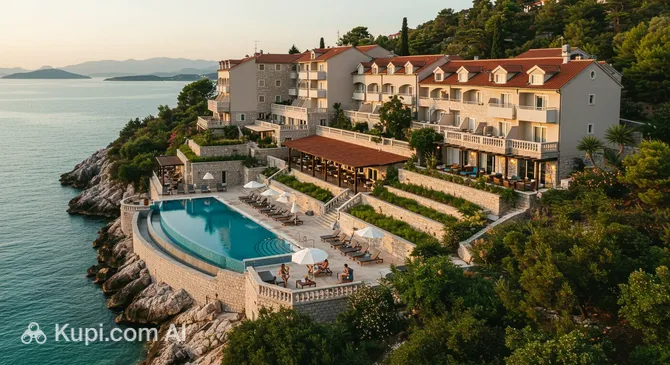
The most popular areas for tourists to stay are the surroundings of Mala Plaža (Small Beach) and the Old Town, where many hotels, guest houses, and apartments are concentrated within walking distance of the main attractions, restaurants, and the promenade. For those who prefer a more tranquil holiday and proximity to long sandy shores, the areas along Velika Plaža (Velika Plaža) are an excellent choice, as they host large hotel complexes and camping zones. For example, one of the well-known options in this area is the Hotel Otrant, offering comfortable accommodation near the beach.

Hotel Otrant. Illustration.
Source: Kupi.com AI

Traveler photos:

The price range for accommodation in Ulcinj varies from very affordable to mid-range and high, depending on the type of accommodation, its location, and the season. It is recommended to book accommodation in advance, especially if your trip falls during the peak tourist season (July-August), as the best options are quickly taken. The main booking methods are popular online platforms such as Booking.com and Airbnb, as well as direct booking through hotel websites or by phone. Many locals also rent out rooms and apartments, and advertisements for these can be found upon arrival, but for guaranteed occupancy, it is better to take care of this beforehand.

Nearby Cities

For those who want to explore the surroundings, Ulcinj serves as an excellent starting point for day trips to several interesting nearby places. Each of these trips will provide new experiences and allow for a better understanding of the region.

Particularly notable among them are Budva, famous for its lively beaches, medieval Old Town, and active nightlife; Cetinje, the historical and cultural capital of Montenegro, where you can visit the former royal palace, ancient monasteries, and numerous museums; and Podgorica, the modern capital of the country, offering a look at urban life, parks, bridges over the Morača River, and cultural institutions.

Below is a table with some of the closest cities that may also be of interest for a day visit:

CityPopulationDistance
Bar13 71921 km
Shkoder112 27629 km
Lezhe15 51039 km
Golubovci3 11045 km
Tuzi4 74849 km

These nearby destinations allow for a more complete picture of the diverse culture, history, and landscapes of Montenegro, complementing the experience of a holiday in Ulcinj.

Shopping & Souvenirs

Ulcinj, as a charming coastal resort in Montenegro, offers shopping opportunities primarily focused on the needs of tourists and the acquisition of memorable souvenirs. The city is not famous for large shopping centers or exclusive boutiques of global brands, but here you can find many interesting local goods, beach supplies, and handcrafted items reflecting the flavor of this southern region.

The main commercial life of Ulcinj is concentrated along the busy promenade at Mala Plaža (Small Beach) and on the adjacent streets, as well as in the labyrinths of the Old Town. Here you will find many small shops, souvenir stalls, jewelry workshops, and boutiques with clothing, footwear, and beach accessories. Walking through these areas is a pleasant activity in itself, allowing you to combine shopping with sightseeing.

There are no large modern shopping centers in the conventional sense in Ulcinj, which is consistent with its status as a cozy resort town. Instead, shopping is represented by individual stores and small retail outlets. If you need everyday goods, supermarkets can be found both in the center and in the residential areas of the city.

A mandatory stop for lovers of authentic shopping and local products is the Ulcinj City Market (pijaca). This colorful place is where you can purchase the freshest fruits, vegetables, homemade cheeses, famous Montenegrin olive oil, honey, dried meat (pršut), local wines, and rakija. The market is also a great place to buy inexpensive souvenirs, products of local craftsmen, and simply to soak up the atmosphere of real Montenegrin life. Don't hesitate to haggle, especially if you are buying several items.

From Ulcinj, it is worth bringing back something special that reflects its unique spirit. Popular souvenirs include: locally produced olive oil, Montenegrin wines (e.g., "Vranac"), the spirit rakija, honey, and bee products. Look for ceramic items with local motifs, handmade jewelry, and perhaps textiles with traditional embroidery. Of course, you cannot do without classic beach souvenirs – shells, magnets, and postcards with views of Ulcinj.

During the tourist season (from May to September), most shops in Ulcinj, especially in the resort area, are open daily, often from morning until late evening, sometimes without a lunch break. Small private shops may have more flexible schedules. The official currency in Montenegro is the Euro (EUR). Supermarkets and larger stores usually accept bank cards, but in markets and small souvenir shops, cash is preferred. ATMs are quite common in the city.

Tourists from countries outside of Montenegro may be entitled to a VAT refund for goods purchased in shops participating in the Tax Free system, provided that the purchase amount exceeds a certain threshold (usually around 100 euros in a single receipt). To do this, you must ask the seller for a special Tax Free form at the time of purchase, which you will then need to present along with the goods and receipt at customs when leaving the country. Clarify the details and availability of such an option directly in the shops.
Reached the end of the page?

That means the route is fully explored