Support

Mojkovac

About

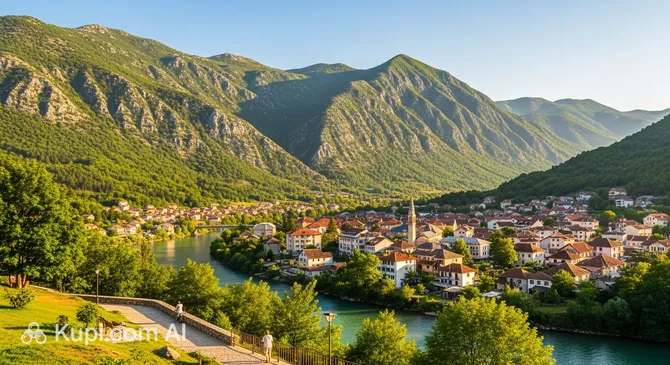
Mojkovac is a charming town in northern Montenegro, known for its rich history and breathtaking natural landscapes. Located in the Mojkovac municipality at the foot of the majestic Bjelasica and Sinjajevina mountains and on the banks of the famous Tara River, the town attracts visitors with its authentic atmosphere and hospitality.

Mojkovac. Illustration.
Source: Kupi.com AI

The population of Mojkovac is approximately 10,000 people. The town serves as an important transport hub and a convenient starting point for exploring the country's northern region. The climate here is moderate continental, with warm summers ideal for hiking and outdoor activities, and snowy winters offering opportunities for winter sports in the nearby mountain areas.

Among the main attractions of Mojkovac is its close proximity to Biogradska Gora National Park, one of the last virgin forests in Europe, featuring its jewel—the crystal-clear Biogradsko Lake. The nearby Tara River is famous for its canyon, the second deepest in the world, providing excellent conditions for rafting. Additionally, the town and its surroundings preserve the memory of significant historical events, including the famous Battle of Mojkovac, to which an impressive memorial complex is dedicated.

Mojkovac is a wonderful destination for those seeking a combination of outdoor activities, historical immersion, and traditional Montenegrin culture. Discover this cozy corner of Montenegro, full of unexplored trails, picturesque views, and vivid impressions!

You can find more interesting facts on the history of Mojkovac page.

Weather Overview

The weather in Mojkovac is distinctly seasonal. Summers, especially in July and August, are generally warm, with average maximum temperatures reaching +23°C to +24°C. Winters are cold, with temperatures often dropping below zero; for instance, in January, the average minimum temperature is around -5.7°C. Precipitation occurs throughout the year, with the highest number of rainy (or snowy) days usually falling in May and the winter months, while autumn sees a noticeable decrease. Overall, travelers can expect warm summers with occasional showers and cold, snowy winters. For more detailed information on climatic conditions and a monthly forecast, visit the Climate of Mojkovac page.

Average monthly temperature

Average monthly precipitation

Interesting Facts

In addition to its picturesque landscapes and proximity to famous national parks, Mojkovac holds many fascinating stories and lesser-known details that make it even more attractive to curious travelers. Here are some interesting facts about this Montenegrin town:

  • The origin of the name Mojkovac is shrouded in legend. One of the most popular versions links it to the phrase "moj kovani novac" (my minted money), referring to the rich traditions of medieval coin minting in the nearby Brskovo mine back in the days of Serbian King Stefan Uroš I.

  • The famous Battle of Mojkovac, which took place in January 1916, is often called the "Christmas Battle" as it occurred during the Orthodox Christmas holidays. This heroic victory of the Montenegrin army over superior enemy forces allowed Serbian troops and civilians to retreat safely to the Adriatic Sea during World War I.

  • Near modern-day Mojkovac, the town and mine of Brskovo flourished in the Middle Ages. In the 13th century, it was one of the most important silver mining centers in the Balkans, where experienced Saxon miners worked, and the mined silver was used to produce coins known as "Brskovo groschen."

  • In the Mojkovac municipality, on the majestic Sinjajevina Mountain, lies Zabojsko Lake—one of the deepest glacial lakes in Montenegro. Surrounded by dense coniferous forests and alpine meadows, this lake is a true gem of untouched nature.

How to Get There

There are several ways to reach Mojkovac, and for many international travelers, the most convenient option is a flight to one of the nearest airports in Montenegro or neighboring countries.

The closest airport to Mojkovac is the international Podgorica Airport (TGD), located approximately 72 km away. This is a major airport from which you can reach Mojkovac by taxi or rental car in roughly 1 hour 45 minutes – 2 hours 15 minutes. Another popular option is the international Tivat Airport (TIV), also a major hub, located about 94 km from Mojkovac. The drive from there takes approximately 2 hours 30 minutes – 3 hours. Some tourists also consider Dubrovnik Airport (DBV) in Croatia. This large international airport is about 116 km from Mojkovac, and the journey takes about 3 hours – 3 hours 30 minutes, though additional time for border crossing should be taken into account.

For convenience, here is a summary of the main airports used to reach Mojkovac:

AirportPassenger trafficDistance
Podgorica Airport1.8 mln72 km
Tivat Airport1.1 mln94 km
Dubrovnik Airport3.0 mln116 km
Kukes Zayed30 000124 km
Kraljevo13 862125 km

Regarding rail travel, a significant advantage of Mojkovac is its own railway station on the major Belgrade – Bar line. This provides direct and convenient rail links with major cities both within Montenegro (such as Podgorica and Bar) and with Serbia (Belgrade), making the train one of the preferred ways to reach Mojkovac for many travelers. We recommend checking current train schedules to Mojkovac station when planning your trip.

While there are other railway hubs in the region, such as the Durrës Railway Station in Albania (about 183 km from Mojkovac) or the Brindisi Railway Station in Italy (about 292 km from Mojkovac), they are quite far away and may only be relevant for specific routes. For most trips to Mojkovac, using the local railway line will be much more convenient.

Below is information about some railway stations in the region mentioned in available data that may be of interest to travelers coming from these directions:

StationPassenger trafficDistance
Durres Railway Station2 000183 km
Brindisi Railway Station2.5 mln292 km

Additionally, Mojkovac is easily accessible by car, as the town has good road connections with other parts of Montenegro and neighboring countries. Intercity buses are also a popular and affordable way to travel around the region, linking Mojkovac with many settlements.

Main Attractions

Mojkovac and its surroundings offer travelers a unique blend of natural wonders and historical monuments. This region is a true find for those who appreciate untouched nature and want to connect with Montenegro's rich past. Here are several key attractions that should definitely be included in your itinerary:

The jewel of the region is undoubtedly Biogradska Gora National Park. It is one of Europe's three remaining virgin forests, where ancient trees create a unique atmosphere. In the heart of the park lies the glacial Biogradsko Lake, whose emerald waters reflect dense forests and mountain peaks. Here, you can enjoy hiking along marked trails, have a picnic on the shore, or simply contemplate the pristine beauty of nature. This place is ideal for eco-tourism enthusiasts and those seeking a peaceful retreat.

The famous Tara River flows near Mojkovac, forming the deepest canyon in Europe and the second deepest in the world. This majestic canyon is a paradise for adventure seekers. Exciting rafting through the turbulent rapids of the Tara attracts tourists from all over the world, offering unforgettable experiences and a dose of adrenaline. Moreover, the canyon banks and viewpoints offer truly stunning views that will remain in your memory for a long time.

For those interested in history, the Memorial Complex dedicated to the Battle of Mojkovac is a must-visit. This impressive monument commemorates the heroic events of World War I, when the Montenegrin army achieved an important victory here. The complex not only serves as a tribute to fallen soldiers but also allows for a deeper understanding of the significance of these events for the history of Montenegro and the entire region.

Lovers of secluded natural spots and hiking should pay attention to Zabojsko Lake, located on the slopes of Sinjajevina Mountain. It is one of the deepest glacial lakes in Montenegro, surrounded by dense coniferous forests and picturesque alpine meadows. Reaching the lake may require some effort, but the reward is silence, tranquility, and incredibly beautiful landscapes far from the tourist crowds, perfect for photography and connecting with nature.

Local Cuisine

The cuisine of Mojkovac is a true gastronomic journey into the heart of traditional Montenegrin cooking, where natural flavors, hearty portions, and centuries-old recipes are valued. Located in a mountain region, the town offers dishes that will warm you up and provide energy after an active day outdoors.

When in Mojkovac, be sure to try iconic dishes such as kačamak—a thick and hearty meal made from cornmeal, potatoes, and local layered cheese (skorup)—or its richer version cicvara, prepared with plenty of kajmak. Another signature dish not to be missed is lamb under the sač. The meat, slow-cooked for several hours under a special metal lid covered with hot coals, becomes incredibly tender and aromatic. Various pitas (savory layered pies) filled with cheese, meat, or greens are also popular, along with the famous Montenegrin pršut (dry-cured ham).

Popular drinks in Mojkovac include homemade juices made from forest berries like blueberries or raspberries, and pure mountain water. Among alcoholic beverages, local rakija—a strong fruit brandy—is noteworthy, especially slivovitz (plum) and lozovača (grape). You can also find Montenegrin wines, such as the rich red Vranac, and various types of beer.

The food culture in Mojkovac centers around traditional restaurants known as konobas. This is where locals and tourists can enjoy authentic cuisine in a cozy, home-like atmosphere. The emphasis is on using fresh, seasonal, and local products: meat from mountain pastures, river fish, homemade cheeses, and vegetables. Street food is less common here; preference is given to full lunches and dinners in establishments where you can slowly enjoy the flavor of the dishes and the hospitality of the hosts.

The culinary scene in Mojkovac is attractive for its authenticity and adherence to tradition. This is a cuisine that reflects the character of the region—generous, simple, and incredibly delicious. By trying local specialties, you will not only satisfy your hunger but also touch the soul of this hospitable part of Montenegro.

Travel Tips

Planning a trip to charming Mojkovac? Wonderful! To ensure your journey through this corner of Montenegro is as comfortable as possible and leaves only pleasant impressions, we have prepared some practical tips. They will help you navigate better and enjoy every moment of your stay.

  1. Clothing and Essentials:

    The climate in Mojkovac is moderate continental. In summer, bring light clothing but don't forget a sweater or light jacket for evening walks and mountain trips, where it can be cooler. In winter, very warm clothing is mandatory (jacket, sweater, thermal underwear), along with a hat, gloves, and waterproof warm shoes, as it often snows. For the transition seasons (spring and autumn), layered clothing is best. Make sure to bring comfortable, broken-in shoes, especially if you plan to explore Biogradska Gora National Park or go hiking in the area. In summer, sunscreen, sunglasses, and a hat will come in handy. When visiting Orthodox monasteries and churches, which are numerous in Montenegro, remember the dress code: shoulders and knees should be covered for both men and women. Electrical outlets in Montenegro are standard European (types C and F, 230V), so most European tourists won't need an adapter; however, if you are traveling from a country with different standards, bring a universal adapter.

  2. Transport: How to Get Around:

    Mojkovac itself is a small town, and its central part is easy to explore on foot. For travel between cities, buses are convenient—they are the primary form of intercity transport in Montenegro, connecting Mojkovac with Podgorica, the coast, and northern regions. A major advantage is the railway station in Mojkovac on the Belgrade-Bar line, making the train an excellent option for trips to the capital, the Adriatic coast, or even Serbia. There are local taxi services in town; it's better to agree on the fare in advance or ensure the driver turns on the meter. Ride-hailing apps may not be as common as in major European capitals. Renting a car is a good choice if you want to explore the picturesque surroundings, such as the Tara River Canyon or national parks, at your own pace. Keep in mind that mountain roads can be winding and narrow, especially in winter.

  3. Finance: Currency, Cards, and Tipping:

    The official currency in Montenegro is the Euro (EUR). You can exchange currency at banks or official exchange offices ("mjenjačnica"); avoid exchanging money with private individuals on the street. Credit cards (Visa, Mastercard) are accepted in many hotels, restaurants, and large shops in Mojkovac. However, in small cafes, markets, or souvenir stalls, it's better to carry cash, as card terminals may be unavailable. There are ATMs in the city, usually located near bank branches. Tipping in restaurants and cafes is usually 5-10% of the bill if you liked the service, and it is not included in the bill. It is also customary to round up the fare in taxis.

  4. Health and Safety:

    There is a medical center (Dom zdravlja) in Mojkovac. Pharmacies ("apoteka") are also available, but not all may work 24/7 or on weekends, so we recommend bringing a basic first-aid kit with your necessary medications. Before your trip, be sure to get medical insurance valid in Montenegro. Mojkovac is generally a very safe town with low crime rates. Nevertheless, follow standard precautions: watch your belongings in crowded places and do not leave valuables unattended in the car. When hiking in the mountains or national parks, strictly follow marked trails, inform others of your route, and carry a charged phone and a map; hiring a local guide is recommended for difficult routes.

  5. Communication: Language and Internet:

    The official language is Montenegrin (a variant of Serbo-Croatian, very similar to Serbian, Croatian, and Bosnian). In the tourism sector (hotels, some restaurants, travel agencies), staff, especially younger people, may speak English and sometimes Russian. Knowing a few basic phrases in the local language will be very useful and warmly received by locals: "Dobar dan" (Good day), "Hvala" (Thank you), "Molim" (Please/You're welcome), "Da/Ne" (Yes/No), "Koliko košta?" (How much does it cost?), "Izvinite" (Excuse me). A local SIM card with internet access can be purchased at mobile operator offices (One, M:tel, Crnogorski Telekom) or at newsstands. Free Wi-Fi is available in most hotels, cafes, and restaurants.

  6. Local Etiquette and Traditions:

    Montenegrins are known for their hospitality, friendliness, and sense of dignity. A handshake is the standard greeting for both men and women. Older people should be addressed respectfully (e.g., using forms of "Sir/Madam"). Behave discreetly in public places. Loud conversations or overly expressive behavior may be viewed unfavorably. If you are invited to someone's home, it is considered a great sign of respect; it is customary to bring a small gift for the hosts (e.g., coffee, sweets, a bottle of wine). When photographing locals, especially the older generation or in rural areas, always ask their permission first—it is a sign of respect.

  7. What to Avoid:

    Try to avoid discussing sensitive political topics related to the recent history of the Balkans or religious issues with locals unless you are sure of their views. This helps avoid awkward situations and shows respect for the local culture. Do not compare Montenegrin culture or language with those of neighboring countries in a derogatory way; Montenegrins are very proud of their national identity and history. Also, as elsewhere, avoid excessive alcohol consumption in public places.

  8. Special Advice for Mojkovac:

    Given Mojkovac's unique location at the foot of the Bjelasica and Sinjajevina mountains, and its proximity to natural gems like Biogradska Gora National Park and the Tara River Canyon, be sure to set aside enough time to visit them. If you plan active recreation like Tara rafting, jeep tours, hiking, or cycling mountain routes, research offers and book tours in advance through licensed local companies or guides, especially during the high tourist season (July-August). This not only ensures your safety but also allows you to get the most out of the incredible nature in this region.

We hope these tips help you plan an unforgettable trip to Mojkovac! This cozy town and its breathtaking surroundings are full of discoveries for the curious traveler. We wish you bright impressions, interesting encounters, and a wonderful vacation in hospitable Montenegro!

Entertainment & Nightlife

Mojkovac, being a charming small town surrounded by the majestic nature of Montenegro, offers its guests a quiet and soulful evening atmosphere rather than the noisy and bustling nightlife of a metropolis. You won't find districts with neon signs of large nightclubs here, but you can enjoy the authentic atmosphere of local establishments where time flows slowly and pleasantly.

Evening entertainment in Mojkovac is mainly concentrated around cozy cafes, traditional restaurants, and small bars. The atmosphere in such places is usually very friendly and welcoming, conducive to leisurely conversations over a glass of local wine or a cup of aromatic coffee. The crowd here is mixed—both locals and tourists discovering this corner of Montenegro. The dress code is generally casual and informal; comfort is key. Establishments usually stay open until late evening, especially during the tourist season, but do not expect parties until dawn like in large coastal resort towns.

Most establishments where you can spend a pleasant evening are concentrated in the central part of the city, along the main streets. Mojkovac is not famous for a large number of well-known specialized nightclubs or concert venues with big names. Instead, we recommend walking through the center and exploring local streets in search of cozy, authentic spots. Look out for traditional kafanas (local taverns) or small bars that might have simple but characteristic names, such as "Centar" (Center) or "Kod Pera" (At Pera's). It is in these small, non-chain establishments where the true atmosphere of Montenegrin hospitality often lies. Locals can also point out where young people gather or where you might hear live music on certain nights, if available.

The best time for evening outings is after dinner, when the town quiets down a bit and cafes fill up with patrons. Prices in Mojkovac establishments are generally quite moderate, especially compared to major tourist centers on the coast. It is convenient to get around the city center at night on foot. If your accommodation is on the outskirts, you can use local taxi services. It is best to ask your hotel or restaurant to call a car for you, or find the number of a reliable taxi service in advance, as ride-hailing apps may not be widely available.

Mojkovac is a quiet and safe town, and night walks along the central streets usually don't cause concern. However, basic precautions should always be observed: do not leave personal belongings unattended and be aware of your surroundings, especially if returning late. Avoid poorly lit and deserted areas on the outskirts if you are alone.

As for daytime entertainment, Mojkovac and its surroundings offer plenty of opportunities for active and educational recreation. You can visit the Mojkovac Battle Memorial Complex to touch upon history or head out to explore Biogradska Gora National Park with its unique lake. While there are no large theaters or noisy amusement parks in the city, its main value lies in the nature and historical heritage that provide a wealth of experiences.

Evening in Mojkovac is an opportunity to relax after a busy day, enjoy the hospitality of the locals, and feel the unhurried pace of life in this cozy Montenegrin town. It's not about loud parties, but about heartfelt communication and pleasant memories of your trip to Montenegro.
Parks & Museums

Mojkovac, as the gateway to some of Montenegro's most impressive natural wonders, offers its guests not only active recreation but also opportunities for cultural enrichment. The town and its surroundings preserve memories of significant historical events and offer peaceful corners for connecting with nature.

The main natural gem in the immediate vicinity of Mojkovac is certainly Biogradska Gora National Park. It is one of Europe's last virgin forests, at the center of which lies the magnificent Biogradsko Lake. The park offers many marked hiking trails of various difficulty levels, picnic spots, and simply the chance to enjoy pristine silence and pure mountain air. It is an ideal place for eco-tourism and family vacations.

Another significant natural area is the territory around the famous Tara River, whose canyon is considered one of the deepest in the world. Although Mojkovac is not located in the deepest part of the canyon, it offers excellent opportunities to get to know the river—whether through quiet walks along its banks, fishing, or as a starting point for rafting tours. The majestic landscapes of the Tara Canyon will leave no one indifferent.

For those seeking more secluded natural beauty, look towards Zabojsko Lake, hidden on the slopes of Sinjajevina Mountain. Reaching it may require some effort, but the reward is stunning views, crystal-clear water, and an atmosphere of complete tranquility away from tourist routes.

Regarding museums and cultural heritage, the key site in Mojkovac is the Memorial Complex dedicated to the Battle of Mojkovac. This significant historical monument tells the story of heroic events from World War I and holds great importance for Montenegro's national identity. Visiting the complex allows for a deeper understanding of the region's history and a chance to pay tribute to the fallen.

While Mojkovac may not have large art galleries, local cultural centers or small town museums often host exhibitions dedicated to local history, ethnography, and archaeological finds related, for example, to the medieval Brskovo mine. Such places provide insight into the life and traditions of the residents of this mountain region.

Insider tip: For a more authentic experience, try exploring not just the main sights but also the small villages around Mojkovac. There you can see the traditional way of life and enjoy untouched nature. Also, don't hesitate to talk to the locals—they can share many interesting stories about their region.

Getting Around

Getting around Mojkovac is quite simple, given its compact size. Most of the town can be easily explored on foot, allowing you to enjoy its atmosphere and sights at a leisurely pace. For most tourist needs within the town center, public transport may not even be necessary.

As for urban public transport, in Mojkovac, being a small settlement, you won't find an extensive network of bus routes, metros, trams, or trolleybuses. Movement within the town itself is oriented toward walking. For trips to neighboring villages or larger cities in Montenegro, there are intercity and suburban buses. It's best to check information about their routes and schedules at the local bus station (if available) or with locals. Tickets for such buses are usually purchased directly from the driver or at the ticket office before departure, and payment is generally in cash.

For more comfortable and faster travel, especially if you need to reach the outskirts of town or the start of hiking trails in the surrounding area, you can use taxi services. Local taxi companies operate in Mojkovac. It is recommended to find out the approximate cost of the trip in advance or check if the driver uses a meter. You can usually call a car by phone (ask for numbers at your hotel or from locals) or find them at stands in the central part of the town. Taxi services are also most often paid for in cash.

Specialized fare payment systems, such as unified transport cards, multi-day passes, or mobile apps for buying tickets for city transport, do not exist in Mojkovac due to the lack of a city route network. Alternatives like car-sharing or a widely developed bike rental system are not characteristic of the town. If you plan to actively explore the picturesque surroundings, such as the national parks, the most practical option would be renting a car or joining organized excursion groups.

Thus, the transport system in Mojkovac is simple and corresponds to its status as a small town. Be prepared for walking tours around the center, and for longer distances, use buses or taxis, remembering to check details on the spot. Transport operating hours, especially for buses, may be limited, particularly in the evenings and on weekends.

Accommodation

When planning a trip to Mojkovac, you will find a variety of accommodation options to suit both budget travelers and those seeking more comfort. The town and its surroundings primarily offer guesthouses (pensions), private apartments, and small family-run hotels. Do not expect luxury resorts from global chains here, which only adds to the charm of this authentic corner of Montenegro.

Most accommodation options are concentrated within Mojkovac town itself, providing easy access to its cafes, restaurants, and shops, and serving as a convenient base for visiting the region's main attractions. Some guesthouses and apartments may be located in more secluded spots on the outskirts or in nearby villages, offering guests tranquility, beautiful views, and close proximity to nature, for instance, on the way to Biogradska Gora National Park.

While specific names of famous hotels may not always be well-known outside the region, you can find cozy family hotels and motels in Mojkovac and its vicinity that offer comfortable stays. These are often small establishments where the owners personally care for their guests, creating a homey atmosphere. We recommend looking for current offers on popular online booking platforms or contacting local tourist information centers upon arrival.

As for prices, accommodation in Mojkovac can generally be described as affordable and mid-range. Of course, costs will vary depending on the season, type of housing, and level of amenities provided. It is recommended to book accommodation in advance, especially if your trip coincides with the peak tourist season (summer months) or local festivals. The main booking methods are popular international and regional online platforms (such as Booking.com, Airbnb), as well as direct booking via hotel websites or phone, if available.

When choosing where to stay in Mojkovac, pay attention to reviews from other travelers and the location relative to the places you plan to visit. Regardless of your choice, the hospitality of the locals will make your stay pleasant and memorable.

Nearby Cities

For those who want to explore the surroundings, Mojkovac serves as an excellent starting point for day trips to several interesting nearby places:

CityPopulationDistance
Kolasin2 72516 km
Bijelo Polje15 88316 km
Berane11 77626 km
Andrijevica1 07330 km
Petnjica5 48231 km

These nearby destinations provide a glimpse into the diverse culture and landscapes of the region. For example, Bijelo Polje, located just 16 km away, is an important economic and cultural center of northern Montenegro and can offer interesting city walks and a look at local life. Pljevlja, 48 km away, is rich in history related to the Ottoman period and is known for its mosques and Orthodox monasteries. A trip to Nikšić (55 km) will allow you to see the country's second-largest city, famous for its brewery and Lake Krupac. The capital of Montenegro, Podgorica (65 km), offers a more vibrant urban atmosphere, museums, and modern entertainment, while the historical capital Cetinje (83 km) will immerse you in the atmosphere of old Montenegro with its numerous museums and monasteries.

Shopping & Souvenirs

Shopping in Mojkovac is more of an opportunity to buy essentials, fresh local products, and authentic souvenirs than a hunt for famous brands or visits to large malls. The town offers a peaceful and traditional shopping experience, dominated by small, often family-run shops and stalls that reflect the local flavor and hospitality of Montenegro.

The main shopping areas and streets in Mojkovac are concentrated in its central part. Walking along the main streets, you will find various small shops offering food, clothing, household goods, and other everyday items. There are no large pedestrian shopping zones, but the cozy streets invite a leisurely look at the local merchants' assortments.

You won't find the large, modern shopping malls characteristic of big cities in Mojkovac. The town's commercial infrastructure consists mainly of standalone shops and small retail outlets. If you need a wider selection of goods or are looking for specific international brands, you might need to travel to larger cities.

An interesting experience can be visiting the local town market (pijaca), if it is open during your visit. Here you can usually find fresh seasonal fruits and vegetables, famous local cheeses (such as "lisnati sir" or "skorup"), mountain honey, homemade jams and preserves, and sometimes handmade crafts. The market is not just a place for shopping but also a great opportunity to feel the local atmosphere. The range of goods can change depending on the day of the week and the season.

For souvenirs from Mojkovac, consider items that reflect the local culture and natural riches of this mountain region. Popular choices include:

  • Local delicacies: A jar of aromatic mountain honey, homemade rakija (fruit brandy), dried wild mushrooms, or herbs.
  • Handmade crafts: Warm knitted socks, sweaters, or hats made of natural wool, small wooden crafts, or items with traditional Montenegrin patterns.
  • Themed products: Souvenirs related to Biogradska Gora National Park or the Tara River, such as maps, nature books, fridge magnets, or postcards with picturesque views.
  • Traditional products: If transportation conditions allow, you can bring home local cheese or the famous Montenegrin pršut.

Shop opening hours in Mojkovac can vary. Small shops are usually open from the morning (around 8:00 or 9:00) until the evening (until 19:00 or 20:00), often with a long lunch break, especially in the summer. Supermarkets, where available, may work without a break and have longer hours. On Sundays, many shops may be closed or have reduced hours. Regarding payment, cash (Euro) is the most common method, especially at the market and in small shops. Credit cards may be accepted in some larger stores, but it's always best to have enough cash on hand. ATMs for cash withdrawals are available in town.

Tourists from non-European Union countries may be eligible for a VAT refund (known as PDV in Montenegro) for goods purchased in shops participating in the Tax-Free system, if the purchase amount exceeds a set minimum. To do this, you must ask the seller for a special Tax-Free form at the time of purchase, which is then presented along with the goods and the receipt at customs when leaving the country. We recommend checking details and refund possibilities directly in the shops.

Reached the end of the page?

That means the route is fully explored