Support

Tan-Tan

About

Welcome to Tan-Tan, a captivating city in southwestern Morocco that serves as a gateway to the vast Sahara. Known for its rich nomadic traditions and unique atmosphere, this city offers a blend of desert landscapes and coastal breezes, making it a distinct stop for travelers exploring the Guelmim-Oued Noun region.

Geographically, Tan-Tan is situated just inland from the Atlantic Ocean, benefiting from a climate that mixes desert heat with cooling maritime influences. With a population of approximately 73,000 residents, it is a bustling hub that maintains a welcoming, community-focused feel. The history of Tan-Tan is deeply rooted in the heritage of the Sahrawi tribes, serving as a vital meeting point for trade and social exchange for centuries.

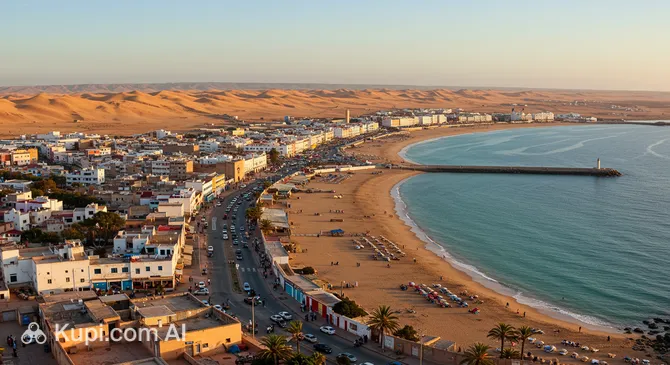
Tan-Tan. Source: Kupi.Binoculars

One of the city's most famous features is the Moussem of Tan-Tan, an annual gathering of nomadic tribes that has been recognized by UNESCO as a Masterpiece of the Oral and Intangible Heritage of Humanity. Visitors are also drawn to the nearby coastal town of El Ouatia (often called Tan-Tan Plage), which offers sweeping beaches perfect for relaxation and fishing. Additionally, the iconic statues of two giant camels at the city entrance stand as a proud symbol of the area's enduring connection to ancient caravan routes.

Whether you are passing through on a journey further south or stopping to immerse yourself in the local culture, Tan-Tan promises an authentic experience. Its warm hospitality and unique position between the dunes and the sea make it a memorable destination for any adventurer.

Weather Overview

Tan-Tan enjoys a pleasant, semi-arid climate that is significantly moderated by the nearby Atlantic Ocean, preventing the extreme heat often associated with the desert interior. Visitors can generally expect comfortable conditions year-round, making it an accessible destination in any season. To help plan your specific travel dates, you can consult the detailed guide to the weather in Tan-Tan, which breaks down the conditions month by month.

The summer months are warm but manageable, with August being the hottest time, featuring average temperatures around 23.9°C and daily highs reaching up to 28.2°C. Winters are mild rather than cold; in January, the average temperature hovers around 16.8°C, though nights can be cooler with lows dipping to 12.0°C. Rainfall is extremely scarce throughout the year, with July and August typically seeing 0 wet days, while the transitional month of March sees a slight peak with just 3 wet days.

Interesting Facts

Beyond its bustling streets and desert horizons, Tan-Tan holds intriguing stories and geographical distinctions that often escape the casual eye. Here are some unique aspects of this fascinating city and its surroundings:

  • The Venus of Tan-Tan: One of the most significant archaeological curiosities in Morocco was discovered just a few kilometers from the city. Known as the "Venus of Tan-Tan," this tiny quartzite figurine was found in the river deposits of the Draa River and is estimated to be between 200,000 and 500,000 years old, sparking global debates about the artistic capabilities of early humans.

  • A Name Born from Sound: Local folklore often suggests that the city's unique name is onomatopoeic. Legend has it that the name "Tan-Tan" mimics the echoing sound of a bucket swinging against the sides of a deep well, paying homage to the vital water sources that first attracted nomadic tribes to this location.

  • The End of the Longest River: The region marks the final destination of the Draa River, the longest river in the country. While the riverbed is often dry for much of its journey through the desert, its estuary is located near Tan-Tan, where the ghostly path of the water finally meets the Atlantic Ocean.

How to Get There

Reaching this unique destination in the Guelmim-Oued Noun region often involves a combination of air and road travel. While the city is a gateway to the desert, it is best accessed via larger regional hubs. For a complete guide on all transport options and routes, you can read more about how to get to Tan-Tan.

One of the most common entry points for international travelers is Agadir Al Massira Airport (IATA: AGA). Located in the city of Agadir, this is a major facility serving a large volume of passengers annually. Although it is not located in Tan-Tan, it acts as a primary hub for the south of the country. The distance to Tan-Tan is approximately 266 km. From the airport, a journey by car or taxi takes roughly 4 hours, while traveling by bus is a slower alternative, typically taking 6 to 7 hours to navigate the route from the coast to the pre-Saharan landscape.

Another viable option is Hassan I Airport (IATA: EUN), situated in the city of Laayoune. This airport is about 253 km from Tan-Tan and serves as a key regional connection. While it handles less traffic than Agadir, it is a significant transport node for the area. Travelers arriving here can expect a drive of approximately 3.5 to 4.5 hours to reach the city center of Tan-Tan.

For clarity, here is a summary of the main airports in the wider region:

Airport Name City Passenger Traffic Km from City
Lanzarote Airport Arrecife High 251.5
Fuerteventura Airport Puerto del Rosario High 270.9
Agadir Al Massira Airport Agadir Medium 265.6
Hassan I Airport Laayoune Small 252.9

Main Attractions

While Tan-Tan is often viewed as a transit point, the surrounding region hides several gems that showcase the dramatic beauty of the pre-Saharan coast. From sweeping beaches to unique geological formations, the area offers travelers a chance to experience the raw and untouched landscapes of Southern Morocco.

El Ouatia (Tan-Tan Plage)

Located approximately 25 kilometers west of the main city, El Ouatia is the region's primary seaside escape. Known locally as Tan-Tan Plage, this coastal town features expansive stretches of golden sand that remain uncrowded throughout much of the year. It is particularly famous among fishing enthusiasts for its excellent surf-casting opportunities and among surfers looking for consistent Atlantic waves. The town also hosts a lively port where visitors can enjoy fresh seafood at local eateries, soaking in the relaxed, maritime atmosphere.

Oued Chbika

For those willing to venture a bit further south, Oued Chbika offers one of the most striking landscapes in the province. This stunning estuary is where the desert dunes dramatically meet the Atlantic Ocean, creating a breathtaking contrast between the arid sands and the deep blue water. It is a haven for nature photographers and adventurers seeking solitude. The area is also a vital stopover for migratory birds, making it an interesting spot for wildlife observation amidst the silence of the desert coast.

Embouchure de l'Oued Draa

To the north of the city lies the mouth of the Draa River, Morocco’s longest river. Although the riverbed is often dry along its course, the estuary itself is a site of ecological importance and stark beauty. Here, the remnants of the river's path finally merge with the ocean, creating wetlands that support various bird species, including flamingos and herons. Nature lovers will appreciate the significance of standing at the terminus of this legendary waterway, which serves as a natural boundary between the rocky landscapes to the north and the dunes to the south.

Local Cuisine

Local Cuisine:

The culinary landscape of Tan-Tan reflects its unique geographical position where the arid desert meets the abundant Atlantic. The local food scene is a fascinating blend of traditional Moroccan flavors and distinct Sahrawi heritage. Visitors can expect hearty, flavorful meals that prioritize fresh ingredients, ranging from the catch of the day brought in at the nearby port to the robust meats favored by the nomadic tribes of the region.

One of the most authentic gastronomic experiences in Tan-Tan is tasting camel meat. A staple of Sahrawi cuisine, it is widely available in local butcher shops and restaurants. The meat is known for its lean texture and rich flavor, often prepared in a slow-cooked tagine with prunes and almonds or simply grilled as skewers seasoned with cumin and salt. For a true taste of the desert, look for dishes featuring tidguit, a traditional preparation of dried meat mixed with fat, which was historically essential for travelers crossing the Sahara.

Thanks to the proximity of the fishing port at El Ouatia, seafood is another pillar of the local diet. Freshly caught sardines, whiting, and calamari are staples here. The best way to enjoy them is often the simplest: grilled over charcoal and served with a squeeze of lemon and a side of fresh bread. In the coastal areas, you will find casual eateries serving frying pans full of mixed fish, offering a delicious and affordable feast straight from the ocean.

No meal in this region is complete without the ceremonial Sahrawi tea. Unlike the standard Moroccan mint tea, the preparation here is an art form involving a rigorous pouring process to create a thick foam. It is traditionally served in three rounds, each with a different flavor profile, symbolizing life, love, and death. For a unique non-alcoholic beverage, adventurous travelers should try zrig, a refreshing drink made from camel milk, often mixed with water and sugar, which is highly prized by locals for its nutritional value in the desert heat.

The dining culture in Tan-Tan is laid-back and communal. You won't find many high-end fine dining establishments; instead, the city charms with its modest roadside grills and family-run snack bars. For seafood lovers, the port area of El Ouatia is the place to be, where you can choose your fish at the market and have it cooked on the spot. In the city center, the atmosphere comes alive in the evenings as locals gather around grill houses to enjoy skewers and conversation, reflecting the warm hospitality that defines the Guelmim-Oued Noun region.

Travel Tips

Visiting Tan-Tan offers a unique glimpse into the Sahrawi culture of Southern Morocco, but being prepared for its specific environment and customs ensures a hassle-free journey. Here are some practical tips to help you navigate the city and its surroundings with confidence.

  1. Clothing and Gear: Since Tan-Tan sits at the edge of the desert, the weather can be changeable. Pack breathable, loose-fitting clothing made of cotton or linen to handle the daytime heat, but definitely bring a warm jacket or fleece for the evenings, as temperatures drop significantly after sunset. Modesty is important here; both men and women should avoid very short shorts or sleeveless tops when walking in the city center. Don't forget a universal travel adapter (types C and E are used) and sturdy walking shoes for exploring the rocky terrain.

  2. Transportation: The city center is compact enough to explore on foot, but for longer distances, Petit Taxis are the most convenient option. They are inexpensive and can be hailed from the street; always ask the driver to use the meter or agree on a price beforehand. To reach the coastal area of El Ouatia (Tan-Tan Plage), you will need to take a Grand Taxi (shared taxi) from the main station or rent a car, which gives you the freedom to explore the desert landscapes at your own pace.

  3. Finances: The currency is the Moroccan Dirham (MAD). While there are banks and ATMs in Tan-Tan, the local economy is heavily cash-based. Small shops, cafes, and taxi drivers rarely accept credit cards, so it is essential to carry sufficient cash, particularly in smaller denominations. Tipping is customary; leaving a few dirhams for waiters or rounded-up change for taxi drivers is a polite gesture.

  4. Health and Safety: Tan-Tan is generally a safe and peaceful city, but standard travel precautions apply. Stick to bottled water for drinking and brushing your teeth to avoid stomach issues. Pharmacies are marked with a green cross and are well-stocked for minor ailments; look for the "pharmacie de garde" schedule posted on windows for after-hours service. The sun here is stronger than it feels due to the coastal breeze, so high-SPF sunscreen and sunglasses are non-negotiable.

  5. Communication: The primary languages are Arabic (Darija) and the local Hassaniya dialect. French is widely understood and used for business and tourism, while Spanish is also spoken by many locals due to historical ties and proximity to the Canary Islands. English is less common than in major tourist hubs like Marrakech, so learning a few basic phrases in French or Arabic will go a long way. Buying a local SIM card (Maroc Telecom, Orange, or Inwi) is recommended for reliable navigation and translation apps.

  6. Local Etiquette: Greetings are warm and often lengthy; a simple "Salaam Alaykum" (Peace be upon you) is the standard greeting. If invited to a local home, remember to remove your shoes at the entrance. When eating communal meals, which is common in Sahrawi culture, always use your right hand for eating, as the left is considered unclean for food handling.

  7. What to Avoid: Public displays of affection are frowned upon in this conservative region and should be avoided. Additionally, be very respectful regarding photography; never take photos of people, especially women or military personnel, without their explicit permission. It is considered intrusive and rude.

  8. Timing Your Day: Life in Tan-Tan often follows the rhythm of the sun. Many shops and businesses may close for a few hours in the early afternoon (around 1:00 PM to 3:00 PM) for lunch and a rest during the hottest part of the day. Plan your shopping and errands for the morning or late afternoon when the city comes back to life and the streets are bustling.

By keeping these practicalities in mind, you will be able to relax and fully appreciate the warm hospitality that defines this gateway to the Sahara. A little preparation allows you to focus less on logistics and more on the stunning sunsets and rich traditions that make Tan-Tan so special.

Entertainment & Nightlife

Entertainment and nightlife in Tan-Tan offer a distinct departure from the bustling clubs of Marrakech or Agadir. Here, the evening scene is deeply rooted in local culture, characterized by lively social gatherings, late-night promenades, and a relaxed atmosphere. Instead of high-energy discos, you will find a city that comes alive after sunset with the hum of conversation in packed cafes and families strolling along the main avenues to enjoy the cooler air.

The heart of the city's nightlife beats strongest along Boulevard Hassan II. This central artery is where locals congregate, and the sidewalks are often bustling well into the night. The atmosphere is welcoming and safe, with a mix of young people, families, and elders enjoying the evening. For a different vibe, the coastal district of El Ouatia (Tan-Tan Plage), located about 25 kilometers west, offers a seaside promenade where the sound of the Atlantic Ocean provides a soothing backdrop to your evening walk.

While alcohol is not served in most standard cafes due to local customs, there are specific venues where you can enjoy a drink or a more upbeat environment. VIP Club is one of the city's notable spots, functioning as a hybrid between a cafe, restaurant, and lounge. It is a popular place to relax, enjoy music, and experience a slightly more modern side of Tan-Tan's social scene. Another fixture in the local routine is Café Marjana, which, while traditional, buzzes with energy during football matches or busy weekends, offering an authentic glimpse into the daily life of the residents.

If you are staying near the coast in El Ouatia, the Hotel Sahara Beach is a key destination for evening entertainment. Its bar and restaurant areas provide a comfortable setting for tourists to unwind with a drink after a day of exploring, often accompanied by fresh seafood and ocean views. This area tends to be quieter but offers a serene escape for those looking to listen to the waves under the stars.

For practical advice, the best time to head out is after 8:00 PM, when the heat of the day has fully dissipated. The dress code is generally casual but modest; it is respectful to avoid overly revealing clothing even at night. Getting around is easy with Petit Taxis, which are plentiful in the city center and very affordable. If you plan to move between Tan-Tan and El Ouatia at night, you will need a Grand Taxi or a private rental car, as the distance is too great for a standard city taxi.

During the daylight hours, entertainment in Tan-Tan shifts towards cultural and natural exploration. The city is world-famous for the Moussem of Tan-Tan, a UNESCO-recognized festival that, when in session, offers spectacular displays of camel races, traditional music, and nomadic heritage. Outside of festival times, visitors often head to the beaches of El Ouatia for surf-casting and water sports, or explore the desert outskirts on 4x4 excursions to see the dramatic meeting of the dunes and the sea.

Parks & Museums

Tan-Tan offers a unique perspective on public spaces and cultural heritage. Instead of traditional lush city parks, the region is defined by its vast, open landscapes and significant historical repositories. For travelers, the city serves as a launchpad to protected natural reserves and a center for preserving the deep-rooted history and traditions of the Sahrawi people.

Urban Spaces and Natural Reserves

Within the city limits, the concept of a park is best represented by its communal squares, most notably Place de la Marche Verte. This urban plaza serves as a central gathering point and a testament to the community-focused lifestyle of Tan-Tan. It functions less like a botanical garden and more as a social hub where locals meet for evening strolls and conversation. It offers a clean, open space to observe the daily rhythm of the city and enjoy the cooling evening temperatures away from the traffic of the main boulevards.

For a true immersion in nature, a trip south to Khenifiss National Park is indispensable. Although situated in the neighboring province, it is a primary excursion for nature lovers based in Tan-Tan. This protected area is a distinct ecological jewel surrounding the Naila Lagoon, the largest of its kind on the North African Atlantic coast. Unlike the surrounding arid plains, the park is a vibrant sanctuary for biodiversity, famous for hosting thousands of migratory birds, including large flocks of pink flamingos. The landscape offers a dramatic mix of salt flats, shifting coastal dunes, and high plateaus, providing a pristine environment for eco-tourism and birdwatching.

Museums and Living Heritage

History buffs will find deep meaning at the Museum of Resistance and Liberation. This institution is pivotal to understanding the region's past, housing a comprehensive collection of photographs, documents, and artifacts. The exhibits meticulously chronicle the struggle of the local tribes against colonial powers and their contributions to the fight for independence. It provides a serious and educational insight into the resilience of the population and the strategic role Tan-Tan played in the broader history of Morocco.

Perhaps the most profound "museum" in Tan-Tan is not a building at all, but a cultural phenomenon. The Moussem of Tan-Tan is recognized by UNESCO as a Masterpiece of the Oral and Intangible Heritage of Humanity. It functions as a living museum of nomadic culture. Even when the annual festival is not taking place, the city preserves this heritage through local associations and cooperative centers. These community hubs maintain the traditions of oral poetry, camel breeding, and craftsmanship, ensuring that the spirit of the Sahrawi nomads remains a tangible and accessible part of the visitor experience year-round.

Getting Around

The public transport system in Tan-Tan is relatively simple and informal compared to larger metropolitan areas. There is no metro, tram, or extensive urban bus network within the city limits. Instead, the primary mode of transportation for locals and visitors alike is the taxi system, which is divided into two distinct categories based on the distance of travel and the type of vehicle used.

For getting around the city center and immediate neighborhoods, Petit Taxis are the most convenient option. These are small cars that carry up to three passengers and are strictly for travel within the municipal boundaries. They are plentiful and can be easily hailed from the street. While they are equipped with meters, drivers do not always use them, so it is often necessary to ask for the meter to be turned on or to agree on a fixed fare before starting your journey.

If you plan to travel between Tan-Tan and the coastal town of El Ouatia (Tan-Tan Plage), or to other nearby villages, you will need to use a Grand Taxi. These are larger sedans, typically older Mercedes models or newer minivans, that operate on fixed routes. They function as shared transport, departing only when all passenger seats are filled. You pay for a single seat, but if you prefer more comfort or privacy, you have the option to pay for the entire vehicle or multiple seats.

Regarding payment, the system operates exclusively on cash. There are no travel cards, digital passes, or mobile apps for public transport in Tan-Tan. Fares are generally very affordable, with a ride across town in a Petit Taxi costing only a few dirhams. It is essential to carry small change and coins, as drivers often do not have change for large banknotes. Tipping is not mandatory, but rounding up the fare is a common and appreciated gesture.

Buses are less common for internal city travel but serve as a vital link for regional connections. Public buses do run between the city center and the port area of El Ouatia, offering a cheaper but slower alternative to Grand Taxis. These buses have specific stops, but schedules can be somewhat flexible, often waiting for a reasonable number of passengers before departing. Tickets for these trips are purchased directly from the driver or a conductor on board.

For those who prefer more independence, walking is a viable alternative for exploring the city center, which is compact and easy to navigate. However, given the desert heat, walking long distances during the middle of the day is not recommended. Car rentals are available and are highly recommended if you wish to explore the surrounding desert landscapes or visit the estuary at your own pace, as relying solely on taxis can limit your access to more remote natural attractions.

Accommodation

Accommodation in Tan-Tan reflects the city's character as a gateway between the Atlantic coast and the Sahara Desert. Visitors will not find sprawling luxury resort chains here; instead, the options are generally modest, practical, and welcoming. The range typically spans from budget-friendly guesthouses and mid-range city hotels to furnished apartments. For those seeking a more scenic stay, the nearby coastal area offers seaside hotels and vacation rentals that cater to beachgoers and surfers.

When choosing where to stay, the primary decision is between the city center and the coast. Staying in Tan-Tan city center is convenient for travelers relying on public transport or those who want to be close to markets, banks, and restaurants. The hotels here are often simple, catering to transit passengers and business travelers. Alternatively, many tourists prefer the relaxed atmosphere of El Ouatia (Tan-Tan Plage), located about 25 kilometers west. This area is ideal for a holiday vibe, offering accommodation within walking distance of the beach and fresh seafood dining options.

For adventurous travelers, the region also offers unique opportunities to stay closer to nature. In the areas surrounding the estuary and the desert outskirts, you may find campsites or traditional bivouacs (tented camps) that allow for an immersive experience under the stars. These are particularly popular among those exploring the ecological sites of the province.

Booking Tips and Prices

Accommodation prices in Tan-Tan are generally very affordable compared to Morocco's major tourist hubs. Budget rooms can be found for very reasonable rates, while mid-range options remain accessible to most travelers. However, it is crucial to book well in advance if your visit coincides with the Moussem of Tan-Tan. During this annual festival, the city fills up with visitors from around the world, and finding a room last minute can be nearly impossible. Similarly, the summer months can see high demand in El Ouatia due to domestic tourism.

While some larger establishments and coastal hotels appear on major online booking platforms, many smaller guesthouses and apartments still operate offline. In these cases, booking by phone or finding a place upon arrival is common. Be prepared to pay in cash (Moroccan Dirhams), as credit card facilities are not universally available, especially in smaller lodgings.

Nearby Cities

For those looking to explore the surroundings, Tan-Tan serves as an excellent base for day trips to several interesting nearby locations:

Guelmim
Located approximately 119 kilometers to the northeast, Guelmim is widely known as the "Gateway to the Desert." This city is the most accessible and rewarding day trip from Tan-Tan. It is famous for its weekly camel market, usually held on Saturday mornings, which attracts traders from all over the region. Beyond the market, Guelmim offers a charming atmosphere with its reddish-ochre walls, bustling souks filled with tribal jewelry and handicrafts, and nearby palm oases that provide a lush contrast to the arid surroundings.

Agadir
Situated further north along the coast, Agadir represents a modern contrast to the traditional desert towns. While the journey is longer, it rewards visitors with a vibrant resort city atmosphere. Agadir is renowned for its wide, crescent-shaped beach, a modern marina, and the hilltop Kasbah Oufella, which offers panoramic views of the ocean and the city. It is a perfect destination for those seeking extensive shopping options, diverse dining experiences, or a lively seaside promenade.

City Population Distance (km)
Agadir 421,844 265
Laayoune 217,732 253
Ait Melloul 171,847 261
Inezgane 130,333 261
Guelmim 118,318 119

These nearby destinations offer a glimpse into the diverse culture and landscapes of the region.

Shopping & Souvenirs

Shopping in Tan-Tan offers a genuine glimpse into the daily life of Southern Morocco. Unlike the bustling, tourist-heavy medinas of Marrakech or Fez, the shopping scene here is laid-back and authentic, catering primarily to the needs of the local population and the nomadic communities of the region. Visitors will not find high-end luxury brands or sprawling retail complexes; instead, the city provides an opportunity to purchase traditional Sahrawi goods and daily essentials in a friendly, hassle-free atmosphere.

The commercial heart of the city beats strongest along Boulevard Hassan II and the surrounding central streets. This area serves as the main open-air shopping district, lined with small boutiques, grocery stores, and electronic shops. A stroll down this avenue allows travelers to browse through rows of colorful textiles, local clothing, and household goods while soaking in the vibrant energy of the town center. It is the perfect place to observe local commerce in action and interact with shopkeepers who are known for their warm hospitality.

Regarding modern retail infrastructure, Tan-Tan does not feature large Western-style shopping malls. The retail experience is defined by individual storefronts and small "Kissariats"—covered galleries housing multiple small vendors. These smaller arcades are often the best places to find specialized items like fabrics and tailoring services, offering a more intimate shopping environment than a typical department store.

For a more sensory experience, the weekly souk (market) is a must-visit event. Like many cities in the region, Tan-Tan hosts a designated market day where traders from the surrounding desert and rural areas gather to sell livestock, fresh produce, spices, and grains. This is where the connection to the desert is most visible, with stalls piling high with dates, olives, and aromatic herbs. The municipal market in the city center also operates daily, providing fresh fish brought in from the port of El Ouatia, along with fruits and vegetables.

When it comes to souvenirs, the best keepsakes are those that reflect the Sahrawi culture. The city is an excellent place to purchase a Melhfa, the long, colorful decorative cloth worn by local women, or a Daraa, the traditional blue robe for men. Other unique items include silver jewelry with distinct southern designs, camel leather sandals, and intricate tea sets used for the elaborate local tea ceremony. Visitors may also find locally produced cactus oil and argan products from the nearby Ait Baamrane region.

Store hours in Tan-Tan generally follow the rhythm of the sun and the afternoon heat. Shops typically open around 9:00 AM, close for a long break from approximately 1:00 PM to 3:00 PM or 4:00 PM, and then reopen until late in the evening. Cash is king in Tan-Tan; very few small shops or market stalls accept credit cards. It is essential to carry sufficient Moroccan Dirhams in smaller denominations. Bargaining is common in the souks and for handicrafts, but everyday items in grocery stores usually have fixed prices.

Tax-free shopping (VAT refund) is generally not available in the small shops and markets of Tan-Tan. The system is typically found in larger, registered tourist stores in major cities like Casablanca or Marrakech. Therefore, visitors should not expect to process tax refunds for purchases made within the local markets here.
Reached the end of the page?

That means the route is fully explored