Support

Pyay

About

Pyay (also known as Prome) is an atmospheric city stretching along the picturesque banks of the Irrawaddy River. It serves as an important transport hub and attracts travelers with its relaxed pace of life, acting as a kind of gateway to the central part of the country. Located in the western part of the Bago Region in Myanmar, this city offers a unique blend of colonial heritage and authentic Burmese culture.

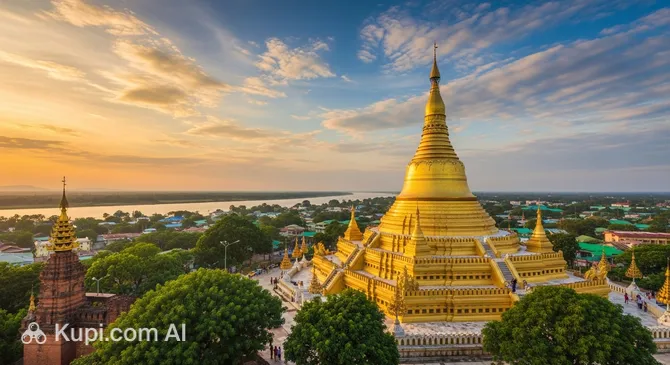
Pyay. Illustration.
Source: Kupi.com AI

With a population of about 135,000 people, Pyay is a bustling commercial center that still maintains the cozy feel of a provincial town. The climate here is tropical, so travelers should expect warm temperatures year-round. The city is often chosen as a convenient stop on the way from Yangon to Bagan to rest and enjoy the views of the great river.

The main point of interest for tourists is the rich history of Pyay, which is inextricably linked to the ancient Pyu civilization. Just a few kilometers from the modern center lie the ruins of Sri Ksetra—an ancient capital listed as a UNESCO World Heritage site. The city itself is dominated by the majestic Shwesandaw Pagoda, which stands on a hill; its terraces offer breathtaking panoramic views of the city and its surroundings, especially impressive at sunset.

A visit to Pyay is an opportunity to see the real, non-touristy life of the country. Take a stroll along the embankment, visit the night market, or take a boat to the Akauk Taung rock reliefs. This city definitely deserves the attention of those seeking a deep immersion into the culture and traditions of the region.

Weather Overview

Pyay is characterized by a hot tropical climate with a distinct separation into dry and wet seasons. When planning a comfortable trip, keep in mind that the weather in Pyay can change dramatically depending on the month, ranging from pleasant coolness to exhausting heat and prolonged downpours.

The most comfortable time for a visit is considered to be the period from November to February. During these months, there is practically no precipitation (0–1 mm), and the air temperature stays at a pleasant level: average figures in January are around 23°C, while nights can be refreshing (down to 16–19°C). However, the high heat season begins as early as March, peaking in April when daytime maximums often exceed 37°C.

From May to October, the rainy season prevails in the region. The peak of precipitation falls in the summer months: in June, July, and August, it rains almost daily (up to 30 rainy days per month). Despite the high humidity and heavy rainfall, air temperatures remain steadily high, averaging around 27–28°C.

Expect a very hot and dry spring, a wet summer with frequent monsoon downpours, and warm, sunny weather during the winter period.

Average monthly temperature

Average monthly precipitation

Interesting Facts

In addition to its main attractions, Pyay holds many fascinating secrets and historical curiosities that rarely make it into standard guidebooks. This city will surprise you not only with ancient ruins but also with unique legends that have lived here for centuries.

  • Buddha in Golden Spectacles. Just a few kilometers from Pyay, in the town of Shwedaung, is the country-famous Shwemyethman Pagoda. This is the only place in Myanmar where a Buddha statue wears real gold-rimmed glasses. According to local belief, they were donated by a queen who was miraculously cured of blindness, and now pilgrims come here to pray for improved vision.

  • The Gallery of "Bored Customs Officers". In Akauk Taung, located downstream, you can see amazing rock bas-reliefs. Hundreds of Buddha images were carved into the steep cliffs in the 19th century by tax collectors. While they waited for passing boats to collect duties, stone carving helped pass the time, turning a customs post into a work of art.

  • Railroad Pioneer. Pyay played a key role in the region's modernization, becoming the terminus of the very first railway in the country. The line connecting the city with Yangon was opened by the British back in 1877, forever cementing Pyay's status as a strategically important transport hub.

  • A Name with a Mistake. In old books and on maps, the city is often called Prome. This name arose because British colonizers could not accurately reproduce the Burmese pronunciation of "Pyay." The erroneous version became so established that it was used officially for over a century.

How to Get There

When planning a trip to this colorful city on the banks of the Irrawaddy, it's important to think through the logistics in advance, as there are no direct flights to the city itself. Pyay is an important transport hub, and you can get here in various ways by combining air and ground transport. You can find more details on how to get to Pyay by studying all available routes and schedules.

Pyay does not have its own airport, so travelers have to use the airports of nearby major cities. The closest to the city is Naypyidaw Airport (IATA: NYT), located in the capital. It is approximately 132 km from Pyay. A trip from there by taxi or bus will take about 3 hours and 40 minutes. This is a convenient option for those who want to reduce overland travel time.

However, most international tourists prefer to fly into Yangon International Airport (IATA: RGN), which is the region's main air gateway. It is located in Yangon, about 233 km from Pyay. Despite the distance, this route is popular due to the large number of flights. The journey from Yangon Airport to Pyay by ground transport takes approximately 6 hours and 10 minutes.

It is also worth mentioning Nyaung-U Airport (IATA: NYU), serving the Bagan tourist zone. It is located in the town of Nyaung-U, about 261 km from Pyay. If you are traveling through the historical sites of Myanmar, this option may be convenient for creating a complex itinerary. The transfer from here will take about 7 hours.

For clarity, here is summary information on the main airports through which you can reach the region:

AirportPassenger trafficDistance
Thandwe Airport109 km
Nay Pyi Taw Airport100 000132 km
Kyaukpyu Airport30 000193 km
Loikaw Airport40 000226 km
Yangon International Airport3.3 mln233 km

Since Pyay is historically the terminus of the country's first railway, rail connections here are fairly well developed. Regular trains depart from Yangon, offering a scenic, though not the fastest, way to reach the city (the journey can take 9–10 hours). Intercity buses are also popular, running along the highway connecting Yangon and Bagan and making a stop in Pyay.

Main Attractions

Pyay is a real treasure trove for antiquity lovers, where every stone breathes history. The city's attractions span the period from the ancient Pyu civilization to later eras, offering tourists a rich and diverse cultural program.

The undisputed landmark and spiritual heart of the city is the Shwesandaw Pagoda. Although its golden spire is visible from almost anywhere in the city, the shrine is worth a visit for the chance to see its unique details up close. A special feature of this stupa is that it is topped with two "hti" umbrellas at once—one was donated by a local ruler, and the second was added later by King Mindon, which is a great rarity in Myanmar's architecture. There is also a small museum with religious artifacts on the upper terrace.

Just a few kilometers southeast of the modern center lies the Sri Ksetra Archaeological Park. This is the territory of an ancient city-state, enclosed by the remains of brick walls. The main objects here are the unusual cylindrical stupas, such as Bawbawgyi Paya. Their austere, upward-reaching form differs radically from the country's common bell-shaped pagodas. Since the ruins are scattered over a large area among rice fields, it is most convenient to explore them on a rented bicycle or an ox-cart.

An impressive sight for travelers is the Sehtatgyi Paya, located near the center. It is famous for its colossal statue of a seated Buddha. The temple's name can be translated as "Ten-Story Buddha," which is no exaggeration: the giant figure towers over residential neighborhoods, striking in its scale and serenity.

On the outskirts of the city lies another important monument of the Pyu era—Payagyi Paya. It is believed that in ancient times it served as one of the four corner markers defining the boundaries of Sri Ksetra. Tourists are attracted here by the archaic architecture: the stupa has a specific rounded shape resembling a bud and lacks lavish decoration, giving it a stern and majestic look characteristic of early Buddhism in the region.

Local Cuisine

The culinary scene in Pyay is inextricably linked to the Irrawaddy River, which provides the city with the freshest fish. Local cuisine represents an authentic version of Burmese culinary traditions: it is hearty and aromatic, yet not as fiery-hot as in neighboring Thailand. The foundation of most meals here is boiled rice, typically served surrounded by many small plates of snacks, sauces, and a main dish.

The main treat that every traveler should try is mohinga. This is a thick and flavorful fish soup with rice noodles, generously seasoned with lemongrass, ginger, and the heart of a banana stem. In Pyay, it is prepared with special care, often using fresh catch straight from the river. Another definitive staple is laphet thoke, the famous salad made from fermented tea leaves with crunchy nuts, fried garlic, chili, and dried shrimp. This dish has a unique tart taste and a tonifying effect.

For lovers of hearty meals, Burmese curries are worth noting. Unlike Indian versions, local varieties are oilier and have a deep, rich flavor due to the long slow-cooking of onions and spices. River fish or shrimp curries are particularly popular in Pyay. Quick snacks often include various types of palata—layered flatbreads similar to Indian paratha, eaten both with meat gravies or in a sweet version with condensed milk.

The drink culture in the city revolves around traditional teahouses, which serve as community hubs. It is customary here to slowly sip laphet ye—strong, very sweet black tea with condensed milk. For alcoholic beverages, locals prefer light Myanmar beer, which is very refreshing in the tropical heat. A more exotic option found in the surroundings is toddy (palm wine), a light, fermented whitish drink extracted from the sap of palm trees.

To fully immerse yourself in the city's atmosphere, head to the Night Market for dinner, which comes alive along the Irrawaddy Embankment at sunset. This is the main meeting point for locals and tourists alike: at low plastic tables under the open sky, you can try grilled satay skewers, fried noodles, and fresh tropical fruits. The street food here is inexpensive, delicious, and prepared right before your eyes, allowing you to feel the true rhythm of life in Pyay.

Travel Tips

A trip to Pyay is an immersion into the authentic life of Asia, where ancient traditions exist side-by-side with modernity. To ensure your trip to this cozy city on the banks of the Irrawaddy is as comfortable as possible and leaves only warm memories, we have prepared a list of important practical recommendations.

  1. Clothing and Dress Code. Given the hot tropical climate, bring light, breathable clothing made of cotton or linen. However, remember that Myanmar is a country of strict Buddhist traditions. To visit pagodas (especially Shwesandaw), you will need clothing that covers your shoulders and knees. Be sure to wear shoes that are easy to remove (flip-flops or sandals), as you are only allowed to walk on temple grounds barefoot, even without socks.

  2. Transport Nuances. There is no conventional public transport in Pyay. To move around the city, it's most convenient to use motorcycle taxis or tuk-tuks. An important rule: always agree on the price before the trip begins, as there are no meters here. To explore the ruins of ancient Sri Ksetra located outside the city, renting an ox-cart is a colorful and practical option, as the roads there can be difficult for regular transport.

  3. Finances and Cash. Bank cards are accepted very rarely, so cash is your main resource. The local currency is the Kyat. If you are bringing US dollars for exchange, make sure the bills are in perfect condition: they must be new (preferably the "blue" newer series), without folds, stamps, or wear. Even the slightest defect can be a reason for refusal.

  4. Health and Safety. Pyay is a safe city, but do not neglect basic hygiene rules. Drink only bottled water and use it even for brushing your teeth. The sun here is very active, so a high SPF sunscreen and a hat are mandatory. We also recommend carrying insect repellent, especially if you plan on evening walks by the river.

  5. Connection and Communication. English is not as widely spoken here as in Yangon or Mandalay. We recommend downloading offline maps and a translator on your phone in advance. You can buy a local SIM card (e.g., from MPT or Atom) at street mobile shops; you will need your passport. Mobile internet in the city works quite stably.

  6. Local Etiquette. Burmese people revere the head as the holiest part of the body and the feet as "dirty." Never touch a local person's head (even a child's) and ensure that when sitting on the ground, your feet do not point toward people or Buddha images. It is best to sit with your legs tucked under you.

  7. What to Avoid. Refrain from public displays of affection: kissing and hugging in the street can embarrass locals and are considered improper. Also, avoid loud conversations and arguments in sacred places—tranquility and respect are valued above all else here.

  8. Tip for Early Birds. Try to visit the city market early in the morning, around 6–7 AM. This is the best time to see the true daily life of the city without the tourist fluff, buy the freshest fruits (mango or pomelo) at low prices, and watch the monks collecting alms.

Following these simple rules will help you easily find common ground with the locals and avoid awkward situations. Pyay is an incredibly hospitable city, and by showing respect for its way of life, you will receive sincere smiles and a unique time-traveling experience in return.

Entertainment & Nightlife

Nightlife in Pyay is fundamentally different from the noisy parties in Asia's megacities. You won't find neon signs of nightclubs with world-class DJs or glamorous rooftop bars here. An evening in this city is a time for relaxed rest, soulful conversations, and gastronomic discoveries under the fresh breeze from the Irrawaddy River. Main activities are concentrated around the embankment and local venues where you can feel the true rhythm of Burmese life.

The epicenter of evening activity is Strand Road (the Embankment). This is where the famous Night Market opens at sunset. It's not just a place for dinner, but a real open-air social club. The atmosphere here is as casual as it gets: plastic chairs, the smell of the grill, and lively groups of locals and tourists. There is no dress code whatsoever—shorts and sandals are the most appropriate choice.

The main entertainment for adults in Pyay, as in all of Myanmar, is the "beer stations." These are local equivalents of pubs serving fresh draught beer (usually Myanmar Beer) and a variety of snacks. Football matches are often broadcast in such places, and the crowd engages in lively conversation. Music can be loud, ranging from Burmese pop to Western hits of yesteryear.

If you are looking for specific places to spend a pleasant evening, consider the following establishments:

  • San Francisco Restaurant — one of the most famous spots among travelers. Despite the name, this place offers an excellent mix of Chinese and Burmese cuisine. It has a cozy atmosphere, an English menu, and a good selection of refreshing drinks. It's a great place to start your evening before a walk along the embankment.

  • Lucky Dragon Hotel Bar — if you want a quieter and slightly more refined setting, stop by the bar at this hotel. Here you can enjoy a cocktail or a glass of wine in an air-conditioned room or by the pool, relaxing away from the street bustle and heat.

Practical tips for tourists:

Prices in Pyay's establishments are very affordable: a glass of draught beer can cost less than $1, and a hearty dinner is around $3–5. Most places close quite early, around 10:00 PM – 11:00 PM, so plan your evening in advance. Public transport does not run at night, so the only way to get back to your hotel is by motorcycle taxi or tuk-tuk. It's worth agreeing on the price beforehand. In terms of safety, Pyay is a peaceful city, but streets can be poorly lit, so it's better to walk in groups and carry a flashlight.

As for daytime entertainment, besides sightseeing the pagodas, there aren't many options. You can visit local cinemas showing Burmese or Bollywood films—it's an interesting cultural experience even if you don't understand the language. The City Park by the river is also popular, where you can hide in the shade of trees during the day while watching passing boats.

Parks & Museums

Pyay offers travelers not so much manicured European parks with flowerbeds, but a living intertwining of wild nature and ancient culture. The green zones here are natural landscapes along the great river and shaded areas around centuries-old shrines where you can escape the tropical heat and touch history.

The main walking area of the city is rightfully the Irrawaddy Embankment (Strand Road). It's not just a street, but a kind of linear park stretched along the river. During the day, you can find shade under spreading trees and enjoy the cool breeze from the water while watching the slow movement of cargo barges and fishing boats. It's an ideal place for meditative strolls and getting to know the rhythm of life of the locals, for whom the river remains the center of the universe.

A unique combination of nature and history is the territory of the ancient city of Sri Ksetra. Although formally an archaeological zone, it is a vast green space among rice fields and groves, where the ruins of ancient temples are harmoniously integrated into the rural landscape. A walk here resembles a visit to a massive open-air landscape park where the silence is broken only by birdsong and the rustle of leaves. This place is perfect for cycling trips away from city noise.

For those who want to dive deeper into the region's past, the Thiri Khittaya Archaeological Museum is a must-visit. It is located directly on the historical site in the village of Hmawza. The museum is small but contains an impressive collection of Pyu civilization artifacts: from massive stone urns and Buddha statues to exquisite silver coins and famous carnelian beads. The exhibition provides a visual representation of the high level of cultural development that flourished here over a thousand years ago.

Another interesting cultural point is the Museum at the Shwesandaw Pagoda. Located on the platform of the city's main shrine, it houses a collection of religious offerings, ancient manuscripts, and Buddha images collected over many years. Visiting this small museum allows for a better understanding of Myanmar's spiritual traditions and the chance to see art objects usually hidden from public view.

In terms of architecture, the center of Pyay itself is an open-air museum. Many colonial-era buildings have been preserved here, which, despite their aged state, retain their former grandeur. While walking through the central streets, take note of the old administrative buildings and the clock tower—they create a unique contrast with the golden spires of the pagodas.

Insider tip: For an authentic experience, rent an ox-cart to explore the remote corners of the Sri Ksetra zone. This not only supports the locals but also allows you to reach ruins hidden in the thickets that are difficult to access by regular transport, turning the excursion into a real Indiana Jones-style adventure.

Getting Around

The public transport system in Pyay differs significantly from the familiar European structure. You won't find a metro, trams, or a network of municipal buses with fixed routes and schedules here. The city lives at its own pace, and moving around is done using more maneuverable and informal types of transport that are perfect for narrow streets and short distances.

The main means of transportation for locals and tourists are motorcycle taxis. They can be found on literally every corner, near markets, and attractions. This is the fastest way to get from point A to point B. For those traveling with luggage or in a group, a more comfortable option would be tuk-tuks (three-wheeled scooters with a covered passenger cabin) or traditional trishaws (sidecars), which are suitable for leisurely trips over short distances in the center.

The payment system here is as simple and conservative as it gets: only cash is accepted. No transit cards, validators, or mobile apps like Uber or Grab are used in Pyay. The main tip for a tourist: always agree on the price of the trip in advance, before you get into the vehicle. Drivers do not have meters, and there are no fixed fares either, so the cost depends on the distance and your ability to haggle politely. It is recommended to always carry small bills, as finding change for a large banknote from a driver can be problematic.

As a popular alternative, many travelers choose transport rental. At most hotels and guesthouses, you can rent a bicycle or a scooter (e-bike). This gives you complete freedom of movement and allows you to independently explore the city and its surroundings. Traffic in Pyay is relatively calm compared to megacities, but stay alert and always wear a helmet when riding motor transport.

A unique "transport feature" of Pyay that is definitely worth trying is ox-drawn carts. Although they are not often seen in the modern center, they remain the main means of transport across the territory of the ancient city of Sri Ksetra. Dirt roads between the ruins can often be difficult for regular cars and scooters, so such an authentic ride becomes not just a tourist attraction but a practical necessity for visiting remote pagodas.

The central part of the city, especially the area along the embankment and around the market, is quite compact and perfectly suited for walking. Sidewalks are not everywhere, but the traffic allows for comfortable walking while enjoying the colonial architecture and river views.

Accommodation

The choice of accommodation in Pyay is quite modest but fully meets the needs of travelers stopping here on their way to Bagan or Yangon. You won't find major international hotel chains or luxury five-star resorts in the city. The hotel stock mainly consists of small, cozy mid-range hotels, family guesthouses, and budget motels. The level of service here is warm and simple, and the prices will pleasantly surprise even budget-conscious tourists.

In terms of location, the most attractive area for staying is considered the zone along the Irrawaddy Embankment (Strand Road) and its adjacent blocks. Staying here puts you within walking distance of the colorful Night Market, the pier, and most cafes. It's an ideal spot for those who want to enjoy river sunsets and the evening breeze. Another popular option is the central part of the city near the market and clock tower, where many budget guesthouses convenient for transit stays are concentrated.

The price range varies from budget (simple rooms with a fan and minimum amenities) to mid-range (spacious rooms with air conditioning, hot water, breakfast, and sometimes a pool). Accommodation can be booked through popular international online aggregators, which guarantees a fixed price. However, many small guesthouses still accept guests without prior booking or via a phone call, allowing you to inspect the room before checking in.

Booking tip: If you plan to travel during the high season (November to February), we strongly recommend booking in advance, especially if you are looking for hotels with a river view or a pool. Also, when choosing a place, check for the presence of an on-site generator: power outages can occur in parts of the country, and backup power will ensure a comfortable sleep with working air conditioning.

Nearby Cities

For those who want to explore the surrounding areas, Pyay serves as an excellent starting point for day trips to several interesting nearby locations. The city's location at the junction of different regions allows travelers to see both modern administrative centers and traditional settlements.

One of the most intriguing destinations is the country's new capital—Naypyidaw. This city is striking in its scale, wide deserted boulevards, and the majestic Uppatasanti Pagoda. A visit here creates a sharp contrast with the ancient atmosphere of Pyay. Also worth noting is the city of Magway, located upstream on the Irrawaddy. It is known for its beautiful embankment and the famous Mya Tha Lun Pagoda, which towers over the river and is considered one of the most revered in the region.

CityPopulationDistance
Aunglan57 89758 km
Myanaung42 25263 km
Okpo11 52590 km
Thandwe133 484103 km
Taungup28 652106 km

These nearby destinations offer insight into the diverse culture and landscapes of the region, making your journey through Myanmar even more enriching.

Shopping & Souvenirs

Shopping in the city of Pyay is not a chase after fashion brands or a visit to glossy boutiques, but an opportunity to immerse yourself in the authentic atmosphere of the Burmese province. Trade here is traditional in nature: it's noisy, colorful, and concentrated mainly in markets and small private shops. For tourists, this is a great chance to purchase local handicrafts and see how the ordinary population of Myanmar lives, buying goods at prices significantly lower than in Yangon or Mandalay.

The main commercial artery of the city is the area around the Central Market and its adjacent streets. Life here bustles from the early morning. Rows of household goods, clothing, and electronics line the roads. In the evening, the epicenter of activity shifts to the embankment (Strand Road), where spontaneous trading of souvenirs, clothing, and knick-knacks unfolds under the glow of lanterns.

There are no large modern shopping malls in the usual Western sense in Pyay. Instead, small department stores and trading houses operate where you can buy basic clothing, cosmetics, and food. If you need familiar European products or hygiene items, it's best to look for them in supermarkets like Ocean or local mini-marts scattered throughout the center.

The heart of city trade is the Pyay Myoma Market (Central Market). This is a huge indoor space where literally everything is sold: from the freshest fruits and vegetables to gold jewelry and fabrics. The market is a labyrinth of stalls, and walking through it is an adventure in itself. Look for quality textiles and ready-made cotton products here. The second important spot is the Night Market on the embankment, which, while focused more on food, also offers inexpensive clothing, toys, and accessories.

As for souvenirs, it's worth bringing items from Pyay that reflect the region's culture:

  • Longyi — traditional Burmese "skirts" worn by both men and women. You can find fabrics with unique patterns in Pyay.
  • Wood products — the region is rich in forests, so local craftsmen are famous for their teak wood carving.
  • Thanaka — traditional cosmetics made from ground tree bark, used for sun protection and decoration. It is sold as small logs or ready-made paste.
  • Local sweets — be sure to buy Burmese halwa (Pathein halawa) or candied fruits, which are prepared here according to old recipes.

Shops and markets in Pyay live by the sun's schedule. The Central Market opens very early, around 6:00 AM, and winds down by 4:00 PM – 5:00 PM. Private shops may stay open until 8:00 PM. The Night Market starts at sunset (around 6:00 PM) and runs until 10:00 PM. In the middle of the day, many vendors may take a siesta due to the heat.

The main and often only method of payment is cash Kyats. Bank cards (Visa, Mastercard) are accepted very rarely, perhaps only in the most expensive hotels or jewelry stores. There are ATMs in the city, but they do not always work reliably, so a cash reserve is essential. Bargaining is appropriate almost everywhere except for supermarkets with fixed price tags; a smile and polite communication often help reduce the price by 10–20%.

The Tax Free system (VAT refund) does not work in Pyay. This service is available only on a very limited basis at major certified stores in Yangon and at the international airport, so you should not count on a VAT refund for purchases at local markets.
Reached the end of the page?

That means the route is fully explored