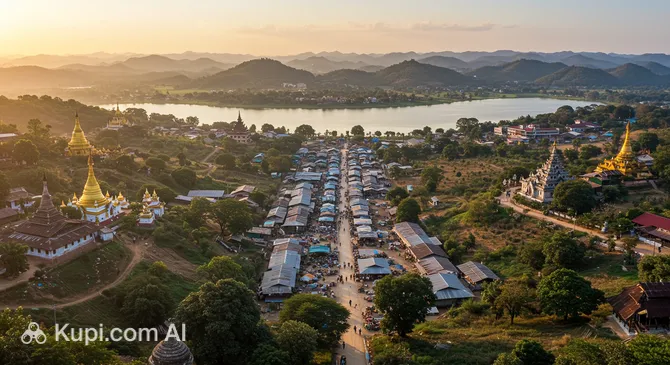
Taunggyi is more than just the capital of Shan State in Myanmar; it is a city soaring at 1,400 meters above sea level. Its name translates as "Big Mountain," which perfectly describes its majestic location on the picturesque Shan Plateau. Founded by the British in the late 19th century, the city quickly became an important administrative and commercial hub while retaining the charm of a cool mountain resort.
Thanks to its unique location, Taunggyi enjoys a refreshing climate that contrasts sharply with the country's hot plains. The city's population of about 380,000 represents a fascinating "melting pot" of Pa-O, Intha, Shan, and Bamar peoples, along with Chinese and Indian communities. This diversity is reflected in the architecture, where Buddhist stupas stand alongside mosques, churches, and Hindu temples.
Taunggyi. Illustration.
Source: Kupi.com AI
Tourists are drawn here not only by the fresh air but also by the rich historical heritage and the city's proximity to the famous Inle Lake. The city is famous for its bustling markets and the annual fire balloon festival, which turns the night sky into a spectacular light show. We invite you to discover this "city in the clouds," where ancestral traditions are harmoniously interwoven with the modern rhythm of life in Shan State.
Weather Overview
Due to its location at an altitude of nearly 1,500 meters, Taunggyi offers tourists a much milder and more pleasant climate than most regions of Myanmar. A subtropical highland climate prevails here, characterized by three distinct seasons. If you are planning a trip, be sure to check what the weather in the city will be like in different months.
The dry and cool season lasts from November to February—this is the ideal time to visit. During the day, the temperature stays around a comfortable 22-25°C, but at night it can drop to 10°C, so warm clothes will be necessary. From March to May, a hot period sets in, when the thermometer can rise to 30°C; however, even then, it is fresher in Taunggyi than in Yangon. The rainy season begins in June and continues until October: heavy showers are frequent during this time, especially in August and September, when up to 200 mm of rain falls per month.
Expect sunny and dry skies during the winter months with almost no rain, making this period the best for trekking and excursions to pagodas. Humidity increases significantly in the summer months, turning the surrounding hills into bright green carpets, though fogs at this time can limit visibility at observation decks.
Average monthly temperature
Average monthly precipitation
Interesting Facts
Taunggyi is a city that knows how to surprise with its contrasts and hidden details. Here are a few curious facts to help you get to know it better:
British Legacy: The city was founded by the British administration in 1894 as a "healthy" alternative to Fort Steadman at Inle Lake, allowing officials to escape the tropical heat and malaria.
City in the Clouds: Due to its altitude of 1,436 meters above sea level, Taunggyi is among the highest large cities in Southeast Asia.
Ethnic Mosaic: In addition to Buddhist monasteries, the city is home to the Roman Catholic Archdiocese with St. Joseph's Cathedral, founded in 1961.
Five-Day Market: The region operates a unique system of "rotating" markets that change their location every five days, and Taunggyi is a key point in this trade cycle.
How to Get There
Taunggyi is the main gateway to Shan State; however, due to the mountainous terrain, transport logistics have their own specifics. Most travelers prefer combined routes that pair domestic flights with ground transport along scenic winding roads.
The main air hub for the region is Heho Airport (HEH), located about 45 kilometers from the city center. This modern terminal receives regular flights from Yangon, Mandalay, and Bagan. Upon arrival in Heho, the best way to get to Taunggyi is to use an official taxi or book a transfer; the journey takes about an hour and passes through beautiful mountain passes.
Railway communication in this region is poorly developed, and there are virtually no direct trains to the city itself. The main line passes through the station in Shwenyaung, from where tourists still have to transfer to buses or taxis for the final climb up the mountain.
Station
Passenger traffic
Distance
Naypyitaw Central Railway Station
3
136 km
Mandalay Central Railway Station
6
164 km
For more budget-conscious travelers, long-distance buses are available. Trips from Yangon take 12 to 14 hours, while from Mandalay they take about 5-7 hours. To plan your route as conveniently as possible, we recommend checking detailed information on how to get to Taunggyi by various modes of transport.
Main Attractions
The main architectural and spiritual landmark of the city is the Shwe Phone Pwint Pagoda. Located at the top of a hill, this shrine not only impresses with its golden brilliance but also serves as the best viewpoint, offering a breathtaking panorama of all Taunggyi and the endless expanses of the Shan Plateau.
In the vicinity of the city lies the unique Kakku complex. This incredible cluster consists of thousands of 16th-century pagodas standing close to each other on a small plot of land. This site is considered the pinnacle of traditional pagoda building of the Pa-O people. The tinkling of thousands of small bells on the tops of the stupas, swaying in the wind, creates a truly mystical atmosphere.
For those who want to dive deeper into the local culture, the Taunggyi Central Market is a must-visit. It is a place where you can see representatives of various hill tribes in their traditional attire. Also worth noting is the historic colonial-era Anglican church, which recalls the days of British presence in the region.
Local Cuisine
Taunggyi's gastronomy is a true feast for foodies, combining Shan, Bamar, and Chinese traditions. The region's signature dish is undoubtedly Shan Noodles. It is served both with broth and in "dry" form with marinated chicken or pork, generously sprinkled with crushed peanuts and herbs. No less popular is "Shan Rice" (Shan Htamin), which is prepared with turmeric and served with crispy fried fish.
Salads hold a special place in the local diet, particularly the famous fermented tea leaf salad—Lahpet Thoke. It is a unique combination of flavors: bitter tea leaves mixed with crunchy beans, garlic, and chili peppers. For drinks, be sure to try the local green tea, which is served free of charge in most establishments, as well as fresh juices from exotic fruits grown in the fertile soils of Shan State.
The food culture in the city is closely linked to markets and street stalls. In the evening, the city center turns into a massive open-air food court where you can try all kinds of grilled snacks. If you prefer a more formal setting, check out the TGI Bar or one of the restaurants at major hotels. Be sure to visit local bakeries—thanks to the colonial past, they still make excellent traditional pastries and sweets.
Travel Tips
Traveling in the mountains requires preparation, so we have gathered the most important tips to make your visit to Taunggyi comfortable and enjoyable.
Clothing and Essentials: Even if it's hot in the plains of Myanmar, Taunggyi can be very cool in the evenings. Be sure to bring a light jacket or sweater. To visit pagodas, you need clothing that covers shoulders and knees, as well as shoes that are easy to remove.
Transport: The best way to get around the city is by taxi or songthaew. If you plan to go to Kakku or Inle Lake, negotiate a "round-trip" with the driver; this will be significantly cheaper.
Finances: Always carry an adequate supply of cash (Kyats) in small bills. There are ATMs in the city, but international cards do not always work. A tipping culture is welcomed but not mandatory.
Health and Safety: Drink only bottled water. There are pharmacies near the central market, but it is better to bring specific medications with you. The city is absolutely safe for tourists day and night.
Communication: English is not widely spoken, so it is useful to have an offline translator. A few words in Burmese (e.g., "Mingalaba" — hello) will open the hearts of the locals.
Local Etiquette: When entering any temple or residential home, always remove your shoes and socks. Do not touch the heads of locals and do not point your foot at objects or people—this is considered extremely offensive.
What to Avoid: Do not engage in discussions on political topics and avoid photographing military or government facilities.
Additional Tip: Plan your market visits for the very early morning (6:00–7:00 AM). This is when you can see the most authentic trade and take the best photos without the crowds.
By following these simple rules, you can fully immerse yourself in the atmosphere of Shan State and enjoy the hospitality of this amazing mountain city.
Entertainment & Nightlife
Entertainment in Taunggyi is predominantly cultural and contemplative. The rhythm of city life is dictated by local bazaars and religious holidays. The most vibrant event of the year is the Tazaungdaing festival, during which competitions of huge handmade hot air balloons are held. Even on ordinary days, strolling through the central streets filled with shops selling traditional crafts can be an exciting adventure.
The city's nightlife is quite calm and concentrated in a small number of venues in the center. One popular spot for evening relaxation is the TGI Bar, where travelers and locals can unwind after a busy day of sightseeing. The atmosphere in such places is friendly and laid-back, and prices remain very affordable.
During the day, it is worth taking walks on the outskirts, which offer views of the mountain slopes and valleys. For those who prefer more active recreation, the city serves as a base for organizing treks to nearby Pa-O villages. Safety in the city is high, and locals are always ready to help tourists find their way or call a taxi to return to their hotel.
Parks & Museums
The cultural heart of the city is the Shan State Cultural Museum. It houses an impressive collection of artifacts telling the story of the life and traditions of the state's numerous ethnic groups. The exposition features traditional costumes, ancient weapons, musical instruments, and personal belongings of the former rulers of the region—the Saophas. A visit to the museum will help you better understand the complex and interesting history of this region.
Although there are few large city parks in the classic sense in Taunggyi, their role is successfully filled by the territories around major religious complexes. For example, the garden around the Shwe Phone Pwint Pagoda is a wonderful place for walking and contemplating sunsets. Well-kept paths and an abundance of greenery create an atmosphere of peace away from the noise of the central shopping streets.
For nature lovers, the surrounding hills, accessible for easy walks, become a natural "park." The path to the western outskirts of the city will lead you to open areas with views of the valleys. Also worth visiting is the territory of St. Joseph's Cathedral—an architectural landmark with a neat courtyard that is an important center for the local Christian community.
Getting Around
The public transport system in Taunggyi is simple and effective for a mountain city. The main means of transport for locals are songthaews—pick-up trucks equipped with benches in the back. They ply specific routes, connecting the center with markets and surrounding areas. The fare is extremely low, and payment is made in cash to the driver upon exiting.
For more comfortable and faster trips, tourists more often choose taxis or motor-rickshaws. There are no apps like Uber or Grab in their usual form in Taunggyi, so the price of the trip should be negotiated in advance. Taxi drivers usually know the main attractions well and can offer full-day guide services for trips to the Kakku pagodas or Inle Lake.
If you feel confident on mountain roads, you can rent a motorbike. This will give you full freedom of movement; however, remember that the roads here are often winding and require caution. Bicycle rental is less popular due to the steep climbs but is possible for rides in the flatter parts of the plateau. Most transport in the city usually stops operating quite early; after 8:00–9:00 PM, only private taxis remain on the streets.
Accommodation
Taunggyi's hotel stock offers accommodation options for every taste, although the bulk of hotels fall into the mid-price segment. The most convenient area to stay is the city center, especially the blocks near the main market and government offices. Here, you will find both classic hotels and cozy budget guesthouses catering to foreign backpackers.
Those seeking peace and seclusion should consider options in the suburbs, such as the Aythaya area. More modern hotels with panoramic mountain views and even their own nearby wineries are located there. Housing prices in Taunggyi are generally lower than at Inle Lake itself, making the city an excellent base for budget travelers.
During the high season (October to February), and especially during the Hot Air Balloon Festival in November, hotel rooms sell out instantly. We strongly recommend booking accommodation several months in advance if your visit coincides with festival dates. At other times of the year, you can find a free room even upon arrival using popular international booking services.
Nearby Cities
Taunggyi serves as a magnificent starting point for exploring the attraction-rich Shan State. Just an hour's drive away is one of Myanmar's most magical places—Inle Lake. You can head to the town of Nyaungshwe, the main gateway to the lake, to hire a boat and see the famous Intha fishermen who row with one leg, as well as the floating gardens.
Another interesting destination is Heho, known for its picturesque agricultural landscapes and weekly fairs. If you have time, it is worth visiting Aungban—an important trade center through which caravans of spices and vegetables from all over the region pass. These small towns allow you to see the real, non-tourist life of mountainous Myanmar.
We recommend not limiting yourself to the city alone and making sure to set aside a couple of days for trips to the surrounding areas. Each of these directions will provide you with unique photos and unforgettable impressions of the hospitality of the local people and the beauty of pristine nature.
Shopping & Souvenirs
Shopping in Taunggyi is primarily an introduction to the unique crafts of Shan State. The city is famous for its handmade fabrics, especially silk and lotus products. In the local markets, you can find traditional hand-embroidered shoulder bags worn by the Pa-O tribe, as well as the famous Shan umbrellas made of waxed paper.
The center of commercial life is the Taunggyi Central Market (Myoma Market). Everything is sold here: from the freshest spices and mountain tea to jewelry with rubies and sapphires, which this region is rich in. Be careful when buying gemstones and choose only certified stores. The market is especially colorful early in the morning when farmers from surrounding villages arrive with their goods.
Shops in the city usually operate from 9:00 AM to 6:00 PM, while markets open at dawn. Payment at most outlets is made in cash in local currency (Kyats); cards are only accepted at very large hotels or specialized souvenir centers. If you are lucky enough to catch one of the "five-day fairs," be sure to look for silverware and lacquerware—these are the best gifts to bring home from this region.