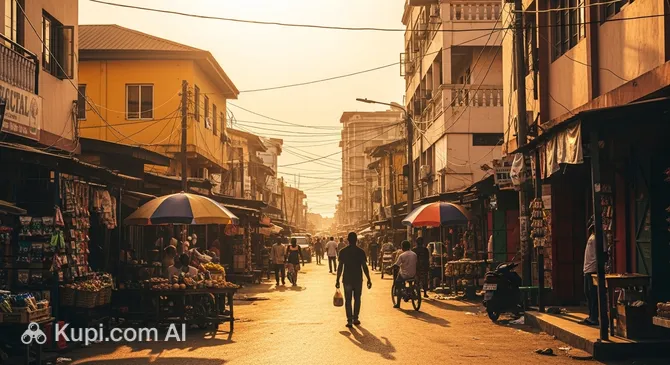
Somolu is a dynamic and densely populated district within the vast metropolis of Lagos in southwestern Nigeria. Primarily a residential neighborhood, it reflects the true rhythm of life for the middle and working classes, creating an atmosphere of authentic urban bustle. While the district is not a classic tourist hub, it attracts those who want to see the unvarnished life of Africa's largest city.
Somolu. Illustration.
Source: Kupi.com AI
Geographically, the city covers an area of about 11 square kilometers and is characterized by an incredibly high population density, exceeding 23,000 people per km². Officially, the district was formed in 1976, and since then the history of its development has been inextricably linked with the urbanization of Lagos. About 400,000 people live here, most of whom are young, filling the streets with a special energy.
The main feature of Somolu is its role as a major hub for the printing industry and the informal economy. There are no grand monuments here, but the uniqueness of the place lies in its markets and everyday life. A visit to this area is an invitation to dive into the real chaos and charm of the Nigerian urban environment, where modernity is closely interwoven with tradition.
Weather Overview
A typical tropical climate prevails in Somolu, characterized by high humidity and consistently hot temperatures throughout the year. Average thermometer readings hover around 25–29°C, but during the daytime, the air often warms up to 32°C and higher. To better prepare for your trip, it is worth studying the specifics of the weather in the city across different seasons.
The year is clearly divided into wet and dry periods. The heaviest rainfall occurs from May to October, peaking in June and July. During this time, downpours can be very intense, often leading to local flooding and complicating road traffic. The dry season arrives in November and lasts until March, bringing with it the northeasterly Harmattan wind, which carries dust from the Sahara, making the air drier and hazier.
Due to high population density and a shortage of green zones, the environmental situation in the district can be challenging. During the dry months, haze and increased dust content in the air are often observed, which people with health sensitivities should take into account. When planning a visit, it is best to choose the months from November to February, when the heat is more tolerable due to the absence of constant rain.
Average monthly temperature
Average monthly precipitation
Interesting Facts
Young population: The median age of Somolu residents is just 24.1 years, making it one of the "youngest" districts in the Lagos metropolitan area.
Printing hub: The district has the unofficial status of the printing capital of Nigeria due to the huge number of printing houses and publishers concentrated on its streets.
Explosive growth: From 1975 to 2015, the district's population increased by nearly 160%, making it one of the most densely built-up places in the world.
Historical separation:Somolu was granted the status of a separate administrative district on May 27, 1976, thanks to active lobbying by local traditional rulers.
Time zone: The city operates on West Africa Time (WAT), which is the same as British time in the winter.
How to Get There
The transport accessibility of Somolu is due to its strategic position within the Lagos metropolitan area. The city is connected to the main business and cultural centers of the metropolis by a network of roads, though it is worth considering that chronic traffic jams are an integral part of local traffic. It is worth thinking about how best to plan your route in advance, choosing times outside of peak hours.
The nearest major air hub is Murtala Muhammed International Airport (LOS). The journey from the terminal to the center of Somolu by taxi can take anywhere from 45 minutes to two hours, depending on the traffic situation. For travel from other parts of Lagos, it is convenient to use the BRT rapid bus system, which has dedicated lanes and saves time in transit.
There is no rail connection within the district itself, but major Lagos railway stations are relatively close by. For travel within the city and to the suburbs, locals often use bright yellow "danfo" minibuses or "okada" motor-taxis; however, for greater comfort and safety, tourists are recommended to use ridesharing services such as Uber or Bolt.
Station
Passenger traffic
Distance
Lagos Terminus Railway Station
5
8 km
Lagos Terminus Railway Station
5
8 km
Train Station Ibadan
1
109 km
Alfred Rewane Station
1
294 km
Main Attractions
The city of Somolu is not categorized as a traditional tourist destination with world-famous landmarks, but it is of interest as a place with a unique urban environment. The main points of attraction here are the local markets, such as Somolu Market, where you can feel the spirit of African trade. These are not just places for shopping, but true cultural hubs where life teems from early morning until late evening.
The architectural face of the district is shaped by numerous religious centers—churches and mosques—which play an important role in community life. Although they do not hold the status of historical monuments, their impressive size and active presence reflect the deep spirituality of the locals. A stroll through the streets of the district will allow you to see typical Lagos architecture and get acquainted with the daily lives of the city's residents.
For those seeking cultural enrichment, Somolu can serve as a base for exploring larger sites in neighboring districts. However, the atmosphere of Lagos's "printing capital" itself, where printing houses and workshops are found at every turn, creates a unique industrial flavor. This place is ideal for explorers who want to see the unpolished but vibrant side of Nigeria.
Local Cuisine
The gastronomic world of Somolu is a real treat for those who love spicy sensations and authentic African cuisine. The basis of the diet here consists of hearty dishes such as Pounded Yam and the famous Egusi soup, made from melon seeds with added greens and meat. Street food is an integral part of the culture, and the aroma of Suya (spicy grilled meat skewers) accompanies passers-by at many intersections.
Be sure to try Jollof Rice—the legendary West African dish of rice, tomatoes, and spices, which is prepared with particular passion in Nigeria. Local eateries, known as "bukas," serve fresh fish and seafood, generously seasoned with hot peppers. Fufu or fried plantains (large vegetable bananas) are often served as side dishes.
Among drinks, the local favorite is fresh palm wine, which has a unique sweetish taste, as well as local beers. For those who prefer non-alcoholic options, freshly squeezed tropical fruit juices are always available. The dining culture in the area is built around markets and small cafes, where you can get a huge portion of home-cooked food made from traditional recipes at an affordable price.
Travel Tips
A visit to Somolu will allow you to see the real Nigeria, hidden from the eyes of ordinary tourists. To make your stay in this lively district comfortable and safe, we have prepared some practical tips.
Clothing and essentials: Choose light clothing made of natural fabrics, as it is hot and humid in the city year-round. Don't forget comfortable closed shoes for walking through crowded markets and a British-type plug adapter (Type G).
Transport: To get around the city, it is best to use the Bolt or Uber mobile apps. This eliminates the need to haggle and provides a higher level of safety compared to street taxis.
Finances: The main currency is the Nigerian naira. Cards are only accepted in large establishments, so always have cash on hand for markets and small purchases. Be prepared for the fact that international cards do not work at all ATMs.
Health and safety: Drink exclusively bottled water and use insect repellent, especially in the evening. Avoid walking alone after dark and do not display valuable items.
Communication: The official language is English, but locals often use Pidgin. Knowing a few simple phrases in Yoruba will win you genuine sympathy from the locals. A local SIM card can be purchased at the offices of operators MTN or Airtel.
Local etiquette: Nigerians highly value politeness. Always greet the person before asking a question. It is customary to remove your shoes when entering private homes or some religious sites.
What to avoid: Try not to photograph government buildings, bridges, or military personnel—this can cause trouble with the police. Also, avoid criticizing local customs in public conversations.
Extra tip: Plan all your trips with a significant time buffer. Lagos traffic is unpredictable and can turn a 20-minute route into a two-hour wait.
May your introduction to Somolu be filled with vivid impressions and new discoveries. Following these simple rules will help you enjoy the atmosphere of this unique district and feel the hospitality of its residents.
Entertainment & Nightlife
The entertainment scene in Somolu is primarily geared towards local residents, so it is difficult to find the typical night clubs or concert venues a tourist might expect. Life in the district quiets down after dark, with the focus shifting to family relaxation and friendly gatherings in small local cafes. The main form of leisure for young people remains street football, with matches visible in almost every courtyard.
For active nightlife and modern entertainment, guests of the district usually head to neighboring parts of Lagos, such as Ikeja or Victoria Island. A taxi ride will take between 30 to 60 minutes, and that is where the metropolis's best bars, cinemas, and trendy clubs are concentrated. Nevertheless, in Somolu itself, you can find authentic evening markets where the atmosphere is filled with the aromas of street food and the sounds of Afrobeats.
If you decide to spend an evening in the district, it is worth looking into small establishments that serve traditional drinks. The crowd here is simple and friendly, but it is important to remember safety rules and avoid walking through unlit alleys. For comfortable travel at night, it is recommended to use verified taxi-hailing services.
Parks & Museums
Due to its extremely dense development and industrial focus, Somolu faces a shortage of green spaces and park zones. Greenery in the district is minimal, and residents often use open market spaces or the areas surrounding churches for meetings and relaxation. This is a typical picture for the overcrowded outskirts of Lagos, where every meter of land is used for housing or commerce.
There are no world-renowned museums or galleries in the district. Cultural life here is manifested not in exhibitions but in everyday creativity—in the workshops of graphic artists and printing houses. To visit classic museums, tourists will have to travel to the city center, where, for example, Freedom Park is located, created on the site of a former prison and now an important cultural space.
Despite the lack of parks in the conventional sense, improvised recreation zones and sports grounds, where the life of the local community teems, may be of interest to researchers. The lack of recreational zones is compensated for by the energy of the streets, but for a full rest in nature, it is better to choose more spacious districts of Lagos State located closer to the coast.
Getting Around
The public transport system in Somolu reflects the overall character of Lagos: it is dynamic, chaotic, and fully subordinate to the rhythm of the metropolis. The main means of transportation for most residents are "danfos"—yellow minibuses that ply specific routes without a fixed schedule. A ride in such a bus is a unique experience that allows you to feel the true flavor of local life, but it requires a certain degree of skill.
For faster travel through the district's narrow streets, motor-taxis known as "okada" are popular. They allow for efficient maneuvering in traffic jams; however, tourists should use them with caution. A more modern and comfortable option is the BRT (Bus Rapid Transit) buses, which connect Somolu to other parts of Lagos via dedicated lanes. Payment for these is made using special transport cards.
In modern conditions, the best alternative for travelers remains the taxi services Bolt and Uber. This is the safest and most predictable way to get around, avoiding difficulties with payments and routes. It should be noted that due to dense development and narrow roads, walking within the district can be difficult, so transport plays a key role in any trip to this part of the city.
Accommodation
The choice of accommodation directly in Somolu is limited, as the district is geared towards permanent residents rather than short-term tourists. There are virtually no large hotel chains here, and the main accommodation stock consists of modest guesthouses and apartments, most often booked via online platforms. Most options are simple and budget-friendly.
For those who value a high level of service and comfort, the best solution is to stay in the neighboring Ikeja district or in the central parts of Lagos. A wide range of hotels is available there—from business hotels to luxury complexes. Staying in the center will provide better access to tourist infrastructure, while Somolu will remain a convenient place to study the life of the local population.
When planning your trip, it is worth booking accommodation in advance, especially if you are looking for verified options with good reviews. When choosing private sector apartments, pay attention to the presence of a security system and backup power sources, as power outages are common in this region. The general price range in the area remains low, making it attractive for budget travelers.
Nearby Cities
Thanks to its location in the heart of the capital region, Somolu is a convenient point for exploring other areas of giant Lagos. Each part of this metropolis has its own character, and a short trip can reveal a completely different side of Nigerian life. Exploring the surroundings will allow you to see the contrast between quiet residential zones and bustling business districts.
Just a couple of kilometers away is Lagos itself—the economic heart of the country, where the main museums and parks are concentrated. It is also worth visiting the administrative center of the state, the city of Ikeja, which is famous for its shopping malls and developed infrastructure. For lovers of a maritime atmosphere, a trip to the Apapa district, home to the country's largest seaport, will be interesting.
The region around the city offers many options for day trips, allowing you to change your surroundings and see all the diversity of the African metropolis in a short time. Use Somolu as a launchpad to immerse yourself in the endless flow of life in the continent's most populous city.
Shopping & Souvenirs
Shopping in Somolu is primarily an introduction to the vibrant world of traditional markets and small craft shops. The most significant place is Somolu Market, where you can buy almost anything: from everyday food items to exotic spices. Special attention should be paid to fabrics—Nigeria is famous for its textiles, and here you can find high-quality materials with unique African patterns at very attractive prices.
Since the district is considered a printing hub, you can order unique printed products or buy handmade paper items here. For those looking for modern brands and air-conditioned shopping floors, the best option would be a trip to Ikeja City Mall, located 30–60 minutes away. International brands of clothing, electronics, and perfumes are represented there.
As souvenirs from Somolu, it is worth bringing back items made by local artisans: wooden figurines, woven baskets, or traditional clothing. Most shops are open from early morning until sunset, and the main method of payment is cash—Nigerian naira. Credit cards are accepted in large retail outlets, but for market trips, you should always carry small bills. Remember that polite bargaining is encouraged in the markets and is part of the local communication culture.