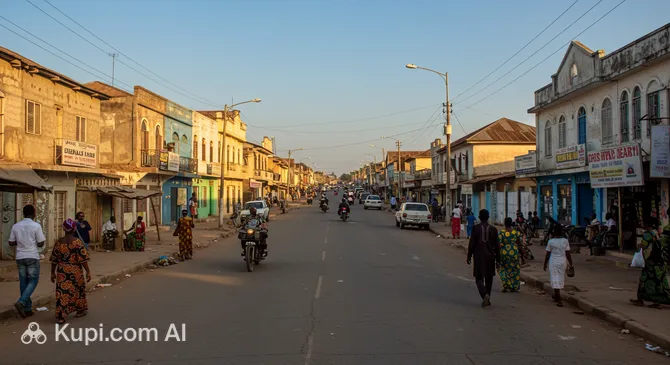
Located in the southwestern part of Nigeria, Sagamu (also known as Shagamu) is a fascinating blend of ancient traditions and dynamic modernity. The city is a key hub in Ogun State, strategically positioned between the region's largest metropolises—Lagos and Ibadan. Founded in 1872 as a defensive union of thirteen Remo settlements, it has evolved today into a thriving political and economic center with a population of over 1.1 million people.
Shagamu. Illustration.
Source: Kupi.com AI
Exploring this destination allows you to get a glimpse of the rich historical heritage of the Yoruba people. Each of the thirteen historical settlements that formed the city carefully preserves its identity, yet all recognize the authority of the paramount ruler—the Akarigbo, whose residence is located right here. Sagamu is steeped in an atmosphere of traditional hospitality, where bustling markets sit side-by-side with the majestic palaces of chiefs.
For travelers, Sagamu reveals itself as a city of crafts and commerce. It is world-renowned as a major collection center for kola nuts, which has left an imprint on the entire way of local life. Visiting this city is an invitation to explore authentic African culture, enjoy its unique rhythms, and see how centuries-old traditions are carefully maintained within the pace of a modern Nigerian city.
Weather Overview
Sagamu is characterized by a typical tropical climate of southwestern Nigeria, which dictates the rhythm of life for the entire region. The city is influenced by two main seasons: wet and dry. High humidity persists almost year-round, making the heat even more palpable.
The hottest months occur from January to March, when average daytime temperatures often reach +33–34°C. During this time, rain is rare, and the number of dry days per month can reach 24. With the arrival of May, the rainy season begins, peaking in June and September–October. During these months, up to 260 mm of precipitation falls, and humidity reaches its maximum.
If you are planning a visit, keep in mind that the city's climate is most comfortable for walking from November to February. During this period, dry weather sets in with moderate winds, and nighttime temperatures drop to a pleasant +23°C. Nevertheless, even in the rainy season, Sagamu retains its charm, and tropical downpours are usually short-lived.
Average monthly temperature
Average monthly precipitation
Interesting Facts
Sagamu is a city with a remarkable destiny and unique traditions that set it apart from other regions of the country.
City of Thirteen Settlements: Sagamu was founded in 1872 as a strategic union of thirteen independent Remo towns to protect against inter-tribal wars following the collapse of the Oyo Empire.
Kola Nut Capital of the World: Historically, the city is considered Nigeria's largest center for the collection and trade of kola nuts, which stimulated the development of related crafts, such as weaving special baskets for their storage.
The Akarigbo Traditions: The head of Sagamu bears the title of Akarigbo and is the paramount ruler of the entire Remo Kingdom, maintaining significant influence over the cultural and social life of the region.
Industrial Giant: Thanks to limestone deposits in the vicinity, Sagamu has become an important center for cement production, ensuring the city's economic stability.
Weaving Heritage: In addition to trade, the city is famous for its weavers, who create traditional fabrics with patterns unique to this part of Ogun State.
How to Get There
Sagamu enjoys an exceptionally favorable geographic location in the southwestern part of the country, located just 40 kilometers from Abeokuta and in close proximity to Africa's largest metropolis, Lagos. The main hub for travelers arriving from afar is Murtala Muhammed International Airport (LOS), located in Ikeja. This is one of the continent's largest aviation hubs, from which Sagamu can be reached by taxi or rental car in about an hour and a half to two hours, depending on traffic conditions.
Ground transport plays a key role in the city's accessibility. Sagamu is intersected by major highways connecting Lagos with Ibadan and Benin City, making it easily reachable from anywhere in southern Nigeria. Travelers can use regular intercity bus services or the popular minibuses that depart from major parks in Lagos and neighboring administrative centers.
Railway communication in the region is actively developing, linking nearby hubs with the interior of the country. Although the city itself is primarily oriented towards road transport, the presence of modern stations in neighboring cities allows for a combination of transport modes for a more comfortable journey through Ogun State.
Station
Passenger traffic
Distance
Lagos Terminus Railway Station
5
49 km
Lagos Terminus Railway Station
5
49 km
Train Station Ibadan
1
67 km
Alfred Rewane Station
1
284 km
Main Attractions
The heart of social life and one of Sagamu's most colorful attractions is the historic Gbegbe market square. This is a place where time seems to slow down amidst endless rows of spices, fabrics, and fresh produce. A walk through Gbegbe is not just shopping, but a full immersion into daily Yoruba life, filled with the sounds of lively bargaining and the aromas of local cuisine.
For those interested in the history of power and traditional governance, the Sagamu Obio palace is a must-visit. This chief's residence serves as a symbol of the city's unity and the spiritual center of the Remo people. The architecture and atmosphere of the palace provide a better understanding of the region's hierarchy and cultural codes, which have remained steadfast for many decades.
Another important commercial and cultural landmark is the Gwari market. Here, you can meet masters of traditional crafts and see the products that have made the region famous. Special attention should be paid to the workshops practicing pottery and weaving. Watching the artisans at work offers a unique insight into the artistic talents of the locals and allows you to see the creation process of objects that have served Nigerian families in their daily lives for centuries.
The cultural calendar of Sagamu is crowned by an annual festival that transforms the city streets into a vibrant tapestry of dance, music, and theatrical performances. If your trip coincides with this event, you will have a rare opportunity to see the best examples of local art and crafts in their most lively and festive form.
Local Cuisine
Sagamu's culinary identity is inextricably linked to the traditions of the Yoruba people. The local cuisine is based on products grown in the fertile lands of Ogun State: yam, cassava, cocoa, and the famous kola nuts. A meal here always features rich flavors, an abundance of spices, and the use of the freshest ingredients delivered straight from the city markets.
Among the dishes definitely worth trying are various traditional soups (such as egusi or ewedu), which are served with "fufu" or "eba"—thick porridges made from root vegetables. Meat dishes are often prepared over an open fire with spicy sauces, giving them a characteristic smoky aroma. The city's gastronomic scene is primarily represented by cozy local cafes and street food stalls, where you can experience the authentic taste of Nigeria.
In Sagamu, it's worth paying attention to drinks made from local fruits and traditional infusions. The kola nut, although an export commodity, plays an important role in local etiquette and consumption culture. To discover the best examples of local food, it is best to head to the Gbegbe market, where you can find the most authentic specialties prepared according to family recipes in the morning.
Travel Tips
A trip to Sagamu will provide you with unforgettable impressions if you prepare in advance for the specifics of the local way of life. These practical tips will help you feel confident and enjoy the hospitality of Ogun State.
Clothing and Essentials: Choose light clothing made from natural fabrics, as the region experiences high humidity and heat. Be sure to bring comfortable closed shoes for walking through markets. When visiting palaces and religious sites, it is recommended to dress modestly, covering shoulders and knees.
Transport: The fastest way to get around the city is by taxi. If you plan to travel to neighboring cities, use official bus parks. Car rental is only advisable if you have experience driving in heavy Nigerian traffic.
Finance: The primary currency is the Nigerian naira. Always carry cash, especially for purchases at the Gbegbe and Gwari markets. Cards are only accepted in major hotels. ATMs are available in the city center, but it is better to exchange currency at official points in Lagos before arriving.
Health and Safety: Use only bottled water and avoid ice in drinks. It is recommended to carry insect repellents. In crowded places, keep a close watch on your personal belongings and avoid walking in unfamiliar areas after dark.
Communication: The official language is English, but most residents speak Yoruba. Knowing a few phrases (for example, "E nle"—a greeting) will earn you favor with the locals. For connectivity, it is best to buy a SIM card from a local operator at the airport or shopping centers.
Local Etiquette: Respect for elders and traditional rulers (Akarigbo) is the foundation of Yoruba culture. Always ask for permission before taking photos of people or their market stalls.
What to Avoid: Do not discuss sensitive political topics and do not show impatience during bargaining at the markets—this is considered bad form. Also, you should not drink tap water.
Additional Tip: Try to plan your visit during a cultural festival to see the city in its most vibrant and lively form.
Sagamu is a city with an open heart that will reward the attentive traveler with a deep immersion into real Africa. Enjoy your journey!
Entertainment & Nightlife
Entertainment in Sagamu has a strong cultural and communal character. The main center of attraction for residents and visitors alike is the numerous festivals held throughout the year. The most significant is the Annual Cultural Festival, where you can see performances by dance troupes, hear traditional drum rhythms, and get acquainted with the musical heritage of Yoruba culture.
Nightlife in the conventional Western sense is mainly concentrated in hotels and private clubs; however, the evening atmosphere of Sagamu is best experienced in open-air venues and local markets that remain lively until dusk. Spontaneous musical gatherings are often held here, creating a unique flavor of a Nigerian evening. Establishments at larger guest houses offer bars with modern music and refreshing drinks.
For daytime leisure, the city offers visits to craft centers where the process of creating handmade goods turns into a captivating spectacle. Safety in the city is maintained at a good level, but for evening walks, tourists are advised to use the services of licensed taxis or be accompanied by local guides who can help navigate the most interesting locations of the city at night.
Parks & Museums
The main cultural asset of Sagamu, serving as a living museum, is the historic Sagamu Obio palace. This building is a monument to the history of the Remo people, where traditions and artifacts related to the power of the Akarigbo are preserved. Visiting the palace grounds allows tourists to see ceremonial aspects of Yoruba life and touch the architectural heritage of the past.
Instead of typical art galleries, the city offers craft workshops that function as open exhibitions. Here, you can see the process of creating traditional pottery and basket weaving. These centers of mastery preserve techniques that have not changed for decades, providing an opportunity not only to see the finished products but also to talk with the artisans who safeguard the people's memory.
While there are few developed parks within Sagamu itself, the natural area around the Ibu River offers picturesque views and opportunities for outdoor walks. The city's surroundings, with their cocoa and kola nut plantations, represent a unique agricultural landscape that will be of interest to those who want to see rural Nigerian life and enjoy the tropical nature of Ogun State.
Getting Around
The transport system in Sagamu relies on a network of roads that connect the city with other important centers in the region. The main form of public transport is minibuses (shuttles), which operate both within the city and on intercity routes. This is the most affordable and popular way to get around among locals, allowing you to quickly reach markets or neighboring settlements.
For more comfortable trips, tourists often choose taxis. Both private carriers and taxi services operate in Sagamu, which can be called by phone or found at special stands. It is recommended to agree on the fare with the driver in advance, as meters are rarely found in cars. Recently, mobile apps for ordering transport have also become available in the region, simplifying travel for foreign guests.
The city's road network is in satisfactory condition, especially the main highways linking Sagamu with Lagos and Ibadan. For those who value complete independence, car rental is possible, but one should take into account the specifics of local traffic and driving style. Within the city itself, many attractions and markets are within walking distance of each other, allowing for exploration of the central districts on foot.
Accommodation
Accommodation options in Sagamu are quite diverse and capable of meeting the needs of both budget travelers and those looking for modern comfort. Several guest houses and modern apartments are located in the city and its immediate surroundings, often offering in-demand services such as uninterrupted power supply, unlimited Wi-Fi, and air conditioning.
Most high-quality accommodation facilities are concentrated in areas with good transport accessibility, often within a 20-minute drive of the city center. This is convenient for those using Sagamu as a base for exploring Ogun State or planning day trips to neighboring Lagos and Ibadan. Housing prices here are usually lower than in large metropolises, making the city attractive for longer stays.
Tourists are advised to book accommodation in advance, especially during local festivals or major holidays when the demand for quality rooms increases sharply. Main booking methods include international online platforms and direct contact with hotel administrations. When choosing a place, it is worth paying attention to reviews regarding the presence of on-site security and guarded parking.
Nearby Cities
Thanks to its location at the intersection of key roads, Sagamu serves as an excellent starting point for exploring southwestern Nigeria. Just 32 kilometers away is Ijebu-Ode, a city with a rich history and unique cultural traditions, which is definitely worth visiting to experience the heritage of the Ijebu region.
For those seeking the rhythm of a big city, Lagos is an hour's drive away—the economic heart of the country, offering endless opportunities for entertainment, shopping, and relaxation on the Atlantic coast. Also nearby is Ikeja, the administrative center, where you can find modern shopping complexes and parks.
Equally interesting destinations for day trips are the cities of Somolu and Agege, each boasting its own unique character and markets. Exploring the surroundings of Sagamu allows you to see the diversity of Nigerian life in a short time, from quiet historical settlements to bustling modern districts.
Shopping & Souvenirs
Shopping in Sagamu is primarily a journey through its famous traditional markets. The city is not known for massive shopping malls, but it offers something more valuable: authentic goods that cannot be found elsewhere. The most important commercial site is the Gbegbe market, where the trade of kola nuts, fabrics, and folk crafts is concentrated.
In addition to kola nuts, which are the hallmark of the region, tourists should pay attention to traditional textiles. Local weavers create fabrics with unique patterns that make excellent souvenirs. Also, at the Gwari market, you can purchase quality leather goods, woven baskets, and handmade pottery created in the traditional Yoruba style.
Markets usually operate from early morning until sunset, with the most active trading taking place in the first half of the day. Payments are primarily made in cash in the local currency (naira), so tourists are advised to carry small denominations for convenience. Don't forget that polite bargaining is encouraged in local markets—it is an integral part of the communication culture in Sagamu.