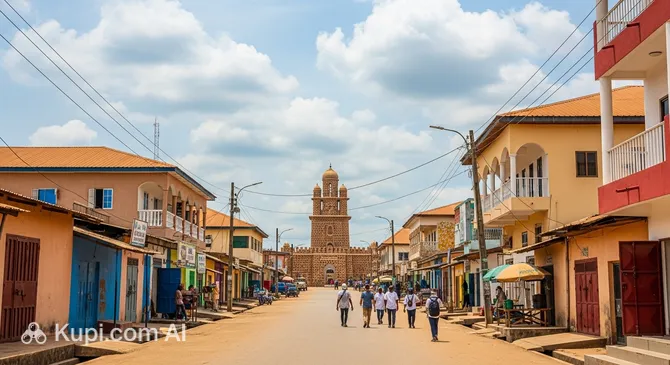
Iwo is a unique window into traditional Yoruba culture, located in Osun State in southwestern Nigeria. Spread across scenic hills at the transition zone from dense forests to savanna, the city possesses the special atmosphere of an ancient kingdom. As an important administrative and cultural center, Iwo preserves the spirit of provincial Africa, where centuries-old traditions are closely interwoven with the daily lives of its more than 250,000 residents.
Iwo. Illustration.
Source: Kupi.com AI
The rich heritage of this place dates back centuries, and the city's history is inextricably linked to the ancient state of Ile-Ife. From the time of its founding between the 14th and 17th centuries, Iwo served as the capital of an influential kingdom led by a monarch known as the Oluwo. Today, it attracts those seeking authenticity and wanting to see Nigeria as it truly is, immersing themselves in the customs and traditions of one of West Africa's most populous ethnic groups.
While Iwo is not a typical tourist resort with developed infrastructure, it charms visitors with its distinct identity. Visitors can expect traditional markets, craft workshops, and the majestic royal residence. A trip here is an invitation to explore the true Yoruba civilization and get to know its rhythm and the hospitality of the local people.
Weather Overview
The climate in Iwo is typical of tropical regions in West Africa: warmth and high humidity prevail throughout the year. The city is situated at the junction of the forest zone and the savanna, which defines a clear division into dry and wet seasons. You can check the current weather forecast for Iwo before planning your trip to choose the most comfortable time for a visit.
The dry season lasts from November to February, when hot weather sets in with minimal precipitation. During this time, average maximum temperatures often reach +35°C...+36°C, while nights bring some relief with temperatures around +22°C. The rainy season begins in March and reaches its peak between June and October. During these months, expect frequent but refreshing downpours that make the surrounding nature incredibly green and lush.
It is important to keep in mind that Iwo is located in a hilly area, which, however, does not provide much relief from the tropical heat. In the wettest months, such as August and September, rainfall can reach 180 mm per month, and the sky is often overcast. For a comfortable stay at any time of year, it is recommended to bring lightweight cotton clothing and always have a supply of drinking water on hand.
Average monthly temperature
Average monthly precipitation
Interesting Facts
Iwo is considered the cradle of Islamic justice in the region: it was here that the first Sharia court in Nigeria was established.
According to legend, the people of Iwo migrated from the legendary city of Ile-Ife as early as the 11th century, making them some of the oldest inhabitants of these lands.
The city's king, bearing the title Oluwo of Iwoland, is a first-class ruler who oversees more than 30 other ancient regional kings.
For centuries, the city has been famous for its traditional weaving and the art of dyeing cotton with natural indigo—a craft that still flourishes here today.
Iwo is located on an ecological boundary: it is a meeting point for humid tropical forests and vast savannas, which defines the unique landscape of its surroundings.
How to Get There
The accessibility of Iwo is largely determined by its location at the crossroads of routes between the largest cities of southwestern Nigeria. The city is connected by a network of roads to Oyo, Ogbomosho, and Ibadan, making it a convenient stop during a journey through Osun State. You can find more details on how to reach this region, keeping local traffic conditions in mind.
There is no direct air service to Iwo, as the city does not have its own airport. The nearest air hubs are located in major neighboring cities. Travelers usually fly into Lagos or Ibadan and then continue their journey by land transport. When planning your flight, consider available options to the closest regions.
Rail travel is an interesting and historic way to reach these parts. The city itself is located about 10 kilometers north of Iwo Railway Station, which is situated on the important Lagos–Kano main line. Trains in Nigeria are gradually being modernized, offering tourists a chance to see the country's changing landscapes from a carriage window, though schedules should be checked in advance.
Station
Passenger traffic
Distance
Train Station Ibadan
1
43 km
Lagos Terminus Railway Station
5
156 km
Lagos Terminus Railway Station
5
156 km
For travel from neighboring cities like Ibadan, a car or intercity bus is the most practical option. A car journey takes about 1.5–2 hours, while a bus from Lagos can take between 4 to 6 hours. When planning your trip, it is important to account for road conditions and potential delays due to peak-hour traffic.
Main Attractions
The main pride and central heart of the city is the Oluwo's Palace. This residence of the traditional monarch of Iwoland serves not just as the king's home but as a living monument to the Yoruba political system. Visiting the palace allows you to experience ancient governance protocols and see how the monarchy is integrated into the region's modern life. The architecture of the complex and its interior decoration reflect the kingdom's centuries-old grandeur.
For those interested in religious history, Iwo offers the unique opportunity to see the first mosque in Yoruba land, built back in the mid-17th century. This structure bears witness to the long and deep influence of Islam in the region. The architectural style of the city's old quarters, with their dense layout and traditional houses, also deserves attention, creating a unique labyrinth where one can wander for hours observing local craftsmen at work.
Of special value to cultural researchers is Iwo's status as a center for the preservation of Yoruba traditions. There are no standard tourist attractions here, but every market and square can become a stage for a spontaneous celebration or ceremony. Immersing yourself in the city's daily life, talking with the keepers of its history, and observing traditional rituals makes a trip to Iwo a truly deep and educational experience.
Local Cuisine
A gastronomic journey to Iwo is an introduction to the hearty and aromatic cuisine of the Yoruba people. The local diet is based on the region's agricultural wealth: yams, cassava, corn, and an abundance of tropical vegetables. The main dish accompanying almost every meal is fufu or iyan (pounded yam), which is served with various thick soups and sauces.
It is definitely worth trying the local palm oil-based soups, seasoned with traditional spices and complemented by fish or meat. Corn cakes and porridges also hold an important place on the tables of Iwo residents. The flavor palette of local food is often quite spicy, which is characteristic of Nigerian cuisine in general, but this is exactly what gives the dishes their unique character.
The food culture in the city is closely linked to markets and street vendors. This is where you can experience the true taste of Iwo by buying freshly prepared snacks straight from the fire. For drinks, locals often prefer fresh palm wine or traditional herbal decoctions, which are believed to have medicinal properties. While the city lacks fine dining restaurants, the sincerity and authenticity of the local culinary traditions will leave a lasting impression.
Travel Tips
A trip to Iwo is a unique chance to see Nigeria from its most sincere and traditional side. To make your journey comfortable and leave only pleasant memories, we have prepared a few practical tips.
Clothing and Essentials: Choose lightweight clothing made of natural fabrics, as it is hot and humid in Iwo. Don't forget comfortable closed-toe shoes for walking through markets and sunglasses. If you plan to visit the palace or religious sites, choose a modest outfit that covers your shoulders and knees.
Transport: The best way to get around the city is by motorcycle taxi or by hiring a private driver. Always agree on the price before starting the trip, as there are no meters here.
Finance: Make sure to carry a sufficient supply of cash in Nigerian naira. Cards are very rarely accepted, and ATMs may be unavailable or may not accept international cards.
Health: Use insect repellents and drink only bottled water. It is recommended to consult a doctor regarding malaria prevention before your trip.
Communication: The official language is English, but locals speak Yoruba. Knowing a few simple phrases in the local language ("E nle" is a greeting) will help you quickly win people over.
Etiquette: The Yoruba highly value politeness. Always say hello before asking for anything. Respect for elders and traditional leaders (such as the Oluwo) is mandatory.
Safety: Avoid moving around the city at night. Try not to display valuables or expensive equipment in crowded places.
Connectivity: For stable internet, it's better to purchase a local SIM card (MTN or Airtel) immediately upon arrival in the country, as Wi-Fi in Iwo hotels can be unreliable.
May your introduction to the ancient kingdom be filled with discoveries and vibrant emotions. Following these simple rules will help you feel confident in the heart of Yoruba culture!
Entertainment & Nightlife
Entertainment in Iwo is primarily cultural and communal in nature. You won't find noisy nightclubs or modern cinemas here; the city's life follows a calmer and more traditional rhythm. The main source of vibrant impressions is the colorful festivals and religious holidays, during which the streets fill with music, dancing, and traditional attire, creating a unique festive atmosphere.
The city's nightlife is concentrated in small bars at local hotels and guesthouses. These are places where you can spend an evening in a quiet setting, try local drinks, and chat with residents. After dark, Iwo grows quiet, and most establishments close quite early, so tourists are encouraged to plan their leisure activities for the daylight hours.
For more dynamic entertainment and modern recreation, travelers usually head to nearby major centers. For example, just a 1.5 to 2-hour drive away is Ibadan—a massive metropolis with museums, theaters, shopping malls, and an active club scene. Iwo, meanwhile, remains a quiet haven, ideal for those wanting a break from the hustle and bustle of big cities.
Parks & Museums
There are no traditional museums in Iwo in the Western sense, but the entire city can be considered an open-air museum. The primary keeper of history is the Oluwo's Palace. Here, amidst ancient walls and artifacts of royal power, visitors can learn about the origins of the Yoruba people, the migration from Ile-Ife, and the development of the Iwo Kingdom. This place stands in for any gallery, offering a living connection with ancestral heritage.
The city's natural areas and parks are represented mainly by natural landscapes. Iwo is situated on hills, and walks on its outskirts reveal views of the savanna transition zone. While there are no landscaped parks with walkways here, the surrounding nature and agricultural lands, where cocoa and cotton are grown, provide a wonderful insight into the region's agricultural wealth and ecology.
For those who want to see classic museum exhibits, a short trip to nearby Ile-Ife (about 50 km from Iwo) is recommended. Ile-Ife is considered the spiritual center of the Yoruba and possesses rich museum collections, including the famous bronze and terracotta heads. The combination of Iwo's authenticity and the cultural wealth of neighboring centers will provide a complete picture of the history of this amazing region.
Getting Around
The transportation system in Iwo is characterized by simplicity and focus on the needs of local residents. There is no centralized municipal transport such as a metro or trams. The main way of moving around the city and beyond its limits is by buses and shared taxis. They connect Iwo with nearby villages and major cities in the region, serving as an affordable and popular mode of transport.
Within the city itself, the most mobile means of transportation are motorcycles (known in Nigeria as "okada") and private cars. Motorcyclists can take you anywhere in the city for a small fee, which is especially convenient in the narrow streets of the old quarters. It is important to remember that fixed tariffs often do not exist, so the price of the trip must be agreed upon in advance before you get on the vehicle.
Road conditions in Iwo vary in quality: the main highways are in acceptable condition, but secondary roads can be difficult to navigate, especially during the rainy season. Walking through the city center is also possible and allows for a better look at local architectural details, though the hot weather should be taken into account. For tourists, the optimal option is to hire a driver for the whole day or use the services of trusted local taxis.
Accommodation
The hotel sector in Iwo is primarily oriented toward local business and travelers who value simplicity and functionality. Here you will find small private hotels and guesthouses offering a basic set of amenities. Luxury chain hotels are absent from the city, so be prepared for a modest but hospitable welcome at local establishments.
Most available accommodation options are concentrated in the central part of the city or along the main roads, which is convenient for quick access to markets and administrative buildings. When choosing a place to stay, it is recommended to check for a generator (for stable electricity) and air conditioning, as the climate in the region can be quite hot and humid.
Since the tourist flow to Iwo is relatively small, international online booking systems may not show all available options. Often, the best way to find accommodation is through local contacts or by choosing a hotel upon arrival. However, if you plan to visit during major traditional festivals, you should arrange your accommodation in advance, as the city can become crowded with guests from neighboring states.
Nearby Cities
Thanks to its location, Iwo can serve as a convenient base for short trips to the most significant cities in southwestern Nigeria. The surrounding areas are rich in historical sites and cultural centers, each revealing the grandeur of the Yoruba civilization in its own way. Exploring the neighboring territories will add new layers to your travel experience.
Just 30 kilometers away is Ede, and a bit further lies the legendary city of Osogbo, famous for its Osun-Osogbo Sacred Grove, a UNESCO World Heritage Site. If you are looking for scale and modern rhythms, head to Ibadan, which is one of the country's largest metropolises. Also of interest are smaller towns like Ipetumodu and Ilobu, which maintain a traditional way of life.
Travel between these cities is usually done by car or shared taxi, allowing you to see several iconic sites in the region in a single day. We recommend not limiting yourself to just one city but exploring the entire network of historical settlements in Osun State to fully feel the spirit of this part of Africa.
Shopping & Souvenirs
Shopping in Iwo is primarily an immersion into the atmosphere of traditional African markets. The city has no large shopping malls with glass storefronts, but it has noisy and colorful bazaars where life is in full swing from early morning. The city's main market is its commercial heart: you can find everything here, from fresh tropical fruits and spices to household items and handicrafts.
Tourists should pay special attention to local textiles. Iwo is famous for its masters of weaving and fabric dyeing. Traditional cloths dyed with natural indigo make a wonderful and unique souvenir. You can also find wooden crafts, woven baskets, and traditional jewelry in the markets, all handmade by local artisans using ancient techniques.
Shops and stalls in Iwo generally operate from morning until sunset. Payment is made primarily in cash using the local currency (naira), as bank cards are rarely accepted and only at very large points. Trading in the market is part of the local culture, so don't be afraid to politely negotiate with the vendor; this will help you not only save money but also better understand the local rhythm of communication.