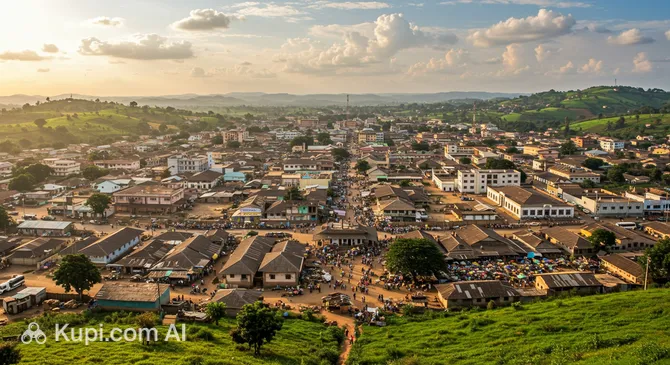
Located in the southwestern part of Nigeria, the city of Ondo is the second most significant and populous center in Ondo State after Akure. It is a dynamic urban hub deeply rooted in the traditions of Yorubaland—the historical and cultural region of the Yoruba people. With a population exceeding half a million, the city thrives on the rhythm of bustling trade and administrative activity, offering guests an authentic glimpse into modern West African life.
Geographically, Ondo occupies the flat landscapes characteristic of the region's tropical belt. Ondo. Illustration.
Source: Kupi.com AI
The city does not position itself as an elite resort; however, its uniqueness lies in its genuine atmosphere: dense development, noisy markets, and steady traffic flows create a portrait of a real medium-sized Nigerian metropolis. Exploring the city's historical heritage, one can trace its path from a traditional settlement to a major commercial center.
Among Ondo's key features are its role in the regional economy and its preservation of Yoruba cultural codes. Despite a minimal number of standard tourist attractions, the city attracts those seeking to immerse themselves in the country's daily reality, see traditional residential architecture, and feel the energy of local markets. We invite you to discover this distinctive corner of Nigeria to better understand the multifaceted character of the state.
Weather Overview
The city of Ondo is located in a typical tropical climate zone, characteristic of southwestern Nigeria. It experiences high humidity and consistently warm temperatures throughout the year, which usually range from 25°C to 30°C. Travelers should account for the sharp seasonal shifts: the rainy season, with heavy downpours, lasts from April to October, while the dry period sets in from November to March.
A special climatic feature of the region is the Harmattan period, occurring during the winter months. During this time, northern winds from the Sahara bring dry air and fine dust to Ondo, which can reduce visibility and affect air quality. The hottest days usually fall in February and March, when the thermometer can rise to 35°C. To better prepare for your trip, we recommend checking the detailed city climate by month.
Average monthly temperature
Average monthly precipitation
Interesting Facts
Dynamic Growth: The population of Ondo is showing remarkable growth rates—since 1950, the number of residents has increased from 31,000 to over 528,000 people.
Regional Giant: Ondo ranks as the 20th most populous city in Nigeria and is the second largest in its state.
Heart of Yorubaland: The city is considered one of the key cultural strongholds of the Yoruba people, preserving the unique traditions and social structure of this ancient African ethnic group.
Oil Region: Although the city itself is not an industrial center, Ondo State, where it is located, accounts for about 12% of all oil and gas production in Nigeria.
How to Get There
The city of Ondo is integrated into the transport network of southwestern Nigeria, although reaching it directly from other countries can be difficult. The primary link for travelers is the road network, specifically the A122 federal highway. To plan your route and choose the best transport, we recommend researching how to get to the city in advance, keeping local traffic conditions in mind.
The nearest aviation hub is the airport in Akure, about an hour's drive from Ondo. However, most international travelers arrive at Murtala Muhammed Airport in Lagos. The journey from Lagos to Ondo by bus or taxi can take between 5 to 8 hours, depending on Nigeria's famous traffic jams and road conditions. Popular interstate bus carriers include companies like GUO Transport.
Railway service is virtually non-existent in this part of the state, so buses, shuttle taxis, and private cars remain the only options. Within the city and for trips from neighboring regions, "danfos" (minibuses) are actively used. When planning a trip from major cities like Benin City or Ibadan, it is best to leave in the morning hours to minimize time spent in congestion.
Station
Passenger traffic
Distance
Train Station Ibadan
1
150 km
Alfred Rewane Station
1
176 km
Lagos Terminus Railway Station
5
201 km
Lagos Terminus Railway Station
5
201 km
Enugu Railway Station
1
265 km
Main Attractions
The city of Ondo is primarily a living space where the main attractions are not world-renowned museums, but the everyday life and culture of the locals. The central point of attraction here is the Ondo Main Market. It is a true labyrinth of colors and sounds where you can find a vast variety of goods: from traditional fabrics to exotic spices. A visit to the market allows tourists to experience the spirit of Yorubaland and get acquainted with local trading traditions.
The city's architectural face is shaped by administrative buildings and public squares that serve as important landmarks for residents. While there are no massive historical monuments in Ondo, a walk through its central quarters reveals the traditional layout of Nigerian cities. Commercial zones with modern shopping areas contrast with residential clusters, creating a layered image of a developing urban center.
For those interested in Yoruba culture, Ondo serves as an excellent base for exploring the region. The primary interest here lies not in static objects but in the dynamic street life and architectural nuances that reflect local history. Interacting with residents and visiting local neighborhoods provides a deeper understanding of the social structure of modern Nigeria.
Local Cuisine
A gastronomic journey in Ondo is an introduction to the bold flavors of Yorubaland. The basis of the local diet consists of yam and cassava dishes. You should definitely try pounded yam or amala—a dense dough served with various thick soups. The cuisine here is characterized by the bold use of spices and chili peppers, giving the dishes a characteristically spicy kick.
Among the popular soups are egusi (made from melon seeds with leafy greens) and efo riro—a rich vegetable stew with meat or fish. For street food lovers, Ondo offers many options: from fried plantains to spicy "suya" skewers. The main local drink is palm wine (emu), which has a unique sweetish taste, as well as freshly squeezed tropical fruit juices.
The food culture in the city centers around markets and small street diners called buka. It is in these places, where the locals themselves dine, that you can find the most authentic and fresh food. Despite the lack of English menus in many establishments, the hospitality of local cooks will help you find your way and choose a dish to your liking. Hotel restaurants offer a more familiar environment, but for a true immersion, it's worth visiting local cafes in the city center.
Travel Tips
A visit to Ondo is an opportunity to see the real Nigeria without any tourist frills. To ensure your trip is comfortable and safe, we have prepared some practical tips.
Clothing and Essentials: Choose clothing made of light, natural fabrics, as humidity in the region is high. During the dry season (November to March), sunglasses and scarves are essential—the northern Harmattan wind brings a lot of dust from the Sahara. When visiting traditional neighborhoods, modest dress is recommended.
Transport: For moving around the city, it is better to use official taxis or hail cars through apps if available. Avoid motorcycle taxi rides after dark and always allow an extra hour for traffic.
Finances: The main currency is the Nigerian Naira. Cards are rarely accepted, only in major hotels, so always have a cash reserve. There are ATMs in Ondo, but they do not always work reliably with international cards.
Health and Safety: A yellow fever vaccination certificate is mandatory. Drink only bottled water and avoid ice in drinks. In crowded places like markets, keep a close eye on your personal belongings.
Communication: The official language is English, but locals more frequently communicate in Yoruba or Nigerian Pidgin. Knowing a few phrases in Yoruba, such as "E nle" (a greeting), will win you genuine favor from the residents.
Local Etiquette: The Yoruba place great importance on politeness. Greeting is an important ritual; always say hello first before asking for anything. Respect for elders is the foundation of local etiquette.
What to Avoid: Do not photograph government buildings, security-sensitive sites, or people without their explicit consent. Avoid visiting informal settlements on the outskirts of the city alone.
Additional Tip: Plan your errands for the morning—after noon, the heat and traffic in central Ondo become most intense.
May your introduction to this colorful city be filled with interesting discoveries and pleasant encounters!
Entertainment & Nightlife
Entertainment in the city of Ondo is predominantly local in character, as the tourist infrastructure is still in its developmental stages. Daytime activity is concentrated around markets and shopping areas where life is in full swing and spontaneous street performances often occur. For those seeking cultural leisure, local Yoruba festivals are the most interesting highlights, occasionally turning the city streets into vibrant festive venues.
Nightlife in Ondo itself is relatively quiet; the city center winds down quite early, and venues with loud music and dance floors are rare. Local youth and fans of a club atmosphere often prefer to travel to nearby Akure, where the choice of bars and late-night restaurants is significantly wider. Nevertheless, one can find cozy local cafes and hotel bars in Ondo where residents gather for a relaxed evening.
When planning evening leisure, tourists should consider safety and transport logistics. It is recommended to use trusted taxi services and avoid walking in poorly lit areas on the outskirts. Overall, a stay in Ondo is an opportunity to enjoy the slow-paced rhythm of a provincial Nigerian city, observing its life from small street establishments.
Parks & Museums
There are no major state museums in the city of Ondo; however, the urban environment itself can be described as a living museum of Yoruba culture. Traditions and history are passed down here not through display cases, but through the lifestyle, market trade, and social interaction. The absence of classic galleries is compensated for by the vibrant street life and architectural details of the old quarters that hold the memory of the region's development.
Park areas and designated recreation spots in Ondo are rare, which is typical for densely built-up Nigerian cities. The primary open spaces are the squares near markets and administrative buildings where residents gather to socialize. Despite the shortage of extensive green spaces, shady corners can be found in some districts, offering a brief respite from the city's hustle and bustle.
For tourists seeking natural serenity or organized exhibitions, a visit to Ondo can be a reason to more closely study local ecology and urban planning. The cultural experience here is built on observing how residents adapt the space to their needs, creating a unique atmosphere where every alley and market stall can tell its own story.
Getting Around
The public transport system in Ondo is characterized by its chaotic and highly dynamic nature, typical of many large cities in Nigeria. The main mode of travel for most residents is brightly painted minibuses known as danfo. They ply the main city arteries but do not have a strict schedule, departing once they are filled with passengers.
For faster and more maneuverable trips over short distances, tourists often choose okada—motorcycle taxis—or their three-wheeled counterparts, motor rickshaws. This transport is particularly convenient during peak hours when the city center is gripped by traffic jams, and moving by car can take up to an hour for every 10 kilometers. However, it should be remembered that okada rides require caution due to the heavy traffic.
Payment for city transport is made only in cash directly to the driver or conductor; fixed passes or transport cards do not exist. Travelers are advised to plan their trips for the morning hours and always carry small denominations of cash. Despite the lack of a metro or trams, Ondo's transport network allows you to reach almost any point in the city if you are ready for a noisy and colorful experience of local logistics.
Accommodation
The hotel sector in Ondo is primarily geared towards business travelers and locals, so the choice of classic tourist hotels is limited. Nevertheless, visitors can find decent mid-range accommodation options. Small private hotels and guest houses predominate, offering a basic level of comfort at reasonable prices.
Most available housing options are concentrated in the central areas and near major markets, which is convenient for transport accessibility. The cost of a standard room usually ranges from $20 to $50 per night. For those planning to stay in Ondo for a longer period, renting apartments or guesthouses from locals is a popular option.
It is recommended to book accommodation in Ondo in advance, especially if your trip coincides with local holidays or major market days. When choosing a hotel, pay attention to the presence of its own security system and backup power generators, which are essential factors for a comfortable stay in Nigerian cities.
Nearby Cities
The city of Ondo serves as an excellent starting point for exploring the southwestern region of Nigeria, where important cultural and administrative centers of the state are located within a couple of hours' drive. Traveling around the surrounding areas will allow you to see a fuller picture of life in Yorubaland, from modern metropolises to historical settlements with ancient traditions.
Just 38 kilometers away is Akure, the state capital, where people often go for a wider choice of entertainment and services. Another interesting destination is the ancient city of Owo, known for its historical ties to the Benin Kingdom and unique archaeological finds. For those ready for a slightly longer trip, the road is open to the majestic Benin City, the capital of Edo State, famous for its bronzes and the rich history of the Benin Empire.
Exploring nearby towns such as Ipele or Ado-Ekiti will offer many new experiences. The region's roads connect various ethnic groups and natural landscapes, making every day trip from Ondo a small adventure in the heart of West Africa.
Shopping & Souvenirs
Shopping in Ondo primarily involves visiting traditional markets, which are the heart of the city's economy. The city does not have large Western-style shopping malls, but in return, it offers a unique experience of lively trade. The main shopping destination is Central Market Ondo, where you can find almost everything in endless rows: from food to household items.
If you are looking for authentic souvenirs, look for the works of local Yoruba craftsmen. Especially prized are traditional fabrics such as Aso Oke, as well as wooden masks and bead jewelry reflecting the region's rich mythology. The market is also famous for its huge selection of local spices and ingredients for traditional cuisine, which make excellent gifts for food enthusiasts.
Most shops and market stalls operate from early morning until sunset. Payment is mainly made in cash in the local currency (Naira), so tourists should ensure they have small bills ready. In Ondo, it is customary to haggle—this is not just a way to lower the price, but an important part of social interaction that turns a simple purchase into an engaging process of communication.