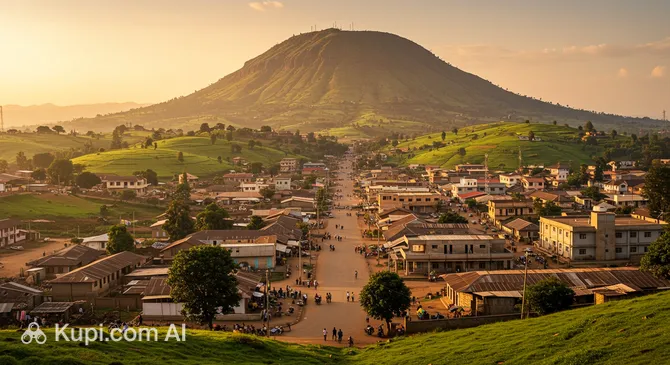
Ikare (also known as Ikare-Akoko) is a vibrant city located in Ondo State in southwestern Nigeria. Nestled among picturesque hills at an altitude of about 455 meters above sea level, it serves as an important administrative and economic center for the Akoko North-East region. The city has a unique atmosphere where traditional Yoruba culture blends harmoniously with the modern rhythm of commercial life.
Ikare's geographical location makes it a strategic hub connecting various parts of the country. The city's population has shown dynamic growth, exceeding one million people, transforming it into a bustling hive of activity. Here, you can witness a striking architectural contrast: ancient mud-brick buildings stand alongside colonial-era concrete structures and modern developments.
Ikare. Illustration.
Source: Kupi.com AI
The rich history of Ikare is rooted in the migrations of the Yoruba people from the sacred city of Ile-Ife. Its status as a city-state under the rule of the traditional monarch, the Olukare, has left a lasting impression on the local way of life, making Ikare a place where ancient customs are still deeply revered. A visit to this city is an invitation to immerse yourself in authentic Nigerian life, discover local crafts, and enjoy the hospitality of the people from this hilly region.
Weather Overview
The city of Ikare is characterized by a typical tropical climate of southwestern Nigeria, with clearly defined dry and rainy seasons. High humidity and consistently high temperatures persist throughout the year. Average daytime temperatures usually fluctuate between +25°C... +29°C, although in the hottest months, such as February and March, the thermometer can rise to +35°C.
Expect hot and dry weather from November to March — this is an ideal time for visiting the hills and taking walks. Conversely, from April to October, the season of heavy rainfall arrives. The peak of the rains usually occurs in June and September, when downpours become almost daily, providing life-giving moisture for the region's agriculture. Even during the rainy period, the temperature rarely drops below +20°C at night.
For planning a comfortable journey, it is important to consider the weather in the city, especially if you plan on active walks in the surrounding hills. High humidity can make the heat feel more intense, so tourists are advised to always carry a supply of drinking water and wear clothing made of light, natural fabrics.
Average monthly temperature
Average monthly precipitation
Interesting Facts
The city of Ikare was founded by settlers from the legendary city of Ile-Ife, which is considered the cradle of Yoruba civilization.
Due to its location at the intersection of important trade routes, Ikare has for centuries been a key center for the trade of cocoa beans, yams, and palm oil.
The city's architecture is an eclectic mix, where traditional mud-brick houses stand alongside modern buildings made of concrete and glass.
Ikare is the administrative headquarters of the Akoko North-East local government area, highlighting its significance in the governance of Ondo State.
Over the past decades, the city has shown impressive demographic growth, becoming one of the most dynamically developing settlements in the region.
How to Get There
The most convenient way to reach Ikare is by land, as it is well-integrated into the developed road network of Ondo State. The city is located approximately 240 kilometers southwest of the capital, Abuja, and just 60 kilometers from the state capital, Akure. Good transport links and detailed information on how to get to Ikare make trip planning relatively simple for travelers.
The nearest airport to Ikare is located in Akure. From this airport, you can continue your journey by bus or taxi, which takes about an hour and a half along the region's scenic roads. Ikare is an important transport hub, so many intercity routes pass through it, connecting the northern and southern regions of Nigeria.
For trips from more distant centers like Lagos or Abuja, it is recommended to use the services of major transport companies that organize regular trips in comfortable buses. Within the city itself, the main flow of passengers is served by local taxis and minibuses, ensuring mobility for both locals and tourists within the state.
Station
Passenger traffic
Distance
Train Station Ibadan
1
209 km
Enugu Railway Station
1
225 km
Alfred Rewane Station
1
227 km
Amina Mohammed Train Station
1
242 km
Minna Railway Station
1
246 km
Main Attractions
One of the city's most stunning natural gems is the majestic Oke-Mari Hills. These natural elevations attract outdoor enthusiasts and hikers. Upon reaching the summit, travelers can enjoy breathtaking panoramic views of the city sprawling below and the surrounding lush green landscapes of Ondo State. The hills create an atmosphere of tranquility that contrasts sharply with the bustling commercial streets.
For those who want to experience the authentic spirit of the Yoruba people, the traditional markets of Ikare are a must-visit. These are not just places for trade but true cultural hubs where life is in full swing. Here, you can observe daily social rituals, meet local artisans, and purchase unique goods that have been produced in the region for centuries. The markets reflect the city's long history as a vital node on trade routes.
The city's architectural heritage is also of great interest to tourists. While walking through the center, it is worth noting the traditional residential quarters and the residence of the local ruler. The combination of old mud-brick houses and later colonial buildings tells the story of Ikare's development from a small settlement to a major economic center. A journey here is perfect for ethnographers and those seeking authentic experiences away from well-trodden tourist paths.
Local Cuisine
The gastronomic scene in Ikare is inextricably linked to the rich agricultural traditions of Ondo State. The local diet is based on products grown on the region's fertile lands: yam, cassava, corn, and rice. The main specialty you must try is fufu — a thick paste made from cassava or yam, traditionally served with a variety of aromatic sauces and soups seasoned with palm oil and local spices.
Cocoa beans play a special role in Ikare's cuisine, as the region is one of the largest cocoa producers in the country. You can find interesting dishes and desserts using this ingredient. Also popular are dishes made with pumpkin and okra, which give local soups a unique texture and flavor. Fans of spicy food will enjoy meat snacks cooked over an open fire with the addition of chili peppers.
The city's food culture is centered around traditional markets. This is where you can find the freshest street food and taste authentic Yoruba recipes. For drinks, locals prefer refreshing palm wine, tapped from local palm trees, as well as freshly squeezed juices from tropical fruits. Visiting local market stalls will not only satisfy your hunger but also allow you to immerse yourself in the lively gastronomic atmosphere of Ikare.
Travel Tips
Preparing for your trip to Ikare will help you fully enjoy the authentic Yoruba culture and avoid minor inconveniences. Here are some practical tips from experienced travelers for a comfortable visit.
Clothing and Essentials: Choose lightweight clothing made from natural fabrics, as tropical heat prevails in the region. Be sure to bring sunglasses, a hat, and an umbrella if your trip falls during the rainy season. When visiting traditional communities, try to dress modestly out of respect for local customs.
Transport: To move around the city, it is most convenient to use taxis or motorized rickshaws. Always agree on the price of the trip in advance, as there are no meters in the vehicles. If you plan to travel to neighboring cities, choose major transport companies in Akure.
Finances: The official currency is the Nigerian Naira. Always carry a sufficient supply of cash, as bank cards are only accepted in very large establishments, and ATMs may be unavailable or may not accept international cards.
Health and Safety: Drink only bottled water and avoid ice in drinks. It is recommended to use insect repellent. After dark, it is better to avoid walking in unfamiliar outskirts and stick to crowded, well-lit areas.
Communication: The primary language is Yoruba, but English is widely spoken, especially among young people and traders. Learn a few phrases in Yoruba (for example, "E nlo" — hello) — it greatly endears you to the locals.
Local Etiquette: Greeting is an important part of the culture. Always greet people before asking for anything. Asking for permission before taking photos of locals or their homes is considered a matter of good manners.
What to Avoid: Do not discuss political or sensitive social topics with strangers. Also, try not to point at people or objects with your index finger, as this can be perceived as rude.
Dining Tip: Be sure to try yam dishes at the local markets, but choose stalls where the food is prepared in front of you — this guarantees the freshness of the product.
Ikare will welcome you with its energy and warmth if you are open to new experiences and treat its centuries-old traditions with respect. Have a pleasant trip!
Entertainment & Nightlife
Entertainment in Ikare is primarily low-key and cultural, closely tied to local traditions and the way of life. Unlike major metropolises, you won't find an abundance of nightclubs with loud music until dawn; however, the city offers other ways to spend your time interestingly. The main centers of social life remain the local markets and squares, where community gatherings and spontaneous celebrations reflecting the rich Yoruba heritage often take place.
Daytime leisure for tourists is mostly centered around natural sites. Walking along the slopes of the Oke-Mari Hills is a popular activity for both locals and visitors. It is an excellent spot for quiet picnics and contemplative relaxation in the heart of nature. After sunset, life in Ikare slows down, and the primary entertainment shifts to cozy local cafes and restaurants where you can enjoy traditional music in an informal setting.
Safety in the city is maintained at a good level, but for evening walks, it is recommended to stick to central, well-lit streets. For moving between venues, it is best to use taxis or motorized rickshaws, which operate until late evening. A visit to Ikare is a rare chance to take a break from the hustle and bustle and immerse yourself in the atmosphere of authentic Nigeria, where the main entertainment is genuine interaction with the hospitable townspeople.
Parks & Museums
The main natural recreation area in Ikare is the Oke-Mari Hills. These elevations serve as the city's parks, providing a natural space for walks, meditation, and gatherings. The picturesque slopes and panoramic viewpoints make the hills an ideal place for those who want to enjoy silence and fresh air. This is the heart of the city's natural landscape, where people come for inspiration and beautiful photographs.
While there are currently no major state museums in Ikare, the city's cultural heritage is presented in an informal way. Traditional markets and community centers serve as living exhibitions of Yoruba history. Here, you can observe ancient methods of textile processing, wood carving, and other crafts whose secrets are passed down from generation to generation. Such immersion in the environment often proves more educational than visiting a classic gallery.
For those interested in history more deeply, Ikare offers an exploration of its architectural environment, which is itself an open-air museum. Old buildings in the historic part of the city reflect the region's development path from ancient migrations to the present day. The absence of formal museum walls is compensated for by the sincerity and accessibility of the living history found on every street of this hospitable city.
Getting Around
The transport system of Ikare reflects its role as an important trading hub in Ondo State. The main types of public transport here are taxis and minibuses (danfo), which run on city routes and connect Ikare with neighboring settlements. Thanks to the intersection of several regional roads, it is easy to travel in any direction from the city.
For quick trips over short distances, locals and tourists actively use motorized rickshaws (keke napep) and motorcycle taxis. This is the most maneuverable type of transport, allowing for easy movement through busy streets and market squares. There are usually no fixed schedules in the conventional sense — transport departs as it fills up, which is a typical practice for the region.
Fares are paid in cash to the driver or conductor before the journey begins. Fares are very affordable, but foreign tourists are advised to confirm the price in advance. Travelers should keep in mind that the main transport hubs are concentrated near the markets. If you are planning a long-distance trip, it is best to arrive at the motor park in the morning hours when the choice of routes is at its maximum.
Accommodation
Accommodation options in Ikare are mainly geared towards travelers who value simplicity and authenticity. The city offers a choice of small guest houses and local inns that provide basic comfort. Most of these establishments are concentrated near the administrative center and main commercial streets, which is convenient for those visiting the city for business or to explore the local markets.
For tourists seeking a higher level of service and a wider range of amenities, it is recommended to consider staying in the neighboring large city of Akure. There, you can find mid-range hotels and modern hotel complexes. Many travelers prefer to stay in Akure and visit Ikare for day trips, given the short distance between the cities.
If you plan to stay specifically in Ikare, it is advisable to book accommodation in advance, especially during local festivals or major market days. The price range in the city is very affordable, making it accessible for budget travelers. Most local hotels accept payment in cash in the national currency, so it is important to ensure you have the necessary amount upon check-in.
Nearby Cities
Due to its location at a commercial crossroads, Ikare serves as an excellent starting point for exploring other interesting corners of Ondo State and neighboring regions. The city's surroundings are rich in historical settlements, each possessing its own unique character and cultural heritage.
One of the most attractive destinations for a trip is the city of Owo, located just 41 kilometers away. It is famous for its rich artistic heritage and historical significance as the center of an ancient kingdom. It is also worth visiting the city of Okene, which is a bit further away but impresses with its landscapes and traditions. For a short trip, Ipele is ideal, where you can get acquainted with the lifestyle of small Nigerian communities.
Exploring nearby cities will allow you to form a more complete picture of life in southwestern Nigeria. Travel between these points usually doesn't take much time and opens doors for tourists into a world of ancient kingdoms, traditional crafts, and the stunning nature of tropical Africa.
Shopping & Souvenirs
Shopping in Ikare is, above all, a colorful and bustling adventure in traditional African markets. The city is renowned as a major trading hub, so the range of goods here is impressive. The primary "souvenirs" from this region are high-quality agricultural products: natural cocoa, aromatic palm oil, and yam tubers. These products are the pride of local farmers and make excellent gifts for lovers of culinary experiments.
Beyond food, you can find stunning traditional Yoruba fabrics at the local bazaars. Local artisans create clothing with bright patterns that carry deep symbolism. It is also worth paying attention to traditional crafts: woven baskets, wooden utensils, and handmade leather accessories. There are no huge Western-style shopping malls in the city, but it is the markets that allow for truly authentic purchases.
Shops and stalls usually operate from early morning until sunset. When planning your shopping, keep in mind that the main method of payment is cash in the local currency (Nigerian Naira). In the markets, the ability to bargain is common and even welcomed — it is part of the local culture that allows you not only to save money but also to strike up a friendly conversation with the seller. Visiting the market stalls of Ikare will give you not just purchases, but also unforgettable emotions from interacting with the locals.