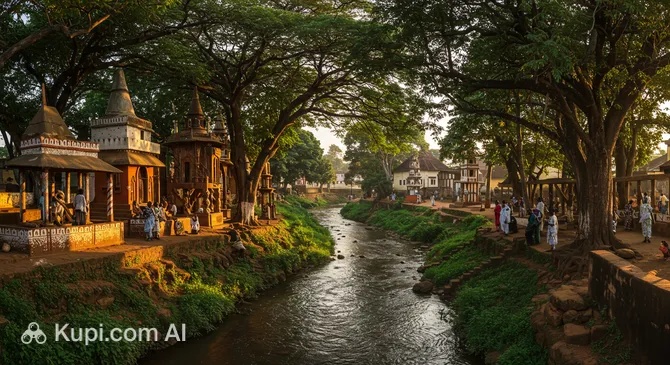
Oshogbo is a dynamic and authentic administrative center of Osun State, located in the southwestern part of Nigeria. Stretched along the banks of the sacred Osun River, the city serves as a vital trading hub for a thriving agricultural region. Life here is bustling: local markets trade yam, cotton, and tobacco, and the city's population is estimated to reach 731,000 people, creating the atmosphere of a true mid-sized African metropolis.
Osogbo. Illustration.
Source: Kupi.com AI
The city's uniqueness lies in its deep connection to the traditions of the Yoruba people. In the history of Oshogbo, spiritual heritage plays a key role, harmoniously coexisting with the modern urban rhythm. Although the city is actively developing as a business center, it maintains a reputation as a place that honors crafts and art, attracting those who want to see the authentic life of modern Nigeria without embellishment.
The crown jewel of Oshogbo is the Osun-Osogbo Sacred Grove, a UNESCO World Heritage site that attracts thousands of pilgrims and tourists annually. Beyond this, the city is known for its school of arts and the colorful Oja Oba market. Oshogbo invites travelers to immerse themselves in a world of vibrant colors, traditional festivals, and sincere hospitality, offering a unique cultural experience in the heart of Osun State.
Weather Overview
The climate in Oshogbo is typical for the tropical zone of southwestern Nigeria and is characterized by a clear division into wet and dry seasons. The rainy season lasts from April to October, bringing heavy rainfall that feeds the dense forests around the city. During this period, humidity rises significantly, and the nature of the Sacred Grove appears in all its glory.
The temperature in Oshogbo remains consistently warm throughout the year. Average figures hover around 25–29°C. The hottest months are February and March, when the air can heat up to 35°C, while it becomes coolest (if one can say that about the tropics) in August, at the height of the rains. If you want to know more about how the weather in Oshogbo changes by month, this will help you choose the ideal time for your trip.
The dry season, lasting from November to March, brings more predictable sunny weather; however, during this time, the city can be enveloped by the harmattan—a dry wind from the Sahara that brings dust. Expect warm days and relatively comfortable nights, but be prepared for high humidity near the Osun River, which persists even in dry months thanks to the dense vegetation on the outskirts.
Average monthly temperature
Average monthly precipitation
Interesting Facts
Oshogbo is a city with a rich spiritual history and a unique status. Here are some curious facts about this Nigerian hub:
A World-Class Sanctuary: On the outskirts of the city lies the Osun-Osogbo Sacred Grove, which has been a UNESCO World Heritage site since 2005. It is one of the last remaining sacred forests of the Yoruba people.
A Young Capital: Oshogbo officially received the status of the Osun State capital relatively recently—in 1991, which gave a powerful boost to its administrative development.
Art Center: The city became world-famous thanks to the "Oshogbo School of Art," which originated here in the 1960s and created a unique movement in contemporary African art.
Former Palace: The main city market, Oja Oba, is located on the site where the palace of the city's ruler (Oba) once stood, maintaining a historical continuity of power and trade.
Sporting Spirit: Despite its medium size, the city boasts a 10,000-seat stadium and its own football team competing in the Nigerian second division.
How to Get There
The accessibility of Oshogbo is largely due to its central position within Osun State. The city is an important hub connecting various regions of Nigeria. Most travelers arrive here by road or rail, making it a convenient transit point for those exploring the southwest of the country.
Oshogbo does not have its own airport. The nearest air gateways are located in Ibadan (about 1.5–2 hours away) or Lagos. The journey from Lagos to Oshogbo by car or bus usually takes between 4 and 7 hours, depending on federal highway conditions. You can learn more about ways to reach Oshogbo to plan your route in advance and avoid peak-hour traffic.
Railway connections link Oshogbo with the country's largest metropolis—Lagos (via the Lagos–Kano line). The railway station in Oshogbo is conveniently located, and a train ride can be an interesting experience, although schedules are not always stable. Additionally, the city is crossed by important regional roads leading from Ilesa, Ede, and Ogbomosho.
Station
Passenger traffic
Distance
Train Station Ibadan
1
85 km
Lagos Terminus Railway Station
5
194 km
Lagos Terminus Railway Station
5
194 km
Alfred Rewane Station
1
292 km
Minna Railway Station
1
299 km
Main Attractions
The main magnet for travelers in Oshogbo is the famous Osun-Osogbo Sacred Grove. This is a dense primary forest on the outskirts of the city, considered the home of the fertility goddess Osun. The grove is filled with whimsical sculptures, shrines, and art objects that create a mystical atmosphere. In August, it hosts a grand two-week festival, gathering thousands of people for vibrant rituals and processions.
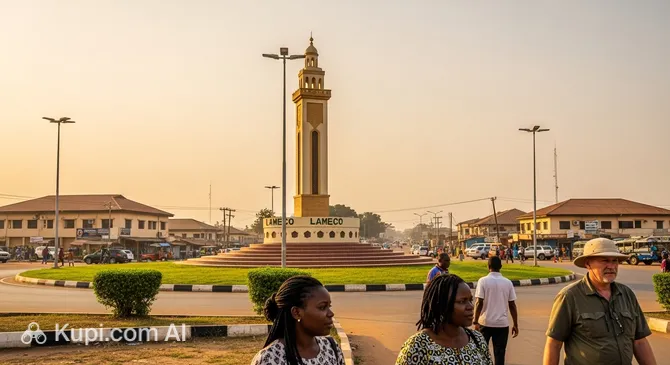
At the center of urban life is the Oja Oba market, located near the Grand Mosque. This place is notable because it was once the site of the ruler's (Oba) palace. Today, the market is the epicenter of trade where you can feel the true spirit of the city, see mountains of spices, traditional fabrics, and the work of local artisans. Also noteworthy is the Lameco Roundabout, which serves as an important landmark and transport hub for the city.
Lameco Roundabout. Illustration.
Source: Kupi.com AI
Traveler photos:
For those interested in modern culture, the Oshogbo School of Art is open to visitors. It made the city famous as a center for avant-garde African art. Here, you can get acquainted with the works of local artists whose creativity intertwines folk motifs with modern techniques. Although Oshogbo is not overloaded with typical tourist sites, each of these places allows you to touch the living and deep culture of the Yoruba people.
Local Cuisine
The culinary scene in Oshogbo is a celebration of traditional Yoruba cuisine. The staple diet of the locals consists of hearty dishes made from root crops and grains. You should definitely try pounded yam, which has a consistency similar to thick mash or dough. It is served with flavorful soups such as egusi (made from melon seeds) or ogbono, which include meat, fish, and plenty of spices.
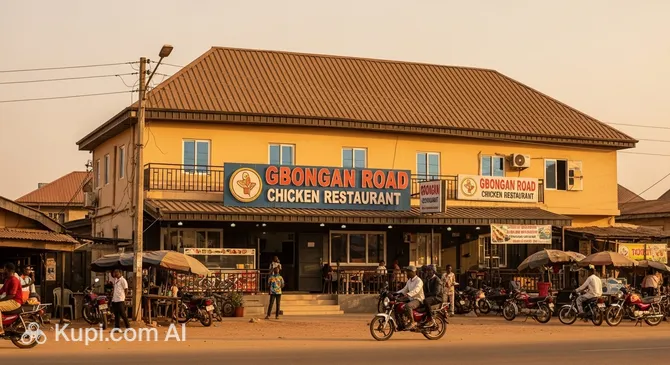
Street food plays a huge role in the city's food culture. In markets and on busy streets, you can find vendors selling suya—spicy grilled meat on skewers—as well as akara (deep-fried bean cakes). For fans of quick and tasty snacks, it's worth visiting the Chicken Restaurant on Gbongan Road or the Restaurant on Ayetoro Street, which offer familiar dishes in a modern format.
Gbongan Road Chicken Restaurant. Illustration.
Source: Kupi.com AI
Traveler photos:
Among drinks in Oshogbo, fresh palm wine, harvested from the surrounding forests, is especially popular. It has a unique sweet-and-sour taste. To quench thirst on a hot day, locals also choose local beer brands or non-alcoholic malt drinks. The gastronomy here is simple but very authentic, allowing you to fully experience the flavor of the Nigerian southwest.
Travel Tips
A journey to Oshogbo promises to be rich and colorful, and these practical tips will help you make it as comfortable and safe as possible.
Clothing and Essentials: Choose lightweight clothing made from natural fabrics, as the city is hot and humid. Be sure to bring comfortable closed shoes for walks in the Sacred Grove. When visiting religious sites and shrines, observe a modest dress code (shoulders and knees covered).
Transport: For moving around the city, it is best to use registered taxis. The popular motorcycle taxis (okada) are fast but require caution. Avoid traveling after dark.
Finances: Be sure to carry a sufficient supply of cash in Naira. ATMs may be unavailable or may not accept international cards, and cards are practically never used in shops and markets.
Health and Safety: Drink only bottled water and use repellents to protect against malarial mosquitoes. In crowded places like markets, keep a close eye on your personal belongings.
Communication: The official language is English, but knowing a few phrases in Yoruba (for example, "E nle" — a greeting) will help you win over the locals. It is better to buy a SIM card at official communication centers in the city center.
Local Etiquette: Greeting is very important in Yoruba culture. Always greet people before asking for anything. You should only photograph people or sacred objects after obtaining permission.
What to Avoid: Do not enter the territory of the Sacred Grove without an official guide and do not try to take "souvenirs" (stones or plants) from there—this can be seen as an insult to traditions.
Extra Tip: Plan your visit to the Sacred Grove for the first half of the day before the peak heat sets in and the humidity becomes too high.
Oshogbo is a city with an open heart, and your respect for local traditions will make this trip truly unforgettable.
Entertainment & Nightlife
Entertainment in Oshogbo is predominantly local in character, reflecting the city's leisurely and commercial rhythm. The main draw for residents is the numerous bars and eateries located around the major markets. Here, you can spend an evening watching a football match—football is beloved in Oshogbo, and the local 10,000-seat stadium regularly gathers fans for professional league games.
The city's nightlife doesn't have the massive scale of megacities but offers several interesting venues for evening relaxation. One of the most popular spots is Berrymist Lounge, where you can enjoy music and drinks in the company of friends. It's also worth checking out Graffiti Village Bar, which stands out for its atmosphere and often becomes a meeting point for active youth and city guests.
Berrymist Lounge. Illustration.
Source: Kupi.com AI
Traveler photos:
For lovers of cultural leisure, exhibitions at the Oshogbo School of Art, which occasionally hosts creative evenings, may be of interest. However, the most vibrant entertainment event of the year remains the Osun-Osogbo festival, when the city streets are filled with dancing, music, and a festive mood. If you're looking for a more intense nightlife with large clubs and concert halls, locals usually recommend heading to neighboring Ibadan or Lagos, which are a few hours away.
Parks & Museums
The main green oasis and simultaneously an open-air museum in Oshogbo is the Osun-Osogbo Sacred Grove. It is not just a park, but a preserved area of primary tropical forest that is considered sacred. Walking along its shaded paths along the Osun River, you can see dozens of unique shrines and sculptures created by modern artists in honor of the Yoruba gods. For the city's residents, this is a vital place of silence and spiritual tranquility.
In the city itself, greenery is more modest, as the dense layout is oriented toward trade. However, an important cultural landmark is the Lameco Roundabout, which often hosts community events and is decorated with elements reflecting local identity. This place serves as a kind of bridge between the historical districts and modern parts of the city.
Lameco Roundabout. Illustration.
Source: Kupi.com AI
Traveler photos:
Cultural centers and art galleries, such as the School of Art, perform the role of museums in Oshogbo. These house collections of works that tell the story of the evolution of Nigerian art and Yoruba mythology. While there are no classic museum buildings in the Western sense, the very atmosphere of Oshogbo and its sacred forests create the feeling of being in a living ethnographic reserve, where history and nature are inextricably linked.
Getting Around
The public transport system in Oshogbo is primarily represented by private carriers who provide mobility for residents across an area of just 47 km². The main means of getting around the city are minibuses, known as danfo, and shared taxis. They run along the main arteries, connecting the railway station, large markets, and remote areas of the city.
For quick trips over short distances, tourists and locals often use motorcycle taxis called okada. This is the most effective way to bypass congestion, which often occurs on the roads due to trucks carrying agricultural products. Nevertheless, for comfortable and safe trips, guests are recommended to order registered taxis; fares should be negotiated in advance, as meters are a rarity here.
Oshogbo is also included in the country's railway network: the local station connects the city with Lagos and Kano. Trains do not run very frequently, but this is an important alternative to congested highways. Fares on city transport are paid only in cash in the local currency. When planning your movements, keep in mind that during peak hours, a trip between districts can take up to 40 minutes due to heavy traffic in commercial zones.
Accommodation
The choice of accommodation in Oshogbo consists mainly of mid-range hotels and budget guesthouses. Most accommodation options are concentrated in the central part of the city, in the Oke-Baale and Igbonna districts, as well as near the Oja Oba market and the railway station. These locations are convenient for those visiting the city for business or a brief cultural introduction.
There are virtually no luxury five-star hotels from global chains in the city. Instead, travelers are offered local guesthouses and hotels catering to traders and festival visitors. Living conditions here are usually basic but quite comfortable for an unpretentious tourist, and prices remain at an affordable level.
If you plan to visit Oshogbo during the annual festival in August, it is highly recommended to book accommodation several months in advance, as the city becomes crowded with pilgrims and tourists from all over the world. During the rest of the year, finding a free room is not difficult. For long-term stays, apartments are also popular, often rented by expats and specialists working in Osun State.
Nearby Cities
Thanks to its central location in Osun State, Oshogbo serves as an excellent starting point for exploring the cultural and historical treasures of the region. Within an hour's drive are cities that will complement your understanding of Yoruba heritage and offer new experiences.
Just 13 kilometers away is the city of Ede, known for its university and traditional markets. Another interesting destination is Ilesa—a large commercial and educational center surrounded by picturesque hills. However, the most important place to visit is the sacred city of Ile-Ife. It is considered the spiritual cradle of Yoruba civilization, and its numerous museums and ancient monuments will capture the imagination of any traveler.
Exploring the surroundings of Oshogbo will allow you to see the diversity of life in Osun State—from bustling market squares to quiet academic towns and ancient shrines. Short trips to these cities are easily organized by taxi or local buses, making your stay more fulfilling and interesting.
Shopping & Souvenirs
Shopping in Oshogbo is primarily an immersion into the atmosphere of traditional African markets. The city is famous for its textiles, especially Adire cloth (hand-painted indigo), produced by local craftswomen. The main place for shopping is the Oja Oba market, where among endless rows you can find everything from fresh yams and exotic spices to leather goods and ritual items.
If you are looking for souvenirs, be sure to pay attention to the works of local artists. Oshogbo is a recognized center of avant-garde art, and small figurines, paintings, or metalwork will serve as a unique reminder of your trip. Also, interesting finds await visitors at the School of Art and small shops near the Sacred Grove, which sell items inspired by Yoruba mythology.
For a more familiar shopping and snacking format, you can visit MDC Street Kitchen (Indomie & Chicken Arena), which combines features of a modern commercial space and a food court. There are virtually no large Western-style shopping centers in the city, so most trade is conducted in cash (Naira). Markets usually open early in the morning and run until sunset, offering guests the most authentic trading experience in Nigeria.