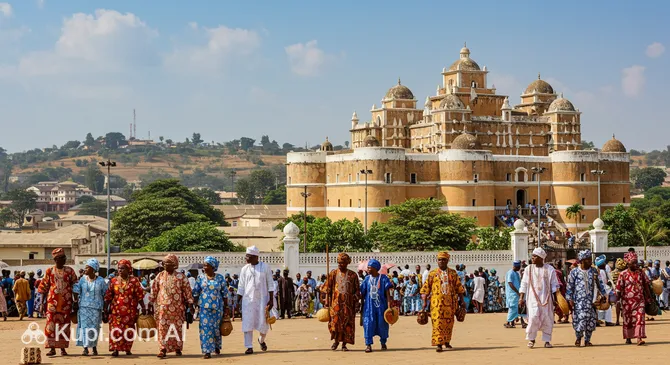
Oyo is not just a city in Nigeria, but a true cultural and historical bastion of the Yoruba people. Located in the state of the same name in the southwest of the country, it serves as an important administrative center. With a population of about 387,000 people, Oyo maintains the appearance of a typical Nigerian city, where modern everyday life intertwines with deep ethnic traditions.
Oyo. Illustration.
Source: Kupi.com AI
The city has a unique heritage: modern Oyo (also known as Oyo Atiba) was founded in the 1830s as a successor to the ancient capital of Oyo-Ile. By studying the history of its founding, one can better understand the role of the Oyo Empire in shaping the region. Today's city attracts travelers with its authentic atmosphere, bustling markets, and the opportunity to see the daily life of the Yoruba people in its unfiltered form.
Despite the fact that Oyo is not a major tourist hub, it charms visitors with its simplicity and hospitality. It is a place for those who want to immerse themselves in local color, explore traditional architecture, and feel the rhythm of life in provincial Nigeria. A visit to Oyo is an excellent addition to a journey through the state, offering a relaxed pace and a genuine introduction to the cultural roots of the region.
Weather Overview
Oyo is dominated by a tropical climate, characterized by high temperatures throughout the year. Average figures usually range from 25°C to 35°C, creating conditions of perpetual summer. The weather in Oyo is clearly divided into two seasons: wet and dry, which largely dictates the rhythm of life in the city and its surroundings.
The rainy season lasts from April to October, reaching its peak in June and August. During this period, heavy downpours are possible, which bring temporary coolness but significantly increase air humidity. The dry season arrives in November and continues until March, characterized by an almost complete absence of precipitation. During this time, the influence of the Harmattan—a dry wind from the Sahara that brings a dusty haze and makes the nights cooler—can be observed.
When planning a visit, keep in mind that during the dry months, the city's environment suffers from dust, and during the rainy season, traveling on unpaved roads can be difficult. Nevertheless, sunny weather prevails for most of the year, making Oyo a warm and welcoming place for travelers in any season.
Average monthly temperature
Average monthly precipitation
Interesting Facts
Successor City: Modern Oyo was founded in 1836–1837 as the direct successor to Oyo-Ile, the ancient capital of the powerful Yoruba Empire, which was destroyed during internal conflicts.
Cultural Heart: Oyo is considered one of the main spiritual centers of the Yoruba people, having given the country many outstanding cultural and political figures.
Highland Geography: The city is located in an area of picturesque plateaus and mountains, with elevations in the state varying from 500 to 1,200 meters above sea level.
Agricultural Hub: Despite its administrative status, Oyo remains an important agricultural hub for the region, where the trade of farming products defines the daily rhythm of life.
Historical Influence: Old Oyo (Oyo-Ile) at the height of its power between the 15th and 19th centuries was the capital of one of the most influential empires in West Africa.
How to Get There
Oyo has moderate transport accessibility, with the main flow of travelers arriving from neighboring major cities. The city does not have its own airport or rail connection, so roads remain the most convenient and common way to travel. Journeying on them requires some patience due to the quality of the surface and frequent traffic jams.
Most tourists reach Oyo via Ibadan, the state capital, which is about 50–60 kilometers away. A taxi or bus ride will take 1 to 2 hours. If you are planning a trip from Lagos (about 200–250 km), expect 4–6 hours of travel time. When planning your route, it is helpful to research transport connections in advance to choose the most comfortable mode of transport.
The nearest airport is located in Ibadan, from where you can reach Oyo by local transport. There are few direct international flights to the region, so travelers most often fly into Lagos and then continue north. A private car or a rented car with a driver is an excellent option for those who value mobility, but keep in mind the specifics of local driving.
Station
Passenger traffic
Distance
Train Station Ibadan
1
90 km
Lagos Terminus Railway Station
5
188 km
Lagos Terminus Railway Station
5
188 km
Main Attractions
Oyo is a city that reveals itself not through grand monuments, but through its vibrant environment and everyday culture. You won't find the usual world-famous landmarks here, but the city space itself is a reflection of Yoruba traditions. The main interest for visitors lies in the central squares and old quarters, where traditional buildings and a unique way of life have been preserved.
The markets remain the city's primary centers of attraction. These are not just places of trade, but true social hubs where you can see the works of local artisans, traditional fabrics, and taste local delicacies. The lively hustle and bustle, bright colors, and endless rows of goods create a unique atmosphere that is hard to find in more Westernized metropolises.
For those looking for more classic tourist sites, Oyo serves as a convenient stopover. Nearby points of interest, such as parks and historical towers, are located in neighboring Ibadan; however, it is in Oyo that you can feel the spirit of the old empire, whose legacy still lives on in street names, the greetings of passersby, and the patterns on the walls of residential houses.
Local Cuisine
Oyo's cuisine is an ode to Yoruba traditions, where root vegetables and aromatic spices play the leading role. You should definitely try pounded yam—a smooth, elastic dough made from boiled yams, served with a variety of thick soups. Standing out among them is egusi, a hearty dish made from melon seeds with meat and greens added.
Another local favorite is amala, a dish made from yam or cassava flour that has a dark color and pairs perfectly with spicy sauces. Street food in Oyo is also noteworthy: akara (fried bean cakes) and grilled meat marinated in local spices are often prepared at the markets. The city's gastronomic scene is simple, honest, and very filling, reflecting the region's agricultural character.
As for drinks, traditional palm wine, which has a unique taste, is popular in Oyo. Local beer is also in demand on hot days. You won't find haute cuisine restaurants here, but in local diners and at the markets, you can get the most authentic sense of Nigerian hospitality and the flavor preferences of the country's southwestern residents.
Travel Tips
A trip to Oyo is an opportunity to see Nigeria at its most authentic, and these tips will help make your journey as comfortable and safe as possible.
Clothing and Essentials: Bring lightweight cotton or linen clothing, as Oyo is hot and humid year-round. Be sure to pack sunglasses, a hat, and comfortable closed-toe shoes for walking through dusty markets. Don't forget a British-style power adapter (Type G).
Transport: To get around the city, use taxis or motorcycle taxis (okada), but agree on the price in advance. Avoid traveling after dark.
Finances: The main currency is the Nigerian Naira. Cards are rarely accepted, so always carry enough cash with you. ATMs can be unreliable.
Health and Safety: Drink only bottled water and avoid ice in drinks. It is recommended to carry a basic first-aid kit and insect repellent. Keep a close eye on your personal belongings in crowded areas.
Communication: English is the official language, but many residents speak Yoruba. Learning a few simple phrases ("E nle" — a greeting) goes a long way with the locals. It's best to buy a SIM card at the airport upon arrival.
Local Etiquette: Greeting is very important in Yoruba culture. Always say hello to people before asking for anything. Show respect to your elders.
What to Avoid: Do not photograph people without their explicit permission and avoid filming government or military sites.
Additional Tip: The best time to visit is the dry season from November to March, when the probability of rain is minimal and traveling on the roads is easier.
May your introduction to Oyo be filled with bright colors and interesting discoveries. Respect local traditions, and the city will surely welcome you in return!
Entertainment & Nightlife
Entertainment in Oyo is predominantly local and community-based. You won't find large nightclubs or noisy Western-style bars here—the city lives at a calm pace, focused on family values and traditional ways. The main leisure activities for residents are local Yoruba festivals, featuring vibrant dancing and music, as well as football matches that draw large crowds of fans to local stadiums.
Evening life in Oyo is centered around small street cafes and eateries where residents gather for leisurely conversations. The atmosphere here is very informal and friendly, but tourists are advised to plan their leisure time so they return to their hotel before dark. Safety at night can be inconsistent, so it's best to avoid walking in unlit areas.
If you miss bright lights and active nightlife, it's worth heading to neighboring Ibadan, located just an hour's drive away. There, you'll find modern cinemas, large concert venues, and a variety of restaurants. In Oyo itself, it's better to focus on daytime entertainment: strolling through the markets and observing the city's distinctive culture.
Parks & Museums
Finding classic parks with manicured alleys or major state museums directly in Oyo is a challenge. The urban landscape is characterized by dense residential buildings and active commercial zones, so there are very few organized recreational spaces here. Residents most often use open lots and the outskirts for relaxation and informal gatherings.
The lack of large museum complexes is compensated for by the atmosphere of Oyo itself, which is often called a "living museum" of Yoruba culture. Historical heritage is displayed here not in glass cases, but in the preserved layout of the old quarters and the activities of local artisans. To see classic natural recreation areas, such as Agodi Gardens, tourists usually have to travel to neighboring Ibadan.
Nevertheless, the outskirts of the city offer natural beauty—hills and plateaus that may be of interest to hiking enthusiasts. While there are no official nature reserves here, the landscape of Oyo State itself is an attraction for those who appreciate Africa's wilderness and want to see authentic rural landscapes away from the city bustle.
Getting Around
Public transport in Oyo is provided exclusively by private carriers, and its operation may seem chaotic to the unprepared tourist. The backbone of the city fleet consists of old minibuses, known as danfo, and minivans. They ply the main streets without a fixed schedule, departing once they are full of passengers.
For quick travel over short distances, locals and visitors most often choose okada—motorcycle taxis. This is the most efficient way to maneuver through narrow roads and traffic jams, especially during peak hours (7 to 10 AM and 4 to 7 PM). However, it's important to keep safety in mind: the condition of the motorcycles and the driving style of the operators can be far from ideal.
There are no electronic transit passes or integrated card systems in Oyo—payment is always made in cash to the conductor or driver. Fares are low, but tourists are advised to check the price with locals beforehand to avoid overpaying. The city lacks sidewalks and pedestrian infrastructure, so long-distance walking can be uncomfortable due to dust and heavy traffic.
Accommodation
Accommodation options in Oyo are limited, as the city is not a mass tourist destination. Most lodging options consist of small private guesthouses and budget lodges. These are simple, functional establishments mostly used by locals or people visiting the city on business.
The main places to stay are concentrated in the central part of the city, close to administrative buildings and markets. There are no luxury hotels from international chains in Oyo, so travelers accustomed to a high level of service should consider staying in Ibadan, where the choice of hotels is significantly wider, and visiting Oyo as a day trip.
When booking accommodation in Oyo, it is recommended to prioritize options that have positive reviews from foreign guests and provide basic security measures. It's best to book rooms in advance, especially if your visit coincides with local holidays, as the best of the few available options may be occupied.
Nearby Cities
Oyo serves as an excellent starting point for exploring the surrounding state, allowing tourists to see the diversity of life in the southwestern part of the country. Neighboring cities and settlements offer a unique look at the region's craft traditions and natural beauty.
Just 20 kilometers away is the city of Iseyin, famous for its weavers who create the renowned Aso-oke fabric. Another interesting destination is Ogbomosho, a major historical center with a rich culture. For those who want to see a calmer, more rural side of life, a trip to the town of Saki is ideal, taking about an hour and a half to reach.
Exploring the nearby areas is the best way to complement your impression of visiting Oyo. Each neighboring city has its own character and specialties, whether it's unique markets, historical buildings, or simply the picturesque landscapes of the Nigerian highlands.
Shopping & Souvenirs
Shopping in Oyo is a vibrant and noisy experience centered entirely around local markets. You won't find modern air-conditioned shopping malls here, but instead, you'll be immersed in the thick of commercial life. The main place for shopping is Akesan Market and other central trading areas, where you can find absolutely everything from fresh tropical fruits to household items.
Special attention should be paid to local textiles. The region is famous for traditional fabrics such as Aso-oke, which are hand-woven. These fabrics are often used to make ceremonial Yoruba clothing and make for a magnificent and unique souvenir. You can also purchase wood carvings, ceramics, and traditional jewelry created by local craftsmen at the markets.
Store hours are usually tied to daylight—trading starts early in the morning and winds down by evening. Payment is made exclusively in cash in the local currency (Naira), so tourists should take care of exchanging money in advance. Don't forget that bargaining is expected in Oyo's markets—it's not just a way to lower the price, but an important part of local etiquette and social interaction.