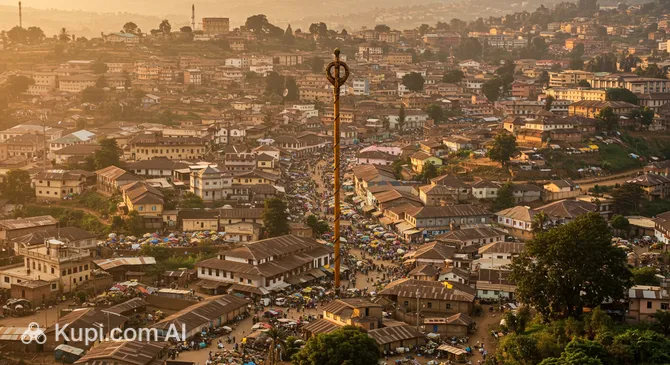
Located in the heart of Osun State in southwestern Nigeria, Ilesa is a unique blend of ancient history and vibrant modern commerce. The capital of the traditional Ijesa kingdom, this city is nestled among the picturesque Yoruba Hills. Ilesa serves as a vital transportation hub connecting the northern, southern, and eastern regions of the country, which gives it significant strategic importance.
The climate here is typical of the tropical rainforest zone: the city is lush with greenery, and the air is filled with the scents of damp earth and rich vegetation. With a population of about 384,000, Ilesa pulses with life while remaining a guardian of the deep cultural traditions of the Yoruba people. Ilesa. Illustration.
Source: Kupi.com AI
The rich heritage of Ilesa is evident in its majestic palaces and traditional festivals that attract cultural researchers. The city is also known as an educational and industrial center—it is here that the famous International Breweries was founded. A visit to this place allows you to experience the authentic rhythm of the Nigerian province, where history comes alive on every street.
Weather Overview
A perpetual tropical summer atmosphere prevails in Ilesa. Due to its location in the humid forest zone, the climate here is hot and humid all year round. The air temperature rarely drops below 20°C, and during the hottest months, such as February and March, the thermometer can rise to 35–36°C during the day. The average annual temperature stays around a comfortable 26–28°C.
The region is characterized by a clear division into dry and rainy seasons. The period from November to February is considered the driest and sunniest, making it an ideal time for walking tours and excursions. Regular rainfall begins in March, peaking in September and October, when tropical downpours can be very intense. The climate of Ilesa largely determines the city's rhythm of life, especially in the agricultural sector.
If you are planning a trip, aim for the period from mid-November to early February—during this time, humidity is lower and the sky remains clear more often. However, even in the rainy season, Ilesa retains its charm: the hills turn a vibrant emerald color, and the air becomes extraordinarily fresh.
Average monthly temperature
Average monthly precipitation
Interesting Facts
Ancient Roots: Ilesa was founded in the 12th century by Owaluse, the grandson of the legendary Oduduwa, who is considered the progenitor of the Yoruba people.
Golden Land: The surroundings of the city contain rich gold deposits that are of commercial importance to the region's economy.
Kingdom Capital: The city is the headquarters of Ijesaland—a traditional region encompassing over 200 villages and settlements.
Center of Enlightenment: Ilesa is proud of its educational traditions; it is home to the famous Ilesa Grammar School, which has produced many of Nigeria's prominent figures.
Industrial Pioneer: The city hosts one of the largest plants of International Breweries, playing a significant role in the country's industrial sector.
How to Get There
You can reach Ilesa via an extensive network of federal highways, as the city is a key transport hub in southwestern Nigeria. A journey by car or intercity bus from Lagos usually takes between 4 to 6 hours, depending on traffic. From neighboring Ile-Ife, the drive takes only about an hour, while from the state capital, Osogbo, the trip takes about 30–45 minutes.
The city does not have its own airport. The nearest air hubs are located in Akure and Ibadan. The drive from these cities to Ilesa takes about 2–3 hours. If you are planning a trip, it is best to plan your route to Ilesa through these cities using taxi services or private transporters.
Railway service within the city is currently not developed for passenger transport, so roads remain the primary way to get around. It is important to note that during the rainy season, travel times may increase due to the condition of secondary roads, so it is recommended to allow extra time for travel.
Station
Passenger traffic
Distance
Train Station Ibadan
1
95 km
Lagos Terminus Railway Station
5
193 km
Lagos Terminus Railway Station
5
193 km
Alfred Rewane Station
1
266 km
Minna Railway Station
1
299 km
Main Attractions
While Ilesa is primarily an administrative and commercial center, it serves as an excellent base for exploring the cultural treasures of the Ijesa people. One of the main attractions is the Owa Palace—the residence of the traditional ruler, where you can experience the living history and architectural traditions of the Yoruba. The city's central markets are also a fascinating sight, showcasing the authentic rhythm of local life.
Located in the immediate vicinity of the city is one of Nigeria's most impressive natural wonders—the Erin-Ijesha Waterfalls (Olumirin Waterfalls). Seven levels of cascades surrounded by dense tropical forest provide cool air and unforgettable views. Tourists often visit this site to hike alongside the flowing water and enjoy the panorama of the hilly landscape.
For those interested in past military history and diplomacy, a visit to the Kiriji War Museum is a must. This site preserves the memory of the longest civil conflict in Yoruba history and the subsequent peace treaty that shaped the modern map of the region. The annual Iwude festival also transforms the city into a vibrant theatrical space filled with traditional dances and ceremonies.
Local Cuisine
A gastronomic journey to Ilesa is primarily an introduction to the authentic cuisine of the Yoruba people. The diet is based on dishes made from yam, corn, and cassava. Be sure to try Pounded Yam or Fufu, which are served with rich and aromatic soups. Egusi soup, made from melon seeds with herbs and meat, is particularly popular, as is Ogbono—a thick soup based on wild mango seeds.
The city is a major center for cocoa exports, so cocoa-based products here are always fresh and high quality. Regarding drinks, look out for local palm wine—a traditional beverage that is best enjoyed fresh. Ilesa is also proud of its beer from the local International Breweries, which is widely available in city bars.
The food culture in the city is closely linked to street food and markets. The tastiest and most affordable dishes can be found in small cafes (bukas) and from street vendors, where food is prepared right in front of you. Locals prefer to dine in company, so a meal here is always a social process filled with conversation and a friendly atmosphere.
Travel Tips
Welcome to Ilesa! To make your journey through this historical center of Osun State comfortable and safe, we have prepared some practical tips.
Clothing and Essentials: Choose light clothing made from natural fabrics, as the city is hot and humid. During the rainy season (March to October), be sure to bring an umbrella or a light raincoat. A modest dress code is recommended for visiting palaces and religious sites.
Transport: The fastest way to get around the center is by motorcycle taxi (okada), but always agree on the price in advance. For travel between cities, it is better to use taxis or buses departing from central parks.
Finances: The primary currency is the Nigerian Naira. Always carry a sufficient supply of cash in small denominations, as ATMs may be out of order and international cards are rarely accepted.
Health and Safety: Drink only bottled water and avoid ice in drinks. In the evening, it is better to refrain from walking alone in unfamiliar areas, using taxis for transportation.
Communication: The official language is English, but locals will be delighted if you learn a few phrases in the Yoruba language (for example, "E nle" — a polite greeting).
Local Etiquette: Greeting is very important in Yoruba culture. Always greet people before asking for anything. Respect for elders is a key value in the region.
What to Avoid: Do not photograph government buildings or people without their explicit permission. This can lead to misunderstandings and problems with local authorities.
Connectivity: Buy a SIM card from a local operator (MTN or Airtel) immediately upon arrival for internet access, as Wi-Fi in hotels can be unstable.
Following these simple rules will help you fully enjoy the hospitality of Ilesa and discover the authentic Nigeria!
Entertainment & Nightlife
Entertainment in Ilesa is predominantly traditional and community-oriented. City life centers around vibrant local holidays and market bustle. The most significant event is the annual Iwude festival, when the streets are filled with music, grand processions, and traditional performances, turning the entire city into one large celebratory venue.
Nightlife here is relatively quiet and unlike the hectic rhythm of major metropolises. Most evening activities take place in local bars and hotel restaurants, where you can find residents discussing the day's news over a cold drink. For those seeking modern nightclubs and loud discos, locals often recommend heading to nearby Osogbo or Ile-Ife, which are within an hour's drive.
During the day, a popular way to spend leisure time is socializing at busy markets and intersections, which serve as the main social hubs. Church and community events also play a significant role in city life, where you can see the beauty of local attire and the hospitality of the people of Ilesa.
Parks & Museums
While there are not many classical park zones within Ilesa itself, the city is surrounded by magnificent natural landscapes. The Yoruba Hills provide a picturesque backdrop for walks, and the forested terrain ensures cleaner air compared to major metropolises. Locals often use open squares and natural elevations as places for relaxation and meetings.
Culturally, the city offers a chance to learn about history by visiting traditional sites such as palace complexes. One of the most important sites in the vicinity is the Kiriji War Museum. It is dedicated to historical battles of the 19th century that were decisive for the unification of the Yoruba people. Visiting the museum allows you to learn about the tactics of ancient warriors and see artifacts from that era.
For nature lovers, the main point of attraction remains the Erin-Ijesha Waterfalls. Although they are some distance from the city center, this is the region's premier open-air "natural museum." Here you can spend hours watching the cascades of water and studying the unique tropical flora surrounding the hills of Ijesaland.
Getting Around
The transport system in Ilesa is geared towards rapid movement in conditions of dense development and busy market traffic. The main form of public transport here is the danfo—nimble minibuses that ply the city's main routes. This is the most affordable way to get around, although they can be overcrowded during peak hours.
For more maneuverable trips, locals and tourists often choose the okada (motorcycle taxi). These allow you to quickly bypass traffic jams at major intersections, but they require a certain level of bravery from the passenger. Three-wheeled motor rickshaws are also popular, providing slightly more comfort and sun protection compared to motorcycles.
In the central part of Ilesa, many attractions and markets are within walking distance of each other. If you need to reach a distant neighborhood or a neighboring city, it is best to use a taxi or private transporters. Payment in transport is made in cash, and the cost of the trip should be agreed upon in advance, before you get into the car or onto the bike.
Accommodation
Accommodation options in Ilesa are primarily geared towards transit travelers, business tourists, and those attending cultural festivals. Cozy budget guesthouses and mid-range hotels offering a basic set of amenities predominate here. There are no luxury five-star complexes in the city, but the cleanliness and sincere hospitality of the staff compensate for the lack of extras.
The city center and areas near the main markets are considered the most convenient neighborhoods to stay in. This provides quick access to transport and key shopping points. If you are looking for a quieter setting, you should consider small private hotels on the outskirts of the city, where there is less noise from busy roads.
When planning a trip, especially during the Iwude festival or other major holidays, it is recommended to book accommodation in advance. Most local hotels are not always listed on international aggregators, so it is sometimes more reliable to contact them directly or use the help of local guides.
Nearby Cities
Ilesa is an excellent starting point for exploring the cultural and historical heart of Osun State. Proximity to several significant cities allows tourists to take interesting day trips and return by evening.
Just 22 kilometers away is the sacred city of Ile-Ife, which the Yoruba consider the cradle of their civilization. Here you can visit the magnificent Ooni's Palace and a museum featuring unique Ife bronze heads. Another essential destination is Osogbo, the state capital, famous for its Osun-Osogbo Sacred Grove, a UNESCO World Heritage site.
It is also worth visiting Ede or heading to the natural attractions in the Okemesi-Ekiti area. Exploring these surroundings will allow you to gain a deeper understanding of the diversity and richness of southwestern Nigerian culture.
Shopping & Souvenirs
Shopping in Ilesa is primarily an immersion into the atmosphere of traditional African markets. The city does not have giant Western-style shopping malls, but this is more than compensated for by the character of the local marketplaces. The main hubs are the markets in the city center, where life bustles from early morning. Here you can find everything from the freshest tropical fruits to the products of local artisans.
The city is famous for its trade in cocoa and kola nuts, which can be purchased as an unusual souvenir. Ilesa is also known for its textiles—here you can buy high-quality traditional Yoruba materials such as adire (indigo-dyed hand-painted cloth) or the elegant aso-oke. These fabrics make wonderful gifts that reflect the cultural code of the region.
Shops typically operate from morning until sunset, and bargaining is common at the markets—it is an important part of the local social culture. Payments are made mainly in cash in the local currency (Naira), so tourists are advised to always carry small amounts of money. The main retail stalls, where you can buy daily necessities and household items, are concentrated near the road junctions in the city center.