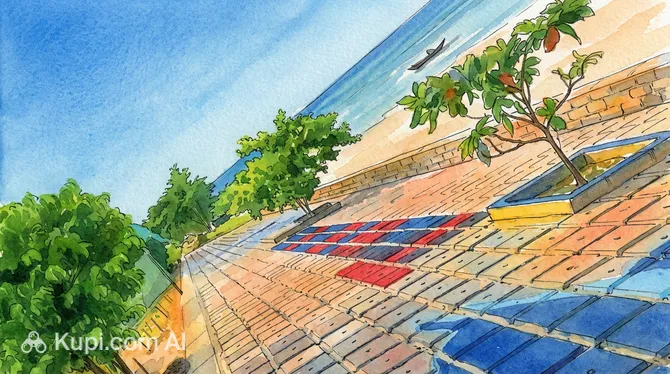
Burutu is a unique port city hidden in the picturesque network of the Niger River delta in southern Nigeria. Located in Delta State on the banks of the Forcados River, it serves as an important industrial and commercial hub for the region. The city possesses a distinct atmosphere of a bustling river port, where life is inextricably linked to the water and shipping.
The city's geographical position defines its character: it is located just 30 kilometers from the Bight of Benin and spans both banks of the river. The population of Burutu is over 200,000 people, most of whom are representatives of the Ijaw people. The climate here is tropical and humid, typical of the Niger Delta, creating conditions for lush coastal vegetation.
Burutu. Illustration.
Source: Kupi.com AI
The main feature of the city is its rich historical heritage: Burutu was founded by the Royal Niger Company and became one of the first modern ports in Africa, starting its operations in 1887. Today, travelers are drawn here primarily by the industrial aesthetics of the shipyards and the opportunity to see the traditional way of life of the fishing communities in the river delta.
A visit to this city is a chance to see a "different" Nigeria, far from the capital's glitz but full of the energy of labor and the authentic traditions of river peoples. Burutu invites those who appreciate industrial history and want to explore one of West Africa's most important waterways.
Weather Overview
The weather in Burutu is determined by its proximity to the equator and the Atlantic Ocean. A typical tropical climate with high humidity prevails here, staying stable throughout the year. The average temperature ranges between 25–28°C, with daytime highs in the dry season often reaching 32°C.
Expect a very humid city climate with abundant rainfall, which peaks between May and October. The wettest months are traditionally considered to be June and September, when precipitation can exceed 380 mm. The dry season is short and falls in December and January, but even during this time, short-term tropical showers are possible.
Due to the low altitude above sea level and the location in the river delta, air humidity here always remains high, which may require time for acclimatization. Tourists are recommended to plan their visit during the winter months when the probability of prolonged rains is minimal, and the heat is more tolerable thanks to sea breezes.
Average monthly temperature
Average monthly precipitation
Interesting Facts
Burutu is a place with a fascinating history and geography that holds many surprises for the traveler.
Pioneer of African Logistics: The city was officially commissioned as the first modern deep-water port on the entire African continent as early as 1887.
A City on Two Banks: Unlike many other settlements, Burutu developed simultaneously on both banks of the Forcados River, making water transport an essential part of the city's layout.
Royal Past: The city owes its foundation and rapid development to the Royal Niger Company, which used it as its main logistics headquarters for British trade in the 19th century.
Ethnic Diversity: Despite the dominance of the Ijaw people, the city is home to representatives of the Urhobo and Itsekiri ethnic groups, creating a unique cultural blend.
Water Borders: The southern tip of the Burutu territory opens directly onto the Atlantic Ocean, making the city an important border outpost of Delta State.
How to Get There
Transport accessibility to Burutu has its own specifics due to its location in the heart of the Niger Delta. The main artery connecting the city with the outside world is the Forcados River. Travelers should be prepared for the fact that a significant part of the route will likely be by water. More detailed information on how to get to Burutu can be found in specialized transport guides for the region.
The city does not have its own airport, so tourists usually use the nearest air hubs in Delta State or neighboring regions. From there, the journey continues by road or water transport. River boats and ferries regularly run between Burutu and major coastal logistics centers, providing delivery for passengers and cargo.
Railway communication in this part of Nigeria is poorly developed due to the complex terrain of the delta. The main emphasis is on port infrastructure capable of receiving vessels of various classes. For trip planning, it is recommended to check river transport schedules in advance, as they can depend on seasonal fluctuations in river water levels and weather conditions.
Station
Passenger traffic
Distance
Alfred Rewane Station
1
36 km
Port Harcourt Railway station
1
177 km
Enugu Railway Station
1
251 km
Lagos Terminus Railway Station
5
266 km
Lagos Terminus Railway Station
5
266 km
Main Attractions
Even though Burutu is primarily a major industrial center, there are several sites that can spark genuine interest for explorers of industrial history and Niger Delta culture. The main attraction of the city is considered to be the Port of Burutu itself. Founded at the end of the 19th century, it retains its status as one of the oldest modern port complexes on the continent. A walk along the piers allows you to feel the scale of international trade and see powerful logistical processes in action.
For engineering enthusiasts, the local shipbuilding and ship repair yards are a must-visit. Burutu is famous for its craftsmen, and watching the process of creating or restoring massive river vessels provides insight into the industrial potential of Delta State. It is a living open-air museum where maritime traditions meet modern technology.
The Forcados River itself deserves special attention. A boat trip along its waters provides access to the unique ecosystems of the Niger Delta. From the water, the city looks different: you can see traditional Ijaw settlements, their fishing trades, and the thick mangroves lining the banks. This place is ideal for those looking for authentic views and wanting to capture the daily life of one of Africa's most dynamic regions.
Local Cuisine
The cuisine of Burutu is a real feast for seafood lovers. Because the Ijaw people have been involved in fishing for centuries, fish and seafood form the basis of the local diet. You should definitely try the fish cooked over charcoal with local spices, as well as various thick soups to which shrimp, crabs, and mollusks caught in the Niger Delta are added.
As an important agricultural center, the city offers a rich selection of dishes made from yams, cassava, and plantains. A typical local lunch often includes a side of pounded yam or fufu, served with fragrant palm oil and pepper. In Burutu, you can find unique variations of traditional Nigerian dishes, complemented by the freshest ingredients straight from the local markets.
Popular drinks include freshly squeezed tropical fruit juices and traditional palm wine, which locals know how to extract and serve according to all the rules. The food culture in the city is quite simple: most establishments are small open-air snack bars or market stalls with street food, where you can feel the true taste of life in the delta. Burutu's gastronomic scene captivates with its simplicity and incredible freshness of products.
Travel Tips
Preparing for a trip to such an original and industrial city as Burutu requires special attention to detail. Our tips will help you make your journey as comfortable and safe as possible.
Clothing and Items: Choose light clothing made of natural fabrics, as it is very humid and hot in the Niger Delta. Be sure to bring a reliable insect repellent and sunscreen. For walks around the port area, you will need closed, comfortable shoes with non-slip soles.
Transport: Remember that the main transport here is water-based. Check the boat schedules to major hubs in advance and always wear a life jacket when moving along the river.
Finance: Only cash Naira is accepted in Burutu. ATMs can be unstable, so stock up on currency in major cities before departure. Tipping culture is welcomed but remains at your discretion.
Health and Safety: There is a hospital in the city for emergencies, but it is better to have a basic first-aid kit with you. Avoid visiting closed industrial areas without special permission.
Communication: The main languages of communication are English and local Pidgin. Download offline maps in advance, as Wi-Fi in public places is rare.
Local Etiquette: Burutu residents are very friendly. Greetings are an important part of the culture. Always ask for permission before taking photos of local residents or their homes.
What to Avoid: Do not engage in disputes regarding industrial activities in the region and do not attempt to film strategic port facilities — this may cause problems with security.
Drinking Water: Use only bottled water even for brushing your teeth to avoid digestive problems.
Following these simple rules will allow you to focus on exploring the unique atmosphere of Burutu and have only positive impressions from your trip.
Entertainment & Nightlife
Entertainment in Burutu is predominantly local and community-based, as the city is oriented towards the industrial sector. Nevertheless, the city's evening life is centered around small local bars and cafes located near the port area and administrative buildings. Here, you can meet sailors, shipyard workers, and locals exchanging news after a workday over a cool drink.
The city lacks large nightclubs or European-style concert halls; however, the atmosphere comes alive during traditional holidays and public events. On such days, the streets are transformed by performances of local musical groups and folk dances of the Ijaw people, allowing tourists to experience the living culture of the region.
For daytime leisure, residents often choose walks along the Forcados River or visits to local markets, which are a colorful sight in themselves. For safety purposes, it is recommended to choose central, well-lit streets for night walks or to arrange for an escort in advance. It is better to call a taxi through the administrators of your accommodation or use the services of trusted private carriers.
Parks & Museums
In Burutu, the cultural program is closely intertwined with its industrial past. Although there are practically no classic museums with exhibition halls here, the territory of the old port itself plays the role of a museum. Historical buildings from the late 19th century, preserved from the times of the Royal Niger Company, allow you to literally touch the history of the development of modern trade in Africa.
Regarding park zones, the city does not have extensive landscaped gardens; however, the natural banks of the Forcados River and the mangroves surrounding the city create a natural environment for relaxation. A walk along the water during sunset hours is the best entertainment for those who want to enjoy the silence and see the unique flora of the Niger Delta.
To visit larger museums or well-equipped urban parks, residents usually head to the regional centers of Delta State. Nevertheless, Burutu remains an interesting site for industrial tourism enthusiasts, where every pier and ancient warehouse can tell its own exciting story of the colonial past and the industrial present of the region.
Getting Around
The transport system of Burutu is unique in that its basis is water communication. The city's location in the Niger Delta has made boats, launches, and small vessels the main means of transport. Intracity travel between the banks of the Forcados River and neighboring settlements is carried out mainly by motorboats, which replace the usual buses here.
Payment for the fare is usually made in cash directly to the boat driver. There may not be fixed tariffs for tourists, so it is better to agree on the cost of the trip in advance. A centralized system of travel tickets or transport apps does not currently exist in the city. It is important to remember that water transport activity significantly decreases after dark.
Ground transport is represented mainly by private taxis and motorcycle taxis (okada), which ply the few asphalted roads within residential areas. Car sharing or bike rentals are not developed here, so for long trips outside the city, travelers often rent an entire boat. This gives freedom of movement along the river channels and allows you to see the most inaccessible corners of the delta.
Accommodation
The housing stock in Burutu is primarily oriented toward professionals arriving in the city for business in the port and oil and gas sectors. Here you will find mid-range guest houses and departmental dormitories that offer a basic level of comfort: clean linens, electricity, and often air conditioning, which is critically important in the local climate.
Traditional luxury tourist hotels are practically non-existent in the city itself, so travelers accustomed to high-end service should consider accommodation options in larger neighboring cities such as Warri. In Burutu, short-term rental options prevail, which are in demand among trade representatives and ship repair specialists.
When planning a trip, it is extremely important to book accommodation in advance, as the number of quality places is limited. Most bookings are made through direct contact with guest house owners or through local logistics companies. Note that the presence of a functional hospital in the city provides minimal social security; however, for a comfortable stay, it is better to choose proven options in the administrative center.
Nearby Cities
Burutu is an interesting starting point for exploring the southern part of Nigeria and neighboring states. Thanks to its location in the delta, the city provides access to regions that are rarely visited by ordinary tourists but hide a rich cultural diversity.
Just 36 kilometers away is the major industrial center of Warri, which can offer more developed urban infrastructure, shopping centers, and hotels. Also great for a day trip is Sapele — another important port and a center of the timber industry in Delta State. If you are ready for a longer journey, it is worth visiting historical Benin City, famous for its ancient heritage and the renowned Benin Bronzes.
Exploring the surroundings of Burutu will allow you to better understand the economic and cultural mosaic of Nigeria. Each of these destinations is unique in its own way: from the bustling markets of Warri to the cultural monuments of Benin City. Travel between cities is carried out both by road and by water routes, which adds flavor to the journey.
Shopping & Souvenirs
Shopping in Burutu is primarily an acquaintance with the local flavor and trading traditions of the river peoples. The city serves as a central market for the entire surrounding area, so the main shopping areas are concentrated around the port zone. There are no fashion boutiques here, but there is a bustling trade in agricultural products and basic necessities.
The main attraction is the local seafood markets. This is the best place to see the full variety of the catch from the Niger Delta: from giant prawns to rare species of river fish. It is also worth paying attention to the stalls with imported goods that arrive here through the port and often cost less than in the interior of the country. Souvenir shops as such are absent, but as a commemorative gift, you can purchase traditional textiles or products of local Ijaw artisans.
Most transactions are made in cash in the local currency (Naira). Markets start operating early in the morning and wind down by evening. If you plan to make purchases, it is best to do so in the first half of the day when the choice of fresh products is at its maximum. Shopping in Burutu is not about brands, but about authenticity, communicating with sellers, and the opportunity to find truly unique locally produced goods.