Onitsha is more than just a city; it is a true energy hub of West Africa, sprawling along the eastern bank of the majestic Niger River. Located in Anambra State, this metropolis is famous for its incredible dynamism and its status as one of the largest commercial centers in all of Nigeria. The atmosphere here is permeated with the spirit of commerce and the entrepreneurship of the Igbo people, making the city a unique destination for those wanting to see the "real" economic life of the region.
The city's geographical position on the river determined its fate as a strategic river port. According to historical records, the city was founded by migrants from the Benin Kingdom in the 16th–17th centuries. Today, Onitsha's population is estimated to be approaching one million, turning it into a densely built, vibrant, and constantly evolving organism where ancient monarchical traditions coexist with the modern rhythm of life.
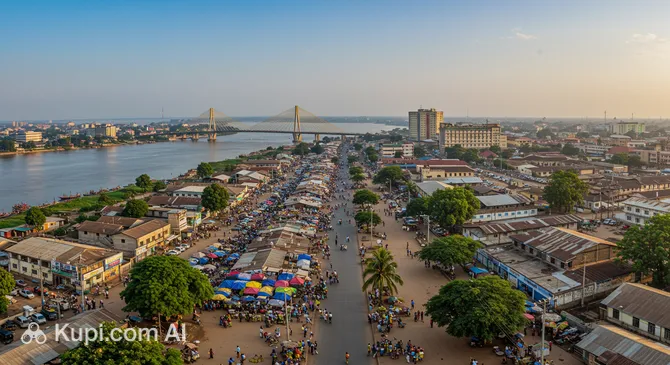
Onitsha. Illustration.
Source: Kupi.com AI
One of the city's main features is its cultural heritage, embodied in a system of governance headed by the Obi of Onitsha — a traditional monarch whose authority is deeply revered by local residents. Tourists will find it interesting to see the legendary Niger Bridge and immerse themselves in the chaos and abundance of the local markets. Onitsha invites those who are not afraid of the hustle and bustle and are ready to discover the authentic character of modern Africa.
Weather Overview
The climate in Onitsha is typical of the tropical zone of southeastern Nigeria: it is hot and humid throughout the year. February is usually the hottest month, when average daytime temperatures can reach +36.7°C. Even in the "coolest" months, such as July or August, the thermometer rarely drops below a comfortable +23°C.
The year is clearly divided into two seasons: the dry season and the rainy season. The dry season lasts from December to February, during which there is practically no rainfall. The first thunderstorms begin in March, and the peak of the rains occurs in September, with up to 248 mm of precipitation. For trip planning, it is useful to study the detailed climate of the city to prepare for the high humidity.
Travelers should expect consistently warm weather with periodic downpours from May to October. Despite the heavy rainfall, the rains are usually short-lived and followed by bright sunshine. High humidity is a characteristic feature of the region, so light cotton clothing will be your best companion on this trip.
Average monthly temperature
Average monthly precipitation
Interesting Facts
Royal Roots: Onitsha was founded as a sovereign kingdom by migrants from the Benin Kingdom under the leadership of Chief Eze Chima.
Unique Monarchy: Unlike many other Igbo communities, Onitsha maintains a monarchical system with a ruler bearing the title of Obi.
Engineering Giant: The Niger Bridge, completed in 1965, has an impressive length of over 1.4 kilometers and is a key transport artery for all of Nigeria.
Trade Scale: The Onitsha Main Market is regularly cited as the largest in West Africa in terms of turnover and land area.
Center for Education: Since the mid-19th century, the city has been an important center for the spread of Western education and Christianity in the region, thanks to the active work of missionaries.
How to Get There
Onitsha is a vital transport hub in the southeastern part of Nigeria. The city is famous for its accessibility by land: key federal highways pass through it, connecting Lagos, Abuja, and Enugu. Travelers most often arrive here on comfortable intercity buses or private taxis that run regularly between the country's major cities.
There is currently no active civilian airport in Onitsha itself. The nearest air gateways are located in the cities of Asaba and Enugu. From there, Onitsha can be easily reached by highway; the trip takes very little time, especially when using a transfer service or a licensed taxi. Detailed information on routes can be found in the section about transport to the city.
Railway service in this region is less developed than road transport, so land transport remains the primary choice for tourists. The Onitsha river port also plays an important role—it is one of the largest in the country, receiving cargo ships and providing water links along the Niger River, though this route is less commonly used for passenger travel.
Station
Passenger traffic
Distance
Enugu Railway Station
1
85 km
Alfred Rewane Station
1
131 km
Port Harcourt Railway station
1
151 km
Makurdi Railway Station
1
261 km
Main Attractions
The heart of the city is undoubtedly the Onitsha Main Market. Considered one of the largest in West Africa, it is a massive labyrinth where you can find absolutely everything: from fresh tropical fruits to the creations of local artisans. It is the perfect place to feel the pulse of trade life and observe the daily life of the Igbo people.
Another significant attraction is the majestic Niger River. Its banks offer picturesque views, and boat trips allow you to see the city from a completely different perspective. No less important is the famous Niger Bridge, built in 1965. This grand engineering feat, 1,404 meters long, not only connects the east and west of the country but also serves as a symbol of the region's unity and progress.
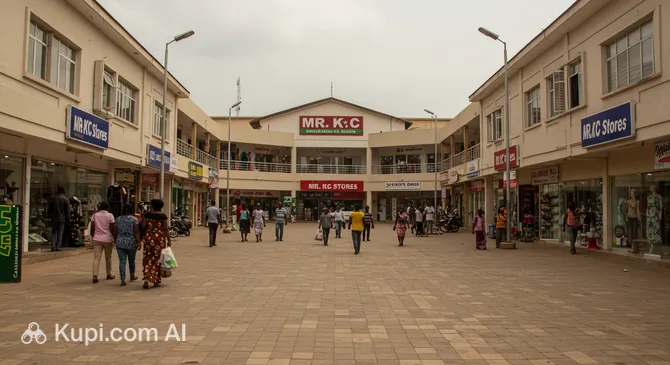
For those looking for modern shopping venues, MR KC Stores is worth a visit. This location combines the convenience of modern service with a wide selection of goods, making it popular with both locals and visitors alike.
MR KC Stores. Illustration.
Source: Kupi.com AI
Traveller photos:
Onitsha's historical heritage is also represented by sites associated with the ruling Obi dynasty. Traditional palaces and ceremonial grounds reflect the centuries-old history of the kingdom and its unique political structure, which has survived to this day despite rapid urbanization.
Local Cuisine
Onitsha's cuisine is a true feast for lovers of rich flavors and fresh ingredients. The local diet is based on products that the surrounding lands are rich in: yam, cassava, rice, and, of course, fish from the Niger River. The main dish you should definitely try is garri — a mash made from fermented cassava, usually served with a variety of thick soups.
Among the soups, ofe-akwu (palm fruit soup) and the bitter but very healthy onugbu soup hold a special place. These dishes reflect the culinary traditions of the Igbo people, where spices and palm oil play a key role. For authentic flavors, it's best to head to the local markets, where street food is prepared right in front of you, staying fresh and aromatic.
For drinks, be sure to try fresh palm wine — a traditional low-alcohol beverage that is very popular in this region. You can also always find a huge selection of freshly squeezed tropical juices from citrus fruits and pineapples. If you prefer a more conventional shopping format, quality products and delicacies can be found at MR KC Stores.
Travel Tips
A trip to Onitsha promises to be vibrant and intense, and to ensure your journey goes as smoothly as possible, we have prepared some practical tips.
Clothing and Essentials: Choose light clothing made from natural fabrics, as the city is almost always hot. Don't forget comfortable closed-toe shoes for market trips and sunglasses. When visiting traditional palaces or churches, try to dress modestly.
Transport: The fastest way to get around is by "keke" motor tricycles. If you value comfort, use a licensed taxi. Be prepared for traffic jams near the bridge and the market during peak hours.
Finances: The main currency is the Nigerian Naira. Always carry cash, especially for market purchases. Cards are only accepted in large hotels and modern centers like MR KC Stores.
Health: Drink only bottled water and use mosquito repellent. Pharmacies are easy to find in central areas, but it's better to have a basic first-aid kit with you.
Communication: The official language is English, but most residents speak Igbo. A few phrases in the local language (for example, "Nnoo" — welcome) will help you win over your interlocutor.
Local Etiquette: The Igbo people are very hospitable. Greeting is an important part of communication; always say a polite hello before asking for something or starting to bargain.
What to Avoid: Try not to photograph people without their consent, especially in the market. It is also not recommended to plan trips around the city alone after dark.
Planning: The best time to visit is the dry season (from November to February), when humidity is lower and moving around the city is more comfortable.
May your introduction to Onitsha be an unforgettable experience, full of interesting discoveries and genuine African hospitality!
Entertainment & Nightlife
Entertainment in Onitsha is closely intertwined with its commercial essence. Most activity is centered around the markets and the banks of the Niger River, where you can watch vibrant performances by street artists throughout the day or simply enjoy the city's energetic atmosphere. The city's nightlife is quieter and focused on cozy gatherings in local cafes and restaurants.
There are several modern establishments in the city, such as MR KC Stores, where you can spend time shopping or relaxing after a busy day. There aren't many nightclubs in the classic sense, as Onitsha is primarily a city of business and trade; therefore, locals prefer to spend their evenings with family or having quiet conversations in hotel bars.
Daytime leisure can be diversified by visiting local cultural centers and schools, which often serve as venues for community celebrations and festivals. For safety and comfort in the evening, it is recommended to choose venues within major hotels and use taxis for traveling between districts.
Parks & Museums
Although Onitsha is primarily known as a commercial giant, there are interesting places for cultural leisure here. The city's main natural area is the Niger River coastline. This is an ideal spot for those who want to enjoy the power of one of Africa's greatest rivers and watch the movement of ships against the backdrop of the setting sun.
There are no large classical museums in the city, but their role is often filled by traditional cultural centers and the Obi's palaces. These sites house artifacts related to the history of the Onitsha kingdom and the migration of the people from Benin. Visiting such sites allows for a deeper understanding of the social hierarchy and spiritual life of the locals.
Numerous historical churches and cathedrals, such as the Holy Trinity Cathedral, are also worth considering as cultural points of interest. These buildings are not only architectural monuments but also hold the history of the region's enlightenment. For modern experiences and comfortable shopping, you can stop by MR KC Stores, which also serves as an important social hub for the city.
Getting Around
The public transport system in Onitsha is highly adapted to its dense traffic and bustling trade life. The main means of transport for locals are minibuses, known as danfo, and small buses. They connect all key areas of the city and the market, but tourists should be prepared for the fast pace and noise inside.
For more maneuverable travel through narrow streets, tricycles, locally called keke-napep or okada, are popular. This is a fast and relatively inexpensive way to get to your destination; however, the fare should always be agreed upon in advance. Taxis and private carriers are also available in the city and can be hailed by phone or via local apps.
River transport plays a special role in the life of the city. Boats and small vessels ply the Niger River, carrying both goods and passengers to neighboring settlements. There are no railways or subways in Onitsha, so all passenger traffic is distributed between the roads and the river. The compact city center is quite suitable for walking if you want to see the local architecture and daily life in detail.
Accommodation
For tourists and business travelers, Onitsha offers a wide range of accommodation options. Most hotels are concentrated in the North and South Onitsha districts, providing convenient access to the main shopping areas and the Niger River waterfront. Here you can find both modern hotels with a full range of services and more modest guest houses for budget trips.
Many travelers prefer to stay in mid-range hotels that offer secure parking, air conditioning, and restaurants serving local cuisine. If your goal is shopping, it's worth considering options closer to MR KC Stores or other major commercial hubs to save on travel time around the city.
It is recommended to book accommodation in advance through online platforms, especially if your trip coincides with major holidays or trade fairs. The price range in Onitsha is quite reasonable, though it should be noted that room rates in high-quality hotels may increase during peak seasons.
Nearby Cities
Onitsha serves as an excellent starting point for exploring southeastern Nigeria and neighboring states. Thanks to its strategic position at the Niger Bridge, it is easy to reach several interesting cities from here, each with its own unique character.
Just a few kilometers away is Nkpor, which is effectively an extension of Onitsha's business zone. For a more substantial trip, consider Asaba — the capital of Delta State, located on the other side of the river. Asaba is known for its calmer pace of life and beautiful waterfronts. Also noteworthy is Nnewi, famous for its industrial potential and automotive market.
Additionally, within an hour's drive are cities such as Umueri and Awka. The latter is the administrative center of Anambra State and offers tourists a chance to explore the university environment and government quarters. Exploring these surroundings will allow you to better understand the many facets of Nigerian culture and life.
Shopping & Souvenirs
Shopping in Onitsha is an exciting adventure that begins at the famous Main Market. This place is striking in its scale: thousands of stalls offer everything from vibrant African fabrics and traditional attire to modern electronics and spare parts. You absolutely must bargain here, as it is an integral part of the local culture and the best way to get a fair price.
In addition to the massive market, modern shopping formats are also developing in the city. A prime example is MR KC Stores, where customers are offered a comfortable environment and fixed prices. This is an excellent alternative for those who want to avoid the market hustle while still purchasing high-quality local or international brand goods.
As souvenirs from Onitsha, it is worth bringing back items made by Igbo folk craftsmen: carved wooden masks, woven baskets, and, of course, local textiles. Long-lasting food products, such as dried fish or spices, are also popular. Remember that most shops operate from morning until sunset, and many commercial outlets may be closed on Sundays.