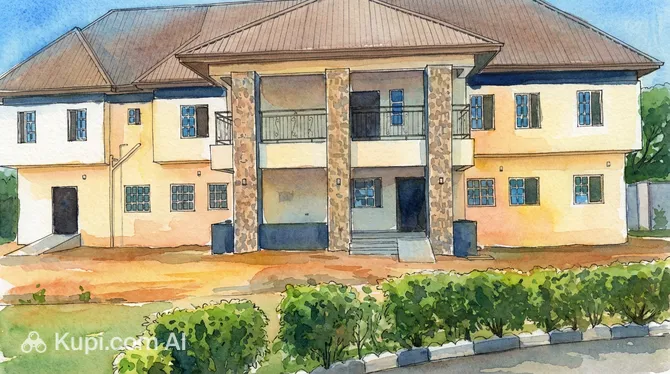
Osisioma is a dynamically developing industrial and residential area in Abia State, located in southern Nigeria. As an essential part of the Aba metropolitan area, Osisioma serves as a gateway and transit hub for traders and workers moving daily through this bustling region. The atmosphere here is that of a typical Nigerian suburb, where modern industry is closely intertwined with the traditional way of life of local communities.
Geographically, the town covers an area of about 198 km² and is characterized by a high population density, which, according to recent estimates, exceeds 300,000 people. Although Osisioma is not a classic tourist center, it attracts those who want to see the authentic, unvarnished life of the Igbo region and get acquainted with its historical heritage and industrial potential.
Osisioma. Illustration.
Source: Kupi.com AI
The city's main features center around its role as a manufacturing hub. It is home to numerous small workshops and large industrial facilities that create a unique rhythm of urban bustle. Visitors can observe the development of the local economy and the daily trade that thrives in local markets and squares.
A visit to Osisioma is an opportunity to step off the beaten tourist path and immerse yourself in the energetic atmosphere of one of the fastest-growing areas in Abia State. We invite you to discover this vibrant corner of West Africa.
Weather Overview
The climate in Osisioma is typical for the southern part of Nigeria and is characterized as tropical humid. Here, hot weather with high humidity prevails almost all year round, which may be unusual for guests from northern latitudes. The average annual temperature ranges from 25–32°C, and bright sunshine is often replaced by sudden downpours.
Two seasons are clearly defined throughout the year: the rainy season and the dry season. The wettest period lasts from March to October, peaking in September, when rainfall can occur almost daily. The dry season begins in November and lasts until February; during this time it becomes slightly hotter, and the Harmattan wind may blow from the Sahara, bringing fine dust. The city's climate can be studied in more detail on the specialized page.
Expect very warm summers with occasional intense rain and relatively dry winter months with high daytime temperatures. Due to dense urban development, Osisioma may experience a "heat island" effect, so it is recommended to plan rest in the shade or air-conditioned rooms during daytime hours.
Average monthly temperature
Average monthly precipitation
Interesting Facts
Osisioma is a place full of hidden energy and interesting demographic records that highlight the rapid development of this part of Nigeria.
Rapid Urban Growth: Between 1975 and 2015, the district's population grew by more than 163%, transforming a small settlement into a densely built-up suburban area.
Geographical Precision: The coordinates of the city center (approximately 5°8′59″N 7°19′49″E) place it almost in the heart of Abia State, making it a strategic hub on the A3 highway.
Special LGA Status: Osisioma Ngwa is one of the 17 Local Government Areas of Abia State, covering an area of only 198 square kilometers but possessing a huge population density.
Time Zone: The city operates on West Africa Standard Time (WAT), which corresponds to UTC+1, and there is no daylight saving time.
How to Get There
The transport accessibility of Osisioma is largely determined by its location near the major highways of Abia State. The town does not have its own airport or railway station, so the main way to get here is by car or bus from nearby transport hubs.
The nearest major aviation hub is Port Harcourt International Airport (PHC), located about 100 kilometers away. The drive from the airport to Osisioma via the A3 highway takes an average of 2 to 3 hours, depending on traffic and weather conditions. You can also consider flying to airports in Owerri or Enugu, from where intercity buses and taxis run regularly.
For travel within the region, trips from the neighboring city of Aba, which is only 5–10 kilometers away, are popular. A taxi or motorcycle taxi (locally known as "okada") ride will take 15 to 30 minutes, though traffic jams at the exits during peak hours can significantly increase travel time.
Station
Passenger traffic
Distance
Port Harcourt Railway station
1
59 km
Enugu Railway Station
1
138 km
Alfred Rewane Station
1
171 km
Bessengue train station
2
293 km
If you are planning a long journey from Lagos or Abuja, overnight bus trips are the most budget-friendly option. The journey from Lagos can take between 8 and 12 hours. More detailed information on routes and travel times can be found in the section on how to get to the city.
Main Attractions
The town of Osisioma is primarily an industrial and residential area, so it is difficult to find classic architectural masterpieces or world-class museums here. However, for the curious traveler, the town is interesting for its local markets and administrative center, where the daily life of the Igbo people is in full swing. A walk through the central market stalls allows you to see the skill of local artisans and feel the true flavor of an African trading hub.
One of the area's characteristic features is its industrial architecture. Many small manufacturing enterprises and workshops shape the city's appearance, demonstrating the economic activity of the region. Observing the work of local craftsmen creating leather goods and textiles can be a fascinating experience for those who value authenticity.
Due to its direct proximity to the city of Aba, many visitors to Osisioma head to the famous Main Market, one of the largest in West Africa. In Osisioma itself, it is worth paying attention to the administrative buildings and public squares, which serve as the main landmarks for locals and venues for community gatherings.
Local Cuisine
Culinary traditions in Osisioma are inextricably linked with the culture of the Igbo people. The diet is based on root vegetables such as yams and cassava. Be sure to try pounded yam or fufu—a thick paste usually served with various aromatic soups. Among the most popular is egusi soup, which is prepared with meat, dried fish, and local spices that give the dish a unique taste.
No less popular in the city is jollof rice—a hallmark of Nigerian cuisine. This is a spicy dish made from rice, tomatoes, and peppers, often served with fried chicken or beef. Street food lovers should look out for suya—spicy beef skewers generously seasoned with a mix of spices and peanut flour.
As a drink, locals often prefer palm wine—a traditional low-alcohol beverage that is best tried fresh. Natural mango and pineapple juices are also great for cooling off in the heat. The city's gastronomic scene is mainly represented by small local eateries (buka), where food is prepared according to home recipes using plenty of palm oil and spicy seasonings.
Travel Tips
Visiting Osisioma will be an interesting experience for you if you prepare in advance for the peculiarities of the local rhythm of life and infrastructure. These tips will help you feel more confident during your trip.
Clothing and Essentials: Choose light clothing made from natural fabrics, as the climate here is hot and humid year-round. Don't forget comfortable closed-toed shoes for walking on dusty streets and a power adapter (types G and D are used in Nigeria).
Transport: For moving around, it is best to use taxis or motorcycle taxis (okada), but always agree on the price in advance. Try to avoid traveling after dark due to road conditions and safety considerations.
Finance: The official currency is the Nigerian Naira. Cards are rarely accepted, so always carry cash. It is better to exchange currency at banks in major cities like Aba.
Health: Drink only bottled water and use repellents to protect against malarial mosquitoes. There are pharmacies in the city, but serious medical help should be sought in specialized state clinics.
Communication: The official language is English, but locals more often communicate in Igbo or Pidgin English. Knowing a few phrases in Igbo (e.g., "Nnoo" — welcome) will help win people over.
Local Etiquette: Nigerians are very friendly and value a polite greeting. When entering a room or starting a conversation, always greet first.
What to Avoid: Do not take photos of administrative buildings and government installations—this can cause legal problems. Also, you should not openly display expensive jewelry and electronics in crowded places.
Connectivity: Buy a local SIM card (MTN or Glo) immediately upon arrival in the region, as hotel Wi-Fi can be unstable.
Following these simple rules will make your visit to Osisioma comfortable and allow you to focus on exploring this energetic industrial district.
Entertainment & Nightlife
The entertainment infrastructure in Osisioma is primarily geared toward locals, so it is difficult to find large nightclubs or concert halls here. The main leisure activities for residents are street markets and spontaneous gatherings in local cafes, where you can listen to modern Nigerian music and discuss the latest news. Life here winds down quite early, and travelers usually head to the neighboring city of Aba for more active evening entertainment.
Daytime entertainment in the city is often related to visiting football pitches—football is a true passion in Nigeria, and local team matches always draw many fans. Church communities also play an important role in social life, with services often accompanied by vibrant choir performances and ceremonial events open to visitors.
For those looking for a quiet break, the best option is to visit family restaurants offering traditional dishes accompanied by cold drinks. Safety at night requires increased attention, so it is recommended to plan your return to the hotel before dark or use trusted taxi services.
Parks & Museums
In Osisioma itself, there are practically no classic parks or museums, as the area developed mainly as an industrial and residential zone. Greenery here is minimal, and the main "green spots" are small squares near administrative buildings or private gardens in residents' yards. The absence of large parks is explained by the dense development and the priority given to commercial land use.
For cultural enrichment and walks in the fresh air, travelers most often head to neighboring Umuahia or Aba. In Umuahia, for example, you can find the National War Museum, which tells the history of the region in detail, which will be of interest to history buffs.
Despite the lack of formal recreational areas, Osisioma offers the chance to see a "living museum" of everyday life—from noisy market squares to industrial landscapes. Travelers looking for peace and nature are recommended to plan trips outside the city, where more tranquil rural landscapes can be found.
Getting Around
The public transport system in Osisioma is characterized by a degree of chaos and high intensity, which is typical for most Nigerian suburbs. The main means of transportation here are minibuses, called danfo, and three-wheeled motor rickshaws. They run without a fixed schedule, departing as they fill with passengers, and cover almost all residential and industrial zones of the district.
For quick trips over short distances, locals and tourists often use motorcycle taxis—okada. This is the fastest way to bypass congestion in narrow streets, but it requires caution and the mandatory use of a helmet. Fares in all types of transport are paid in cash to the driver or conductor, so it is always worth having small bills with you.
There is no metro, tram, or trolleybus in the city. The main transport flows are concentrated along the A3 highway, connecting Osisioma with other major cities in the state. Travelers are advised to avoid traveling during peak hours (morning and evening) when roads become extremely congested and travel times can increase several times over.
Accommodation
Accommodation options in Osisioma are quite limited and primarily aimed at business travelers and industrial workers. Small private hotels and budget guest houses predominate. The cost of living usually ranges from $10 to $30 per night, and the living conditions can be described as basic.
Most hotels are concentrated in the administrative center area and along the main roads. Tourists accustomed to international service standards and chain hotels are advised to consider staying in the neighboring city of Aba, where the choice of housing is much wider and includes mid-range hotels with air conditioning and secure parking.
When choosing a place to stay in Osisioma, it is worth paying attention to the presence of a backup generator (to ensure an uninterrupted power supply) and bottled water supplies. It is better to book rooms in advance by phone or through local services, as international booking systems may not display all available options in this area.
Nearby Cities
Due to its location in the densely populated Abia State, Osisioma can serve as a starting point for short trips to interesting cities in the region. Proximity to major commercial and administrative centers allows tourists to diversify their itinerary and see different facets of life in southern Nigeria.
The most popular destination for a trip is the city of Aba, located just 10 kilometers away. It is a true paradise for shopping enthusiasts and industrial tourism, famous for its giant markets. Also worth noting is Umuahia—the state capital, where you can get acquainted with the administrative culture and visit local museums.
For those ready to travel a bit further, the city of Owerri is interesting, known for its nightlife and more developed entertainment industry. These trips are easily made within one day using taxis or intercity minibuses.
Exploring the surroundings of Osisioma allows for a deeper understanding of the Igbo culture and shows how neighboring cities complement each other, creating a single economic and cultural space for the region.
Shopping & Souvenirs
Shopping in Osisioma is primarily about visiting lively local markets where you can find goods for every taste at very affordable prices. The city does not have modern air-conditioned shopping malls, but it is famous for its market stalls selling leather goods, textiles, and electronics. Trade here is active and noisy, and the ability to haggle is considered an essential skill for every buyer.
Special attention should be paid to leather goods: locally produced shoes and bags are valued throughout Nigeria for their durability. The markets also offer a wide selection of traditional African fabrics with bright prints, from which you can order clothes from local tailors. As souvenirs, tourists often bring back Igbo handicrafts, such as carved wooden figurines or woven baskets.
Shops and stalls usually operate from early morning until sunset. Payment is mainly made in cash in the local currency (Naira), so it is worth taking care of change in advance. Large purchases and visits to supermarkets are best planned in the neighboring city of Aba, where the infrastructure is more developed. Tax Free returns are generally not provided in local retail outlets.