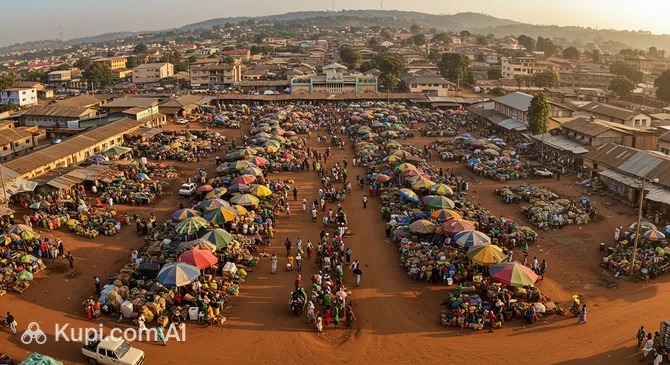
Awka is more than just the capital of Anambra State; it is one of the oldest cities in southeastern Nigeria. Located in the heart of the densely populated Igbo heartland, the city is steeped in the atmosphere of a dynamically developing administrative and educational center. With a population of over 300,000, Awka harmoniously combines the energy of modern universities with the echoes of the ancient Nri civilization.
Awka. Illustration.
Source: Kupi.com AI
The city is historically known as the "land of blacksmiths." Its very name is derived from Igbo words meaning metal smithing, highlighting the deep historical heritage of Awka as a metalworking hub. Today, it is an important commercial hub, strategically located between the major nodes of Onitsha and Enugu, making it a convenient base for exploring the eastern part of the country.
While Awka is more functional than tourist-oriented, travelers are drawn here by the authentic rhythm of life, bustling markets, and the student energy brought by Nnamdi Azikiwe University and Paul University. It is a place for those who want to see the real, unvarnished Nigeria, feel its drive, and get acquainted with traditional Igbo crafts.
Weather Overview
A classic tropical climate dominates in Awka, typical of the southeastern part of Nigeria. High humidity and consistently high temperatures persist throughout the year, usually ranging between 25–32°C. The flat terrain facilitates decent air circulation; however, during periods of no wind, the heat in the city can feel quite intense.
The region is characterized by a clear division into dry and wet seasons. The rainy period lasts from May to October, when the city is hit by heavy downpours, peaking in September (up to 255 mm of precipitation). The dry season, beginning in November and lasting until April, brings sunnier weather but may be accompanied by the dusty Harmattan wind from the Sahara in December and January. Expect hot days with maximum temperatures up to 36°C and warm, humid nights.
When planning a visit, it is worth considering that the weather in Awka significantly affects road conditions and travel speed. The winter months are considered the most comfortable time to visit, as the rains virtually stop and humidity drops slightly, making city walks more pleasant.
Average monthly temperature
Average monthly precipitation
Interesting Facts
Ancient Roots: Awka is considered one of the oldest settlements in Igboland and was part of the Nri civilization. Some of the earliest documented bronze works in sub-Saharan Africa were created here around 800 AD.
City of Smiths: The city's name literally translates from the Igbo language as "land of blacksmiths." Historically, masters from Awka were famous throughout West Africa for their skill in forging weapons, tools, and ritual objects.
Administrative Rise: The city received its official status as the capital of Anambra State relatively recently—on August 21, 1991, following the administrative division of the old state territory.
Seven Clans: Traditionally, the Awka urban community consists of seven Igbo groups of common descent, historically divided into two primary sections.
Educational Hub: More than 16% of the city's population are students, making Awka one of the "youngest" and most intellectually active cities in the region.
How to Get There
Awka is an important transport hub in southeastern Nigeria, providing connections between major regional centers. The city is conveniently located at the intersection of key highways, making it accessible for travelers moving by car and bus. If you are planning a trip, it is worth studying the city's transport routes in advance to avoid the traffic jams that often occur at the entrances from the Onitsha side.
Awka does not have its own airport. Travelers are advised to use the airports in neighboring cities. The nearest options are the airports in Enugu (about 80 km) or Asaba, from where you can reach the center of Awka by taxi or intercity bus. Travel time from Enugu is usually 1.5 to 2.5 hours, depending on traffic conditions.
Rail service in Awka is currently undeveloped, so roads remain the primary means of travel. A bus journey from Lagos can take between 10 to 12 hours (about 640 km), while from Port Harcourt, it takes approximately 3-4 hours. For comfortable intercity travel, it is best to choose major transport companies offering air-conditioned express buses.
Station
Passenger traffic
Distance
Enugu Railway Station
1
52 km
Port Harcourt Railway station
1
159 km
Alfred Rewane Station
1
164 km
Makurdi Railway Station
1
231 km
Main Attractions
Awka serves more as an administrative and educational hub than a classic tourist center with an abundance of monuments. The main life of the city revolves around its major institutions, such as Nnamdi Azikiwe University. Strolling through its extensive grounds, you can feel the pulse of modern intellectual life in Nigeria and meet local youth.
For those interested in Igbo culture, the local artisan workshops are significant sites. Although there is no centralized blacksmithing museum in the city, the traditions of metalworking and woodcarving are still alive in the quarters of hereditary masters. Observing blacksmiths at work allows you to touch the ancient traditions of the Nri civilization, which have made this region famous for centuries.
Awka's central squares and bustling commercial hubs serve as the main points of attraction. While there are no grand architectural ensembles, the very atmosphere of a fast-growing city with its government buildings and modern shopping rows provides a clear picture of the development in the southeast of the country. For a deeper immersion into the region's history, tourists often use the city as a base for trips to the sacred sites of the Igbo people in the surrounding areas.
Local Cuisine
The gastronomy of Awka is a vibrant embodiment of Igbo traditions. The diet is based on root vegetables and grains, which are sold in abundance at local markets. The main dish to try is fufu, a thick mash made from yam or cassava, typically served with a variety of aromatic soups. Especially popular is palm oil-based soup with the addition of local herbs and spices.
Street food lovers should look out for fried yam and plantains, often sold at markets with spicy sauces. Corn and cashew nuts are also popular local snacks. A characteristic feature of the local cuisine is the use of fresh "farm-to-table" ingredients, as the city is surrounded by fertile agricultural land.
Regarding drinks, the undisputed leader is palm wine—a traditional low-alcohol beverage that is best tasted fresh. Refreshing non-alcoholic drinks made from exotic fruits are also widely available. Restaurants in Awka are most often simple, cozy establishments focusing on home-style cooking, where you can dine alongside locals and experience the true hospitality of Anambra State.
Travel Tips
Welcome to Awka! This dynamic city in Anambra State will show you its best side if you follow our practical travel tips.
Clothing and Essentials: Choose light clothing made from natural fabrics, as the city is hot and humid. During the rainy season (May to October), be sure to bring a sturdy umbrella or raincoat. When visiting official institutions or religious communities, you should dress modestly, covering your shoulders and knees.
Transport: During daylight hours, it is most convenient to get around in three-wheeled rickshaws or motorcycle taxis (okada). Be prepared for traffic jams at the city entrances. Renting a car without a local driver is not recommended due to the chaotic traffic.
Finances: The main currency is the Nigerian Naira. Always carry a sufficient supply of cash, as international cards are not accepted everywhere, and ATMs may not work when needed.
Health and Safety: Drink only bottled water. Avoid walking on the outskirts after sunset and always keep your valuables in inner pockets. Before your trip, ensure you have the necessary vaccinations (including yellow fever).
Communication: English is the official language and is widely spoken, but knowing a few phrases in Igbo (for example, "Kedu" — "How are you?") will instantly win over the locals.
Local Etiquette: Greetings are very important. Don't forget to greet people politely before asking for anything. Always ask for permission before photographing someone at the market.
What to Avoid: You should not publicly criticize local traditions or discuss political issues. Also, refrain from wearing overly revealing clothing in densely populated areas.
Extra Tip: Be sure to visit a local market in the morning—it's the best way to feel the true energy of the "land of blacksmiths."
May your introduction to Awka be rich and safe! Enjoy your journey through eastern Nigeria.
Entertainment & Nightlife
The entertainment scene in Awka is largely shaped by the vast number of students who fill the city with life and music. Most activity after sunset is concentrated in areas adjacent to the universities, where local bars and eateries operate. Locals describe the evening atmosphere as "buzzing," filled with lights and the sounds of modern Nigerian music, such as Afrobeat.
While the city lacks an abundance of luxury European-style nightclubs, a culture of open-air venues and street cafes flourishes here. These are places where you can try local beer, chat with friendly locals, and enjoy live performances by local musicians. The dress code in most establishments is casual, and the crowd consists mainly of young people and office workers.
For those seeking large-scale entertainment or theatrical productions, Awka serves as a starting point—many residents travel to neighboring Onitsha or Enugu for major concerts and festivals. Nevertheless, daytime leisure in Awka itself can include visiting bustling markets or participating in traditional Igbo cultural festivals that are periodically held in the city's central squares, offering vibrant spectacles with masks and dancing.
Parks & Museums
There are no large state museums in Awka; however, the city spaces and university grounds themselves serve as keepers of history. The Nnamdi Azikiwe University Campus is perhaps the greenest and best-maintained place in the city. Here, you can stroll along shaded alleys that serve as an improvised park for residents and see monuments dedicated to prominent figures in Nigerian history.
While formal galleries are a rarity in the city, art enthusiasts should pay attention to local woodcarving workshops. Here, you can find unique works by carvers whose products often carry the sacred meaning of Igbo culture. These workshops act as exhibitions, allowing you to see the process of creating traditional masks and ritual items firsthand.
There are few recreational zones or classic amusement parks in Awka, as the city is developing very rapidly and functionally. Nevertheless, the surrounding agricultural fields and small forested areas on the outskirts provide a natural backdrop. For full relaxation in nature, locals often choose hotel grounds or private university areas, where peace and order prevail.
Getting Around
The transport system in Awka is typical of a fast-growing Nigerian city and relies on private transport. There is no metro or tram system; instead, the primary public transport consists of minibuses, known as danfo, and nimble three-wheeled motor rickshaws (keke napep). They ply the city's main arteries, connecting the center with the outskirts and neighboring settlements.
For quick trips over short distances, locals and tourists often use motorcycle taxis, called "okada" here. This is the most efficient way to bypass traffic during rush hours; however, you should keep safety in mind and agree on the price beforehand. There are virtually no fixed fares in public transport, so the ability to bargain will be very useful.
Fares are always paid in cash in Naira. Tourists are advised to carry small bills, as drivers often do not have change. Taxis can be hailed through local apps or on the street, but it is important to note that traffic in the city center can be chaotic, and there is no set schedule for transport—vehicles depart once they are filled with passengers.
Accommodation
The hotel infrastructure in Awka is primarily geared toward business travelers, government officials, and the families of students. There are not many luxury five-star hotels, but a wide selection of quality mid-range options and guesthouses is available. Most accommodation is concentrated in central areas and near major universities, which is convenient for transport accessibility.
For budget travelers, numerous apartments and guesthouses are available, often offering long-term rentals. While the level of comfort in these may be modest, they allow for significant savings. In such establishments, it is advisable to check in advance for the availability of air conditioning and a generator in case of power outages.
When planning a trip during peak periods—such as university graduations or major cultural festivals—it is recommended to book accommodation in advance. Most hotels in Awka can be found through international booking services, though direct communication with the management may be required to confirm a reservation. The price range here remains quite affordable compared to Lagos or Abuja.
Nearby Cities
Thanks to its location in the heart of a densely populated region, Awka serves as an excellent starting point for exploring the surrounding areas and neighboring states. Just 20–30 kilometers away is the legendary Onitsha—a giant commercial hub famous for its market, which is considered one of the largest in West Africa. A trip there allows you to see the famous bridge over the Niger River and immerse yourself in an atmosphere of endless commercial bustle.
For those interested in industrial development and Igbo traditions, a trip to the city of Nnewi is ideal. This place is famous for its industry and entrepreneurial spirit, often referred to as the "Japan of Africa." Also nearby are the towns of Nkpor and Asaba, the latter of which is located on the other bank of the Niger and is the capital of Delta State.
Exploring these cities will help you better understand the multifaceted nature of southeastern Nigeria, where modern economic ambitions are closely intertwined with centuries-old tribal traditions. Most of these destinations are easily reachable within a day trip by taxi or scheduled minibus.
Shopping & Souvenirs
Shopping in Awka is primarily about visiting its bustling and colorful markets. The city is not famous for large Western-style shopping malls, but it offers something more valuable: authentic handmade goods. The most notable souvenir would be items from local blacksmiths—ranging from decorative metal objects to traditional tools that have been the region's hallmark for centuries.
The city's central markets are the main commercial hubs where life teems from early morning. It is worth looking for textiles with traditional Igbo patterns and carved wood products. Awka's markets are also an excellent place to buy fresh produce: high-quality palm oil, spices, and the famous local yam.
Shops in the city usually operate from morning until sunset, and it is customary to bargain actively at the markets—this is part of the local social culture. Payments are predominantly made in cash in Naira, so it is wise to carry small change. While larger stores are beginning to accept cards, cash remains the only reliable method of payment in markets and small stalls.