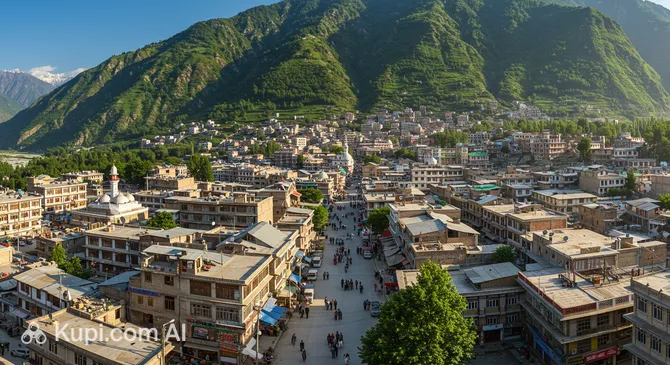
Mingora is not just the largest city in the picturesque Swat Valley in Pakistan, but also a living testament to the intertwining of eras. Located on the banks of the Swat River in the Khyber Pakhtunkhwa province, the city is a key economic and cultural hub for the region. Here, the modern pace of life harmoniously coexists with a rich historical heritage that dates back to ancient times.
Mingaora. Illustration.
Source: Kupi.com AI
The city's geographical location in the foothills of the Hindu Kush ensures its status as an important gateway to the northern regions of the country. With a population of about 280,000, Mingora pulses with the energy of oriental bazaars and craft workshops. The city gained particular significance during the era of the Gandhara Kingdom, becoming a major center of Buddhism where Indian traditions uniquely merged with Greco-Roman art.
Today, Mingora offers tourists a unique opportunity to see Gandhara artifacts and enjoy the majesty of Swat's nature. Although the city is primarily an administrative hub, its atmosphere of hospitality and proximity to archaeological sites make it a must-visit on any itinerary through the north of the country. We invite you to discover this amazing land, where every stone holds the history of millennia.
Weather Overview
The climate in Mingora is temperate mountain in character with distinct seasons, making trip planning an important stage. Summer here is moderately warm but features high humidity due to monsoons. The hottest and rainiest months are July and August, when the average temperature is about +23°C, and daytime highs can reach +30°C. Heavy rainfall is common during this period, reaching 230–250 mm per month.
Winters in the city are cool and dry, which is ideal for lovers of fresh mountain air. In January and February, the average temperature ranges from +2°C to +5°C, and night frosts down to -4°C are common. It is worth checking detailed information about the current weather in Mingora just before leaving to choose your wardrobe correctly.
Spring and autumn are considered the most favorable seasons to visit, as mild and sunny weather sets in. Expect warm days with occasional rain in March-April and dry, cool evenings in October-November. This climatic diversity allows the Swat Valley to remain picturesque at any time of year, offering travelers different colors of nature.
Average monthly temperature
Average monthly precipitation
Interesting Facts
Mingora holds the honorable third place in size among the cities of the Khyber Pakhtunkhwa province, surpassed only by Peshawar and Mardan.
The city stands on the Swat River, which for centuries served as the main life artery and transport route for ancient caravans.
During the Gandhara Kingdom era, this territory was a global center of Buddhism, where a unique artistic style combining Indian and Greco-Roman motifs was born.
Archaeological finds confirm that humans have continuously inhabited the territory of modern Mingora for several millennia.
The city is a major hub for the trade of emeralds, for which the Swat Valley is famous — some of the highest quality stones in the world.
How to Get There
Mingora is a key transport hub for northern Pakistan, linking the Swat Valley with the rest of the country. Although the city is located in a mountainous area, it is quite accessible for the prepared traveler. Road transport is the primary way of moving around here, and a developed network of roads allows you to reach the city from major provincial centers. You can find more details about ways to get to Mingora in the specialized transport sections.
Direct air communication with Mingora is currently unavailable, so travelers usually fly to the nearest major airports in Peshawar or Islamabad, then continue by bus or taxi. There is an airfield in the neighboring Saidu Sharif within the Swat Valley itself, but its operation often depends on seasonality and weather conditions.
Rail communication is not developed in this mountainous region, so trains do not go to Mingora itself. The nearest stations are in the lowland part of the province. The main flow of tourists and locals is served by numerous bus operators, whose trips regularly depart from the city to Hyderabad, Peshawar, and Lahore. Traveling by bus is not only a budget option but also a chance to enjoy stunning views of the Pakistani mountains.
Main Attractions
The main treasures of Mingora are inextricably linked to its role in the ancient Gandhara civilization. One of the must-visit places is the Swat Museum. This specialized depository houses a unique collection of Buddhist art, where you can see the finest bas-reliefs and statues combining Eastern and ancient features. The museum is rightfully considered one of the best in the region for understanding the historical context of the valley.
For those ready to go in search of ancient ruins, the Amluk Dara Stupa will be a real discovery. These impressive remains of Buddhist architecture are located in the city's picturesque surroundings and allow you to feel the former greatness of the region's spiritual center. Additionally, the city's cultural diversity is highlighted by the Hindu Sadh Belo shrine, which is an important monument for the local community.
The main appeal of Mingora lies in the opportunity to take a journey through time by studying monuments of the Gandhara era. Walking through the city allows you to see how modern residential neighborhoods border archaeological zones. Visiting these sites gives travelers a rare chance to see the heritage that shaped the face of Central and South Asia for centuries.
Local Cuisine
A gastronomic journey to Mingora is an introduction to hearty and flavorful Pakistani cuisine, where spices, fresh meat, and bread play the leading role. Meat dishes cooked over an open fire are especially popular in this region. Be sure to try various types of kebabs and tender curry, which is traditionally served here with hot naan or roti flatbreads straight from the tandoor.
The food culture in the city centers around busy bazaars and small family restaurants. Street food is an integral part of life in Mingora: on every corner, you can find stalls with samosas, pakora, and fragrant tea. However, tourists should exercise caution and choose places most popular with locals, where high turnover guarantees fresh products.
As for beverages, tea is the absolute leader — both classic with milk and sugar, and local kahwa (green tea with cardamom). Alcohol is not sold or consumed in the city's public places due to the region's cultural and religious characteristics. You should end your meal with local sweets based on milk and nuts, which are an excellent addition to tea drinking after a busy day in the Swat Valley.
Travel Tips
A trip to Mingora promises to be an unforgettable experience, and these practical tips will help you make it as comfortable and safe as possible.
Clothing and Dress Code: Choose modest and closed clothing that respects local conservative traditions. Women are recommended to wear loose trousers and tunics and carry a scarf. Comfortable closed shoes are essential for walking on uneven terrain.
Transport: The best way to get around the city is by rickshaws. Always agree on the price before starting the trip. For longer excursions into the Swat Valley, consider renting a car with a driver.
Finance: Only Pakistani rupees are in use. Cards are accepted very rarely, so always carry a sufficient supply of cash. It's better to exchange currency in large cities or specialized points in the center.
Safety: Observe general precautions, avoid walking alone at night in unfamiliar areas, and stay away from large crowds. Always keep a copy of your documents with you.
Communication: The main languages are Pashto and Urdu. English is understood by hotel staff and educated youth. Learn basic polite phrases — this very much endears the locals.
Etiquette: Always ask permission before photographing people. Avoid discussing political or religious topics to avoid awkward situations.
Health: Drink only bottled water and avoid ice in drinks. Basic medications can be found in pharmacies, but it's better to bring specific drugs with you.
Connectivity: You can buy a SIM card from a local operator in central markets; a passport is required for registration. Wi-Fi in hotels can be unstable.
Following these simple rules, you can fully immerse yourself in the unique atmosphere of the Swat Valley and bring back only pleasant memories from your trip!
Entertainment & Nightlife
Nightlife in Mingora differs significantly from Western metropolises. You won't find noisy clubs or bars here, as the city adheres to traditional conservative values. The main type of evening leisure for locals is socializing within the family circle or gathering in traditional tea houses, where the latest news is discussed and business matters are settled over a cup of kahwa.
Daytime entertainment in the city is focused on educational and natural leisure. Tourists can spend time studying the exhibits of the Swat Museum or take a walk along the banks of the Swat River. Cultural events in the city are often linked to local holidays and religious traditions, allowing guests to immerse themselves deeper in the authentic atmosphere of the province.
For more active pastimes, travelers often use Mingora as a base for trips to picturesque corners of the valley. Trips to mountain lakes, trekking along Hindu Kush trails, and exploring craft markets form the core of the entertainment program. In the evening, the city quietens down, offering guests the chance to enjoy tranquility and views of the starry sky over the mountain ranges.
Parks & Museums
The cultural heart of Mingora is undoubtedly the Swat Museum. This institution is considered one of the most significant in the region, as its halls house an outstanding collection of artifacts from the Gandhara civilization. Visitors can see unique Buddha sculptures, ancient coins, and household items that are thousands of years old. The museum is a must-visit for anyone who wants to understand how ancient influences shaped the face of South Asia.
Although there are few city parks in the classical sense in Mingora, the city itself is surrounded by magnificent natural landscapes. The Swat River valley serves as a natural recreational zone where locals and tourists find rest in the shade of the mountains. Walking routes along the shore allow you to enjoy fresh mountain air and views of the snow-capped peaks that frame the city.
For a deeper immersion in the region's natural heritage, tourists are recommended to visit the green zones on the outskirts of the city, where gardens and groves create oases of silence. The combination of the Swat Museum's serious scientific exhibition and the valley's natural beauty makes Mingora a place where intellectual rest is harmoniously complemented by the contemplation of nature.
Getting Around
The transport system in Mingora is typical of large regional centers in Pakistan and is focused on meeting the needs of the local population and numerous traders. The basis of urban transport consists of maneuverable rickshaws and tuk-tuks, which are ideal for moving through the narrow and busy streets of the central districts. This is the fastest and most affordable way to get from one point of the city to another.
For longer distances or travel between neighboring settlements, minibuses and vans are actively used. They often do not have a fixed schedule and depart as they fill up, so tourists should be patient. Fares are usually paid in cash to the driver or conductor, and prices are very affordable. For convenience, it's worth finding out the name of the desired stop in the local language in advance or using a navigator.
An alternative to public transport is taxis, where you should always agree on the fare in advance, as meters are rarely used. The city also has a developed intercity bus service connecting Mingora with the country's major metropolises. If you plan to explore the surroundings of the Swat Valley, renting a car with a local driver can be the most comfortable, though more expensive, option.
Accommodation
The accommodation options in Mingora offer travelers a variety of choices, primarily focused on functionality and local flavor. As a regional hub, the city has both budget guest houses for backpackers and more comfortable hotels suitable for business trips and family vacations. The service level in local hotels usually corresponds to the middle class, providing all basic amenities for a comfortable night's stay.
The most convenient area for staying is the city center and the territories adjacent to the main transport arteries, from where it is easiest to reach historical monuments like the Swat Museum. Accommodations on the outskirts are also popular, where you can find quieter hotels with views of the Swat River and surrounding mountains. During the peak tourist season in the summer months, it is recommended to book accommodation in advance.
The price range in Mingora remains very affordable compared to Pakistan's large metropolises. Most bookings are made through international systems or directly by phone. For those planning a long stay, apartments are available in the city, often chosen by researchers and volunteers. When choosing a place to rest, it's worth paying attention to the availability of backup generators, as power outages are not uncommon in the mountain region.
Nearby Cities
Mingora is an ideal starting point for exploring the picturesque surroundings and ancient monuments of northern Pakistan. Proximity to key roads allows you to reach the most interesting locations of the Swat Valley in a short time. The city's surroundings hide both historical artifacts and incredible natural landscapes.
Just a few kilometers from the center is Saidu Sharif — the administrative capital of the district, where you can see royal residences and ancient buildings. If you decide to go a bit further, it's worth visiting the city of Batkhela, known for its trading traditions, or the picturesque Bahrain, where two mountain rivers merge, creating a unique atmosphere for relaxation.
Each of these directions reveals new facets of life in the Khyber Pakhtunkhwa province. Traveling through nearby cities and villages allows you to see the real, non-tourist Pakistan, get acquainted with the hospitality of local people, and enjoy the pristine beauty of the Hindu Kush mountains. Don't miss the chance to expand your itinerary and look into the most hidden corners of this amazing region.
Shopping & Souvenirs
Shopping in Mingora is a vivid immersion into the atmosphere of a traditional oriental bazaar. The city is famous for its handicrafts and markets where you can find unique goods characteristic only of the Swat Valley. The main shopping area is the central streets, where life does not stop from morning until evening, and stalls are bursting with locally produced goods.
Special attention should be paid to textiles: local embroidery, woolen shawls, and traditional Pakistani fabrics are famous for their quality and intricate patterns. Mingora is also a center for trading gemstones, particularly emeralds mined in the local mountains. However, buying stones requires certain knowledge and caution to avoid coming across a fake.
Shops and stalls usually operate from morning until sunset, and Friday may be a shortened day due to prayers. Payment at most outlets is made in cash in local currency (Pakistani rupees), though larger shops may start accepting cards. Don't forget that it's customary to bargain in the markets of Mingora — this is not just a way to lower the price, but an important part of the local communication culture.