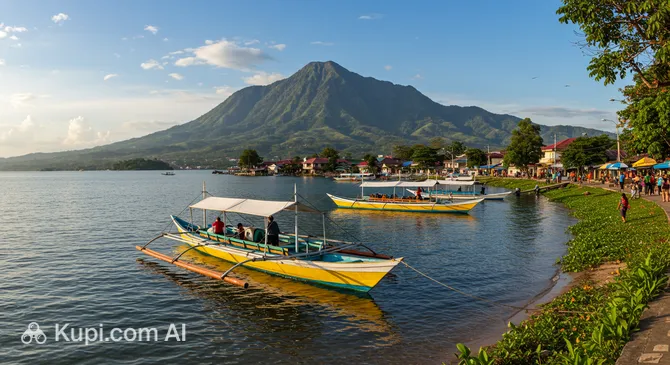
Nestled on the picturesque shores of Laguna de Bay at the foot of the majestic Sierra Madre Mountains, Binangonan is a fascinating corner of the Philippines. This first-class municipality in Rizal Province harmoniously combines the atmosphere of a bustling fishing center with the tranquility of suburban life. With a population of over 313,000, the town serves as an important economic hub for the region while retaining its historical charm.
Binangonan. Illustration.
Source: Kupi.com AI
The town's geographical location largely defines its unique character: part of its territory is on the mainland, while another part is spread across islands, including the western tip of Talim Island. This makes Binangonan an ideal destination for those wishing to experience authentic lakeside life, where daily existence is inextricably linked to the water and fishing. Although the town is not a mass tourist destination, it attracts travelers with its sincerity and hospitality.
Delving into the history of Binangonan, one can learn that a settlement existed here long before the arrival of the Spaniards, receiving official town status in 1737. Today, the main pride of the locals remains the ancient Santa Ursula Church and the proximity to the famous Angono Petroglyphs, which are located right on the municipality's border. Visiting this town is an invitation to see the real Philippines as it remains far from the beaten tourist paths.
Weather Overview
The climate in Binangonan is typical of the tropical Philippines, characterized by high humidity and consistently warm temperatures throughout the year. Average figures usually fluctuate between 27–32°C. Two seasons are clearly distinguished here: the dry season, lasting from December to May, and the monsoon season, which brings heavy rainfall from June to November. The location on the shores of Laguna de Bay provides a pleasant breeze that somewhat tempers the daytime heat.
The most comfortable months to visit are considered to be January and February, when moderately warm weather sets in with minimal rainfall. During this time, the average temperature is around 26°C, which is ideal for walking and excursions. Conversely, in July and August, rainfall reaches its peak, and local flooding is possible in coastal areas. It is recommended to check the current city climate before your trip to plan your wardrobe correctly.
It is worth considering that the proximity to the Sierra Madre Mountains and the lake can influence local weather conditions, sometimes causing morning mists or sudden short-lived downpours even during the dry season. Humidity remains high year-round, so travelers are advised to always have a supply of water and sunscreen. During the monsoon period, keep an eye on typhoon forecasts, as they can temporarily restrict boat traffic to the islands.
Average monthly temperature
Average monthly precipitation
Interesting Facts
The name Binangonan comes from the Tagalog word "binan," which translates to "a place of abundant reeds," referring to the natural landscape encountered by the first settlers.
The town has a unique geographical structure: of its 40 barangays (districts), 17 are located on islands in Laguna de Bay, including a significant part of Talim Island.
Although the famous petroglyphs are often associated with the neighboring town, this world-class heritage site is actually located within Binangonan, at the junction of two of its districts.
The historic Santa Ursula Church was founded by Franciscan missionaries and is one of the oldest in the province, becoming an independent parish as early as 1621.
Binangonan is considered one of the main suppliers of freshwater fish to the Philippine capital region thanks to its extensive coastline.
How to Get There
The transport accessibility of Binangonan makes it a convenient destination for trips from Manila. The town is located approximately 40–50 kilometers from the capital of the Philippines, and there are several ways to get here. The majority of travelers use road transport via the Manila East Road, though it's worth noting that traffic jams during peak hours can significantly increase travel time.
For those who prefer air travel, the nearest hub is Ninoy Aquino International Airport (IATA: MNL) in Manila. From the airport, you can reach the town by taxi or by using Grab, which will take between one and a half to three hours depending on traffic conditions. The municipality does not have its own airport.
If you are planning to travel by public transport, the best options are buses or jeepneys departing from terminals in Quezon City (Terminal 2) or the Cubao area. There is also an interesting water route: ferries and boats run across Laguna de Bay from neighboring coastal towns like Tanay, allowing you to avoid road congestion and enjoy the views. Detailed information on routes can be found in the how to get to Binangonan section.
Station
Passenger traffic
Distance
FTI railway station
5
18 km
Antipolo Station
6
18 km
Marikina–Pasig Station
5
19 km
Boni Station
6
19 km
Shaw Boulevard MRT Station
6
19 km
Main Attractions
The main attractions of Binangonan are inextricably linked to its spiritual heritage and natural wealth. In the heart of the town stands the Santa Ursula Church—a majestic temple with a 200-year history. It is not only an architectural landmark but also the center of cultural life, where the community's centuries-old traditions are carefully preserved under the patronage of Saint Ursula.
For history buffs, the Angono Petroglyphs are a true treasure. Despite the name, these unique rock carvings—recognized as the oldest in the Philippines—are actually located on the border of Binangonan in the barangays of Tayuman and Bilibiran. This archaeological site allows visitors to touch the prehistoric past of the region, viewing hundreds of human and animal figures carved into the rock thousands of years ago.
The town's coastline and Laguna de Bay give it a special charm. A walk to the fish port allows you to watch the bustle of local fishermen and take a boat to the island parts of the municipality on Talim Island. Here, you can enjoy panoramic views of the lake and mountains, feel the fresh breeze, and see how the Philippine province lives, centered around traditional industries.
Local Cuisine
The culinary map of Binangonan is a true paradise for fresh fish lovers. The main feature of the local cuisine is the use of the catch from Laguna de Bay. Here, you must try pelatexa—a small, crispy fish fried to a golden crust—as well as the famous milkfish (bangus) and tilapia, prepared on the grill or smoked according to traditional recipes.
Besides fish, classic Filipino dishes are popular in the town: adobo (meat stewed in soy sauce and vinegar) and the sour soup sinigang, which is often made here with shrimp. A local delicacy is bagoong—a fermented fish paste that serves as the perfect accompaniment to rice and vegetables. The character of the town's gastro scene is very casual: the best flavors are hidden not in expensive restaurants, but in small "carinderias" (eateries) near the port and at the markets.
As for drinks, no lunch is complete without refreshing coconut juice (buko juice) or a cold Filipino beer. Street food also deserves attention: at the markets, you can find vendors selling sticky rice sweets and exotic fruits. For the most authentic experience, head to the portside eateries where you can taste kinilaw—raw fish marinated in vinegar and spices, a flavor you will remember for a long time.
Travel Tips
A trip to Binangonan will give you a unique experience of the Philippine lake region. To ensure your journey goes smoothly and leaves only pleasant impressions, use our practical tips.
Clothing and Essentials: Choose light clothing made from natural fabrics, as the region experiences high humidity and heat. For visiting Santa Ursula Church, be sure to follow a modest dress code (shoulders and knees covered). Don't forget comfortable shoes for walking through the market and port.
Transport: The fastest way to move within the town is by tricycle. If you're planning a trip to Manila, leave either very early in the morning or after lunch to avoid getting stuck in hours-long traffic jams.
Finances: Cash is king in the town. Cards are only accepted in rare large pharmacies or supermarkets. ATMs are few and concentrated in the center, so keep a sufficient supply of Philippine pesos with you.
Health and Safety: Drink only bottled water. Due to the proximity to the lake, it is recommended to use mosquito repellent and carry a basic first-aid kit.
Communication: The primary language is Tagalog, but most residents understand basic English. Learn a few phrases, like "Salamat" (Thank you)—it always brings a smile to local faces.
Local Etiquette: Filipinos are very friendly and polite. Greet people with a smile and show respect to elders—this is the key to being well-received.
What to Avoid: You should not head to remote island areas on the lake alone without a guide, especially in the evening. Also, do not ignore weather warnings during the monsoon season.
Extra Tip: Try to get to the fish market early in the morning (around 5:00–6:00 AM)—this is the most colorful time when you can see the true rhythm of the town's life.
By following these simple rules, you can fully enjoy the hospitality of Binangonan and discover the real, non-tourist Philippines!
Entertainment & Nightlife
Binangonan is primarily a residential and working municipality, so you won't find the noisy night clubs or large-scale concert venues typical of Manila here. The town's nightlife is centered in cozy local establishments: street karaoke bars and small eateries near the port, where a relaxed and friendly atmosphere prevails. These are the perfect places to try local San Miguel beer and listen to the locals sing, as karaoke is a national hobby.
The main entertainment in town is tied to the festival calendar and market culture. The most vibrant event of the year is the Town Fiesta and the feast of the patroness Saint Ursula, celebrated on February 25th. During this time, the streets are transformed with festive processions and public celebrations. At other times, popular daytime activities include boat rides on the lake or visiting the lively fish markets to experience the authentic flavor of Filipino life.
If you're looking for more traditional urban entertainment, such as cinemas or modern shopping centers, residents usually head to neighboring Antipolo, which is about a 30-minute drive away. Large malls and bars with a wider variety of music are located there. In Binangonan itself, the best way to spend an evening is on the waterfront, enjoying the sunset over the lake at one of the floating restaurants.
Parks & Museums
Due to the high building density and focus on industrial fishing, Binangonan does not have an extensive network of city parks; however, Laguna de Bay itself serves as the main recreational zone. Its shores are a place for informal relaxation, walks, and watching sunsets. Locals often spend time in the church plazas, which are traditional centers for socializing and finding quiet amidst the urban bustle.
While there are no classic indoor museums within the town limits, history enthusiasts should visit the archaeological site on the border with Angono. This is an open-air museum protected by the National Museum of the Philippines. Here, you can see prehistoric rock carvings that are an important cultural heritage site of Southeast Asia. The area around the site is landscaped for visitors and allows for the enjoyment of nature away from traffic noise.
The natural area of Talim Island, easily accessible from the town port, offers tourists wilder landscapes and opportunities for light trekking. This is an excellent alternative to parks for those seeking solitude. The island's mountainous terrain combined with lake views creates a unique atmosphere that attracts photographers and hikers wishing to see the region's pristine beauty.
Getting Around
Public transport in Binangonan is typical for Philippine suburbs, characterized by color and a touch of chaos. The main way to get around the town and between barangays is by jeepney—the legendary painted minibuses. For short trips through narrow streets, tricycles (motorcycles with sidecars) are indispensable, and they can take you to almost any point in the municipality. The fare is low, but the price should be agreed upon in advance.
Connections to Manila and neighboring towns are provided by buses and shuttle vans (UV Express). They run regularly; however, tourists should avoid traveling during morning and evening peak hours when transport is overcrowded with people working in the capital. There is no metro or tram system in the town, and due to high population density and narrow roads, congestion on main thoroughfares is common.
A unique feature of the town's transport system is its water connections. Boats regularly depart from the fish port to island districts, including Talim Island. The boat trip takes between 10 to 30 minutes and is not only a necessity for locals but also a pleasant adventure for tourists. Payment for municipal transport is made in cash to the driver or conductor, and ride-hailing apps like Grab primarily work in the mainland part of the town.
Accommodation
The choice of accommodation in Binangonan is specific: there are practically no large hotel chains or luxury resorts here, as the town caters mainly to locals and fishing industry workers. The accommodation stock primarily consists of budget guesthouses, pensions, and short-term rental apartments. Most are concentrated in the central districts and near the port, which is convenient for those planning to explore the lakeside attractions.
For travelers seeking a higher level of comfort and a wide range of services, experienced tourists recommend considering accommodation options in the neighboring city of Antipolo. There, you can find mid-range hotels and resort complexes with swimming pools and panoramic views. In Binangonan itself, choose accommodation if you want to fully immerse yourself in the authentic atmosphere and save on living costs.
Accommodation prices in the town remain very affordable—a standard room in a guesthouse can cost between 1,000 and 3,000 Philippine pesos. It is recommended to book in advance, especially if your trip coincides with major religious holidays in February. Most local establishments prefer cash payments, although some options allowing card payments can be found through popular international booking services.
Nearby Cities
Binangonan serves as an excellent starting point for exploring Rizal Province, offering travelers easy access to neighboring cultural and natural centers. Thanks to its location on the lakeshore, you can easily plan both short excursions and full-day trips.
Just a few kilometers away is Cardona, a charming town that also makes its living from the lake. Another must-see destination is Angono, the recognized "Art Capital" of the Philippines, home to numerous galleries and the famous petroglyphs. It is also worth visiting Baras, known for its historic church and peaceful atmosphere.
Exploring the surroundings of Binangonan will allow you to see the diversity of the Philippine province—from art workshops to secluded lakeshores. Each of these destinations complements the overall picture of the region, making your journey truly deep and interesting.
Shopping & Souvenirs
Shopping in Binangonan primarily means visiting its colorful markets. The main commercial hub is the area near the fish port, where the freshest catch from Laguna de Bay is brought every morning. For a tourist, this is a great chance to see the variety of local seafood and buy authentic specialties, such as different types of dried fish or homemade bagoong.
The central streets of the town adjacent to Santa Ursula Square are filled with small shops and stalls where you can find daily necessities and local products made from reeds. Binangonan is not known for large shopping malls; for traditional modern shopping and branded goods, locals usually head to neighboring Antipolo, where SM and Robinsons malls are located.
As souvenirs from the town, it's worth bringing back handicrafts and local non-perishable food items. Shops usually operate from early morning until evening (around 7:00–8:00 PM), while market life begins buzzing even before dawn. The primary method of payment in town remains cash in Philippine pesos, so tourists are recommended to always carry a supply of small-denomination bills for purchases at markets and for tricycle rides.