Support

Taytay

About

Located in Rizal Province, Taytay is a dynamic and densely populated municipality that forms part of the Greater Manila area. This town in the Philippines is often called the "Garments and Woodworking Capital," as it is home to the country's largest production of ready-to-wear clothing and high-quality wood products. With a population of about 390,000, Taytay moves to the rhythm of an industrial and residential hub, offering guests a unique blend of a hardworking atmosphere and traditional Filipino hospitality.
\n
Taytay. Illustration.
Source: Kupi.com AI
\n

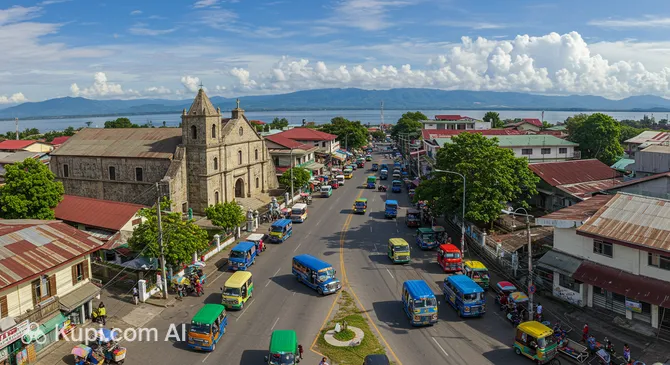
Geographically, the town is nestled on a plain adjacent to Laguna de Bay. Although Taytay is primarily an industrial center, its rich heritage dates back to pre-Hispanic times and the Spanish colonial era. For travelers, the town is interesting primarily as a place to see the "real" Philippines beyond the tourist resorts—complete with bustling markets, authentic street food, and modern shopping complexes.

\n

Among the town's key features are its famous garment markets, which attract buyers from all over the country seeking affordable and quality clothing, as well as the historic St. John the Baptist Church. We invite you to visit Taytay to feel the energy of this industrial heart of the region and find unique locally-made goods.

Weather Overview

The climate in Taytay is typical of the tropical Philippines—it is hot and humid throughout the year. Air temperatures usually range from 25°C to 33°C. Due to its proximity to the vast Laguna de Bay, the town often feels extra muggy, especially on windless days. Those planning a visit should keep in mind that the weather in Taytay largely depends on the changing seasons.

\n

The dry season lasts from December to May and is the best time to visit. During this period, rain is rare and the sky is mostly clear. The hottest months are April and May, when temperatures can rise above 34°C. The period from June to November brings the monsoon season. During this time, heavy downpours and thunderstorms are possible, and average rainfall in July and August can exceed 400 mm per month.

\n

When planning city walks, always bring water and sunscreen. During the rainy season, a light raincoat will come in handy, as precipitation can start suddenly and be very intense. Remember that due to dense urban development and heavy traffic, the heat in the center can feel more intense than in the greener suburbs.

Average monthly temperature

Average monthly precipitation

Interesting Facts

Taytay is a town that can surprise even experienced travelers with its scale and unexpected records. Here are a few curious facts about this Filipino municipality:

\n
    \n
  • Second Most Populous: Taytay is the second most populous municipality in the country, surpassed only by Rodriguez. The population density here is striking—nearly 10,000 people per square kilometer.

  • \n
  • Wealthy Suburb: In 2022, Taytay ranked seventh among the richest municipalities in the Philippines, with assets exceeding 3.6 billion pesos.

  • \n
  • "Father, Father!": According to legend, the town's name originated from a young boy shouting "Tay! Tay!" (short for "tatay," meaning father) upon seeing a Spanish soldier. The Spaniards mistakenly took this to be the name of the area.

  • \n
  • Fashion Hub: The town officially holds the title of "Garments Capital of the Philippines." Much of the affordable clothing sold in Manila's markets is produced right here.

  • \n
  • Landlocked Land: Despite its proximity to the massive Laguna de Bay, Taytay is considered a landlocked municipality because its shoreline is extremely limited and swampy.

  • \n

How to Get There

Taytay is conveniently located on the eastern edge of Metro Manila, making it easily accessible for travelers arriving in the capital. The main link to the town is Ortigas Avenue, which is served by a vast amount of public transport. Those planning a trip should check general information on how to get to Taytay in advance to avoid getting stuck in traffic during peak hours.

\n

The nearest major air hub is Ninoy Aquino International Airport (NAIA) in Manila, located approximately 20–25 kilometers from the town. The journey from the airport by taxi or via the Grab app will take between one to two hours, depending on traffic conditions. While some directories may list the IATA code RZP for Taytay, it's worth noting that the municipality does not have its own airport.

\n
AirportPassenger trafficDistance
Ninoy Aquino International Airport50.1 mln15 km
Danilo Atienza Air Base26 km
Clark International Airport2.4 mln93 km
San Jose48 000243 km
Naga Airport71 487254 km
\n

Direct rail links to Taytay are currently unavailable; however, you can use the LRT-2 or MRT-3 lines to reach the nearest stations in Marikina or Pasig, and then transfer to a jeepney or bus. This can be faster than traveling by ground transport across the entire metropolis.

\n\n

Within the town and its surroundings, it is most convenient to get around using traditional jeepneys and tricycles. The region's main transportation challenge is chronic congestion on the C-6 Highway and Ortigas Extension, so it's best to plan your trips for early morning or late evening.

Main Attractions

Although Taytay is primarily known as an industrial hub, it boasts several interesting locations that attract both locals and visitors. One of the main highlights on the map is the Taytay Church (St. John the Baptist Church), a historic building that carries the spirit of the colonial era despite suffering severe damage in the late 19th century. It serves as a spiritual center for the community and a quiet place for reflection amidst the urban bustle.

\n

For those looking for comfortable relaxation and entertainment, the SM City Taytay is a must-visit. This massive modern space is where world-class shopping meets diverse food courts and cinemas. The center has become a true oasis of coolness and modern convenience in the town's hot tropical climate.

\n
City Taytay Mall. Illustration.
Source: Kupi.com AI

Traveler photos:

\n

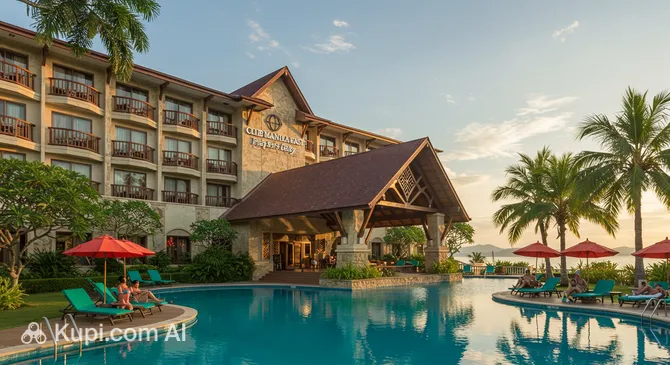
Fans of active recreation and water attractions will enjoy Club Manila East Taytay. This enormous complex includes numerous pools, including one with artificial waves, and offers excellent facilities for family weekend getaways. It is one of the most popular spots in the province for those wanting to escape the city heat and splash around in the water.

\n

If you get hungry, it's worth stopping by Wok It Out Taytay. This establishment is famous for its modern approach to Asian cuisine and fast service. Such places emphasize the town's contemporary character, where fast-food traditions sit alongside a cozy atmosphere for socializing with friends.

Local Cuisine

The gastronomic scene in Taytay is a true paradise for lovers of street food and simple but incredibly delicious Filipino dishes. The foundation of the local diet consists of classic treats: aromatic lechon (roasted pig), adobo, and sisig. A unique feature of the town is that the food is priced for workers and traders, so portions are large and prices are some of the lowest in the region.

\n

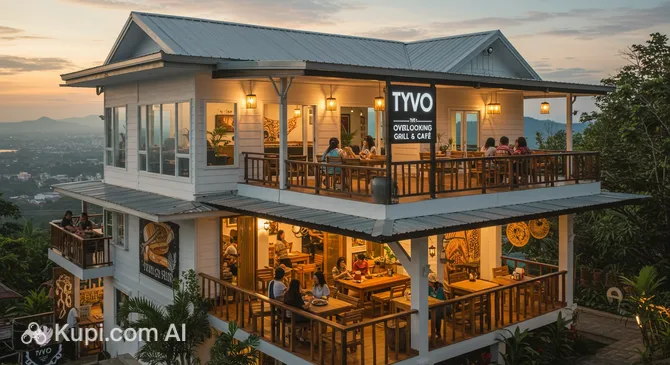
If you want to dine in a comfortable setting with a magnificent view, be sure to visit Tyvo Overlooking Grill & Cafe. This establishment is famous for its grilled dishes and panoramic views of the valley, making dinner here particularly atmospheric. For those who prefer quick and quality modern Asian street food, Wok It Out Taytay is an excellent choice.

\n
Tyvo Overlooking Grill & Cafe. Illustration.
Source: Kupi.com AI

Traveler photos:

\n

Be sure to try local desserts like halo-halo (a mixture of crushed ice, milk, and various fruits) or the sweet rice cake bibingka, often sold near churches and at markets. As for drinks, on a hot day, there's nothing better than fresh young coconut juice (buko) or the famous Filipino beer San Miguel, which can be found in any small shop.

\n

The food culture in the town is centered around the food courts in shopping malls like SM City and local markets. Locals often eat at carinderias—small home-style eateries serving freshly prepared soups and stews. This is the best way to get to know the authentic taste of Taytay and feel its hospitable atmosphere.

Travel Tips

Preparing for a trip to Taytay requires an understanding of the specifics of this bustling industrial suburb. Our tips will help make your visit as comfortable and safe as possible.

\n
    \n
  1. Clothing and Essentials: Choose light cotton clothing, as it is almost always hot and humid. Be sure to bring sunscreen and a folding umbrella—it will save you from both the sun and sudden tropical downpours. When visiting Taytay Church, observe a modest dress code (shoulders and knees covered).
  2. \n
  3. Transport: For short distances within the town, it's most convenient to use tricycles, or use the Grab app for trips to Manila. Avoid jeepneys during rush hour if you don't want to be in a crowded cabin in the height of the heat.
  4. \n
  5. Finances: The local currency is the Philippine Peso (PHP). Cards are accepted in major malls (SM Taytay), but at the garment markets, you will definitely need cash. ATMs are available in shopping centers and at banks along the main streets.
  6. \n
  7. Health and Safety: Drink only bottled water. Taytay is safe during the day, but at night, it's better to avoid walking through poorly lit industrial zones. If health problems arise, contact large hospitals like the Manila East Medical Center.
  8. \n
  9. Communication: The main language is Tagalog, but almost everyone understands English. It's useful to know a few phrases: "Salamat" (thank you) and "Magkano?" (how much?). A SIM card (Globe or Smart) can be purchased at any shopping center.
  10. \n
  11. Local Etiquette: Filipinos are very friendly. When greeting elders, the "mano" gesture (placing the elder's hand to your forehead) is often used, but a polite nod and a smile are sufficient for tourists.
  12. \n
  13. What to Avoid: Do not openly criticize local food or customs—this may offend your hospitable hosts. Also, try not to display large sums of money in crowded markets to avoid attracting pickpockets.
  14. \n
  15. Extra Tip: If you've come to shop at the garment market, it's best to do so early in the morning on weekdays when there are fewer crowds and more variety.
  16. \n
\n

Taytay will give you vibrant impressions of real Filipino life if you remain open to new experiences and follow these simple rules. Have a great trip!

Entertainment & Nightlife

Nightlife in Taytay is generally local and low-key. Since the town is mainly an industrial and residential suburb, there are no massive nightclubs thumping until dawn. Most after-dark activity is centered around large shopping malls and food courts, where locals gather for dinner and live music in cozy cafes.

\n

The hub of evening leisure is SM City Taytay. Here, you can spend the evening in one of the modern cinemas or go bowling. In the evenings, night markets with street food often open in the plazas in front of the mall, where the atmosphere is livened up by local performers and the aroma of grilling barbecue.

\n
Club Manila East Taytay. Illustration.
Source: Kupi.com AI

Traveler photos:

\n

If you're looking for more active water-based entertainment, look out for evening programs at Club Manila East Taytay. Occasionally, themed pool parties are held here, drawing young people from across the Rizal region. For those who prefer panoramic views, Tyvo Overlooking Grill & Cafe, located on the border with neighboring Antipolo, is an excellent choice—it offers stunning views of the lights of Metro Manila at night.

\n

For a full-scale clubbing experience, locals usually head to the neighboring districts of Pasig or Taguig, which take 30 minutes to an hour to reach depending on traffic. Nevertheless, Taytay offers a safe and welcoming atmosphere for evening walks through the lively streets near the central markets, where the garment trade continues until late in the evening.

Parks & Museums

In Taytay, as a typical industrial suburb with dense development, there are not many classical parks and museums. The town lives on trade and production, so public spaces are often combined with commercial zones. Nevertheless, for relaxation, locals and tourists choose the squares near the historic St. John the Baptist Church, where one can find shade and relative quiet.

\n

Modern complexes fulfill the role of the main recreational areas. For example, the grounds of Club Manila East Taytay comprise a large, landscaped zone with swimming pools, which for many serves as the town's park. You can spend the whole day outdoors here, enjoying the water attractions.

\n
Club Manila East Taytay. Illustration.
Source: Kupi.com AI

Traveler photos:

\n

You can supplement your cultural program with a visit to SM City Taytay, which regularly hosts exhibitions by local woodworkers and textile artists. While not a museum in the classic sense, these displays best reflect the soul of the "Garments Capital." If you're looking for full-scale art museums, we recommend a 15-minute drive to neighboring Angono, which has one of the highest concentrations of galleries in the country.

Getting Around

Public transport in Taytay is typical of Filipino suburbs—it's chaotic, colorful, and very cheap. The backbone of the system is the jeepney, which runs on fixed routes, connecting the city's 34 barangays (districts) with each other and with neighboring municipalities. Fares start at 13 pesos, and payment is made in cash to the driver.

\n

For short trips within residential areas or to the nearest market, tricycles are indispensable. These are motorcycles with sidecars that can go where a bus cannot turn around. A tricycle trip usually costs 20–50 pesos depending on the distance. Intercity buses traveling from Manila to Antipolo and other towns in Rizal Province also pass through the town.

\n

If you prefer comfort and predictability, the Grab app works perfectly in Taytay. This is the most convenient way for tourists to get around: you see the fare in advance, and the car will be air-conditioned. The average fare for a trip around town is 150–250 pesos. Bicycle rentals and car-sharing are practically non-existent due to high traffic density and road infrastructure.

\n

Main tip for tourists: avoid traveling during rush hours (7:00 to 9:00 AM and 5:00 to 8:00 PM), as main thoroughfares like Ortigas Avenue Extension and the C-6 Highway turn into one big traffic jam. Long-distance walking can be difficult due to the lack of sidewalks in some areas and high humidity.

Accommodation

The choice of accommodation in Taytay is mainly geared toward business travelers and those visiting for the textile trade. Budget apartments, guesthouses, and small mid-range hotels predominate. Accommodation prices in the town are often lower than in central Manila, making it an attractive option for budget-conscious tourists willing to use public transport.

\n

For those seeking a full-scale holiday with water activities, the best option is Club Manila East Taytay. This is not just a hotel but an entire resort complex with developed infrastructure, swimming pools, and relaxation areas. It is one of the few places in town offering a resort-style stay.

\n
Club Manila East Taytay. Illustration.
Source: Kupi.com AI

Traveler photos:

\n

Another popular option for a comfortable stay is the modern hotels near the shopping centers, such as Microtel by Wyndham. Staying near the Ortigas Avenue Extension is convenient for transport accessibility, as it provides the easiest route to the business districts of Pasig and Makati.

\n

It is recommended to book accommodation in advance, especially if your trip coincides with major trade fairs or holidays. For searching and booking, it's best to use international services or local apartment rental platforms, which offer a wide range of options for long-term stays.

Nearby Cities

Due to its location on the border of Metro Manila and Rizal Province, Taytay serves as an excellent starting point for exploring the eastern outskirts of the capital and the scenic hills. Nearby are several towns, each with its own unique character and attractions.

\n

Just a few kilometers away is Angono, which is officially considered the "Art Capital of the Philippines." It's worth coming here for the numerous galleries, museums, and ancient petroglyphs that are thousands of years old. A trip to Angono by jeepney or tricycle takes no more than 15–20 minutes.

\n

For those looking for modern entertainment and higher-end shopping, Pasig is a perfect fit. This dynamic city offers modern business districts like Ortigas Center and many trendy restaurants. Also of interest is Cainta, known for its traditional sweets and proximity to the region's major transport hubs.

\n
CityPopulationDistance
Angono130 4943 km
Cainta376 9334 km
Napindan19 3465 km
Pasig803 1596 km
Pateros65 2277 km
\n

Don't forget to visit neighboring Antipolo, located higher up in the mountains—it offers the best views of the sunset over Manila. The region around the town offers many options for day trips, allowing you to trade the industrial landscape for an artistic atmosphere or mountain coolness.

Shopping & Souvenirs

Shopping is exactly why many people specifically travel to Taytay. The town rightfully bears the title of "Garments Capital of the Philippines," and the textile trade is celebrated here. The main interest lies in the local garment markets, where you can buy clothes directly from manufacturers at incredibly low prices. It's a true paradise for those looking for quality knitwear and fabric products.

\n

The main place for comfortable shopping is SM City Taytay, as well as its expansion, SM City Taytay Building B. Both international brands and local labels are represented here. You can spend an entire day in these centers, moving between shops, the cinema, and air-conditioned rest areas.

\n
City Taytay Mall. Illustration.
Source: Kupi.com AI

Traveler photos:

\n

For those seeking a more authentic experience, head to the Taytay Tiangge. This is a massive outdoor or covered pavilion area where clothes are sold wholesale and retail. This is where many small shop owners from Manila stock up. Besides clothing, Taytay is famous for its woodwork: from souvenirs to massive handmade furniture, which can be found in workshops along the main roads.

\n

Mall shops generally operate from 10:00 AM to 9:00 PM, while markets can open very early in the morning. Credit cards are accepted in the malls, but you will definitely need cash (Philippine Pesos) at the markets and small stalls. Don't forget to haggle at the markets—it's part of the culture here, especially if you're buying several items at once.

Reached the end of the page?

That means the route is fully explored