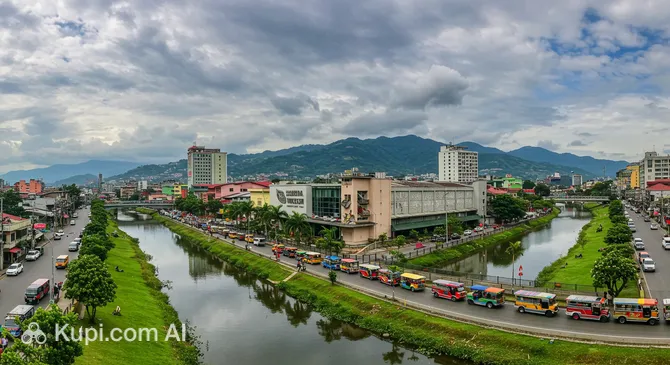
Welcome to Marikina — a vibrant and hospitable city located in the eastern part of the Philippines' National Capital Region. With a population of approximately 456,000, this city harmoniously blends the atmosphere of a cozy suburb with the dynamic energy of a modern industrial center. Marikina is widely known as the "Shoe Capital of the Philippines," and this pride in local craftsmanship permeates city life, from themed museums to annual festivals.
Marikina. Illustration.
Source: Kupi.com AI
The city is nestled in a valley surrounded by majestic mountain ranges and divided by its namesake river. The history of this place is inextricably linked to the development of craft: it was here that the country's multi-million dollar footwear industry was born, turning a small district into a thriving metropolis. Today, Marikina is considered one of the cleanest and most well-maintained cities in Metro Manila, attracting attention for its organization and focus on ecology.
For tourists, the city is primarily interesting for its unique cultural sites, such as the Shoe Museum, and its picturesque riverbanks. Here, you can feel the true rhythm of "Filipino middle-class" life, enjoy local delicacies, and stroll through shaded parks. If you are looking for an authentic experience away from typical tourist traps, be sure to visit this welcoming city in the valley.
Weather Overview
A classic tropical monsoon climate prevails in Marikina, typical for most of the Philippines. It is warm year-round, with average air temperatures ranging between 26–30°C. Weather in Marikina is clearly divided into two main seasons: the dry period from December to May and the rainy season from June to November.
The hottest days occur in April and May, when the thermometer can rise to 34°C. With the arrival of June comes heavy rainfall, often accompanied by typhoons. It's worth noting that due to the city's geographical location in a river valley, flooding is possible in low-lying areas during heavy rains. A typical day in the rainy season features bright sun in the morning and a powerful but short tropical downpour in the afternoon.
For the most comfortable experience exploring the city, it is best to plan your trip for the period from January to March. During this time, pleasant dry weather sets in with moderate humidity, and nights bring long-awaited coolness, with temperatures dropping to a comfortable 23°C.
Average monthly temperature
Average monthly precipitation
Interesting Facts
Marikina is full of fascinating stories and records that set it apart from other cities in the Philippine capital. Here are a few facts to help you get to know the city better:
The city is officially recognized as the "Shoe Capital of the Philippines." It was here that a pair of shoes was made that entered the Guinness World Records as the largest in the world: it is over 5 meters long and over 2 meters wide.
The local Shoe Museum houses the legendary shoe collection of Imelda Marcos. Although it was once said to contain three thousand pairs, the exhibition features about 800 specimens that have become a kind of symbol of an era.
In the late 19th century, in 1898–1899, Marikina briefly became the capital of Manila province, immediately after the declaration of Philippine independence from Spain.
The city is famous for its unique culinary traditions. Only here can you try dishes like waknatoy (a special meat stew) and everlasting (a local version of the embutido meatloaf), which have become essential attributes of Marikeño holiday tables.
How to Get There
Marikina serves as the eastern "gateway" to the National Capital Region, making it an important transport hub. The city is conveniently connected to other parts of Manila and the neighboring provinces of Rizal and Quezon by major highways such as the Marcos Highway. Travelers have many options to plan their trip and get to Marikina comfortably.
While the city does not have its own airport, the nearest aviation hub is Ninoy Aquino International Airport (NAIA), located approximately 20–30 kilometers away. A taxi ride or a Grab from the airport to the city center usually takes 40 to 60 minutes, though during peak hours, heavy traffic can increase travel time to two hours.
Rail service is provided by the LRT-2 line. The closest station to the city center is Marikina-Pasig, which significantly simplifies travel from the central districts of Manila. From the station, specific city attractions are easily accessible via traditional jeepneys or tricycles.
Station
Passenger traffic
Distance
Marikina–Pasig Station
5
3 km
Antipolo Station
6
3 km
Santolan Station
7
4 km
Katipunan station
7
4 km
Anonas station
6
5 km
Main Attractions
The city's main pride is its unique industrial history, centered at the Shoe Museum. Here you can see a collection of footwear from famous figures, including thousands of pairs belonging to former First Lady Imelda Marcos, as well as a giant shoe recorded in the Guinness World Records. This place clearly demonstrates the skill of local artisans that made Marikina famous worldwide.
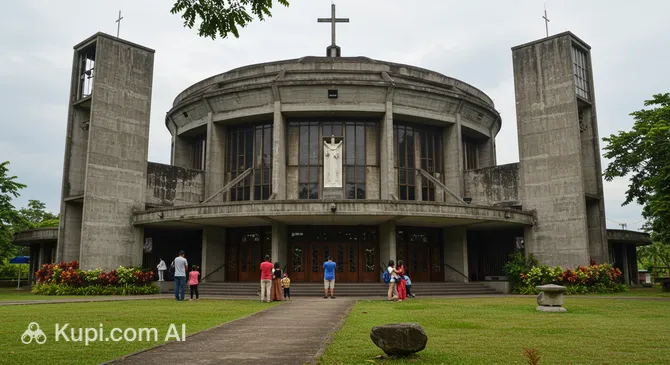
For lovers of architecture and spirituality, the Church of the Holy Sacrifice is a must-visit. This unique modernist building is distinguished by its circular shape and open layout, creating an atmosphere of unity and peace. The interior of the temple is decorated with works by prominent national artists, making it not only a religious site but also an important cultural landmark.
Parish of the Holy Sacrifice. Illustration.
Source: Kupi.com AI
Traveler photos:
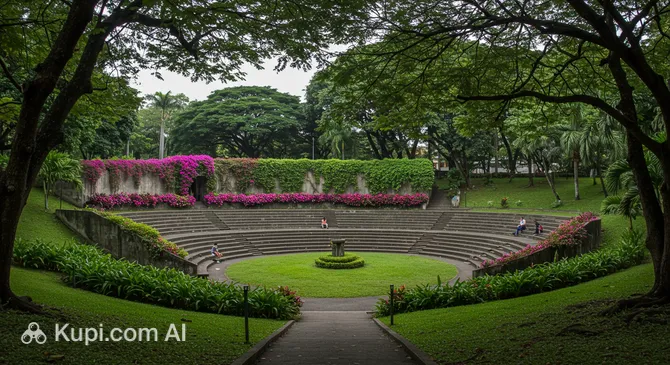
If you want to enjoy nature and tranquility, head to the UP Diliman Sunken Garden. This picturesque spot, a natural depression surrounded by old trees, is a popular place for picnics, sports, and simply relaxing in the fresh air. The garden is especially beautiful during the sunset hours when the sun's rays break through the thick foliage, creating a magical atmosphere.
UP Diliman Sunken Garden. Illustration.
Source: Kupi.com AI
Traveler photos:
Local Cuisine
Marikina's dining scene is a feast for fans of hearty and original Filipino cuisine. The city's main culinary hallmarks are waknatoy — a savory meat stew similar to adobo but with the addition of pickles, and everlasting — an exquisite meatloaf prepared here using a special recipe in tin molds. These dishes reflect the festive spirit and craftsmanship of local homemakers.
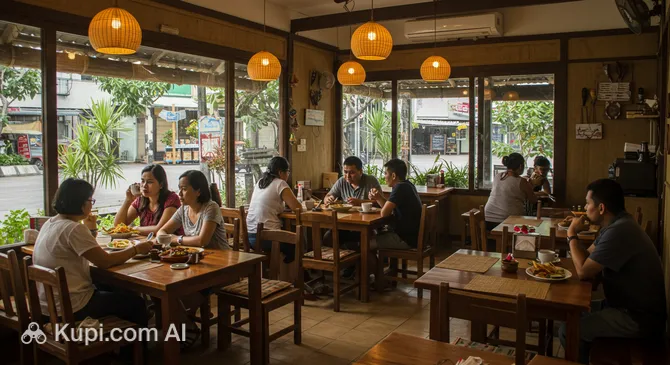
For those who want to experience the region's modern gastronomy, an excellent choice is The Alley by Vikings, U.P. Town Center. This venue offers a buffet concept with an emphasis on international street food in a stylish interior. If you're looking for something more cozy and home-style, be sure to visit Lydia's Cafe, famous for its desserts and traditional Filipino breakfasts.
Cafe Lidia. Illustration.
Source: Kupi.com AI
Traveler photos:
The food culture in the city is closely tied to street food and markets. In the evening, the riverbanks are filled with the aromas of grilled meat and seafood. Be sure to try local sweets and refreshing tropical fruit juices. Residents pride themselves on their cleanliness, so even street food here is considered some of the safest in the region.
Travel Tips
A trip to Marikina promises to be rich and interesting, and to make your journey as comfortable as possible, we have prepared some practical tips.
Clothing and Essentials: Choose lightweight clothing made from natural fabrics, as the valley can be quite humid. Be sure to bring comfortable shoes for walking along Shoe Avenue. For visiting churches, it is advisable to have clothing that covers shoulders and knees.
Transport: Use jeepneys or tricycles for moving between districts — it's inexpensive and authentic. For long-distance trips or to the airport, it's better to book a taxi via the Grab app to avoid haggling and ensure a metered or fixed fare.
Finances: The official currency is the Philippine Peso (PHP). Cards are accepted in large shopping centers, but always keep small cash on hand for jeepney fares and market purchases. ATMs are easy to find in malls and bank branches.
Health and Safety: Drink only bottled water and avoid ice at street stalls. During the rainy season (June–November), the city can suffer from local flooding near the river, so keep an eye on the weather forecast.
Communication: The main language is Tagalog, but English is widely spoken. Locals are very friendly and always ready to help. Learn a simple greeting like "Salamat" (thank you); it will warm people to you.
Local Etiquette: It is customary to remove your shoes when entering a private home (given the city's "shoe" status, this is especially important). Showing respect to elders is a vital part of Filipino culture.
What to Avoid: Do not engage in political discussions and try not to criticize local customs. Avoid walking alone in poorly lit industrial zones at night.
Additional Tip: Visit the city during the Sapatos Festival (usually at the end of the year) — it's the best time to see the city in all its glory and buy shoes at significant discounts.
Following these simple rules will help you feel at home in Marikina and bring back only pleasant memories from your trip!
Entertainment & Nightlife
Entertainment in Marikina is more relaxed and family-oriented compared to the bustling nightlife of central Manila. Most evening activity is concentrated around large shopping malls and park areas by the river, where night markets and open-air food courts operate. Locals love karaoke, so you can find many cozy venues in the city where you can sing with friends.
A popular spot for evening relaxation is the Bar and Grill at Robinsons Metro East. It features a casual atmosphere, a wide selection of traditional snacks and drinks, and local bands often perform on weekends. It's a great place to try Filipino beer and enjoy socializing with friendly locals.
Robinsons Metro East Bar and Grill. Illustration.
Source: Kupi.com AI
Traveler photos:
If you are looking for more energetic nightclubs or large-scale concerts, consider a trip to nearby districts like Eastwood or Ortigas, which are only 20–40 minutes away by taxi. For moving around the city at night, it's best to use the Grab app, as it is the safest and most comfortable way to reach your destination at any time of day.
Parks & Museums
Despite the high building density, Marikina is deservingly proud of its green spaces. The most popular place for recreation is Marikina River Park — an extensive network of parks along the riverbank. It features jogging and cycling paths, recreation areas, and picnic zones. This is the heart of the city's social life, where people practice Tai Chi in the mornings and families take evening strolls.
The city's cultural identity is inseparable from its museums. The Shoe Museum is not just an exhibition, but a tribute to the work of thousands of artisans. Visiting this museum provides a deep understanding of how the shoe craft shaped the city's character and economy. This is a must-visit for anyone interested in fashion history and the social aspects of regional development.
In close proximity to the city is the famous Church of the Holy Sacrifice, which is a national architectural monument. Its unique dome and the artworks inside make it an important point on the region's cultural map. Combining such sites with modern shopping spaces like UP Town Center creates an interesting itinerary for those who want to mix fresh-air walks with art exploration and shopping.
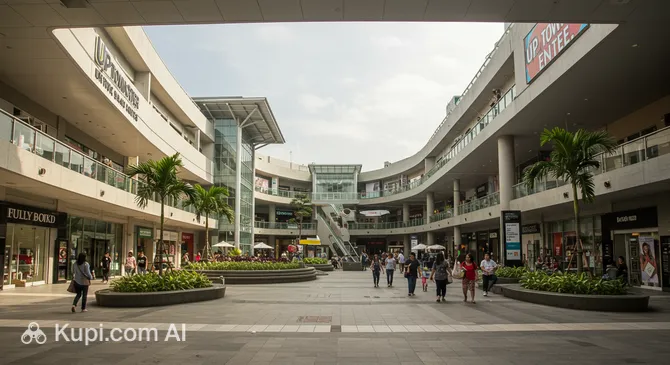
UP Town Center. Illustration.
Source: Kupi.com AI
Traveler photos:
Getting Around
The public transport system in Marikina reflects typical Filipino character while standing out for its remarkable organization. The primary means of travel for short trips within neighborhoods are tricycles — motorcycles with sidecars that will take you literally to the doorstep of your destination. For travel along the city's main thoroughfares, the legendary jeepneys are used, each decorated in its own unique style.
The city is conveniently connected to Manila's rapid transit network via the LRT-2 line. The Marikina-Pasig station allows for quick access to the central districts of the capital, bypassing Manila's famous traffic jams. This is the most reliable way to plan travel time, especially during morning and evening rush hours.
For maximum comfort, tourists are recommended to use the Grab app to call a taxi. This guarantees a fixed price and air conditioning, which is important in the tropical climate. Bike rentals are also gaining popularity in the city thanks to dedicated lanes in the park areas along the river, making Marikina one of the most bicycle-friendly cities in the metropolitan area.
Accommodation
The choice of accommodation in Marikina reflects its status as a cozy residential and industrial suburb. While you won't find a vast number of five-star chain hotels here, the city offers many charming and budget-friendly options. Most tourists prefer staying in apartments or guesthouses, which can be booked through popular online services.
The most convenient areas to stay are the city center and Shoe Avenue. Here, you will be within walking distance of the main museums, markets, and authentic cafes. Accommodation in this part of the city typically consists of small, cozy hotels and guesthouses with friendly staff ready to share local secrets.
Accommodation prices in Marikina remain very affordable compared to the business districts of Manila. If you plan to visit during major festivals, such as the Sapatos Festival, it is recommended to book your stay several weeks in advance. For those seeking more luxurious options, consider hotels in neighboring Quezon City, which are about a 15–20 minute drive away.
Nearby Cities
Marikina is an excellent starting point for exploring the eastern part of the capital region and the picturesque foothills. Thanks to developed transport links, you can easily go on a short trip to the surrounding areas, discovering new facets of Filipino culture and nature.
Just a few kilometers away is Loyola Heights, an area known for its prestigious universities and youthful atmosphere. Here you can stroll through campuses, visit interesting bookstores, or sit in conceptual cafes. Also noteworthy is Marikina Heights — a picturesque residential area with neat streets and cozy parks, often called "Little Singapore" for its cleanliness.
City
Population
Distance
Barangka
16 639
2 km
Marikina Heights
40 967
2 km
Calumpang
15 602
3 km
Loyola Heights
18 884
3 km
Krus na Ligas
21 513
4 km
Exploring nearby towns and districts will allow you to better understand the diversity of life in the Philippines. From bustling shopping zones to quiet academic alleys, every direction offers unique experiences and new discoveries.
Shopping & Souvenirs
Shopping in Marikina is primarily about finding the perfect pair of shoes. The main commercial artery for quality product seekers is Shoe Avenue. This street is home to factory outlets of local manufacturers where you can purchase handmade leather shoes at very attractive prices. This is the best souvenir to bring from the city, as Filipino shoes are famous for their durability.
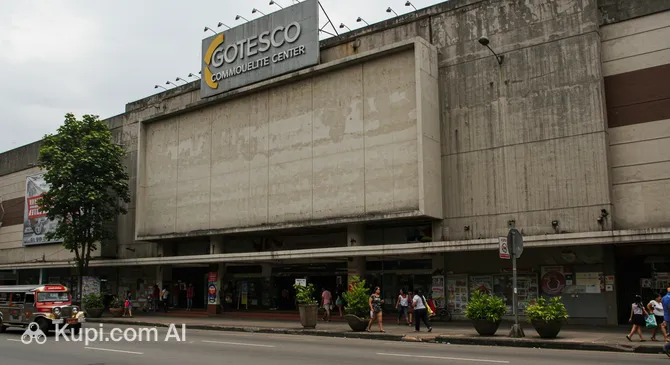
For those who prefer a modern shopping format with all the amenities, UP Town Center is a great fit. This spacious open-air mall offers many international brands, cozy cafe terraces, and relaxation areas. It is also worth checking out the Ever Gotesco Commonwealth Center, which offers a wide range of goods for the whole family at affordable prices.
Gotesco Commonwealth Center. Illustration.
Source: Kupi.com AI
Traveler photos:
If you want to feel the local flavor, head to the Marikina Central Public Market. It is one of the most organized and cleanest markets in the country. Here you can buy the freshest tropical fruits, local delicacies like everlasting, and folk crafts. Shops usually operate from 10 AM to 9 PM, while the market is bustling from dawn. Cards are accepted in large malls, but for purchases at markets and small shops, it's better to have cash pesos on hand.