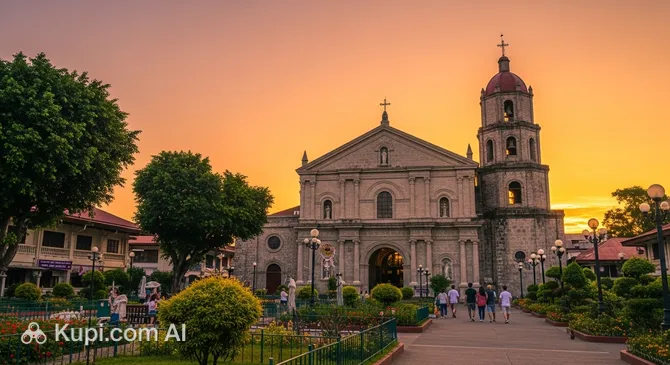
San Mateo is a dynamically developing municipality in the province of Rizal in the Philippines, serving as an important gateway to the northern part of the region. Located within Metro Manila, the town harmoniously combines the features of a modern residential suburb with picturesque rural landscapes. With a population of over 273,000, it pulses with life while remaining a cozy refuge at the foot of the majestic Sierra Madre mountain range.
San Mateo. Illustration.
Source: Kupi.com AI
The geographical location of San Mateo is unique: its hilly terrain provides breathtaking views of the valley, and its proximity to the Marikina River has long shaped its agricultural way of life. The city's rich history dates back to the 16th century, when Augustinian Spanish missionaries founded a settlement here, appreciating the landscape's resemblance to their native lands in Spain.
For the traveler, this town is primarily interesting for its authentic atmosphere. Here, you can see how urbanization meets traditional rice farming, and busy streets neighbor quiet religious shrines. Visiting San Mateo is an excellent opportunity to look behind the facade of the capital's metropolis and feel the true rhythm of life in the Philippine province.
Weather Overview
The climate in San Mateo is typical for the tropical latitudes of the Philippines: it is hot and humid throughout the year. The average temperature usually fluctuates between 25–33°C. The main feature is the clear division into two seasons: the dry period, which lasts from December to May, and the rainy season, covering the months from June to November. During this time, one should consider the likelihood of heavy rainfall, which can affect the water levels in the Marikina River.
The most comfortable months to visit are from January to March, when the weather is the driest and moderately warm. March and April are the hottest months, when the thermometer often rises above 32°C. Thanks to the hilly terrain, the weather in San Mateo often feels fresher than in the low-lying areas of Manila, as the elevations promote better air circulation.
If you are planning a trip, be sure to study the detailed climate of the city to prepare for possible tropical downpours or midday heat. Don't forget sun protection and plenty of drinking water during your walks.
Average monthly temperature
Average monthly precipitation
Interesting Facts
San Mateo is a place with deep historical roots and curious features that often escape the eye of the casual tourist.
Spanish Heritage: The town was founded by Augustinian monks in the 16th century and was named after the Spanish town of San Mateo. It is believed the missionaries chose this name due to the striking similarity of the landscapes: a high mountain and a river flowing through the center.
Older than the Capital: According to one version, the conquistador Juan de Salcedo arrived in these lands in 1571—two years before Manila was officially founded by Miguel López de Legazpi.
Agrarian Oasis: Despite being part of the metropolitan area, its economy still relies heavily on agriculture. San Mateo remains one of the few places near the megacity where rice is still actively cultivated.
Landlocked Status: This is a completely landlocked municipality with no access to the sea, which is a rarity for an island nation. Its life is inextricably linked to the river system and the mountain slopes of the Sierra Madre.
How to Get There
San Mateo is located just 20–25 kilometers from the center of the Philippine capital, making it quite accessible for a visit. The main traffic load falls on the Marcos Highway and the C5 road, which connect the town with the rest of Metro Manila. To plan your route as efficiently as possible, we recommend checking the ways to get to the city in advance.
For international travelers, the main arrival hub is Ninoy Aquino International Airport (MNL) in Manila. The journey from the airport terminals to San Mateo by car usually takes about an hour; however, due to heavy traffic during peak hours, travel time can increase to 2–3 hours. It is most convenient to use the Grab service or book a transfer, as there are currently no direct railway lines to the municipality itself.
Public transport is represented by an extensive network of buses and traditional Philippine jeepneys that regularly run from terminals in Quezon City and Marikina. A bus trip from Manila usually ends at the Municipal Hall on Gen. Luna Ave, which is the main transport landmark. Although there are no major railway stations in the town itself, nearby metro stations in adjacent districts allow for a significant reduction in travel time from central parts of the capital.
Station
Passenger traffic
Distance
Antipolo Station
6
8 km
Marikina–Pasig Station
5
9 km
Katipunan station
7
9 km
Santolan Station
7
9 km
Anonas station
6
10 km
Main Attractions
While San Mateo is not a classic tourist hub, it possesses the special charm of an "undiscovered" place. The main architectural monuments here are the historical Catholic churches and chapels founded during the colonial period. A walk to the Municipal Hall in the Guitnang Bayan I area allows you to experience the city's administrative center, while the nearby Sierra Madre hills offer scenic panoramas highly valued by hikers and photographers.
For those looking for modern places to relax and meet, the town has popular chain establishments. One such landmark is McDonald's, which often serves as a gathering spot for locals. In such places, you can not only grab a bite but also observe the everyday rhythm of the residents' lives in a comfortable setting.
If you want to get acquainted with local gastronomy in a more authentic format, it's worth stopping by Tapsilogan Ni Awe. This place is famous for its traditional breakfasts, which are popular at any time of day. Such establishments convey the true spirit of Philippine hospitality and allow you to try dishes that locals eat every day.
Local Cuisine
The gastronomic scene of San Mateo is a quintessence of the flavors of Rizal province. Local rice, grown here in abundance, forms the basis of the diet. One of the must-try dishes is the classic Philippine adobo, prepared using local spices. The town is also famous for fresh seafood that makes its way to tables from local markets and the Marikina River.
To get a taste of real home cooking, it's best to head to Tapsilogan Ni Awe. They specialize in "tapsilog"—a traditional set of fried meat, rice, and an egg, which is a staple of the Filipino breakfast. This is the perfect place to feel the atmosphere of a local karinderya (folk eatery), where the food is always fresh and affordable.
Street food lovers should try isaw (grilled chicken or pork intestines) or cool down with the famous halo-halo dessert, a mixture of sweet fruits, beans, and shaved ice. Among beverages, the most popular are refreshing buko juice (coconut water) or the famous local San Miguel beer. If you crave something familiar and fast, McDonald's is always open in the center.
Travel Tips
To make your trip to San Mateo as comfortable and safe as possible, we have prepared some practical tips to help you adapt quickly to the local rhythm of life.
Clothing and Essentials: Choose lightweight clothing made of natural fabrics, as the humidity here is high. Be sure to bring an umbrella or raincoat, especially during the rainy season. When visiting churches, it is recommended to cover your shoulders and knees. For electrical outlets, you may need a type A or B adapter.
Transport: To get around the city, it's best to use jeepneys or tricycles. However, for trips from Manila, the Grab app is the safest and most convenient option. Try to avoid traveling during peak hours (7:00–9:00 AM and 5:00–8:00 PM).
Finances: The local currency is the Philippine Peso (PHP). Large establishments accept cards, but for paying for transport and purchases at markets, be sure to have cash with you. ATMs are concentrated in the Municipal Hall area.
Health and Safety: Drink only bottled water. San Mateo is generally safe during the day, but at night, it's better to avoid outlying areas and always keep an eye on your belongings in crowded places.
Communication: The main language is Tagalog, but English is very common. A minimal knowledge of polite phrases (for example, "Salamat" — thank you) will be met with great appreciation.
Local Etiquette: Filipinos are very friendly. Greetings are often accompanied by a smile. Show respect for elders and religious traditions.
What to Avoid: Do not engage in arguments over political issues and try not to openly display expensive jewelry or large sums of money.
Additional Tip: If you plan on a long stay, choose accommodation in elevated areas to avoid possible flooding during the peak of the rainy season.
May your journey bring only bright impressions and pleasant discoveries in this hospitable corner of the Philippines!
Entertainment & Nightlife
San Mateo is primarily a residential area, so classic nightlife with loud clubs is practically non-existent here. Evening entertainment for locals most often revolves around social gatherings in karaoke bars (videoke), which can be found in many barangays. The atmosphere in such places is very casual and welcoming, with the crowd consisting mostly of neighbors and friends.
If you are looking for more modern forms of leisure, bars, or night markets, it's worth heading to neighboring Marikina or Quezon City. A taxi or jeepney ride will take between 20 to 40 minutes. The youth of San Mateo often head to large nearby shopping malls, such as SM City Marikina, which feature cinemas and gaming zones.
Within San Mateo itself, popular food spots remain centers of attraction even in the evening. For instance, McDonald's is always full of visitors, and Tapsilogan Ni Awe becomes a meeting place for those hungry after a late shift or a long commute from the capital. These are safe and lively spots where you can get a meal at any time.
Parks & Museums
Finding classic museums or huge landscaped parks in San Mateo can be a challenge, as the town is very densely built. However, this does not mean there is a lack of places to relax in nature. The main natural wealth of the municipality is the slopes of the Sierra Madre. While there are no official parks with paved paths, there are many informal trails leading into the hills, offering stunning views of the surrounding area.
The banks of the Marikina River also serve as a place for walks and local picnics. Although the infrastructure here is minimal, residents value these spaces for the opportunity to be near the water. In central areas, the role of public spaces is often filled by the plazas in front of churches and municipal schools, where festivals and fairs are held on holidays.
For those interested in culture, it's worth paying attention not to museum exhibits but to the architecture of the religious buildings themselves. Ancient churches are living monuments to the town's history, reflecting its development over the centuries. Despite the absence of large galleries, San Mateo attracts visitors precisely because of its naturalness and lack of artificial tourist polish.
Getting Around
The transport system in San Mateo is geared toward the daily needs of thousands of people working in the capital. The main arteries of the town are Gen. Luna Ave and the C5 road, where buses and jeepneys operate. This is the most accessible and authentic way to get around, allowing you to reach key points in the city in 5–15 minutes if there are no traffic jams.
Within residential quarters and on hilly sections, tricycles reign supreme. These are small motorcycles with sidecars that will take you almost to any doorstep. The cost of a tricycle ride usually ranges from 10 to 20 pesos, but it's better to agree on the final price with the driver in advance. This is an indispensable mode of transport for moving through narrow streets where a bus cannot pass.
For tourists who value comfort, the most suitable option is the Grab service. A car can be called via the app, which eliminates the need to explain directions or haggle. Keep in mind that during peak hours, traffic density in San Mateo and at the exits toward Manila is very high, so plan your trips with an extra 30–60 minutes of travel time.
Accommodation
The accommodation sector in San Mateo is primarily oriented toward those staying for the long term or looking for budget options near Manila. There are few classic luxury hotels here; however, the choice of guesthouses and apartments allows any traveler to find a suitable option. Most housing is concentrated along the main roads, which is convenient for quick access to transport.
In the central district of Guitnang Bayan, you can find affordable pensions and guesthouses where the cost of living varies from 1,000 to 3,000 pesos per night. This is an excellent choice for those who want to immerse themselves in local life. Additionally, the Airbnb segment is actively developing in the town: you can rent cozy rooms or entire apartments in modern residential complexes located near the highway.
If you are planning a visit to San Mateo, we recommend booking accommodation in advance, especially if you are looking for options with air conditioning and good Wi-Fi. When choosing a place to stay during the rainy season, it is better to prioritize properties located in elevated areas. For those looking for more familiar service, you can always consider accommodation options in neighboring Marikina, which is only a few kilometers away.
Nearby Cities
Thanks to its location on the border of the capital region and the province, San Mateo serves as an excellent starting point for exploring the surroundings. In just 15–30 minutes, you can reach the city of Marikina, famous for its shopping malls and shoemaking heritage. A visit to this neighbor will be a great addition to your trip, especially for fans of shopping and walks along well-maintained riverbanks.
Another interesting destination for a day trip is the town of Rodriguez. It is located just 4 kilometers away and attracts nature lovers with its majestic cliffs and caves. If you are interested in cultural and religious tourism, you should head to Antipolo, which is famous for its cathedrals and panoramic restaurants.
For those who want to stay closer to urban infrastructure, Marikina Heights is an interesting option—a quiet area with plenty of greenery and cozy cafes. Transport accessibility between these points is high: jeepneys and taxis run regularly, making it easy to change scenery and discover new facets of Filipino life.
Exploring nearby cities will allow you to see the striking contrast between dynamic business districts and the peaceful natural corners of the Rizal region.
Shopping & Souvenirs
Shopping in San Mateo is primarily about visiting the bustling local markets in the central part of town. Here you can find almost everything: from the freshest tropical fruits and famous local rice to inexpensive clothing and household goods. Prices at local bazaars are very affordable, and for a small amount, you can purchase high-quality local products or souvenirs.
If you are looking for the familiar format of large shopping centers with international brands, the best option is a trip to the neighboring SM City Marikina. This mall is in close proximity to the San Mateo border and offers a wide selection of shops, electronics, and entertainment. Within the municipality itself, shopping areas are concentrated along Gen. Luna Ave, where small shops neighbor popular spots like McDonald's.
As memorable gifts from San Mateo, visitors often bring back religious items sold near the old churches, as well as folk crafts made from bamboo or coconut. After a busy day of shopping at the stores and markets, you can rest and refuel at Tapsilogan Ni Awe, where they offer hearty local dishes for a small price.
Shops usually operate from 9:00 AM to 8:00 PM, while markets open early in the morning, around 5:00 or 6:00 AM. Payment at most retail outlets is made in cash, although large chain stores accept bank cards.