Support

Mati City

Attractions

About

Mati City is a picturesque gem of the south and the administrative center of Davao Oriental province. This city wonderfully combines the comfort of developed infrastructure with the relaxed atmosphere of a secluded resort. Located on the island of Mindanao, it attracts travelers looking to discover the authentic and non-touristic Philippines with its pristine nature.

Geographically, the city is nestled on the coast of the Pacific Ocean, surrounded by scenic hills and thick mangrove forests. With a population of about 147,000 people, Mati retains a sense of coziness and tranquility, where time flows a little slower. A pleasant tropical climate prevails here, and the fresh sea breeze makes walks along the promenade especially enjoyable.

Despite its modern appearance, the city carefully preserves its roots. The fascinating history of Mati City and the region's rich cultural heritage give this place a special charm that is felt in the traditions of the locals and their unwavering hospitality.
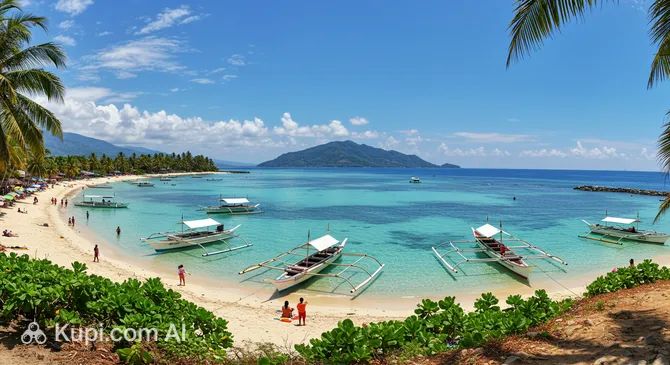
Mati City. Illustration.
Source: Kupi.com AI

For tourists, Mati City is primarily a gateway to the world of water adventures and natural beauty. The main point of attraction is the magnificent Dahican Beach, with its white sand and turquoise waves, considered one of the best places for surfing and skimboarding in the country. Another unique feature of the landscape is the "Sleeping Dinosaur" island, whose silhouette truly resembles a prehistoric giant resting in the waters of the bay.

Mati City is ideal for those who dream of escaping the noise of megacities and enjoying union with nature. Come here to witness incredible sunrises on the ocean shore, try the freshest seafood, and experience the sincere warmth of the local people.

Weather Overview

The climate in Mati City is a classic example of tropical weather with comfortable temperatures that remain practically unchanged throughout the year. Average figures stay steadily at 25–26°C. May is considered the "hottest" month, when the daytime air warms up to 27.6°C, while the coolest nights occur in February, when the temperature can drop to 23.3°C.

A characteristic feature of the local weather is the high frequency of precipitation with its small volume. The number of rainy days is high — from 25 to 29 per month, however, the total amount of falling moisture is insignificant (about 7–12 mm). This indicates that rains here are frequent but very light and short-lived, often in the form of refreshing drizzle, which does not interfere with enjoying your holiday by the ocean at all.

For more accurate travel planning and clothing selection, we recommend studying the detailed information by going to the weather in Mati City section. Expect consistent warm weather year-round with occasional light rains maintaining the freshness of the lush tropical greenery.

Average monthly temperature

Average monthly precipitation

Interesting Facts

Beyond magnificent landscapes and hospitality, Mati City holds many fascinating details that reveal its character from an unexpected side. Here are a few facts to help you better understand the soul of this amazing city.

  • The Unofficial Skimboarding Capital. Dahican Beach is known not only as a resort but also as a true forge of talent. Local teenagers who grew up on these waves are considered some of the best skimboarders and surfers in the country, and their skill is often compared to the level of Hawaiian legends of the sport.

  • A "Maternity Ward" for Sea Turtles. The city is proud of its status as a major sanctuary for sea turtles in the Philippines. Mati's beaches are one of the few places where you can observe these ancient reptiles coming ashore to lay eggs. Local communities are so protective of this natural miracle that they have established special patrols to guard the nests.

  • The "Sambuokan" Unity Festival. The city's brightest holiday, Sambuokan, gets its name from a word meaning "unity" in the local dialect. This event is unique in that it doesn't just entertain, but symbolically unites the indigenous peoples, Muslim, and Christian communities of the region in one colorful stream of street dances and culinary fairs.

  • A City of Artists. Mati City is distinguished by an unusually high concentration of creative people. Local authorities and residents encourage street art, so the walls of many buildings are decorated with bright murals, mostly dedicated to the sea and nature, turning an ordinary walk around the city into a visit to an art gallery.

How to Get There

A journey to Mati City is a fascinating trip along the scenic roads of Mindanao island. Since there is no active commercial airport in the city itself, the main route for most tourists lies through the major transport hubs of neighboring provinces with a subsequent transfer to ground transport. You can find all the details and route options by visiting the how to get to Mati City page.

The most convenient and popular way to get to the region is by air. The nearest and most significant transport hub is Francisco Bangoy International Airport (IATA: DVO). It is important to note that it is located not in Mati, but in the neighboring Davao City. The distance in a straight line is about 66 km, but due to the winding terrain, the trip by taxi or bus will take about 2–3 hours. This is the region's largest airport, receiving many flights.

An alternative option is General Santos International Airport (IATA: GES), located in General Santos City. It is further away, about 143 km from Mati City. A trip from here by ground transport will take about 4 hours. This route may be convenient if you are planning a trip through the southern part of the island.

For clarity, here is a summary of the main airports through which you can reach the resort:

AirportPassenger trafficDistance
Francisco Bangoy International Airport3.8 mln66 km
General Santos International Airport1.2 mln143 km
Awang Airport295 801223 km
Butuan Airport450 000236 km
Laguindingan International Airport2 mln267 km

As for rail transport, it is not developed in this part of the country. There are no railway stations or passenger trains in Mati City and its surroundings. Tourists should rely exclusively on roads.

After arriving at Davao or General Santos airport, the most budget-friendly and colorful way to reach the destination is by intercity buses (for example, the Bachelor Express company) or passenger minivans. Buses depart regularly from the Ecoland terminal in Davao and go directly to the terminal in Mati City, offering a comfortable trip with air conditioning and coastal views.

Main Attractions

Mati City offers travelers not only famous beaches but also unique natural and spiritual attractions that often remain in the shadows. Here are a few places to include in your itinerary to see the city from a new perspective.

Pujada Bay is a true natural treasure, officially included in the list of the most beautiful bays in the world. The main activity here is an Island Hopping tour. You can visit Pujada Island — the largest and wildest, covered in dense greenery; the tiny Waniban Island with its perfect white sand and rocky shores; and the amazing Oak Island. The latter is a vanishing sandbar that completely hides underwater during high tide, leaving only the crystal-clear sea around it.

Ecotourism enthusiasts should definitely visit the Guang-Guang Mangrove Park. This is a vast sanctuary where rare species of mangrove trees are protected. Here you can walk along wooden boardwalks going deep into the forest and enjoy the silence surrounded by nature. The park serves as an important nursery for marine life, and with luck, you can see various birds and fish in their natural habitat.

For those seeking peace and beautiful panoramas, the Carmelite Monastery is the perfect spot. It is located on a hill, offering a breathtaking view of the city and the bay. A special feature of the monastery is not only its architecture but also the suspension bridge leading to a picturesque prayer garden. The garden features expressive life-size statues depicting biblical scenes, creating a special atmosphere of peace and contemplation.

Local Cuisine

The gastronomic culture of Mati City is inextricably linked with the ocean, and the freshest seafood forms the basis of the local menu. Coastal cafes and restaurants will offer you an abundance of oysters, crabs, and squid caught literally hours before serving. Food here is not just about satisfying hunger, but a way to get to know the region's traditions through bright and rich flavors.

The main signature dish of local cuisine is kinilaw — the Philippine version of ceviche. This is a dish of raw fish marinated in vinegar with the addition of local lime, ginger, onion, and hot chili peppers. For those who want to try a unique combination of flavors, sinuglaw is the perfect choice. This hearty dish combines the tenderness of marinated fish with the aroma of grilled pork, symbolizing the harmony of sea and land.

Street food in Mati City deserves special attention and is an important part of evening leisure. As dusk falls, numerous stalls open at local markets and the promenade. Tourists often choose grilled pusit — squid on skewers cooked over an open fire. For dessert or a snack, be sure to try caramelized bananas or bibingka — a traditional sweet rice cake baked on banana leaves, which has a soft texture and a light smoky aroma.

As for drinks, the hot tropical climate dictates its own rules. The most popular choice is fresh juices from exotic fruits, which are sold everywhere. Mango, pineapple, and young coconut drinks are especially good for quenching thirst. Among alcoholic beverages, locals prefer cold beer, which goes perfectly with barbecue and seafood snacks.

The dining culture in the city is democratic and open. It is customary here to eat slowly, enjoying conversation and the view of the sea. Tourists and locals often meet at night markets, where a lively atmosphere prevails. In addition, culinary festivals are held in Mati throughout the year, where you can not only taste authentic dishes from all over Mindanao island but also see how they are prepared by masters of culinary art.

Travel Tips

Welcome to Mati City! To make your introduction to this picturesque corner of Davao Oriental province as comfortable and worry-free as possible, we have prepared a list of useful recommendations. These simple tips will help you easily navigate local realities and get the most out of your trip to the Philippines.

  1. Clothing and Equipment. The climate here is hot and humid, so prefer light, "breathable" clothing made of natural fabrics. Be sure to bring a high-quality raincoat or a compact umbrella: tropical showers can start suddenly. Since Mati is a coastal city, you will need swimwear and special footwear (aqua shoes) to protect your feet from coral. For visiting religious sites, such as the Carmelite Monastery, bring clothes that cover your shoulders and knees.

  2. Transport. The main way to get around the city is by tricycles. There are no common taxi apps like Uber or Grab here. It is critically important to agree on the fare with the driver before boarding to avoid inflated rates for tourists. If you plan to move around a lot between beaches, consider renting a scooter — it will give you freedom and save your budget.

  3. Finances. Mati City is a cash territory. Bank cards are accepted only in large hotels and the Gaisano mall. In small cafes, souvenir shops, and transport, you can only pay in pesos. Withdraw cash in advance at ATMs in the city center (Poblacion) and always try to have small bills (20, 50, 100 pesos) with you, as sellers often don't have change for large banknotes.

  4. Health and Safety. Drink exclusively bottled water and avoid ice in drinks at street cafes. The sun here is very active, so using a high SPF sunscreen is mandatory even in cloudy weather. Pharmacies (for example, Mercury Drug) are in the center, but there are few 24-hour ones, so bring a basic first-aid kit with you. The city is safe, but do not leave valuables unattended on the beach while swimming.

  5. Communication and Connectivity. Most locals understand and speak English well, so the language barrier is minimal. The main local language is Cebuano (Bisaya). Wi-Fi in hotels can be slow, so for stable connectivity, it's better to buy a local SIM card (Smart or Globe) immediately upon arrival. It is useful to download offline maps, as the signal may disappear in remote natural areas.

  6. Local Etiquette. Filipinos are very friendly and smiling. A smile in return is the best way to show respect. In communication, avoid raising your voice and open confrontation — it is customary here to remain calm and not "lose face." When addressing older people, it is appropriate to add the respectful particle "po" at the end of sentences; this will be highly appreciated.

  7. What to Avoid. Strictly do not litter on the beaches and in public places. Locals are very proud of the cleanliness of their coast, especially Dahican Beach, which is a protected area for sea turtles. Also, avoid discussing sensitive political topics and criticizing religion to avoid offending the feelings of locals.

  8. Early Start. Life in the province starts with the sunrise. To see the famous "Sleeping Dinosaur" island in the best light and without haze, as well as to buy the freshest fruits at the market, plan your activities for early morning (from 6:00 to 9:00 AM). Additionally, sunrises on the shore of the Pacific Ocean are a sight worth waking up early for.

We hope these practical tips will help you plan the perfect trip. Mati City is ready to reveal its natural treasures and hospitality to you if you are ready to embrace its slow pace of life!

Entertainment & Nightlife

Nightlife in Mati City is noticeably different from the noisy parties of Manila or Boracay. Here you won't find the neon signs of huge nightclubs or discos thumping until morning. Instead, the city offers a relaxed, soulful atmosphere where evening entertainment is inextricably linked with nature, live music, and conversation. It is the perfect place for those who prefer to "chill out" to the sounds of the ocean.

The epicenter of evening life is undoubtedly the Dahican Beach area. After sunset, the surf resorts and coastal cafes are transformed: fairy lights are lit, bonfires are started, and the time for acoustic concerts begins. Local musicians often play reggae or pop-rock, creating an incredibly cozy atmosphere. The dress code here is as casual as it gets: shorts, t-shirts, and flip-flops are the most appropriate attire.

If you are looking for more lively places within the city limits, look out for popular resto-bars such as Ciangi and La-ne's. These are establishments where both locals and tourists love to gather. Here you can not only have a delicious dinner but also listen to live performances by local bands and enjoy cold beer or cocktails. A feature of Philippine leisure is the love of singing, so many establishments have karaoke (or "videoke" as it is called here), where anyone can perform their favorite hit.

Another important point of attraction is the Mati Baywalk. This is a well-maintained promenade that turns into a lively night market in the evenings. Families come here to stroll, eat street food (be sure to try the seafood barbecue), and enjoy the sea breeze. It is an absolutely safe and well-lit place, perfect for getting to know the local flavor without excessive noise.

Practical tips for tourists:

  • Opening hours: Most bars and restaurants close quite early by capital standards — around midnight or 1:00 AM. It's better to arrive by 7:00 PM – 8:00 PM to catch the peak of the fun.
  • Transport: Tricycles (the main transport) run actively until 9:00 PM – 10:00 PM. If you plan to stay late at Dahican Beach, arrange a pickup with a driver in advance or check with your hotel about transfer options, as catching a passing vehicle at night can be problematic.
  • Prices: Entertainment in Mati is very affordable. The average bill in a bar for a couple of drinks and a snack will be significantly lower than in major tourist centers.
  • Safety: Mati City is considered a quiet and welcoming city. However, as elsewhere, you should follow basic rules: do not leave things unattended and avoid dark, deserted alleys.

In addition to evening relaxation, the Philippines is famous for its daytime activities. In your free time away from beach parties, we recommend visiting the Subangan Museum to dive into the region's history, or strolling through the city's picturesque parks, which provide cool and peace during the day.

Parks & Museums

Mati City is not just about white beaches and surfing. The city offers travelers great opportunities to get acquainted with the cultural heritage of the region and relax in well-kept green zones. Here, modern public spaces harmoniously coexist with places where the history of Davao Oriental province is carefully preserved.

Among the city's green zones, Mati Park & Baywalk holds a special place. This is the heart of Mati's social life and a favorite vacation spot for both locals and tourists. The park is located along the coast, allowing you to enjoy the fresh sea breeze during walks. It is especially lively in the evening: street food stalls open, where you can try local delicacies, and the famous "I Love Mati" installation becomes a popular backdrop for commemorative photos. This is the perfect location to catch the sunset and feel the city's relaxed pace.

Lovers of silence and nature should visit Mati Centennial Park, located next to the City Hall. This is a landscaped space with paved paths and green lawns, the center of which is the majestic Clock Tower. The park serves as a tribute to the city's history and its leaders, whose names are immortalized on the "Avenue of Leaders." It is a pleasant place to hide from the midday heat and learn about the milestones of the city's development.

The main cultural attraction of not only the city but the entire province is the Subangan Museum. This is a modern world-class museum, the name of which translates to "East" or "Sunrise." The exhibition is divided into several thematic zones, but the absolute center of attraction is the skeleton of a 16-meter sperm whale named "Davor," which greets visitors in the main hall. This is one of the largest exhibits of its kind in Southeast Asia.

Besides the impressive giant, the Subangan Museum offers a deep dive into the ethnography and nature of the region. Separate halls are dedicated to the culture of the Mandaya and Kalagan indigenous tribes, featuring their traditional costumes, musical instruments, and crafts. Another part of the exhibition tells of the natural wealth of Mount Hamiguitan (a UNESCO World Heritage site), allowing tourists to learn about rare species of flora and fauna without leaving the city.

From an architectural standpoint, the Provincial Capitol, which locals often call the "White House," is noteworthy. The majestic white building is located on a hill, offering a breathtaking panorama of Pujada Bay and the city itself. The territory surrounding the Capitol is also a well-maintained park available for strolling.

Insider Tip: If you want to combine a walk with culinary discoveries, come to the Baywalk promenade after 6:00 PM. At this time, they start selling the famous local empanadas with various fillings — it's a simple but incredibly tasty way to end the day in Mati.

Getting Around

The public transport system in Mati City is simple and authentic: you won't find a metro, trams, or complex schedules for large buses here. The main and most popular means of transportation around the city are tricycles — motorcycles with a covered sidecar for passengers. They ply all the streets and serve as the primary way to get from your hotel to the market, promenade, or restaurant. For very short distances in the center, you can also find cycle rickshaws (trisikad).

For travel to outlying districts or popular beaches like Dahican, multicabs (small vans converted for carrying people) and classic jeepneys are often used. If you need to reach hard-to-access places where four-wheeled transport cannot pass, the habal-habal comes to the rescue — a motorcycle taxi where the passenger sits behind the driver. This is the fastest and most maneuverable way to get around, especially popular for trips to natural attractions in the hills.

The payment system in the city is exclusively cash. Transport cards, passes, or mobile payment apps do not work here. Payment is made directly to the driver at the end of the trip. It is extremely important for travelers to always carry small bills and coins (pesos), as the driver may simply not have change for large banknotes. Jeepney fares are fixed, but the situation is different with private transport.

The main tip for tourists: always agree on the price of the trip in advance, before you get into a tricycle or on a motorcycle. There is a concept of a "regular fare" (when the driver picks up other passengers) and a "special trip" (an individual ride, similar to a taxi), which costs significantly more. Find out approximate prices from your hotel staff to negotiate confidently. Active transport movement starts at sunrise and quietens down by 8:00 PM – 9:00 PM, after which catching a ride on the street becomes more difficult.

Standard ride-hailing services (like Uber or Grab) or car sharing are not currently available in Mati City. As a convenient alternative, scooter and motorcycle rentals are very popular. This gives full freedom of movement and allows you to independently explore the scenic coast at your own pace. Rental points can be found in the city center or through recommendations at your place of accommodation.

Accommodation

The choice of accommodation in Mati City will pleasantly surprise you with its variety, offering options for both budget backpackers and those seeking comfort right by the ocean. In general, the city's hotel infrastructure is clearly divided into two main zones: the busy center and the relaxed coast, each offering its own unique atmosphere.

For most tourists, the main goal is the Dahican Beach area. This is the heart of resort life, where the most popular vacation spots are located. Staying here allows you to fall asleep to the sound of the surf and watch sunrises on the shore of the Pacific Ocean, literally steps away from your room. This zone is dominated by beach resorts of various levels: from comfortable air-conditioned cottages to democratic surf camps and glamping zones where you can stay in a tent right on the sand.

If proximity to shops, markets, and transport hubs is important to you, consider options in the city center (Poblacion). Classic city hotels, budget inns, and apartments are concentrated here. This is a strategically convenient place for those planning active trips to various attractions in the region, as it is easiest to find transport from here. Prices in the center are often lower than on the first coastline, and the level of service is geared towards practical travelers.

Price range and booking:

The cost of living in Mati City remains very affordable compared to the country's popular tourist destinations. The budget and mid-price segments predominate here. However, one important nuance should be considered: many local guesthouses and small resorts may not be listed on major international aggregator sites. Often the most reliable way to book is through direct contact with the hotel via their official social media pages.

Tip for travelers: Despite the city's relaxed pace of life, the best places on the coast, especially on Dahican Beach, get booked up very quickly. If you plan to travel on a weekend or during holidays, book your accommodation in advance (at least 2–3 weeks) to guarantee yourself a comfortable stay with a sea view.

Nearby Cities

For those who want to explore the surrounding area, Mati City serves as an excellent starting point for day trips to several interesting nearby locations. The Davao region is rich in contrasts, and in just a few hours' drive, you can find both bustling metropolises and secluded natural corners.

One of the most popular destinations is Davao City. This is the region's largest city and its economic heart. People come here to see the famous Philippine Eagle Center, where rare birds of the planet are preserved, or to try the "king of fruits," durian, right in its homeland. The city also serves as a gateway to the majestic Mount Apo, the highest point in the country.

If you are looking for a different type of beach holiday, visit Island Garden City of Samal. This island garden city is famous for its luxury resorts, Hagimit Falls, and the famous Monfort Bat Sanctuary, home to one of the largest colonies of fruit bats in the world. It is an ideal place for snorkeling and relaxation.

Another interesting option is the city of Tagum, known as the "City of Palms." It impresses with its cleanliness, wide avenues lined with palms, and bright festivals. In the evening, a colorful night market opens here, where you can try various street foods and buy souvenirs.

CityPopulationDistance
Batobato33 66419 km
Lupon66 97924 km
Banaybanay44 45124 km
Tarragona26 99628 km
Manay39 57240 km

These nearby destinations provide insight into the diverse culture and landscapes of the region, complementing the experience of visiting the Mati coast.

Shopping & Souvenirs

Shopping in Mati City is more practical and souvenir-oriented than recreational. You won't find huge complexes with global luxury brands here as in the capital, but the city offers everything necessary for a comfortable stay. Shops are oriented towards the daily needs of locals and tourists: it's easy to buy beach accessories, summer clothing, fresh produce, and unique regional delicacies.

The city's commercial life is concentrated in its central part (Poblacion). Main streets like Rizal Street and Quezon Street are lively commercial arteries. Along them are pharmacies, small department stores, hardware shops, and clothing stores. A walk through the center will allow you to feel the rhythm of provincial life and find necessary trifles at very affordable prices.

The center of modern trade is Gaisano Grand Mall Mati. This is the largest shopping mall in the city, where you can find air-conditioned coolness and a familiar range of services. Inside are a supermarket with a wide range of products, a department store with clothes and shoes, electronics stores, and a food court with popular Philippine fast-food chains. This is the best place to stock up on provisions if you plan to self-cater.

For immersion in a real local atmosphere, be sure to visit the Mati City Public Market. This is a colorful place where stalls are bursting with fresh tropical fruits: mangoes, pomelos, durians, and bananas. The fish section deserves special attention, where fishermen bring the catch from Pujada Bay every morning. Here you can buy tuna, marlin, and various shellfish at prices significantly lower than in restaurants.

As souvenirs from Mati City, tourists most often take home culinary gifts ("pasalubong"). An absolute hit is the famous Mati Empanada. These pastries with savory fillings are known throughout the region; they are sold in special boxes for easy transport. Also worth noting are the works of local craftsmen, such as fabrics and accessories with traditional Mandaya tribe patterns, which will serve as an excellent reminder of Davao Oriental culture.

Most shops and shopping centers open around 9:00 AM and work until 8:00 PM or 9:00 PM. Markets start very early, at dawn (around 5:00 AM – 6:00 AM), and by lunchtime, the selection of fresh products may decrease. The primary method of payment is cash (Philippine peso). Bank cards are accepted at the Gaisano mall and some large stores, but in souvenir shops and at the market, you can only pay with bills and coins.

The Tax Free system is practically non-existent in Mati City. The VAT refund mechanism for tourists in the Philippines is under development and is mainly available at major international airports or authorized shops in Manila. In small cities like Mati, you shouldn't count on Tax Free processing, so just enjoy the low prices without additional procedures.

Reached the end of the page?

That means the route is fully explored