Support

Almada

About

Almada is a charming city on the south bank of the Tagus River, located directly across from Lisbon in Portugal. This city uniquely combines historical heritage with a modern pace of life, offering its guests both the coziness of old quarters and the spaciousness of new districts. Its hills provide truly breathtaking panoramic views of the Portuguese capital.

Almada has a population of about 177,000 people, making it a significant city within the Setúbal District and an important part of the Lisbon metropolitan area. Despite its proximity to the capital, Almada maintains its distinct identity and unique atmosphere, where history, culture, and nature are harmoniously intertwined.
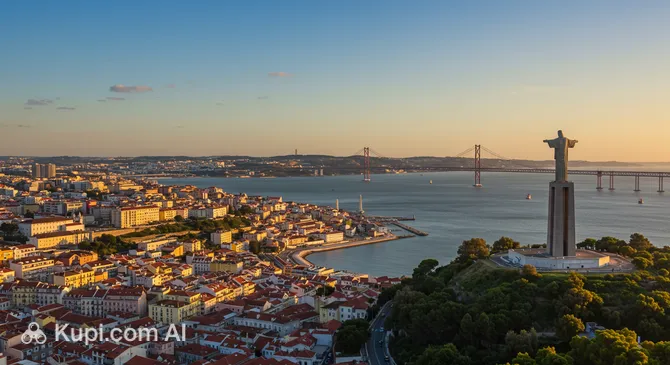
Almada. Illustration.
Source: Kupi.com AI

One of Almada's main and most recognizable landmarks is the monumental statue of Christ the King (Cristo Rei), which seems to embrace the city and the entire country, offering incredible views from its observation deck. No less attractive to tourists are the famous beaches of the Costa da Caparica coastline, stretching for many kilometers and offering excellent conditions for surfing and beach holidays. Culture lovers will find interesting museums, ancient churches, and monasteries here, as well as cozy parks for walking.

Almada is a place where you can enjoy a relaxed holiday by the ocean, taste the freshest seafood in local restaurants, explore historical corners, or simply admire the magnificent sunsets over the Tagus. This city is definitely worth a visit to experience its special atmosphere and discover another gem of Portugal.

You can find more interesting facts on the history of Almada page.

Weather Overview

The weather in Almada is characterized by a Mediterranean climate. You can expect a warm and very dry summer, especially in July and August, when the average air temperature stays around 21-22°C (maximum values can reach 25-26°C), and precipitation is practically non-existent. Winters here are mild, with an average temperature of about 12-13°C in January and December. Although during the winter months, as well as in spring and autumn (for example, in March, April, October, and November), the number of rainy days can reach 7-11 per month, the total amount of precipitation remains small, typically 1-2 mm.

Spring (March-May) and autumn (September-November) offer comfortable temperatures for walking and exploring the city, ranging from an average temperature of 13.8°C in March to 20.7°C in September. To better prepare for your trip, we recommend checking the detailed information about the climate of Almada.

Average monthly temperature

Average monthly precipitation

Interesting Facts

In addition to its famous symbols, such as the majestic statue of Christ the King and the iconic 25th of April Bridge, Almada hides many curious details and stories that make it even more attractive to travelers. Here are just a few of them:

25th of April Bridge. Illustration.
Source: Kupi.com AI

Traveler photos:

  • Many people know about the majestic statue of Christ the King (Santuário Nacional de Cristo Rei) towering over Almada, but not everyone knows that its construction in 1959 was inspired not only by the famous Brazilian Christ the Redeemer but also became a profound symbol of gratitude for the peace preserved in Portugal during the mid-20th century.

  • In the past, Almada was a favorite summer vacation spot for the Portuguese nobility. Even today, you can find elegant old villas and estates here that preserve the spirit of that era, with some of them hospitably opening their doors as museums or boutique hotels, allowing guests to touch history.

  • A unique natural site, the fossil cliff of Costa da Caparica (Arriba Fóssil da Costa de Caparica), is not only a spectacular sight of steep cliffs and golden dunes. It is also an important geological and ecological zone where you can find rare plant species and observe birds while enjoying stunning Atlantic sunsets.

  • Almada is not just about history and nature, but also a vibrant cultural scene. The city is famous for its festivals, among which the annual Almada Theatre Festival holds a special place. This international-scale event attracts troupes and spectators from all over Europe, turning the city into a theatrical Mecca during its run.

How to Get There

When planning a trip to this picturesque corner of Portugal, it is important to plan your route in advance. Almada is located on the south bank of the Tagus River, in close proximity to the capital, making it easily accessible for tourists. You can find all the details and alternative routes by visiting the how to get to Almada page, where comprehensive transport information is gathered.

The main air gateway for travelers is Lisbon Portela Airport (LIS). There is no airport in the city of Almada itself, but this major international hub is located in Lisbon, just 11.9 km from your destination. This is the most convenient option: a taxi or bus ride takes about 40 minutes. Thanks to high passenger traffic, the airport receives flights from all over the world.

If you are planning a grand tour of the country, you might consider arriving at Faro Airport (FAO), located in southern Portugal. It is in the city of Faro, approximately 212.5 km from Almada. The trip from there will take significantly longer—about 5.5 hours by car—but it is a great excuse to see the picturesque landscapes of the Algarve region. Porto Airport (OPO) in the north of the country is also an option, with a distance of about 288 km.

For clarity, here is a summary of the main airports:

AirportPassenger trafficDistance
Lisbon Portela Airport35.1 mln12 km
Cascais Municipal Aerodrome35 00017 km
Badajoz Airport75 416205 km
Faro Airport9.8 mln213 km
Porto Airport15.9 mln289 km

Regarding rail connections, it's worth noting that the nearest major transport hubs from the list provided are located at a considerable distance, primarily in neighboring Spain. There is no major railway station of this type in Almada itself, but you can arrive at Badajoz Railway Station (BQZ) in the city of Badajoz, which is about 191.2 km from Almada. From there, you can take a taxi or bus, though the journey will take over 5 hours.

Another option for those traveling across the Iberian Peninsula could be Mérida Railway Station (QWX). The station is located in the city of Mérida at a distance of 246.6 km. This is a historically significant route, but it is less convenient for quick access to Almada due to the long transfer.

Below is a table with information about the nearest railway stations:

StationPassenger trafficDistance
Badajoz Railway Station125 198191 km
Mérida Railway Station470 592247 km
Huelva Station295 000251 km
Cáceres Railway Station426 505256 km

Main Attractions

Almada, a city on the south bank of the Tagus River directly across from Lisbon, offers visitors a number of interesting attractions. It provides magnificent views of the capital, while the city itself possesses its own unique charm and iconic spots that are certainly worth exploring.

One of the most recognizable landmarks of the region is the majestic 25th of April Bridge. This impressive suspension bridge, often compared to the famous Golden Gate Bridge in San Francisco due to its color and design, connects Almada to Lisbon. Crossing the Tagus River, it serves not only as a vital transport artery but also as a popular photography subject, offering breathtaking panoramas of both cities and the river, especially at sunset.

25th of April Bridge. Illustration.
Source: Kupi.com AI

Traveler photos:

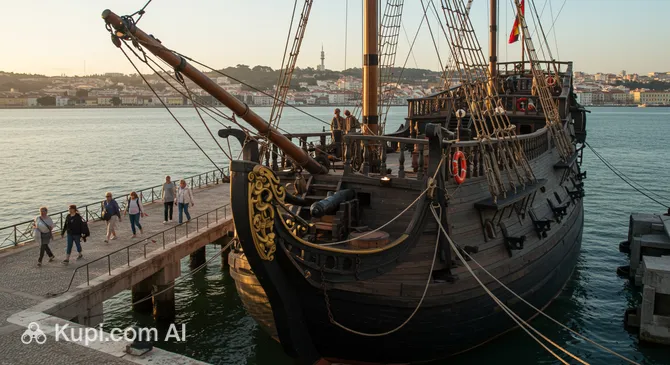
For maritime history enthusiasts, the Frigate "Dom Fernando II e Glória" is of great interest. This beautifully restored 19th-century sailing warship, the last of its kind in the Portuguese Navy, has now been converted into a museum. It is moored in Cacilhas, the waterfront part of Almada, and is open to visitors wishing to immerse themselves in the atmosphere of past sea voyages and learn about the history of Portuguese navigation.

Frigate Dom Fernando II e Glória. Illustration.
Source: Kupi.com AI

Traveler photos:

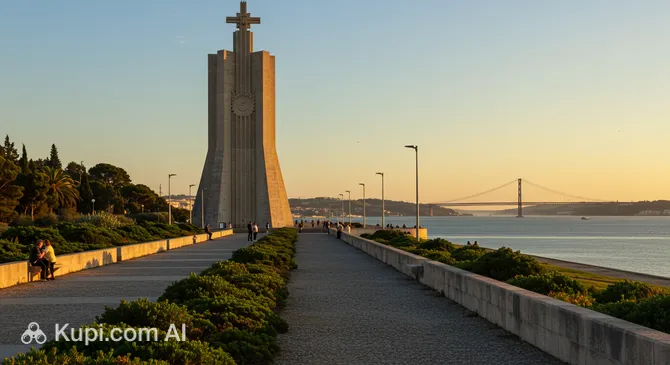
If you are looking for a place to relax in nature, head to Peace Park (Parque da Paz). This vast urban park is a true green oasis in Almada. Here you can stroll along picturesque alleys, have a picnic, play sports, or simply relax by one of the ponds. The park is a popular recreation spot for both locals and tourists.

Peace Park. Illustration.
Source: Kupi.com AI

Traveler photos:

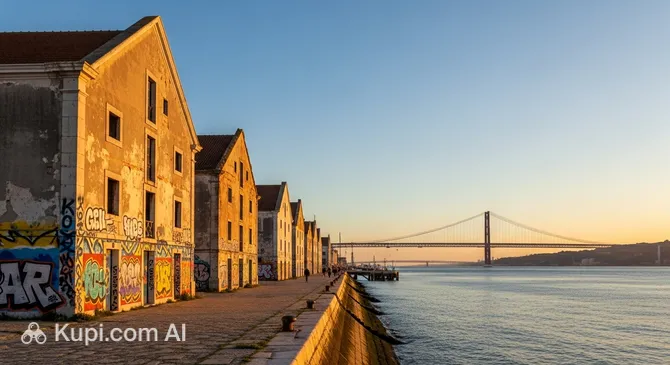
Another noteworthy location is Cais do Ginjal. This historical waterfront in Cacilhas is famous for its old warehouses, many of which are now decorated with street art, and traditional restaurants serving fresh seafood. It offers a magnificent panoramic view of Lisbon, particularly the 25th of April Bridge and the cityscape on the opposite bank of the Tagus. It is an excellent place for a leisurely stroll and dinner with a view.

Cais do Ginjal. Illustration.
Source: Kupi.com AI

Traveler photos:

Local Cuisine

The gastronomy of Almada is a true immersion into the world of Atlantic flavors, where the freshest gifts of the sea play the main role. Located on the banks of the Tagus River, opposite Lisbon and close to the oceanic coast, Almada offers tourists a rich selection of dishes based on Portuguese traditions with an emphasis on fish and seafood.

Be sure to try caldeirada de peixe — an aromatic and hearty stew made from various types of fish with potatoes, tomatoes, peppers, and herbs. This dish perfectly reflects the region's fishing heritage. No less popular are dishes made from cod (bacalhau), which is prepared here in countless ways, as well as freshly caught grilled sardines, especially during the summer season. Baked clams, fresh oysters, and various seafood snacks, such as fried pastries, are also worth noting.

Among local drinks, wines from the nearby Setúbal region stand out, perfectly complementing seafood dishes. For non-alcoholic options, strong Portuguese coffee is popular, often enjoyed with dessert. Speaking of sweets, one cannot fail to mention the famous pastel de nata – delicate custard tarts that have become a symbol of Portuguese confectionery tradition.

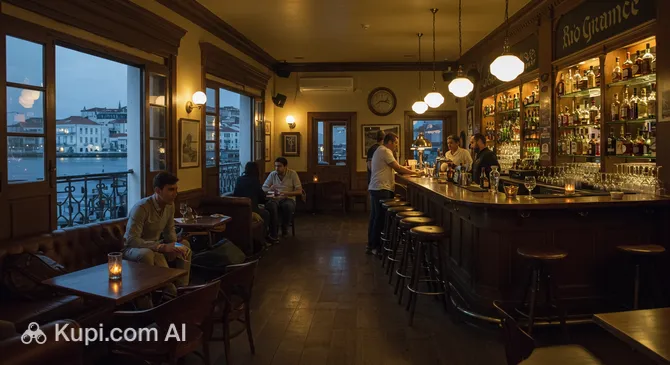
Rio Grande Restaurant. Illustration.
Source: Kupi.com AI

Traveler photos:

The food culture in Almada is diverse. Locals and tourists often choose seafood restaurants, many of which offer magnificent views of the river or ocean. You can find especially many cozy cafes and beach bars on the Costa da Caparica coast, where you can enjoy fresh dishes in a relaxed setting. For example, Rio Grande Restaurant offers visitors the chance to appreciate the local cuisine. It is also worth visiting local markets, where you can always find fresh vegetables, fruits, homemade cheeses, and, of course, the freshest fish. The city regularly hosts gastronomic festivals and fairs introducing the culinary traditions of Portugal.

Travel Tips

Welcome to Almada! To make your trip to this charming Portuguese city as comfortable and memorable as possible, we have prepared some practical tips. They will help you better navigate and enjoy every moment of your stay.

  1. Clothing and Essentials: The climate in Almada, as in all of Portugal, is Mediterranean. In summer (June-August), bring light clothing, sunscreen, a hat, and sunglasses. In spring and autumn, the weather is changeable, so layered clothing and a light jacket will come in handy. In winter (December-February), a warmer jacket and an umbrella will be needed. Extremely important is comfortable footwear for walking, as the terrain can be hilly, especially if you plan to visit the Cristo Rei monument. Don't forget a type F power adapter (Euro-standard).
  2. Transport: Getting around Almada and its surroundings is convenient. The most picturesque way to get from Lisbon is the ferry from Cais do Sodré to Cacilhas in Almada, which offers magnificent views. Within Almada, there is a light rail system (Metro Sul do Tejo) and buses (Carris Metropolitana). Taxis and apps like Uber or Bolt are also available. Renting a car can be useful for trips to the Costa da Caparica beaches, but it is not necessary for moving around the city or trips to Lisbon, where parking can be difficult.
  3. Finance: The official currency is the Euro (EUR). You can exchange money at banks or official exchange offices (câmbios); avoid exchanging at the airport due to less favorable rates. Credit and debit cards (Visa, Mastercard) are accepted everywhere, American Express less frequently. It is always useful to have some cash for small purchases. Multibanco network ATMs are numerous and reliable. Tipping is not mandatory but appreciated: in restaurants, 5-10% of the bill for good service; in cafes, you can round up the amount or leave some change.
  4. Health and Safety: Pharmacies (Farmácias) are easy to find by the green cross; some operate 24/7 according to a duty schedule (farmácia de serviço). In emergencies, call 112. Almada is generally a safe city. Observe standard precautions against pickpockets in crowded places like the Cacilhas ferry terminal or popular observation decks. Avoid poorly lit and deserted areas after dark.
  5. Communication: The official language is Portuguese. In tourist areas, hotels, and restaurants, many people speak English, especially the youth. Knowing a few basic phrases in Portuguese (for example, \"Olá\" – Hello, \"Obrigado/Obrigada\" – Thank you (said by a man/woman), \"Por favor\" – Please) will be very much appreciated. A SIM card can be purchased at the airport or at local operator stores (MEO, Vodafone, NOS). Wi-Fi is available in many cafes, restaurants, and hotels.
  6. Local Etiquette: A greeting is usually a handshake. Use \"Bom dia\" (good morning), \"Boa tarde\" (good afternoon/evening), and \"Boa noite\" (good night). Portuguese people are generally friendly and helpful, though they may seem reserved at first meeting. Politeness and respect are valued. In public places, try not to be noisy, especially in residential areas in the evening.
  7. What to Avoid: Try not to be excessively loud in public places and transport. While many Portuguese speak English, do not take it for granted; an attempt to say a few words in Portuguese is always appreciated. Avoid comparing Portugal with Spain or discussing Spanish politics – they are two different countries with their own unique culture and history.
  8. Special Tip for Almada: Be sure to take the ferry from Cacilhas to Lisbon (Cais do Sodré) – it is not just transport, but a stunning sea trip with views of the 25th of April Bridge and the Lisbon panorama, especially at sunset. Also, if time permits, visit the beaches of Costa da Caparica, which are easily accessible from Almada. In the numerous restaurants of Cacilhas, you can try the freshest seafood.

We hope these tips make your stay in Almada even more pleasant and fulfilling. We wish you an unforgettable journey in this beautiful corner of Portugal!

Entertainment & Nightlife

Almada, located on the south bank of the Tagus River opposite Lisbon, offers its guests various opportunities for evening and night-time relaxation. While the nightlife here may not be as bustling as in the capital, it has its own charm and attracts both locals and tourists.

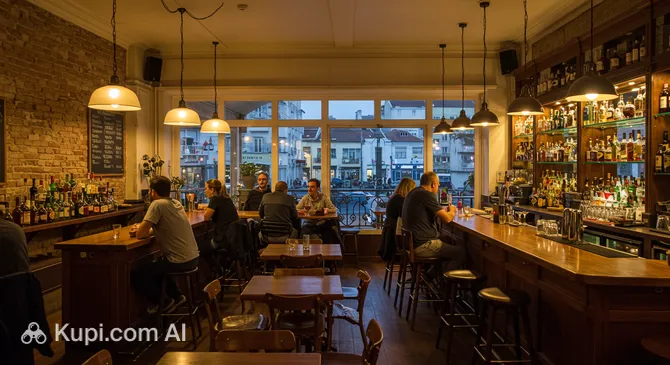
The main concentration of evening entertainment is in the Cacilhas district, known for its numerous seafood restaurants overlooking Lisbon, which turn into lively spots for dinner and socializing by evening. You should also pay attention to the central streets of Almada itself, where you can find cozy bars and cafes. The atmosphere in most establishments is quite relaxed and friendly. The crowd is mixed, ranging from young people to middle-aged adults. The dress code is usually casual unless it's a specific club. Bars are generally open until 1-2 AM, and clubs can operate until early morning, especially on weekends.

Among the specific venues to spend an evening, BLOOM – Bistro & Burgers is worth noting, as it offers not only food but also a pleasant atmosphere for evening gatherings. For those who prefer a more club-like atmosphere, you could consider places like Plateau or La Serra, where you can dance to modern rhythms. It is also worth visiting Rio Grande Restaurant, which can provide an enjoyable evening experience.

BLOOM – Bistro & Burgers. Illustration.
Source: Kupi.com AI

Traveler photos:

The best time to visit bars is after 9:00 PM, and clubs closer to midnight. Prices in Almada are generally slightly lower than in Lisbon. Getting from Almada to Lisbon or vice versa at night can be more difficult, as the ferry service has a limited schedule. In this case, it's better to use taxis or ridesharing services. Almada is generally considered a safe city, but as everywhere, usual precautions should be taken at night, especially in less illuminated areas. You can call a taxi by phone or through mobile apps.

Plateau. Illustration.
Source: Kupi.com AI

Traveler photos:

During the day, Almada also offers interesting leisure options. You can visit the Frigate Dom Fernando II e Glória, explore the historic Cais do Ginjal, or take a walk through Peace Park. Museum lovers can check out the Puppet Museum or the B-MAD Art Deco Museum.

Parks & Museums

Almada, picturesquely situated on the south bank of the Tagus River opposite Lisbon, attracts travelers not only with its famous views but also with the opportunity to spend time pleasantly in green zones and discover unique cultural sites reflecting the maritime spirit and history of the city.

For those seeking outdoor relaxation, the main urban oasis is Peace Park (Parque da Paz). This is a spacious and well-maintained park offering visitors shaded paths for walking, picnic areas, playgrounds, and small lakes. It is perfect for a family holiday or a quiet time away from the city bustle. Additionally, Almada serves as the gateway to the famous Costa da Caparica coastline with its endless sandy beaches. Although these are not parks in the traditional sense, these natural areas offer great opportunities for relaxation by the Atlantic Ocean, surfing, and long walks along the shore.

Almada's cultural heritage and its inseparable connection with the river and ocean are vividly represented by several iconic sites. The main museum that allows you to touch Portugal's naval history is the frigate "Dom Fernando II e Glória". This magnificently restored 19th-century sailing warship, moored in Cacilhas, allows visitors to board and experience the atmosphere of maritime voyages of the past. It is a true floating monument to Portuguese naval glory.

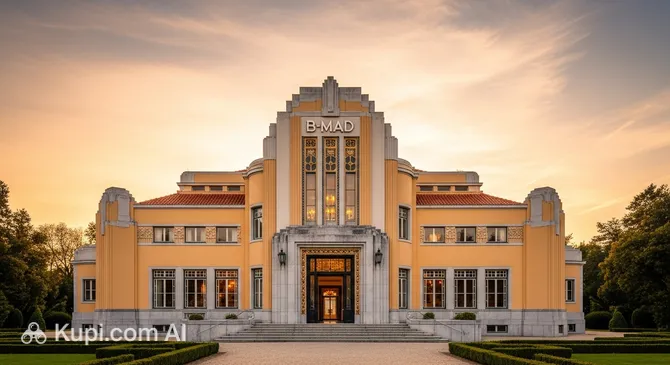
Appreciators of early 20th-century art should visit the B-MAD Art Deco Museum (Museu de Arte Deco - Berardo). This unique collection, housed in an elegant building, immerses you in the Art Deco style through furniture, everyday objects, and decorative art, offering a fresh look at the aesthetics of that era.

B-MAD Museum of Art Deco. Illustration.
Source: Kupi.com AI

Traveler photos:

Another interesting cultural site is the Puppet Museum (Museu da Marioneta). It presents a fascinating exhibition dedicated to the art of puppetry, its history, and variety of forms. This museum will be especially interesting for families with children and anyone who appreciates theatrical craftsmanship and folk art.

Puppet Museum. Illustration.
Source: Kupi.com AI

Traveler photos:

In addition to these cultural treasures, Almada is proud of other iconic places that shape its identity. The majestic Cristo Rei monument is one of these symbols. From its observation deck at the foot of the statue of Christ, truly breathtaking panoramic views of Lisbon, the Tagus River, and the impressive 25th of April Bridge open up, which is itself an outstanding engineering feat and a vital transport artery.

Almada's historical charm can be felt by walking along the Cais do Ginjal waterfront. Once a busy port area with shipyards and warehouses, today it attracts visitors with its old buildings housing restaurants and bars with beautiful views of the river and Lisbon. It is an excellent place for a leisurely stroll and a sunset dinner, watching life on the river.

To feel the atmosphere of Almada more deeply, turn off the main tourist routes into the old quarters of the city or use the local MTS tram (Metro Transportes do Sul) to explore the surroundings. And a ferry ride from Cacilhas to Lisbon (and back) is not just a way to travel, but a real mini-excursion with magnificent views of both banks of the Tagus.

Getting Around

Public transport in Almada offers several convenient ways to get around the city and its surroundings, as well as providing quick connections to Lisbon. The core of the transport system consists of light rail (metro), buses, and ferries.

The main type of urban transport is the Metro Sul do Tejo (MST) – a modern light rail system, often called a fast tram. MST has several lines connecting key districts of Almada, such as Cacilhas, Cova da Piedade, and the university campus. It is a convenient and fast way to move within the city.

Bus service in Almada and adjacent areas is provided by Carris Metropolitana. Buses cover an extensive network of routes, reaching areas not served by the MST and linking Almada with other municipalities on the south bank of the Tagus. Schedules and routes can be found at stops and on the operator's official website.

For trips to Lisbon, ferries, operated by Transtejo/Soflusa, are indispensable. The main ferry terminal is in Cacilhas, from where ferries regularly depart for Cais do Sodré in Lisbon. There are also routes from Trafaria and Porto Brandão. A ferry trip is not only convenient but also allows you to enjoy views of the Tagus River and the 25th of April Bridge.

The fare system in Almada is integrated into the general system of the Lisbon Metropolitan Area. A contactless Navegante card (formerly Viva Viagem) is used for payment. This card can be purchased and topped up at ticket offices and machines at metro stations, ferry terminals, train stations, as well as in some newsstands (Payshop, Pagaqui). The card can be loaded with single trips, via the "zapping" system (topping up a balance to pay for individual trips, which is usually cheaper), or by purchasing monthly passes (Navegante Municipal for trips within Almada or Navegante Metropolitano for unlimited trips throughout the metropolitan area). The cost of a single trip using the zapping system on the MST or bus is usually around 1.50-2.50 euros.

Tourists are advised to purchase a Navegante card immediately upon arrival. Don't forget to validate your card at the start of each journey by tapping it against the special readers on buses, at MST platform entrances, or before boarding a ferry. Public transport usually operates from early morning (around 6:00-7:00 AM) until late evening (11:00 PM-1:00 AM), but schedules can vary depending on the day of the week and the route. Intervals may be longer on weekends and holidays.

In addition to public transport, other ways of getting around are available in Almada. Taxis can be found at stands or called by phone. Ride-hailing services (such as Uber, Bolt) are also popular and often offer competitive prices. For fans of active recreation and short trips, bicycle rental may be suitable; bike lanes are appearing in the city and along the coast.

One of Almada's interesting transport features is the panoramic Elevador da Boca do Vento lift. It connects the lower part of the city near the Cacilhas ferry terminal with the historical center of Almada (Almada Velha), located on a hill. Taking the lift not only saves energy but also opens up magnificent views of Lisbon and the Tagus River. The ferry ride across the Tagus itself is also a kind of mini-excursion.

Accommodation

When planning a trip to Almada, you will find a variety of accommodation options to suit different preferences and budgets. The city offers a wide choice of housing: from cozy guesthouses and modern apartments, ideal for family holidays or long stays, to hotels of various comfort levels. Here you can find both budget-friendly options and more refined offers.

When choosing a place to stay in Almada, it's worth paying attention to several key areas. If your goal is a beach holiday, the best choice would be the Costa da Caparica coast, known for its long sandy beaches and developed tourist infrastructure. Many apartments for rent and hotels are concentrated here. For those who want to be closer to transport hubs and enjoy views of Lisbon, the Cacilhas district is perfect. From here, it is easy to get to the Portuguese capital by ferry, and the area itself offers an authentic atmosphere and a good choice of restaurants.

Various types of accommodation are available in Almada, including small local hotels, guesthouses (pensions), and particularly popular rental apartments. While there are no specific hotels in the provided list of attractions, you can easily find suitable options through popular online booking services. The price range varies from affordable hostels and rooms to mid-range hotels and more comfortable apartments with views of the ocean or the Tagus River.

To guarantee the best choice and prices, especially if your trip falls during the peak tourist season (summer months), it is recommended to book accommodation in advance. The most common booking methods are international online platforms and travel aggregators; some hotels and apartments also offer direct booking through their websites. This allows you to compare prices and conditions, as well as read reviews from other travelers.

Nearby Cities

For those who want to explore the surrounding area, Almada serves as an excellent starting point for day trips to several interesting nearby locations:

Among them, Lisbon, the capital of Portugal, stands out, located just 6 km from Almada. This city attracts with its historic quarters such as Alfama and Baixa, the famous tram No. 28, magnificent observation decks, and rich cultural life. Nearby is Seixal (7 km), offering a more tranquil holiday on the shores of the picturesque Tagus Bay, where you can enjoy fresh seafood and the charm of a fishing town. You should also consider a trip to Amadora (10 km), one of Lisbon's largest satellite cities. Here you can experience modern urban life, walk through its parks, or explore local shopping centers typical of a busy suburb.

CityPopulationDistance
Corroios46 4755 km
Lisbon2 719 0006 km
Seixal158 2697 km
Costa da Caparica11 7077 km
Barreiro78 7648 km

These and other nearby cities and towns offer a variety of experiences, from capital bustle to peaceful coastal landscapes, allowing for a deeper understanding of the culture and history of this region of Portugal.

Shopping & Souvenirs

Almada, located on the south bank of the Tagus River opposite Lisbon, offers various shopping opportunities. While the city may not be famous for exclusive goods, you can find both modern shopping centers and traditional shops offering Portuguese products and souvenirs here. It's a great place to combine sightseeing with some pleasant shopping.

The main commercial life of Almada is concentrated in the central part of the city. Streets such as Rua Capitão Leitão and its surroundings offer many small shops, boutiques, cafes, and service centers. Here you can find clothing, shoes, accessories, and household goods. A walk through these streets will allow you to feel the local flavor and perhaps discover unique finds in small family shops.

One of the main shopping spots in Almada is the large Almada Forum shopping center. It is one of the largest shopping complexes in Portugal, offering a huge selection of shops from well-known international and Portuguese brands, a hypermarket, a food court, a cinema, and entertainment areas. It is located slightly away from the historical center but is easily accessible by public transport or car, and is a popular shopping destination for both locals and tourists.

In Almada, as in many Portuguese cities, you can find traditional markets. Mercado da Romeira is a renovated space that combines traditional food stalls with fresh vegetables, fruit, fish, and meat, along with modern gastronomic concepts and restaurants. It's an excellent place to try local delicacies and buy fresh produce. Also, craft fairs or flea markets may be organized periodically in the city, where you can find interesting vintage items and handmade products – keep an eye on local announcements.

From Almada, as from Portugal in general, it is worth bringing back traditional souvenirs. Look for cork products (bags, wallets, coasters), ceramics (especially azulejos – painted tiles), high-quality Portuguese wines (including Port and Vinho Verde), canned fish in colorful packaging, as well as items featuring the Barcelos Rooster – one of the country's symbols. Local shops also offer textiles, embroidery, and other works by local craftsmen.

Most shops in Almada are usually open Monday to Friday from 9:00-10:00 AM to 7:00 PM, with a lunch break (almoço) roughly from 1:00 PM to 3:00 PM, especially regarding small private shops. Large shopping centers like Almada Forum operate without a break and longer, often until 10:00-11:00 PM, including weekends. Cash (Euro) and bank cards (Visa, Mastercard) are widely accepted. American Express may not be accepted everywhere. In small shops and markets, it is preferable to have cash with you.

Tourists from non-European Union countries can use the Value Added Tax refund system (VAT, known as IVA in Portugal) on purchases made in stores marked "Tax Free Shopping". Usually, you need to make a purchase of a certain minimum amount in one store on one day, fill out a special Tax Free check, and present it along with the goods at customs when leaving the EU. Check the conditions directly in the stores where you shop and keep all receipts.

Reached the end of the page?

That means the route is fully explored